
Liquid vs. Granular Fertilizer: Which Is Better for Your Charlotte Lawn?

Lawn Fertilizer & Soil Health Guide Liquid vs. Granular Fertilizer: Which Is Better for Your Charlotte Lawn? Liquid vs. granular fertilizer comes down to nutrient source, release rate, grass type, soil conditions, and seasonal timing—not simply choosing between a bottle and a bag. Learn how each form delivers nutrients, compare speed, longevity, cost, burn risk, and runoff concerns, apply fertilizer evenly, and choose the right approach for Charlotte-area fescue, Bermuda, and Zoysia lawns. By Advanced Turf Care 17 Minutes Read Updated 2026 Article Guide Table of Contents Compare liquid and granular fertilizer, understand nutrient release, application risks, costs, and choose the right approach for your Charlotte lawn. Liquid vs. Granular Fertilizer Fertilizer Form vs. Nutrient Release How Liquid Fertilizer Works How Granular Fertilizer Works Liquid vs. Granular Comparison Speed, Longevity, and Cost Application Methods and Equipment Fertilizer Burn, Safety, and Runoff Charlotte Fertilizer Timing by Grass Type Using Liquid and Granular Together Choosing the Right Fertilizer Program Frequently Asked Questions You want a thicker, greener lawn. The confusing part is deciding which fertilizer can actually help you get there. One bottle promises fast color from a liquid spray. A bag of granules promises steady feeding over several weeks. Online advice often reduces the choice to “fast liquid” versus “slow granular,” but that leaves out the most important detail: Liquid and granular describe how fertilizer is delivered. They do not automatically tell you how quickly its nutrients release or how the grass absorbs them. A liquid product can contain quick- or slowly available nitrogen. Granular fertilizer can also be quick-release, controlled-release, or a blend of both. Urea, one of the most common nitrogen sources, can be applied in either form. The formulation, nutrient rate, grass type, soil condition, weather, and timing matter more than whether the product begins in a bottle or bag. NC State Extension likewise classifies nitrogen by its release characteristics and notes that quick- and slow-release sources may be available in different application forms. This guide compares liquid and granular lawn fertilizer by speed, longevity, cost, equipment, burn risk, and environmental impact. More importantly, it explains how the answer changes for tall fescue, Bermuda, and Zoysia lawns in the Charlotte area. For a wider explanation of fertilizer labels and nutrients, read our complete guide to lawn fertilizer. Liquid vs. Granular Fertilizer: The Quick Answer Neither form is automatically better for every lawn. Liquid fertilizer is useful when nutrients or compatible treatments need to be distributed in solution. Depending on the product, it may provide a relatively fast response or deliver a carefully measured seasonal treatment. Granular fertilizer is useful when nutrients need to be spread across the soil surface with a broadcast or drop spreader. Many controlled-release products come in granular form, but some granules release nutrients quickly. For many Charlotte lawns, the right program may use both forms at different times. Other visits may focus on weeds, disease, insects, iron, potassium, lime, or soil conditioning instead of fertilizer. The goal is to choose the right treatment for the grass, soil, season, and current problem. First, Separate Fertilizer Form From Nutrient Release Two different decisions are often confused. Physical Form • Liquid fertilizer is dissolved or suspended in water and applied through a hose-end, backpack, or powered sprayer.• Granular fertilizer consists of dry particles applied with a broadcast or drop spreader. Nutrient-Release Type • Quick-release fertilizer supplies nitrogen that becomes available rapidly. It may create a faster response, but excessive rates can increase growth, burn potential, or nutrient loss.• Slow- or controlled-release fertilizer supplies nitrogen over a longer period. Its release may depend on a coating, moisture, temperature, or microbial activity.• Blended fertilizer combines quick- and slowly available nitrogen sources. Do not judge a fertilizer only by its container. Read the label for the nutrient analysis, percentage of slowly available nitrogen, application rate, watering instructions, and restrictions for heat or stressed turf. How Liquid Fertilizer Works Liquid fertilizer delivers nutrients in a solution or suspension. Depending on its formulation and application volume, nutrients may be absorbed through the grass leaves, move into the soil for root uptake, or use both pathways. Not every liquid treatment is simply a “foliar feed.” Some target a fast color response; others move nutrients toward the root zone or accompany another label-compatible treatment. Advantages of Liquid Fertilizer • Uniform coverage when calibrated correctly: A properly functioning sprayer can cover curves, narrow strips, and irregular lawn areas evenly.• Flexible treatment options: Liquid applications may deliver nitrogen, iron, potassium, micronutrients, or other compatible lawn treatments selected for a particular need.• Potential for a faster response: Soluble nutrients may improve color relatively quickly when the lawn has a correctable deficiency and is actively growing.• Precise professional application: A calibrated system can deliver a measured volume over a known turf area. Limitations of Liquid Fertilizer • Mixing errors matter: Increasing the concentration does not improve the treatment. It raises the risk of salt injury and excessive growth.• Sprayer calibration is essential: Nozzle output, pressure, walking speed, spray width, and overlap determine how much product reaches the turf.• Weather affects the application: Wind can cause drift, while heat, drought stress, saturated soil, or heavy rain can make the timing unsuitable.• Fast color is not a complete diagnosis: Darker grass does not prove that pH, compaction, drainage, disease, or root problems have been corrected. Liquid fertilizer is a useful delivery method, but it is not a shortcut around choosing the correct nutrient and timing. How Granular Fertilizer Works Granular fertilizer is spread as dry particles. Moisture then dissolves the material or begins the release process, depending on the product. Some granules release nutrients quickly. Others are coated or formulated for gradual release. Many products combine both. Advantages of Granular Fertilizer • Convenient application equipment: A broadcast spreader can cover an average residential lawn efficiently.• Many controlled-release options: Granular products are commonly used when gradual nutrient availability is desired.• Visible application pattern: The operator can divide the lawn into sections and use crossing passes for more even coverage.• Straightforward
How to Seed a North Carolina Lawn: A Complete DIY Guide

Lawn Seeding & Overseeding Master Guide How to Seed a North Carolina Lawn: A Complete DIY Guide North Carolina lawn seeding comes down to regional timing, grass type, soil preparation, and consistent early care—not simply spreading seed and hoping for the best. Learn when to seed cool- and warm-season lawns, choose grass for your sun and traffic levels, prepare compacted clay soil, establish proper seed-to-soil contact, and water new grass through establishment for a thicker, healthier lawn. By Advanced Turf Care 24 Minutes Read Updated 2026 Article Guide Table of Contents Plan your North Carolina lawn seeding project around the right grass type, timing, soil preparation, and early-care routine. How to Seed a North Carolina Lawn North Carolina Climate and Grass Types Best Time to Seed in NC NC Seeding Calendar by Region Soil Testing, Aeration, and Preparation Choosing the Right Grass Seed How to Seed or Overseed Your Lawn Watering, Mowing, and Early Lawn Care Common Seeding Mistakes and FAQs Your North Carolina Lawn Seeding Plan You’ve spent every Saturday this summer dragging a hose across a lawn that still looks thin, brown, and tired. North Carolina’s brutal July heat and heavy clay soils can turn even a well-cared-for lawn into a weedy, compacted mess. The good news? The fix isn’t more water or a miracle product from the hardware store. It’s seeding the right way, at the right time, with the right grass. This guide is built for North Carolina homeowners, not recycled from a national lawn care website. Here’s what you’ll learn: • Exactly when to seed for your region (Coastal, Piedmont, or Mountains)• How to choose a grass that won’t melt in August• The step-by-step seeding process NC State Extension specialists recommend• A month-by-month calendar you can print and hang in the garage By the end, you’ll have a clear plan to turn your struggling yard into a thick, resilient lawn. One that can handle our summers, our clay, and your kids’ weekend soccer games. No guesswork. No wasted money. Just a lawn you’ll be proud of. Understanding North Carolina’s Climate and Grass Types The Transition Zone Challenge North Carolina sits right in the turfgrass transition zone. That means neither cool-season nor warm-season grasses feel perfectly at home here year-round. Summers get too hot for Kentucky bluegrass to survive without heavy watering. Winters get cold enough to knock back Bermuda and zoysia. Your grass choice has to be a strategic compromise, and it starts with knowing your region. NC State Extension’s TurfFiles website and its Carolina Lawns publication are the go-to resources for matching grass types to North Carolina’s climate zones. Cool-Season vs. Warm-Season Grasses: What Works Where • Cool-season grasses (tall fescue, Kentucky bluegrass, fine fescue): Grow most actively in spring and fall. Tall fescue is the workhorse for the Piedmont and Mountains thanks to its heat tolerance and deep roots. Kentucky bluegrass is less common here due to disease pressure and high water needs. • Warm-season grasses (Bermuda, zoysia, centipede, St. Augustine): Thrive in summer heat and go dormant (brown) after frost. Bermuda is the top pick for full-sun Coastal and southern Piedmont lawns. Zoysia handles shade better. Centipede works well in acidic, sandy soils in the eastern part of the state. Stuck in the Piedmont and can’t decide? Tall fescue is the safest bet. It stays green through winter and, with proper care, holds up through summer. How to Choose Based on Your Yard’s Conditions Answer these three questions before you buy a single bag of seed. • Sunlight. Full sun (8+ hours): Bermuda, zoysia, or tall fescue. Partial shade (4–6 hours): tall fescue, fine fescue, or zoysia. Heavy shade: a shade-tolerant fine fescue mix or a groundcover alternative.• Traffic. Kids and pets running around? Tall fescue or Bermuda hold up best to wear. Skip centipede and St. Augustine in high-traffic areas.• Maintenance level. Want low-input? Centipede or established zoysia need less mowing and fertilizer. Tall fescue needs more attention but rewards you with year-round green. Match your sunlight, traffic, and maintenance answers together, and you’ll land on the right grass type in under a minute. For more depth, check out our guide on best grass seeds in NC. It has an interactive tool that helps to find the best grass for your yard. Best Time to Seed in NC: A Seasonal Guide The Golden Window for Tall Fescue: September 1 – October 15 Fall is the undisputed champion for seeding in North Carolina. Soil is still warm from summer, which speeds germination. Air temperatures are cooling, which reduces stress on young seedlings. The window is tight. Aim to seed between September 1 and October 15 in the Piedmont and Mountains. Coastal areas can push into late October. Seed too early, and you risk heat stress. Seed too late, and seedlings won’t mature before frost hits. Grab a soil thermometer. When soil at a 2-inch depth reads 60–70°F, you’re in the sweet spot. NC State’s TurfFiles website often posts soil temperature maps to help you track it. Warm-Season Seeding: Late Spring (May–June) Bermuda, zoysia, and centipede need soil temperatures of 65–70°F to germinate. That typically happens from mid-May through June across the state. Never seed warm-season grasses in fall. They won’t establish before winter dormancy hits, and they’ll likely die. NC State Extension’s turfgrass establishment calendar lays out these soil temperature thresholds region by region. Regional Timing Adjustments • Mountains: Cooler temperatures shorten the fall window. Seed tall fescue by mid-September. Warm-season grasses are rarely used here due to short growing seasons.• Piedmont: The classic fall window applies. Spring seeding of tall fescue is risky, but possible if you irrigate heavily and accept some summer loss.• Coastal Plain: Fall seeding can extend into late October. Warm-season seeding can start as early as late April in southern coastal counties. NC Region-Specific Seeding Calendar: A Month-by-Month Visual Guide This calendar turns generic advice into a personalized, actionable plan. Print it, hang it in the garage, and check off tasks as you go through the year. Tasks marked with an asterisk (*) are critical for seeding success.
Best Time to Apply Weed Control in NC

Lawn Weed Control Guide When to Apply Weed Control in North Carolina: A Month-by-Month Guide for 2026 North Carolina weed control comes down to soil temperature, regional timing, grass type, and choosing the right product—not following a fixed calendar date. Learn when to use pre- and post-emergent herbicides, prevent seasonal weeds before they germinate, coordinate treatments with overseeding, and keep recurring weeds from taking over your lawn. By Advanced Turf Care 27 Minutes Read Updated 2026 Article Guide Table of Contents Find the right weed-control timing for your region, grass type, and lawn-care plans. When to Apply Weed Control in NC Pre-Emergent vs. Post-Emergent Using Soil Temperature for Timing NC Timing by Region Month-by-Month Weed Control Calendar How to Apply Pre-Emergent Correctly Post-Emergent Tips for Common Weeds Common North Carolina Lawn Weeds Weed Control, Overseeding, and Fertilization Your Year-Round Weed Control Plan You followed the bag instructions. You put down pre-emergent when the calendar said “early spring.” By June, your lawn was a crabgrass convention anyway. Sound familiar? North Carolina’s climate doesn’t read a calendar. It reads soil temperature. If you’re not measuring that, you’re throwing money at weeds that are going to show up no matter what date is circled on your fridge. Here’s the real cost of bad timing: • Wasted product that never formed a proper barrier• Bare or thin patches where weeds moved in first• Hand-pulling crabgrass all summer instead of preventing it in March This guide is built around real Piedmont timing, the same soil, seasons, and weed pressure we deal with every day treating lawns in Charlotte, Gastonia, Huntersville, and the surrounding red clay country. If you’re in the coastal plain or the mountains, we’ve included NC State-backed comparison data so you can adjust the dates for your area too. You’ll learn: • The difference between pre-emergent and post-emergent, and exactly when to use each• How a $15 soil thermometer beats any calendar date, hands down• Which products are safe for your grass type, whether you’re growing fescue or bermuda• The fall pre-emergent window most homeowners skip, and why skipping it costs you next spring Grab a soil thermometer. Bookmark the soil temperature map we’ll link below. By the end of this guide, you’ll have a personalized weed control calendar and the confidence to stop weeds before they ever break the surface. Your weed-free lawn starts with a number, not a date. Let’s get into it. Pre-Emergent vs. Post-Emergent: Understanding the Difference According to NC State Extension, the two categories work in completely different ways. Get them confused, and you’ll waste a season and some money. What Pre-Emergent Herbicides Do (and Don’t Do) A pre-emergent doesn’t kill weeds. It stops them from ever showing up. Here’s how it works: • It creates a chemical barrier right at the soil surface• Weed seeds hit that barrier as they try to germinate, and they can’t get through• It does nothing to weeds that are already growing Timing is everything here. The barrier only works if it’s down before the seed sprouts. One more thing: that barrier breaks down over time. NC’s growing season runs long, so a lot of homeowners need a split application or a longer-lasting product to keep the barrier intact all the way through the germination window. 🌱 Expert Tip Think of pre-emergent like a shield. Once crabgrass breaks through, the shield is useless. Miss the window by even a week, and you’re looking at a summer of hand-pulling instead. What Post-Emergent Herbicides Do Post-emergent is the opposite tool for the opposite problem. You use it on weeds you can already see. Quick facts: • Best results come when weeds are young and actively growing• Ideal temperature range: 60°F–85°F• Selective post-emergents kill specific weed types without touching your grass• Non-selective post-emergents (like glyphosate) kill everything they touch, grass included 🌱 Expert Tip For perennial weeds like dandelion, wait until early fall. The plant is pulling nutrients down into its roots then, and the herbicide gets pulled down right along with it. That’s a more complete kill than a spring application. When to Use Each: A Quick Decision Guide Keep this simple rule in your head all year: • Pre-emergent → late winter/early spring for summer annuals, early fall for winter annuals• Post-emergent → spring or early fall, whenever weeds are small and actively growing• Never apply pre-emergent if you’re planning to overseed within the reseeding interval on the label Get those two tools mixed up, and you’ll either burn money on a treatment that can’t work, or overseed into a lawn that won’t grow a single blade of new grass. The Science of Soil Temperature: Your True Application Trigger Why the Calendar Fails in North Carolina Forget the calendar. Your soil thermometer is the only tool that tells you when crabgrass is about to strike, and if you’re not using one, you’re gambling with your lawn. Here’s why the calendar can’t be trusted: • NC’s weather swings hard from year to year• A warm February can push crabgrass germination into early March• A cold spring can push it back to April There’s no fixed date that works every year. There’s only one number that matters. Crabgrass germinates when the 24-hour average soil temperature at a 2-inch depth hits about 55°F for three to four consecutive days. Goosegrass waits a little longer, usually 60°F to 65°F. NC State Extension’s turfgrass research team tracks this every year at their Raleigh field lab, and their data backs up the same conclusion we’ve seen firsthand: soil temperature is the trigger, not the date on your bag of pre-emergent. How to Measure Soil Temperature Accurately You don’t need anything fancy. Here’s the process: • Use a digital probe thermometer. Insert it 2 inches deep, in a sunny spot on your lawn.• Take readings in the morning for consistency.• Track the 24-hour average, not a single reading. A lot of the online maps do this math for you.• Start monitoring soil temperatures before they approach the crabgrass germination threshold. Apply your pre-emergent early enough for it to be watered in before germination begins, following the product label for your lawn type and
Weed Killer Not Working? 10 Common Reasons and How to Fix Them

Lawn Weed Control Guide Weed Killer Not Working? 10 Common Reasons and How to Fix Them Weed killer failures usually come down to the wrong product, poor timing, bad weather, incorrect mixing, or weak leaf coverage—not a defective herbicide. Learn how to identify the real cause, apply treatments correctly, prevent repeat weed problems, and know when professional help is the better next step. By Advanced Turf Care 21 Minutes Read Updated 2026 Article Guide Table of Contents Jump to the section you need to find out why your weed killer did not work and what to do differently next time. Why Weed Killer Sometimes Fails Weed Identification and Product Matching Application Timing and Weather Conditions Proper Mixing, Rate, and Sprayer Calibration The Role of Adjuvants and Surfactants Understanding and Preventing Herbicide Resistance Common Herbicide Active Ingredients and Target Weeds Interactive Weed Killer Failure Diagnosis Step-by-Step Troubleshooting Checklist Real-World Weed Killer Failure Examples Preventative Lawn Care to Reduce Weed Pressure When to Call a Professional Take Control of Your Weed Problem You followed the label. You sprayed on a calm, sunny day. Yet a week later, those dandelions and clover are still standing tall. It happens more often than you’d think, and it wastes your time, money, and patience. You’re not alone in this. Research from university extension services points to the same conclusion again and again. Most herbicide failures trace back to a handful of correctable mistakes, not a defective product. Maybe you’ve already tried two or three different bottles. Maybe you’re worried about harming the grass you’re trying to protect. Maybe the advice you’ve read online just keeps contradicting itself. But here’s the good news. In nearly every case, the problem isn’t the weed killer itself. It’s how, when, or where you applied it. That’s a fixable problem. This guide is your systematic, science-backed troubleshooting manual. We’ll walk through the ten most common reasons weed killers fail, from misidentified weeds to sprayer calibration mistakes, and give you a clear, actionable fix for each one. By the end, you’ll have a personalized diagnosis and a concrete plan to finally win the battle against weeds, without guesswork or wasted money. Let’s get started. Weed Identification and Product Matching Why Weed ID Is the Non-Negotiable First Step Before you buy a single bottle of weed killer, you need to know exactly what you’re fighting. This is the step most homeowners skip, and it’s the single most common reason weed killers fail. Herbicides are built to target specific types of plants. A product designed for broadleaf weeds like dandelions won’t touch a grassy weed like crabgrass. Spray the wrong one, and you’re not treating the weed, you’re just watering your lawn with chemicals. Lawn weeds generally fall into three categories: • Broadleaf weeds — wide, flat leaves with visible veins, often flowering (dandelion, clover, plantain)• Grassy weeds — narrow, blade-like leaves that mimic turfgrass (crabgrass, foxtail)• Sedges — triangular stems and a grass-like appearance, but not true grasses (nutsedge) Herbicides are labeled as selective or non-selective. Selective products target one category while leaving your turf alone. Non-selective products kill everything green they touch, which is why they’re rarely the right call for a lawn. Even within the broadleaf category, some species shrug off certain active ingredients entirely. That’s why matching matters as much as identifying. If you want a closer look at what you’re dealing with, our guide to broadleaf weeds common to Carolina lawns breaks down the most frequent offenders, and our breakdown of grassy weeds and how they differ from turf covers the trickier lookalikes. How to Accurately Identify Your Weed Guessing gets homeowners in trouble more often than any other step in this process. A confident, accurate ID takes just a few minutes. Start with a clear photo. Capture the leaf shape, the flower if there is one, and the overall growth habit of the plant. Note where it’s growing too. Sun or shade, wet or dry soil, these details help narrow down the species. A weed identification app like PictureThis or PlantSnap can give you a fast answer. For anything you’re still unsure about, your local cooperative extension service can provide a definitive ID, often for free. Compare what you find against a trusted extension database before you commit to a product. Five minutes here can save you weeks of wasted spraying. Matching the Weed to the Right Active Ingredient Every herbicide works through a specific mode of action, meaning it disrupts a plant’s biology in a particular way. Matching that mode of action to your target weed is what separates a successful application from a wasted one. This is also where resistance starts to become a factor. Using the same active ingredient on the same weed population year after year gives resistant plants room to take over, a problem we’ll cover in more detail later in this guide. For a full breakdown of which active ingredients work on which weeds, along with application timing and surfactant needs, jump to the Common Herbicide Active Ingredients and Their Target Weeds table below. Application Timing and Weather Conditions The Goldilocks Zone for Weed Control: Growth Stage and Season Timing decides whether your herbicide works or wastes your afternoon. Young, actively growing weeds absorb and translocate herbicide fast. Mature or flowering weeds have thicker cuticles that block uptake almost entirely. Most broadleaf weeds are easiest to kill from seedling to early vegetative stage. Grassy weeds are most vulnerable at the 2 to 4 leaf stage. Season matters too. Cool-season weeds like chickweed respond best to fall or early spring applications. Warm-season weeds like crabgrass need late spring to early summer treatment. Perennials like dandelion are most vulnerable in fall, when they’re pulling sugars down into the root for winter, and taking your herbicide with it. Weather Factors That Make or Break an Application Weather conditions can undo an otherwise perfect application. Aim for 65 to 85°F. Heat causes volatilization and stresses the weed; cold slows its metabolism to a crawl. Moderate to high humidity
Why Lawn Disease Appears Overnight
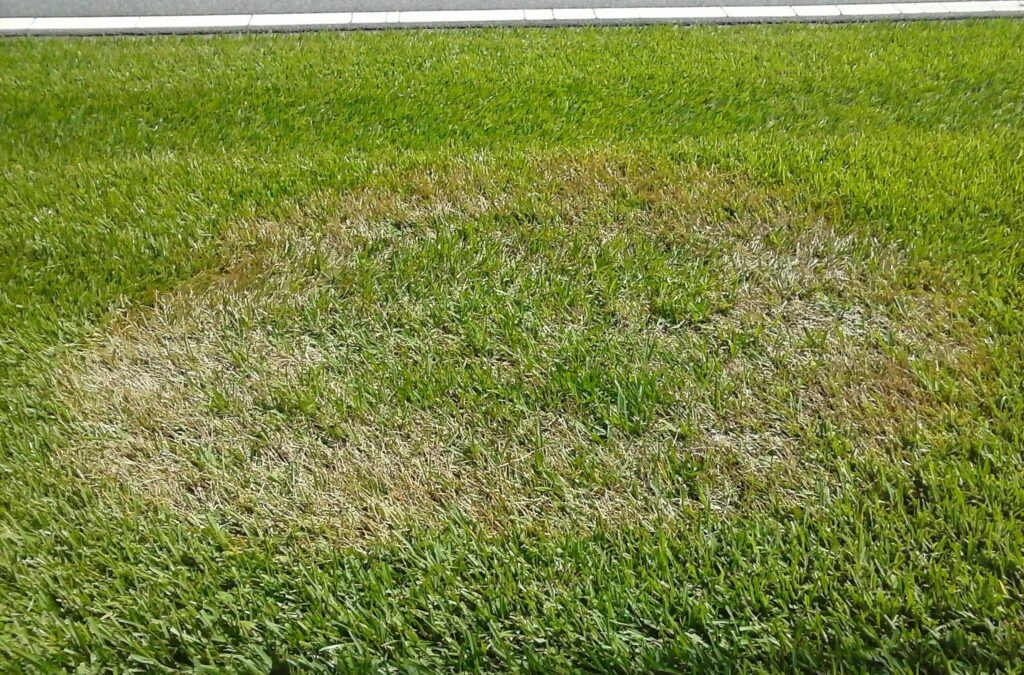
Lawn Disease & Fungus Guide Why Lawn Disease Seems to Appear Overnight: Causes, Early Warning Signs, and Prevention Most lawn diseases do not truly appear overnight; warm, humid nights and prolonged leaf wetness allow pathogens to spread quickly. Learn the warning signs, prevent outbreaks with smarter watering, mowing, nutrition, and airflow, and use treatment only after accurate diagnosis. By Advanced Turf Care 21 Minutes Read Updated 2026 Article Guide Table of Contents Jump to the section you need to understand why lawn disease seems to appear overnight and how to prevent it. Why Lawn Disease Seems to Appear Overnight The Disease Triangle: Why Outbreaks Happen Fast The Role of Dew, Humidity, and Temperature How to Watch for Lawn Disease Risk Common Lawn Diseases That Seem to Appear Overnight Why the Damage Started Before You Saw It How to Prevent Lawn Disease Outbreaks When and How to Use Fungicides Responsibly Monitoring Weather for Early Disease Warnings Charlotte-Area Lawn Disease Risk Calendar Morning-After Diagnosis Flowchart From Morning Panic to Proactive Lawn Care You walk out with your coffee, and there it is. A circle of dead-looking grass that wasn’t there yesterday. Your stomach drops. How does a lawn go from healthy to half-dead in a single night? It doesn’t — not really. What you’re seeing this morning is the final act of a process that started hours before sunrise. The fungus had already been feeding inside your grass blades while you slept. By the time the sun came up, the damage was done. This isn’t a mystery, and it’s not bad luck. Lawn diseases that seem to appear overnight are predictable. They follow patterns you can learn to recognize. They respond to conditions you can actually control. In this guide, you’ll learn exactly what happens in the dark, why your lawn was already sick before you saw the damage, and how to stop it from happening again. By the end, you’ll trade the morning panic for a clear, science-backed plan that keeps your lawn healthy before the fungus ever gets started. The Disease Triangle: Why Fungi Explode Overnight Every lawn disease needs three things to happen at the same time: • A susceptible host — your grass• A pathogen — the fungus• A favorable environment — the right temperature and moisture Remove any one of those three, and the disease can’t happen. The overnight shock you’re seeing? That’s the environment suddenly flipping the switch. The Fungus Was Already There Your lawn didn’t catch a disease overnight. Fungal spores and mycelium are almost always present in the thatch and soil. They’re dormant, waiting for the right conditions. The pathogen isn’t the surprise — the environment is. What Triggers the Explosion When two things align, fungi shift from idle to explosive growth: • Nighttime temperatures hold above a critical threshold• Grass leaves stay wet for an extended period, often 10–12 continuous hours or longer That’s the moment the disease triangle snaps shut. Why You Don’t See It Coming The fungus works from the inside out. By the time brown patches appear, the leaf tissue is already dead. The visible collapse happens fast — usually after sunrise, when the damaged tissue dries out and the grass blades lose all structural integrity at once. 🌱 Expert Tip Think of the disease triangle as a three-legged stool. Kick out any one leg and the whole thing falls. Your job is to make sure the environment leg never gets a chance to stand up. Research from NC State and Penn State Extension confirms that leaf wetness duration is the single most critical environmental trigger for turf disease development. The Role of Dew, Humidity, and Temperature Rain and dew can both create the prolonged leaf wetness that turf diseases need. Dew is especially important because it can remain on the grass for hours after sunrise. Why Dew Is More Dangerous Than Rain When rain falls, it soaks into the soil and drains away. Dew is different. Dew forms when the grass surface cools below the dew point overnight. It coats every leaf blade with a thin film of water — and it sits there, sometimes for hours after sunrise. That’s not a minor inconvenience. That’s a fungal incubator. How Long Do Leaves Need to Stay Wet? There is no single number that applies to every lawn disease. Most turf diseases need extended periods of leaf wetness before infection can take hold. For many common diseases, risk rises when grass blades stay wet for around 10–12 continuous hours. Pythium blight can become a concern when leaves remain wet for 12–14 hours across several warm nights. Dew can easily create those conditions, especially during: • Calm, humid nights• Nights with little to no wind• Lawns with poor airflow or heavy thatch• Mornings when dew remains on the grass for hours after sunrise The longer the grass stays wet, the more time disease-causing organisms have to infect the leaf tissue. Temperature Thresholds That Matter Each lawn disease has its own preferred temperature range. These conditions can raise disease pressure: Disease Conditions That Increase Risk Brown Patch Warm, humid weather with nighttime temperatures staying above 68°F Pythium Blight Hot, humid days around 85–95°F, warm nights above 68°F, and prolonged leaf wetness Dollar Spot Moderate temperatures, often between 60–85°F, combined with frequent dew or humidity Red Thread Cool, damp conditions, usually around 60–75°F, especially in low-nitrogen lawns When warm temperatures and prolonged leaf wetness occur together, disease pressure can rise quickly. That does not guarantee an outbreak, but it is the point when homeowners should tighten up watering, mowing, and airflow practices. A Better Way to Watch for Disease Risk There is no single number that can predict every lawn disease. Disease risk builds when several conditions show up at the same time. Watch for: • Warm, humid nights• Heavy dew that stays on the lawn after sunrise• Frequent rainfall or evening irrigation• Little wind and poor airflow around the lawn• Thick thatch or compacted soil that holds moisture near the grass crowns• Several days in a row with wet leaves and favorable temperatures When
The Best Grass Seed for North Carolina: A Complete Guide for Every Region, Soil, and Season

Grass Types & Identification in North Carolina The Best Grass Seed for North Carolina: A Complete Guide for Every Region, Soil, and Season Finding the perfect grass seed in North Carolina requires balancing your specific microclimate, soil quality, and sunlight availability. Whether you prioritize year-round color or summer resilience, use the following framework to guide your selection. By Advanced Turf Care 32 Minutes Read Updated 2026 Article Guide Table of Contents Jump to the section you need to choose the best grass seed for your North Carolina lawn. Your Path to a Thriving North Carolina Lawn Understanding North Carolina’s Lawn Landscape The Transition Zone: Why NC Lawns Are Challenging North Carolina’s Three Climate Regions NC Soil Types: Clay, Sand, and pH Before You Buy Seed: Start With a Soil Test Best Cool-Season Grasses for NC Lawns Tall Fescue: The Go-To Grass for Most NC Homeowners Kentucky Bluegrass: Best Used in Blends Perennial Ryegrass: Fast but Temporary Best Warm-Season Grasses for NC Lawns Bermudagrass: Built for NC Heat Zoysiagrass: Dense, Durable, and Slow to Establish Centipedegrass: Low Maintenance With Specific Needs St. Augustinegrass: Best for Coastal Areas How to Choose the Right Grass Seed for Your Yard NC Grass Seed Comparison Chart When to Seed Grass in North Carolina Step-by-Step NC Grass Planting Guide Year-Round Lawn Care for North Carolina Common NC Lawn Pests, Diseases, and Weeds Conclusion: Building the Right Lawn for Your Region Frequently Asked Questions Your Path to a Thriving North Carolina Lawn You want a thick, green lawn. But somewhere between the seed bags at the garden center and the brown patches in your yard, things went sideways. You’re not alone. North Carolina homeowners deal with one of the toughest lawn environments in the country. The climate doesn’t neatly fall into “warm” or “cool” — it sits right in the middle, a region turf scientists call the transition zone. And it’s not just the climate. Soil conditions across NC vary dramatically — from the heavy red clay of the Piedmont to the sandy, fast-draining soils along the coast. What works in Charlotte may fail in Wilmington. Without the right guidance, choosing grass seed in North Carolina feels like a gamble. This guide changes that. Whether you’re starting a lawn from scratch, reseeding bare spots, or just trying to figure out why your grass keeps struggling — you’ll find the answers here. We’ll cover: • How NC’s transition zone affects your grass options• Which grasses thrive in your specific region• The best times to plant for each grass type• How to prep your soil and seed the right way• Year-round maintenance tailored to North Carolina No guesswork. No generic advice. Just practical, region-specific guidance built for NC lawns. Understanding NC’s Unique Lawn Landscape The “Transition Zone”: Why NC Lawns Are Uniquely Challenging Most of the country falls cleanly into one of two turf categories — cool-season or warm-season. North Carolina doesn’t get that luxury. NC sits in what agronomists call the transition zone — a climate band where neither grass type performs at its best year-round. Here’s what that means in practice: • Cool-season grasses (like Tall Fescue) thrive in spring and fall but can bake out in NC’s hot, humid summers• Warm-season grasses (like Bermuda and Zoysia) love the summer heat but go fully dormant — and brown — every winter• No single grass is perfectly adapted to NC’s full calendar This is why grass selection in North Carolina requires more thought than simply picking whatever looks good on the seed bag. Versatility and resilience matter more here than anywhere else. NC State University Extension has published detailed research on transition zone turfgrass management — it’s one of the best resources available for understanding how your local climate affects grass performance. Read the NCSU Extension turfgrass resources here. North Carolina’s Three Climate Regions NC isn’t one climate — it’s three distinct regions, each with its own lawn challenges. Western Mountains • Cooler temperatures, shorter summers• Cool-season grasses generally perform well• Warm-season grasses struggle with colder winters at higher elevations Piedmont (Charlotte, Gastonia, and surrounding areas) • Hot, humid summers and mild-to-cold winters• The heart of the transition zone• Tall Fescue is the dominant choice, but warm-season grasses are viable in full-sun yards Coastal Plain • Warmer year-round, high humidity• Warm-season grasses (Bermuda, Centipede, Zoysia) thrive here• Cool-season grasses often struggle through long, hot summers Understanding which region you’re in is the first step toward picking the right grass. A Bermudagrass lawn that looks great in Wilmington could thin out significantly in Asheville’s colder winters. 🌱 Expert Tip If you’re unsure which NC grass types are already common in your neighborhood, our North Carolina grass identification guide can help you figure out what you’re working with before you spend a dollar on seed. NC Soil Types: Know What’s Under Your Grass Climate is only half the equation. What’s underneath your lawn matters just as much. Heavy Clay Soil — Piedmont Region Red clay is the defining soil of Charlotte and the surrounding Piedmont. It’s dense, compacts easily, and drains poorly. Problems it causes: • Water pools on the surface instead of soaking in• Roots can’t penetrate deeply, leading to shallow, weak turf• Soil hardens in dry conditions, making establishment difficult Sandy Soil — Coastal Plain Sandy soils drain fast — sometimes too fast. Problems it causes: • Water and nutrients pass through quickly before roots can absorb them• Frequent watering and fertilization is often needed• Organic matter breaks down rapidly Soil pH: The Number That Controls Everything pH affects how well your grass can absorb nutrients from the soil, no matter how much fertilizer you apply. General pH targets for NC grasses: Grass Type Preferred Soil pH Range Tall Fescue 5.5 – 6.5 Kentucky Bluegrass 6.0 – 7.0 Bermudagrass 6.0 – 6.5 Zoysiagrass 6.0 – 6.5 Centipedegrass 5.0 – 6.0 St. Augustinegrass 6.0 – 7.0 Before You Buy a Single Bag of Seed — Do This First The single most important step NC homeowners skip is a
Tall Fescue vs. Bermuda Grass in the Carolinas: The Ultimate Comparison Guide for Your Lawn

Grass Types & Identification in North Carolina Tall Fescue vs. Bermuda Grass in the Carolinas: Which Is Best for Your Lawn? Use this guide to compare Tall Fescue and Bermuda grass, exploring the unique characteristics, growth habits, and maintenance requirements of each to determine the best fit for your North Carolina lawn. By Advanced Turf Care 21 Minutes Read Updated 2026 Article Guide Table of Contents Jump to the section you need to compare Tall Fescue and Bermuda Grass for your Carolina lawn. Navigating the Carolina Lawn Dilemma Understanding the Carolina Climate & Transition Zone Carolina Microclimates: Mountains, Piedmont, and Coastal Lawns Tall Fescue in the Carolinas Pros, Cons, and Care Tips for Tall Fescue Bermuda Grass in the Carolinas Pros, Cons, and Care Tips for Bermuda Grass Tall Fescue vs. Bermuda Grass: Side-by-Side Comparison Which Grass Should You Choose for Your Carolina Lawn? 5-Year Cost Comparison: Fescue vs. Bermuda Seasonal Lawn Care Calendar Sustainability Tips for Carolina Lawns Troubleshooting Common Carolina Lawn Problems Common Carolina Lawn Pests and Weeds Frequently Asked Questions Conclusion: Choosing the Right Grass for Your Yard Navigating the Carolina Lawn Dilemma Brown patches in July. A lawn that turns brown every winter. Water bills that climb every summer. If any of that sounds familiar, you’re not alone — and the problem often starts with the wrong grass. The Carolinas sit in what turf scientists call the “transition zone” — a climate that’s too hot for cool-season grasses to thrive all summer, and too cold for warm-season grasses to stay green all winter. It’s one of the most challenging regions in the country to grow a consistently healthy lawn. That’s exactly why choosing between Tall Fescue and Bermuda Grass matters more here than almost anywhere else. This guide breaks down both grasses side by side — their strengths, their weaknesses, and which one actually fits your yard, your lifestyle, and your corner of the Carolinas. Understanding the Carolina Climate: The Transition Zone Challenge The Carolinas don’t fit neatly into either the “warm-season” or “cool-season” grass category. That’s the challenge — and why so many lawns here struggle. Summers are brutal. Temperatures regularly push into the 90s with high humidity from June through September. For cool-season grasses like Tall Fescue, that kind of heat triggers stress, thinning, and browning — even with regular watering. Winters are inconsistent. Charlotte and the Piedmont rarely see the deep freezes of the northern states, but temperatures still drop low enough to push warm-season grasses like Bermuda into full dormancy by November. The result: a brown lawn for three to four months every year. This back-and-forth is what makes grass selection in the Carolinas so critical. Get it wrong, and you’re fighting your lawn’s natural response to the climate every single season. Carolina Microclimates: One State, Multiple Realities Where you live within the Carolinas changes the equation significantly. Region Climate Profile USDA Zone Turf Impact Mountains (Asheville area) Cooler summers, colder winters 6a–6b Fescue performs better; Bermuda struggles Piedmont (Charlotte, Gastonia) Hot summers, mild winters, clay soil 7b–8a True transition zone; both grasses face seasonal stress Coastal Plain & Low Country Hottest summers, rarely freezes 8a–9a Bermuda thrives; Fescue often fails in summer heat Soil matters just as much as temperature. The Piedmont — including the Charlotte area — is dominated by heavy red clay soil. Clay drains poorly, compacts easily, and holds moisture in ways that can promote fungal disease in Fescue lawns. It also makes core aeration a critical annual practice for both grass types. Sandy coastal soils drain fast, which suits Bermuda’s drought tolerance but can make consistent Fescue irrigation even more demanding. Knowing your region and your soil type before you choose a grass isn’t just helpful — it’s the difference between a lawn that thrives and one you’re constantly trying to rescue. Tall Fescue: The Year-Round Green Contender Tall Fescue is the most widely grown cool-season grass in the Carolinas — and for good reason. It stays green through fall and winter, handles shade better than any warm-season alternative, and can be established from seed without the cost of sod. But it comes with real limitations in this climate. Understanding both sides helps you set the right expectations before you commit. What Tall Fescue Looks Like • Texture: Coarse, wide-bladed grass with an upright growth habit• Color: Deep green through fall and winter; can fade or thin during peak summer heat• Spread: Bunch-type grass — it doesn’t spread aggressively, so bare spots need reseeding• Shade tolerance: Performs well with as little as 4 hours of direct sunlight per day In established Carolina neighborhoods with mature trees, Tall Fescue is often the only grass that will grow reliably in shaded areas. Pros of Tall Fescue in the Carolinas • Year-round green color — stays active and visible through mild Carolina winters• Best shade tolerance of any common Carolina lawn grass• Faster, cheaper establishment — seed in fall and it fills in within weeks• Good fit for the Piedmont — performs well in the Charlotte region’s cooler microclimates and partially shaded yards• Improved cultivars available — newer turf-type tall fescue varieties like Titan Rex and Houndog 5, recommended by NC State Extension, offer better heat tolerance and disease resistance than older varieties Cons and Challenges for Carolina Fescue Lawns • Summer heat stress — sustained temperatures above 90°F cause thinning, browning, and dormancy in Fescue• Higher water demand in summer — needs consistent irrigation during June–August to prevent significant dieback• Brown patch risk — warm, humid Carolina nights create ideal conditions for brown patch fungus, one of the most common Fescue problems in the region• Low traffic tolerance — heavy foot traffic, pets, and play areas wear Fescue thin quickly, especially during summer stress• Annual overseeding often required — summer thinning means fall reseeding is a near-annual task for most Carolina Fescue lawns If you have a lawn that sees a lot of activity or sits in full sun all day, Fescue will require more intervention to stay
The Definitive Guide to North Carolina Grass Types: Choose, Grow, & Care for Your Perfect NC Lawn

Grass Types & Identification in North Carolina The Definitive Guide to North Carolina Grass Types: Choose, Grow, & Care for Your Perfect NC Lawn Explore our comprehensive guide to North Carolina’s most popular grass types. Compare essential traits and learn how to select the perfect variety to achieve a healthy, vibrant, and long-lasting lawn tailored to your specific local conditions. By Advanced Turf Care 25 Minutes Read Updated 2026 Article Guide Table of Contents Jump to the section you need to choose, grow, and care for the right North Carolina grass. North Carolina’s Unique Climate & The Transition Zone What the Transition Zone Means for Your Lawn Warm-Season vs. Cool-Season Grasses Best Warm-Season Grasses for North Carolina Best Cool-Season Grasses for North Carolina Choosing Grass by NC Region Key Factors Before Choosing a Grass Type How to Identify Your Current Grass Type Basic Year-Round Care Guide for NC Lawns Seasonal Lawn Care Calendar Eco-Friendly Lawn Practices NC Grass Type Comparison Table Pros & Cons of Popular NC Grass Types Conclusion & Next Steps Further Resources North Carolina’s Unique Climate & The Transition Zone You’re watering, mowing, and doing everything right — yet your lawn still looks patchy and stressed. In North Carolina, that’s not a personal failure. It’s a geography problem. NC sits in what turfgrass scientists call the transition zone — a climatic no man’s land where summers are too hot for cool-season grasses and winters are too cold for warm-season ones. No single grass type thrives perfectly statewide, which is exactly why so many homeowners end up with the wrong grass for their yard. This guide fixes that. You’ll learn which grasses actually perform in NC, how to match them to your specific region, and how to care for them through every season. North Carolina’s Transition Zone: What It Means for Your Lawn North Carolina spans three distinct regions — the Mountains, Piedmont, and Coastal Plain — each with its own temperature range, humidity level, and soil type. A grass that thrives in Wilmington can fail completely in Boone. Mountains: Cooler summers, colder winters → favors cool-season grasses Piedmont: Hot summers, moderate winters → true transition zone, hardest to manage Coastal Plain: Hot, humid summers, mild winters → favors warm-season grasses 🌱 Expert Tip Before choosing or changing your grass, run a soil test. It’s the single most important step — it tells you your soil’s pH and nutrient levels, which directly affect what grass will grow and how well your fertilizer works. NC State Extension offers affordable soil testing through your local cooperative extension office. Warm-Season vs. Cool-Season Grasses: The Core Difference Characteristic Warm-Season Grass Cool-Season Grass Peak Growth Late spring through summer Fall through early spring Optimal Temperature 75–90°F 60–75°F Winter Behavior Goes dormant, turns brown Stays green Summer Behavior Thrives Struggles, may go dormant Choosing the wrong category for your region is one of the most common — and most costly — mistakes NC homeowners make. If you’re still comparing seed options, this guide to the best grass seed for North Carolina lawns can help narrow the choice by region, climate, and lawn conditions. Understanding Warm-Season Grasses for North Carolina Warm-season grasses are built for heat. They green up as temperatures climb in late spring, hit peak performance through summer, then go dormant and brown once temperatures drop below 50°F in fall. For most of the Piedmont and Coastal Plain, they’re the natural fit. Key Characteristics at a Glance Benefits: • Thrive in NC’s hot, humid summers (optimal range: 75–90°F)• Generally more drought-tolerant and heat-resistant than cool-season varieties• Lower water demand during peak growing season Drawbacks: • Turn brown and go dormant in winter — expect 3–4 months without green color• Require different fertilization timing (late spring through summer only)• Some varieties are sensitive to late-season cold snaps and fungal disease Best regions in NC: Piedmont and Coastal Plain. Most warm-season grasses struggle to survive the harsher winters in the NC Mountains. According to NC State Extension’s turfgrass research, warm-season grasses perform best in NC when established in late spring after soil temperatures consistently reach 65°F or above — rushing establishment leads to poor rooting and increased disease risk. Profiles: Key Warm-Season Grasses for North Carolina Bermuda Grass The most widely used warm-season grass in NC — and for good reason. Bermuda is tough, fast-recovering, and handles heat and foot traffic better than almost any other variety. Profile: • Texture: Fine to medium; dense, carpet-like appearance• Spread: Aggressive — via both above-ground stolons and below-ground rhizomes• NC Region: Piedmont and Coastal Plain Performance Factor Rating Drought Tolerance ⭐⭐⭐⭐⭐ Disease Resistance ⭐⭐⭐ Traffic Tolerance High Optimal Soil pH 6.0–6.5 Best for: Full-sun lawns, high-traffic yards, homeowners who want a dense, manicured look. Watch out for: Bermuda spreads aggressively into flower beds and neighboring lawns. It also requires frequent mowing and annual dethatching to stay healthy. 🌱 Expert Tip Mow Bermuda at 0.5–2 inches. Cutting it too tall reduces density and invites disease. Zoysia Grass Zoysia is the premium choice for NC homeowners who want a dense, soft lawn with lower weekly mowing demands. It’s slower to establish than Bermuda, but once it’s in — it crowds out weeds naturally. Profile: • Texture: Medium to fine; thick and cushion-like underfoot• Spread: Slow — via stolons and rhizomes• NC Region: Piedmont and Coastal Plain Strengths: • Handles partial shade better than Bermuda• Dense growth naturally suppresses weed pressure• Good drought tolerance once established Weaknesses: • Slow to establish (expect 2–3 seasons for full coverage)• Prone to thatch buildup — plan for annual dethatching• Still goes dormant and browns in winter Best for: Homeowners who want a low-mow, high-quality lawn and are willing to wait for establishment. Centipede Grass If low maintenance is your priority, centipede is worth serious consideration. It’s sometimes called the “lazy man’s grass” — and that’s not an insult. It genuinely needs less fertilizer and mowing than most other warm-season options. Profile: • Texture: Coarse; distinctive apple-green color• Spread: Slow — via stolons only•
Kentucky Bluegrass vs. Turf-Type Tall Fescue: The Ultimate Guide to Choosing Your Ideal Lawn Grass
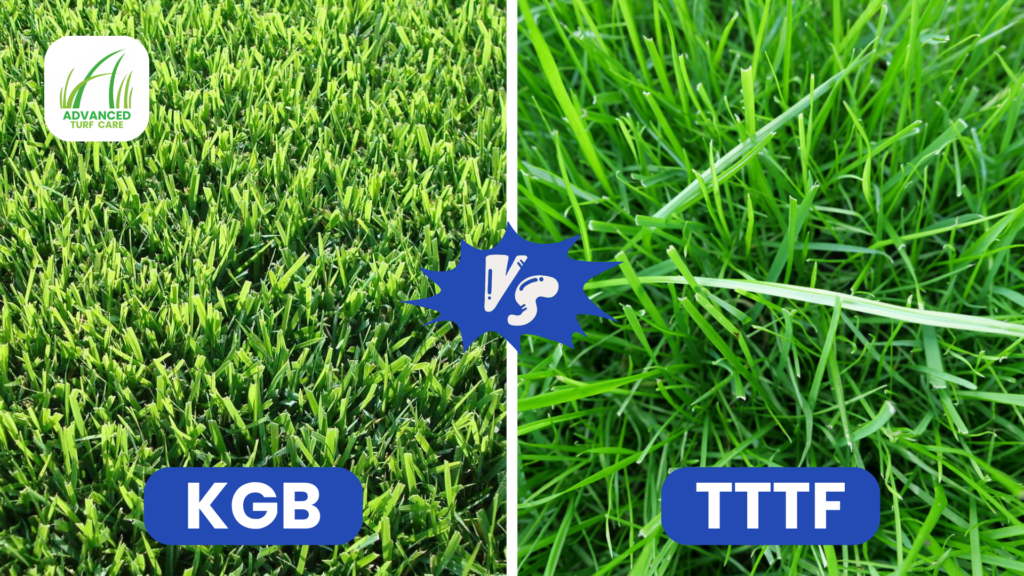
Grass Types & Identification in North Carolina Kentucky Bluegrass vs. Tall Fescue: A Geography-First Lawn Survival Guide Choosing the right grass for your Charlotte lawn starts with climate, soil, sun exposure, and how much maintenance you actually want. By Advanced Turf Care 30 Minutes Read Updated 2026 Article Guide Table of Contents Jump to the lawn-care section you need. Kentucky Bluegrass vs. Turf-Type Tall Fescue Why Geography Matters More Than Seed Specs The Transition Zone Trap What Each Grass Actually Does in Your Yard Seeding, Waiting, and Weeding Mowing Height and Maintenance Disease and Pest Profiles Which Grass Should I Choose According to My Lifestyle When to Mix Both Grass Cost to Maintain Each Grass Frequently Asked Questions You’re staring at the same bare patch for the third spring in a row. The seed went down, the sprinklers ran, and for a few weeks it looked like this time might be different. Then the heat hit, or the fungus crept in, and the new grass melted back into the soil. You’ve spent hundreds on seed, water, and chemicals, and you’ve got nothing but a patchy lawn and a growing suspicion that the problem isn’t your effort. It’s your grass choice. The hidden costs of choosing the wrong grass add up quietly. A turf that needs constant moisture in a July drought can turn your water bill into a second lawn-care expense. A grass that suffers from disease every summer can lock you into repeat fungicide treatments, weekend repairs, and another round of reseeding. That is why your zip code and microclimate matter more than any seed-catalog promise. A shaded backyard, a south-facing slope, or heavy clay soil can completely change which grass survives. This guide treats Kentucky Bluegrass and Turf-Type Tall Fescue not as rivals, but as tools. KBG repairs itself through rhizomes. TTTF handles heat, drought, and lower water use better. In many cool-season and transition-zone lawns, the smartest answer is not one or the other, but knowing where each grass belongs. Key Takeaways Geography Rules: Local climate and shade—not seed catalog specs—determine whether KBG or TTTF thrives on your property. The Resource Trade-Off: TTTF cuts summer water bills and handles heat with ease, while KBG demands heavy irrigation but offers natural self-repair. The Blend Advantage: Mixing a small amount of TTTF into KBG creates a strong resilience buffer against disease and drought. Mowing Heights: Cutting TTTF too short causes permanent thinning, whereas KBG easily tolerates lower cuts for a manicured look. No Shortcuts: Soil testing and certified seed are absolute prerequisites—skipping them is gambling, not gardening. Quick Answer: Should You Choose Kentucky Bluegrass or Turf-Type Tall Fescue? Choose Kentucky Bluegrass if you live in a cooler northern climate, want a dense, fine-textured lawn, and are willing to water, fertilize, and aerate consistently. KBG is best for homeowners who care about a polished, self-repairing lawn and can support it through summer stress. Choose Turf-Type Tall Fescue if you live in a hotter climate, especially in the transition zone, or if your lawn faces full sun, drought pressure, heavy foot traffic, or limited irrigation. TTTF is usually the better choice for homeowners who want a tougher, lower-maintenance lawn that stays green longer during summer heat. If your yard has mixed conditions, you do not have to choose only one. Use TTTF in hot, sunny, dry, or high-traffic areas, and use KBG in cooler, irrigated, or lightly shaded areas where its self-repairing growth habit can work. For many homeowners, a KBG and TTTF blend gives the best balance of beauty, durability, drought tolerance, and recovery. Head-to-Head: The Specifications That Actually Matter Before choosing a grass, you need to see the numbers side by side: not the marketing claims, but the specifications that determine whether your lawn survives July. The table below strips away the adjectives and gives you the engineering data. Every row is a decision point that will either match your property’s reality or set you up for a costly redo. At-a-Glance Comparison Table Characteristic Kentucky Bluegrass Turf-Type Tall Fescue Homeowner Impact Growth Habit Rhizomatous (spreading) Bunch-type with weak rhizomes KBG fills bare spots naturally; TTTF won’t spread into damage, so you’ll need to overseed thin areas. Blade Texture Fine to medium Medium, finer in newer cultivars TTTF’s improved varieties look closer to KBG than old pasture types, but KBG still feels softer underfoot. Color Deep blue-green Medium to dark green Color difference is subtle in well-fed lawns, but KBG often reads as richer in cool weather. Shade Tolerance Poor to moderate Moderate Neither thrives in deep shade. A north-facing slope under a dense canopy will thin both, but TTTF hangs on longer. Drought Tolerance Low to moderate High TTTF roots can reach 2–3 feet or more, letting it stay green weeks longer without water. KBG will go dormant and brown quickly. Heat Tolerance Low High The dealbreaker for transition-zone summers. TTTF keeps growing at temperatures that send KBG into summer dormancy. Cold Tolerance Excellent Good In true northern winters, KBG’s cold hardiness is superior. But in the transition belt, this advantage rarely matters. Traffic Tolerance Moderate High Kids and dogs? TTTF’s thicker cell walls handle wear better. KBG repairs faster afterward, if it survives the stress. Recommended Mowing Height 2.5–3.5 inches 3–4 inches Taller mowing benefits both, but TTTF’s deeper root system demands you keep the canopy high during heat. Water Requirements 1–1.5 inches per week 0.75–1 inch per week TTTF’s lower water need is a direct cost and labor savings, especially where watering restrictions kick in. Nitrogen Needs 2 lbs/1,000 sq ft/year 2 lbs/1,000 sq ft/year Fertility is identical. You can’t differentiate these grasses by feeding schedule; both want split applications with a heavy fall push. Establishment Speed Slow (14–30 days germination) Moderate (7–14 days germination) KBG tests your patience. TTTF comes in faster, which means less time fighting weeds on bare soil. Thatch Tendency High Low KBG’s rhizomes build thatch quickly, and excess thatch magnifies drought stress and disease. You’ll dethatch KBG regularly; TTTF rarely needs
Bermuda Grass Winter Care in Charlotte, NC: Pre-Emergent Guide from a 20-Year Turf Expert

If you own a Bermuda grass lawn in Charlotte, North Carolina, your fall lawn care routine is entirely different from that of your neighbors with Fescue. And if you’re not applying pre-emergent herbicide right now in late October and early November, you’re setting yourself up for a winter full of ugly, patchy weeds. I’m Andrew Powell, owner of Advanced Turf Care, and I’ve been managing turf in the Charlotte area since 2004. After two decades of treating thousands of lawns across Gastonia, Belmont, Mount Holly, Denver, Huntersville, Lake Wylie, Fort Mill, and throughout Mecklenburg County, I’ve learned exactly what Bermuda grass needs to stay healthy—and weed-free—during our North Carolina winters. Why Charlotte Homeowners Are Switching to Bermuda Grass Over the past few years, I’ve noticed a significant trend in new construction neighborhoods throughout the Charlotte metro area. Developers in Iron Station, Weddington, South Charlotte, and surrounding communities are installing Bermuda grass instead of traditional cool-season Fescue. Why? Bermuda grass thrives in our hot, humid Charlotte summers and requires less water once established. It’s the perfect warm-season grass for our North Carolina climate. But here’s what many new Bermuda lawn owners in Charlotte don’t realize: winter lawn care for Bermuda is entirely different than Fescue. The #1 Winter Problem for Charlotte Bermuda Lawns: Poa Annua As a turf management specialist who’s been treating Charlotte-area lawns since 2004, I see the same mistake every winter: homeowners don’t apply pre-emergent herbicide to their dormant Bermuda grass in the fall. Here’s what happens: When temperatures drop in late October and November, Bermuda grass goes dormant and turns brown. This is completely normal and healthy. Your lawn should be a consistent, uniform brown color throughout winter. But without pre-emergent treatment, winter weeds like Poa Annua (Annual Bluegrass) germinate in your dormant Bermuda lawn. Instead of clean, consistent brown turf, you end up with green speckles all throughout your yard—and it looks terrible. What Is Poa Annua? Poa Annua is an invasive winter annual weed that’s common throughout Charlotte, Gastonia, and surrounding areas. It germinates in fall when soil temperatures drop (typically when soil temps reach 70°F and below), grows through winter, and then dies off in late spring—leaving dead patches in your Bermuda lawn right when it’s trying to green up. Other common winter weeds in Charlotte Bermuda lawns include: Henbit Chickweed Annual Bluegrass Bittercress Deadnettle https://www.youtube.com/shorts/0ljkKj4SlXc?feature=share Andrew Powell’s Solution: Fall Pre-Emergent for Charlotte Bermuda Lawns After 20 years managing turf in the Greater Charlotte area, I’ve developed a proven approach to keeping Bermuda lawns weed-free through winter. The key is timing. Here in Charlotte, late October through mid-November is the perfect window for applying pre-emergent herbicide to Bermuda grass. How Pre-Emergent Works Pre-emergent herbicide creates a barrier in the soil that prevents weed seeds—especially Poa Annua, henbit, and chickweed—from germinating. It doesn’t kill existing weeds; it stops new ones from sprouting. When applied correctly at the right time, pre-emergent keeps your dormant Bermuda lawn looking clean and uniform all winter long, so it’s ready to green up beautifully when spring arrives in Charlotte. The Science Behind Pre-Emergent Timing in Charlotte In my 20 years of turf management experience in North Carolina, I’ve learned that soil temperature is everything when it comes to pre-emergent timing. Poa Annua and other winter weeds germinate when soil temperatures consistently reach 70°F or below. In the Charlotte area, this typically happens between late October and early November. Applying pre-emergent too early (when soil is still warm) means it breaks down before weeds germinate. Too late, and weeds have already sprouted. That’s why working with an experienced Charlotte lawn care professional like Advanced Turf Care ensures perfect timing every time. Bermuda vs. Fescue: Why Charlotte Lawn Care Schedules Are Different If you recently moved to a new construction home in Iron Station, Cramerton, McAddenville, or another Charlotte-area neighborhood with Bermuda grass, you might be confused about your lawn care schedule. Here’s the difference between warm-season and cool-season grass care in Charlotte: Fescue (Cool-Season Grass in Charlotte) Stays green through Charlotte winters Needs fertilization in fall and winter Requires 10 applications per year in our area Struggles in hot Charlotte summers Best suited for shaded yards in Charlotte Requires overseeding in fall Bermuda (Warm-Season Grass in Charlotte) Goes dormant (turns brown) in fall/winter Needs pre-emergent in fall to prevent winter weeds Requires 8 applications per year in Charlotte Thrives in hot, humid North Carolina summers Best for full-sun lawns in Charlotte No overseeding needed Bottom line: If you have Bermuda grass in Charlotte, your lawn care needs are opposite of Fescue lawns. Complete Year-Round Bermuda Lawn Care Calendar for Charlotte, NC Here’s my professional guide to Bermuda grass care throughout the year in the Charlotte area: Late October – November (Fall) Apply pre-emergent herbicide to prevent winter weeds Final mowing before dormancy (2-2.5 inches) Soil testing (optional but recommended every 2-3 years) December – February (Winter) Bermuda is fully dormant Keep lawn free of heavy debris Avoid foot traffic on frozen grass Monitor for winter weed breakthrough March – April (Early Spring) Apply spring pre-emergent when soil temps reach 55°F First fertilization as grass begins greening up Post-emergent for any emerged weeds Grub control application (late April is ideal in Charlotte) May – June (Late Spring/Early Summer) Regular mowing begins (1-1.5 inches for common Bermuda) Continued fertilization program Monitor for brown patch fungus (rare in Bermuda but can occur) Weed spot treatment as needed July – August (Peak Summer) Maintain regular mowing and fertilization Watch for drought stress during Charlotte’s hot, dry periods Apply additional fertilization for peak growth Fire ant control if needed September (Early Fall) Continue maintenance fertilization Prepare for dormancy Last chance for any renovation work Begin reducing mowing frequency Advanced Turf Care’s Bermuda Lawn Program for Charlotte Homeowners At Advanced Turf Care, I’ve designed our Bermuda grass program specifically for the Charlotte climate and the challenges we face in North Carolina. Here’s what’s included: 8 Site Visits Per Year – Perfectly timed for Charlotte’s growing season