Lower Your Water Bill This Summer โ€” Join Our Soil Conditioning and Moisture Management Programโ†’

Lower Your Water with Our Summer Programโ†’

info@advancedturfcare.com

126 Melody Dr, Gastonia, NC, 28056

704 800 5955

advanced tuf care logo

Professional Lawn Grub Control Services in Charlotte, NC

That brown patch in your yard? Pull it back. If the turf lifts like loose carpet, you don't have a watering problem โ€” you have grubs.

Charlotte's humid subtropical climate and dense Piedmont red clay create the perfect trap: moisture stays locked near the root zone, and white grub larvae stay fed. By the time you see the damage, the roots are already gone.

Watering more won't fix severed roots. Fertilizing won't either.

Most Charlotte homeowners try both before realizing the problem is underground. Then comes the bag from Lowe's โ€” applied too late, watered into compacted clay that never let it reach the root zone.

Advanced Turf Care treats grub control differently.

The optimal prevention window in Charlotte opens in May and closes in July. Miss it, and you're paying more for less reliable results.

We don't spray and leave. Our Charlotte Clay-Soil Grub Protocol combines:

  • Timed inspection specific to the Piedmont beetle lifecycle
  • Soil compaction analysis before any product touches your lawn
  • Preventive or curative application matched to what your turf actually needs
  • A satisfaction guarantee with free re-treatment if grubs return

Why Charlotte's Red Clay Makes Grub Damage Worse

The Piedmont Soil Problem

Most grub control advice is written for sandy loam. Charlotte's red clay plays by different rules.

Dense Piedmont clay holds moisture near the root zone โ€” exactly where white grubs feed. Poor drainage keeps the soil wet longer, which accelerates root severing during peak feeding season. And when that same compacted clay blocks treatment penetration, products sit in the thatch layer instead of reaching the larvae.


Compaction doesn't just hurt your grass. It protects the grubs.

Japanese Beetle Pressure in the Charlotte Zone

Japanese beetles thrive in warm-season turf areas like Charlotte. They lay eggs in moist, well-irrigated lawns โ€” and in tight suburban subdivisions, they cross property lines freely.

Your lawn can look fine in June and show damage by August because the infestation started next door.

Grub pressure in Charlotte is rarely one lawn's problem.

Where We Treat

Advanced Turf Care serves homeowners across:

Belmont ยท Bethesda Oaks ยท Charlotte ยท Cramer Woods ยท Cramerton ยท Denver ยท Gastonia ยท Huntersville ยท McAddenville ยท Mt Holly ยท Stanley ยท Weddington

Local soil knowledge beats any national franchise script when diagnosing clay-soil damage.

Signs Your Lawn Has Grubs โ€” and How Charlotte's Climate Complicates Diagnosis

01

The 60-Second Sod Lift Test

Don't guess. Check.

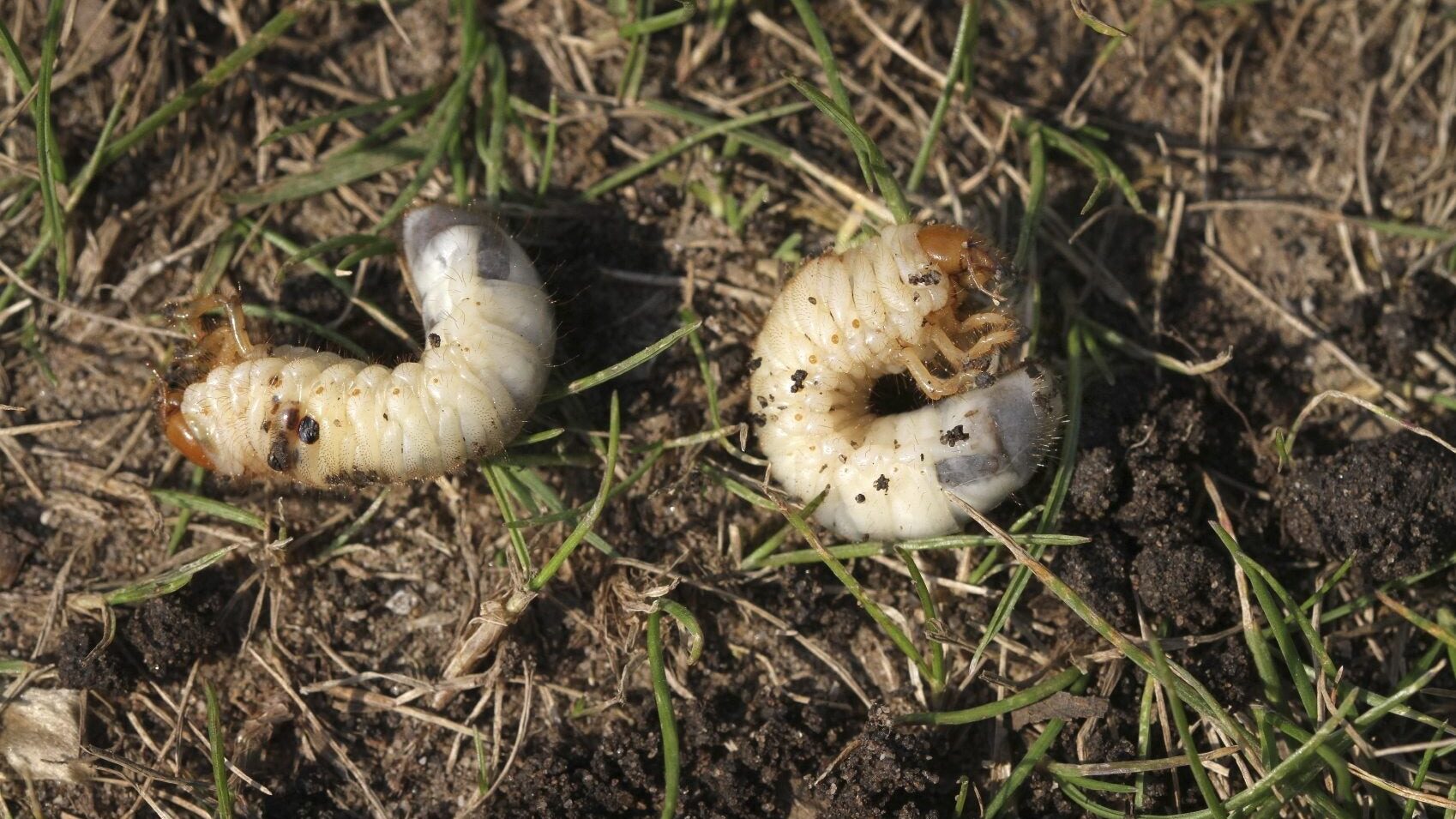
Near a brown patch, cut three sides of a one-square-foot section and peel back the sod. Look for white, C-shaped larvae clustered just below the thatch line.

5 or more grubs per square foot = a damaging population. Time to act.

02

Drought Stress or Grubs? Here's the Difference

Charlotte's summer humidity makes every brown patch look like fungus. It's rarely that simple.

Symptom Drought Stress Grub Damage
Pattern Uniform, blade-first wilting Irregular patches, root-first
Turf feel Firm, won't lift Loose, peels back easily
Recovery with water Yes No
Dog urine spots Defined edges, yellow center Not applicable
03

Wildlife Digging Up Your Lawn?

Moles, skunks, and armadillos don't appear randomly.

They're following the food source โ€” your grubs. Wildlife activity tearing up turf creates secondary repair costs that dwarf the original treatment price.

Don't chase the animals. Eliminate what's feeding them.

04

Why the Bag from Lowe's Didn't Work

Three reasons DIY granular treatments fail in Charlotte clay:

  • Wrong timing โ€” applied in fall when prevention needed to happen in May
  • Poor water-in โ€” compacted clay keeps product trapped in the thatch layer
  • Wrong product โ€” preventive chemistry used on active, feeding grubs

The Charlotte Grub Calendar: When to Treat in the Piedmont

01

May โ€“ July: The Only Reliable Prevention Window

This is the window. Miss it, and you're managing damage instead of preventing it.

Adult Japanese beetles emerge in late spring, lay eggs in moist turf, and newly hatched larvae begin feeding on roots before summer ends. A preventive barrier applied during this period interrupts the lifecycle before fall damage ever appears.

Treat in May through July. Everything else is catch-up.

02

August โ€“ September: Damage Is Visible. Cost Goes Up.

By August, grubs are large, deep, and actively feeding. Curative chemistry works differently than preventive barriers โ€” it's less predictable, more expensive, and you're already repairing turf while treating it.

Homeowners who wait until brown patches show aren't just paying for control. They're budgeting for recovery.

03

October โ€“ April: Don't Reseed Yet

Grubs slow down in cold months but root damage doesn't reverse. Overseeding or laying sod over an active population wastes both.

Use the off-season to plan aeration and soil prep so next spring's treatment actually penetrates Charlotte clay.

The Charlotte Grub Calendar: When to Treat in the Piedmont

01

May โ€“ July: The Only Reliable Prevention Window

This is the window. Miss it, and you're managing damage instead of preventing it.

Adult Japanese beetles emerge in late spring, lay eggs in moist turf, and newly hatched larvae begin feeding on roots before summer ends. A preventive barrier applied during this period interrupts the lifecycle before fall damage ever appears.

Treat in May through July. Everything else is catch-up.

02

August โ€“ September: Damage Is Visible. Cost Goes Up.

By August, grubs are large, deep, and actively feeding. Curative chemistry works differently than preventive barriers โ€” it's less predictable, more expensive, and you're already repairing turf while treating it.

Homeowners who wait until brown patches show aren't just paying for control. They're budgeting for recovery.

03

October โ€“ April: Don't Reseed Yet

Grubs slow down in cold months but root damage doesn't reverse. Overseeding or laying sod over an active population wastes both.

Use the off-season to plan aeration and soil prep so next spring's treatment actually penetrates Charlotte clay.

How Our Grub Control Works: The Charlotte Clay-Soil Protocol

01

Step 1: Inspection & Population Assessment

We measure your lawn accurately โ€” not your lot size โ€” and sample across front, back, and perimeter zones. Infestation severity, neighboring risk factors, and prior treatment history all get documented. That record improves timing precision every season.

02

Step 2: Soil Compaction & Moisture Analysis

Before any product goes down, we probe the clay.

Compaction determines whether treatment penetrates the root zone or sits uselessly in the thatch layer. If density is blocking infiltration, aeration comes first. This is the step most national franchises skip entirely.

Grub control without soil analysis is just spraying and hoping.

03

Step 3: Targeted Application

Product selection is matched to lifecycle stage and soil temperature โ€” not a generic schedule. Preventive chemistry goes down before egg-lay. Curative chemistry targets active, feeding larvae. We also monitor the 10-day forecast. Heavy rain on Charlotte clay slopes means runoff, not absorption.

04

Step 4: Post-Treatment Watering & Root-Zone Recovery

Watering-in isn't optional โ€” it's what moves product through dense clay into the root zone. We provide precise irrigation requirements after every application.

If grub damage is present, recovery nutrition follows a controlled-release program. Heavy nitrogen immediately after root damage accelerates stress, not healing.

Compare Grub Control Plans

Not every lawn needs the same treatment. The right plan depends on where you are in the season โ€” and what your turf is already showing.

Preventive Curative Annual Protection
Timing Mayโ€“July, before egg-lay Augโ€“Sept, once damage shows Spring preventive + fall monitoring
Targets Eggs + newly hatched larvae Active, feeding grubs Full lifecycle management
Soil Analysis Compaction assessment included Post-treatment recovery plan Annual aeration integrated
Guarantee Free re-treatment same season Limited โ€” depends on damage severity Full-season + priority response
Best For Lawns with grub history or neighboring infestations Active brown patches, loose turf, wildlife digging Hands-off year-round protection
Follow-Up Watering guide + recovery checklist Seeding delay advisory + root-recovery nutrients Seasonal reminders + perimeter monitoring

Grub Control Is Included in ATC's Full Lawn Programs

If you're already on an ATC program, grub protection is built in โ€” not sold separately.

01

Bermuda & Zoysia 8-Application Program includes a July insecticide treatment targeting white grubs and army worms, timed to peak feeding pressure in warm-season turf.

02

Fescue Greenskeeper 10-Application Program includes insecticide in May and July โ€” protecting cool-season turf roots during the full grub pressure window, alongside fungicide and soil conditioning treatments.

What's Included in Every Plan

  • Transparent pricing โ€” no hidden fees, no upselling
  • Active ingredient disclosure with EPA registration numbers
  • Clear re-entry intervals and pet-safe protocols
  • Pollinator-conscious application practices
  • No rigid annual contracts required for standalone service

Not sure which plan fits your lawn? We'll recommend one after your inspection.

Safety, Credentials & Real Results

01

Licensed. Local. Accountable.

Advanced Turf Care operates under active North Carolina Pesticide Applicator licenses โ€” not subcontracted crews working off a national franchise script. Every technician treating your lawn is licensed, documented, and familiar with Piedmont clay soil conditions.

Andrew Powell brings 20+ years of Charlotte-area turf experience to every program we build.

02

Product Transparency โ€” Not Green Marketing

We disclose active ingredients, EPA registration numbers, and re-entry intervals on every treatment. You'll know exactly what went on your lawn, when it's safe for kids and pets, and why that product was selected over alternatives.

No vague "eco-friendly" language. Just honest disclosure.

03

Our Guarantee

If grubs return within the same treatment season, we come back. No charge.

That policy isn't buried in fine print. It's the standard.

What Charlotte Homeowners Are Saying

Real feedback from local homeowners

Consistent results start with the right program. Request your lawn assessment today.

Request Your Lawn Assessment โ†’

Grub Control Questions

Frequently Asked Questions

Straightforward answers for Charlotte-area homeowners who want to protect their lawn, roots, kids, pets, and pollinators.

Still unsure what your lawn needs? Call Advanced Turf Care for straightforward local advice.

Talk With a Lawn Specialist
When is the best time to treat for grubs in Charlotte?

May through July is the only reliable prevention window in the Piedmont zone. That's when adult beetles are active, eggs are being laid, and newly hatched larvae are still small enough for preventive chemistry to intercept. Soil temperature and local beetle flight patterns determine the exact timing โ€” not a generic national calendar. Wait until fall, and you're treating large, deep-feeding grubs with curative products that cost more and deliver less predictable results.

Is grub control safe for my kids, pets, and pollinators?

Yes โ€” when applied correctly. Professional applications follow EPA-registered re-entry intervals, which we communicate clearly after every visit. We use targeted application methods that minimize drift and avoid broadcast spraying near flowering plants. That's a meaningful difference from the blanket DIY granules most homeowners apply without reading the label.

How is grub damage different from fungus or dog urine spots?

Grub damage lifts. Grab a corner of the brown patch and pull โ€” if the turf peels back like loose carpet, roots are severed and grubs are likely the cause. Fungus discolors blades but turf stays anchored. Dog urine spots have defined edges and a yellow center. Charlotte's summer humidity makes every brown patch look suspicious. When you're unsure, call for an inspection before applying anything.

Why did my DIY treatment fail?

Three reasons โ€” and they're all common in Charlotte clay:

Wrong timing โ€” fall applications can't prevent damage that started in June
Poor water-in โ€” compacted clay blocks product from reaching the root zone
Wrong product โ€” preventive granules don't work on active, feeding grubs

Do I need grub control if my neighbor's lawn looks fine?

Yes. Adult beetles cross property lines freely in tight suburban subdivisions. Your neighbor's healthy lawn today doesn't protect yours โ€” it may just mean their infestation hasn't surfaced yet. Perimeter monitoring catches pressure before it becomes visible damage.

โ˜…โ˜…โ˜…โ˜…โ˜…

“Advanced Turf Care has been great!”

Curtis Bruton

Limited Spring Offer

Your Lawn Deserves to Look This Good

Join hundreds of homeowners who finally have the lush, weed-free lawn they’ve always wanted โ€” without the guesswork.

50%

Off Your First Treatment

Fertilization ยท Weed Control ยท Aeration ยท More

โฐ Claim it now! Time is running out

No obligation ยท Free quote included ยท Cancel anytime