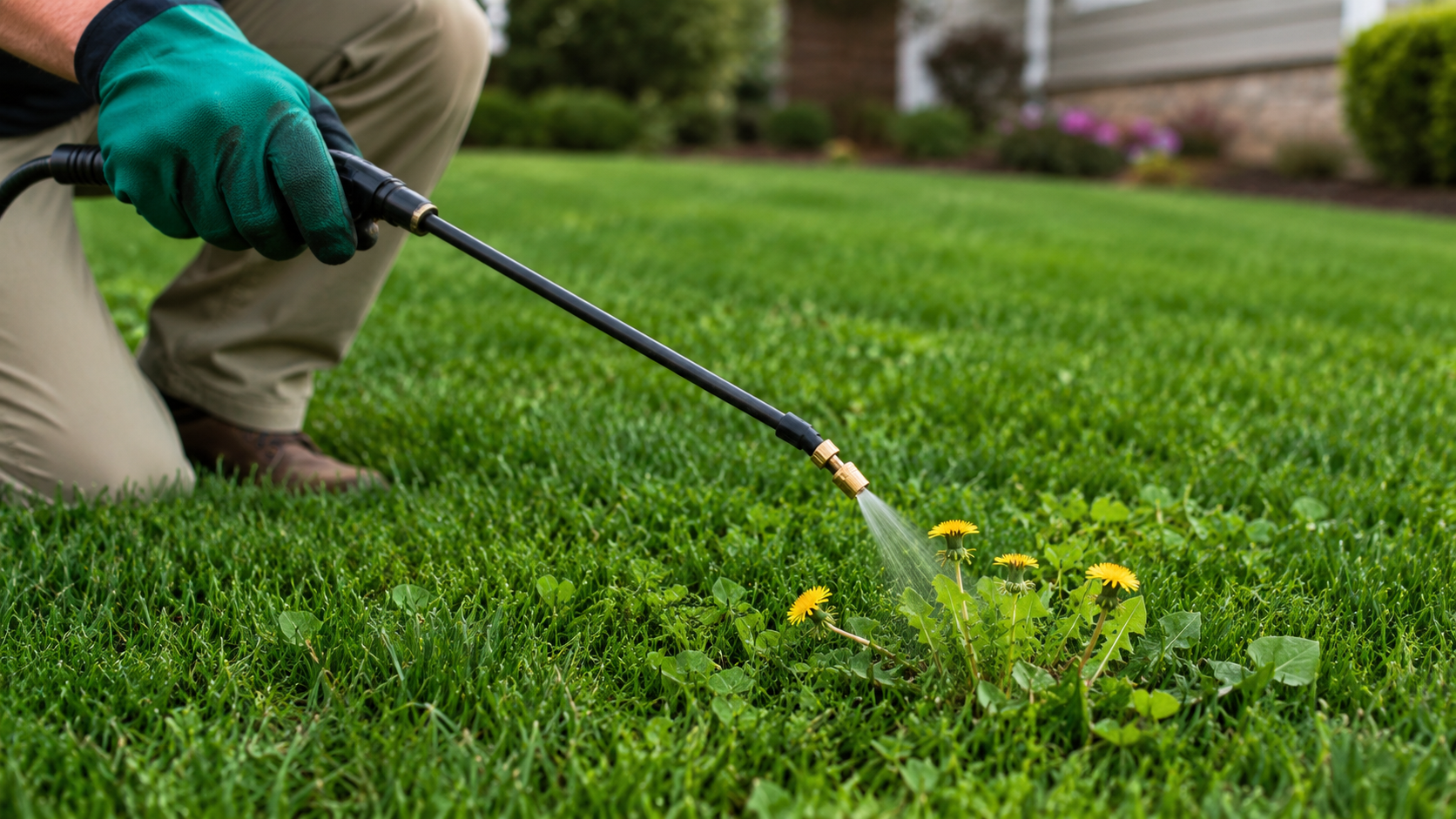
You followed the label. You sprayed on a calm, sunny day. Yet a week later, those dandelions and clover are still standing tall.
It happens more often than you’d think, and it wastes your time, money, and patience. You’re not alone in this.
Research from university extension services points to the same conclusion again and again. Most herbicide failures trace back to a handful of correctable mistakes, not a defective product.
Maybe you’ve already tried two or three different bottles. Maybe you’re worried about harming the grass you’re trying to protect. Maybe the advice you’ve read online just keeps contradicting itself.
But here’s the good news. In nearly every case, the problem isn’t the weed killer itself. It’s how, when, or where you applied it. That’s a fixable problem.
This guide is your systematic, science-backed troubleshooting manual. We’ll walk through the ten most common reasons weed killers fail, from misidentified weeds to sprayer calibration mistakes, and give you a clear, actionable fix for each one.
By the end, you’ll have a personalized diagnosis and a concrete plan to finally win the battle against weeds, without guesswork or wasted money. Let’s get started.
Weed Identification and Product Matching
Why Weed ID Is the Non-Negotiable First Step

Before you buy a single bottle of weed killer, you need to know exactly what you’re fighting. This is the step most homeowners skip, and it’s the single most common reason weed killers fail.
Herbicides are built to target specific types of plants. A product designed for broadleaf weeds like dandelions won’t touch a grassy weed like crabgrass. Spray the wrong one, and you’re not treating the weed, you’re just watering your lawn with chemicals.
Lawn weeds generally fall into three categories:
- Broadleaf weeds — wide, flat leaves with visible veins, often flowering (dandelion, clover, plantain)
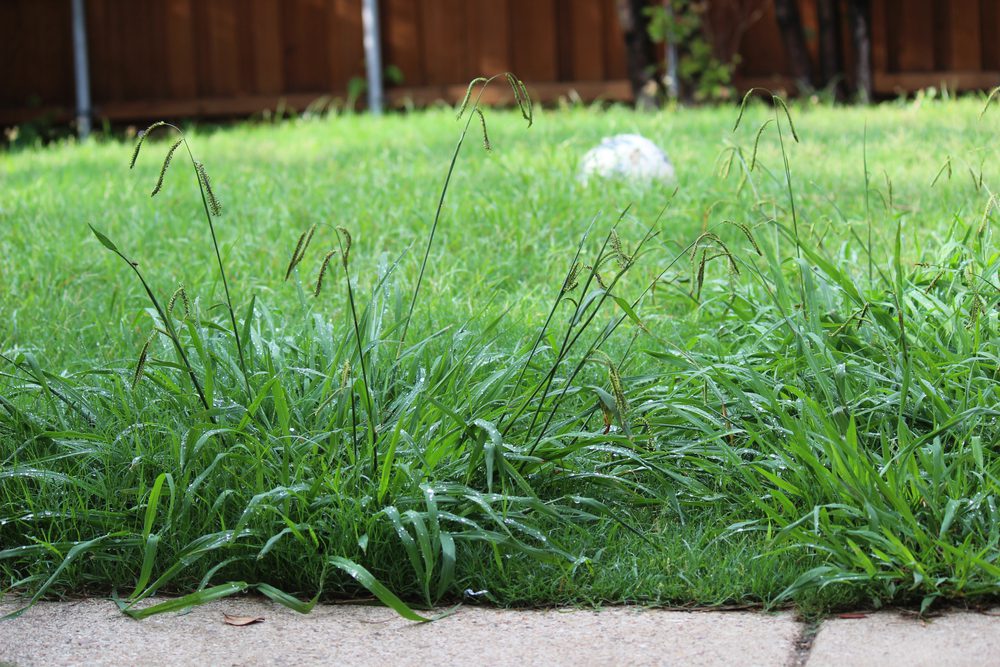
- Grassy weeds — narrow, blade-like leaves that mimic turfgrass (crabgrass, foxtail)
- Sedges — triangular stems and a grass-like appearance, but not true grasses (nutsedge)
Herbicides are labeled as selective or non-selective. Selective products target one category while leaving your turf alone. Non-selective products kill everything green they touch, which is why they’re rarely the right call for a lawn.
Even within the broadleaf category, some species shrug off certain active ingredients entirely. That’s why matching matters as much as identifying.
If you want a closer look at what you’re dealing with, our guide to broadleaf weeds common to Carolina lawns breaks down the most frequent offenders, and our breakdown of grassy weeds and how they differ from turf covers the trickier lookalikes.
How to Accurately Identify Your Weed

Guessing gets homeowners in trouble more often than any other step in this process. A confident, accurate ID takes just a few minutes.
Start with a clear photo. Capture the leaf shape, the flower if there is one, and the overall growth habit of the plant. Note where it’s growing too. Sun or shade, wet or dry soil, these details help narrow down the species.
A weed identification app like PictureThis or PlantSnap can give you a fast answer. For anything you’re still unsure about, your local cooperative extension service can provide a definitive ID, often for free.
Compare what you find against a trusted extension database before you commit to a product. Five minutes here can save you weeks of wasted spraying.
Matching the Weed to the Right Active Ingredient
Every herbicide works through a specific mode of action, meaning it disrupts a plant’s biology in a particular way. Matching that mode of action to your target weed is what separates a successful application from a wasted one.
This is also where resistance starts to become a factor. Using the same active ingredient on the same weed population year after year gives resistant plants room to take over, a problem we’ll cover in more detail later in this guide.
For a full breakdown of which active ingredients work on which weeds, along with application timing and surfactant needs, jump to the Common Herbicide Active Ingredients and Their Target Weeds table below.
Application Timing and Weather Conditions

The Goldilocks Zone for Weed Control: Growth Stage and Season
Timing decides whether your herbicide works or wastes your afternoon. Young, actively growing weeds absorb and translocate herbicide fast. Mature or flowering weeds have thicker cuticles that block uptake almost entirely.
Most broadleaf weeds are easiest to kill from seedling to early vegetative stage. Grassy weeds are most vulnerable at the 2 to 4 leaf stage.
Season matters too. Cool-season weeds like chickweed respond best to fall or early spring applications. Warm-season weeds like crabgrass need late spring to early summer treatment. Perennials like dandelion are most vulnerable in fall, when they’re pulling sugars down into the root for winter, and taking your herbicide with it.
Weather Factors That Make or Break an Application

Weather conditions can undo an otherwise perfect application. Aim for 65 to 85°F. Heat causes volatilization and stresses the weed; cold slows its metabolism to a crawl.
Moderate to high humidity keeps leaf stomata open, which helps absorption. Dry air causes spray droplets to evaporate before they’re absorbed.
Keep wind under 5 to 10 mph to avoid drift onto desirable plants. And check the rainfast window on your label. Most herbicides need at least 6 hours of dry weather to work, so a quick check of the hourly forecast before you spray can save the whole application.
How Drought Stress Sabotages Your Efforts

A drought-stressed weed protects itself. Its cuticle thickens, its stomata close, and it stops moving nutrients efficiently, which means it stops absorbing herbicide too.
A simple test tells you where you stand. If footprints stay visible in your lawn for more than 30 minutes, the turf and weeds underneath are likely drought-stressed. Water deeply a day before you spray to rehydrate the plant and reopen those stomata.
Proper Mixing, Rate, and Sprayer Calibration
Why “Eyeballing It” Is a Recipe for Failure
Most calibration mistakes come down to two things. Confusing teaspoons for tablespoons, or misjudging how much spray volume actually covers the area.
The label rate isn’t a suggestion, it’s a legal requirement. Too little herbicide leaves the weed standing. Too much can damage your lawn or violate the label entirely. Testing your sprayer output with plain water first takes the guesswork out of the equation.
Step-by-Step Sprayer Calibration
Here’s a simplified walkthrough:
- Measure a test area, like 1,000 square feet.
- Fill the sprayer with plain water and spray the test area at your normal walking speed and pressure.
- Check how much water is left in the tank to calculate your gallons applied per 1,000 sq ft.
- Calculate the herbicide needed per gallon based on the label rate for your target weed.
- Mix only what you’ll use for that application, and agitate the tank regularly as you spray.
An online sprayer calibration calculator, like the one from Clemson University, can simplify the math if you’d rather skip the manual calculations.
Mixing Order and Tank Cleanliness
If your label calls for a surfactant and the product doesn’t already include one, add it. It breaks the surface tension on waxy leaves so the spray spreads instead of beading up.
Mixing order matters too. The general rule is W-A-L-E-S: wettable powders, agitate, liquid flowables, emulsifiable concentrates, then surfactants. Mixing out of order risks chemical incompatibility and clogged nozzles.
Clean your sprayer thoroughly after every use. Leftover residue can cross-contaminate your next tank mix, or damage a different area of your lawn entirely.
The Role of Adjuvants and Surfactants
What Are Adjuvants and Why Do They Matter?
Poor leaf coverage kills more applications than weak active ingredients do. An adjuvant is anything added to the tank to improve how the herbicide performs, and a surfactant is the most common type. It reduces the surface tension of your spray droplets so they spread across waxy or hairy leaves instead of beading up and rolling off.
There are a few types worth knowing. Non-ionic surfactants (NIS) work for most broadleaf applications. Crop oil concentrates (COC) and methylated seed oils (MSO) offer stronger penetration for tougher, waxier weeds.
Some herbicides already come with a built-in adjuvant. Adding more on top can burn the leaf tissue you’re trying to treat, so always check the label first.
When and How to Add a Surfactant

The label tells you what you need. If the label calls for a non-ionic surfactant, add it at the labeled rate. A 0.25% v/v rate is roughly 2 teaspoons per gallon. If the label stays silent on the subject, test a small area before treating the whole lawn.
Skip the dish soap. It’s a common shortcut, but it can damage leaf tissue and was never formulated for this kind of use.
Weeds with naturally thick, waxy cuticles, like purslane or lambsquarters, tend to see the biggest improvement in control when a surfactant is added. A generic non-ionic surfactant or crop oil concentrate is easy to find at most farm supply stores.
Understanding and Preventing Herbicide Resistance
How Resistance Develops (and Why It’s a Growing Problem)
Every weed population has natural variation. A small number of plants may carry a trait that lets them survive a particular herbicide. Spray that same product year after year, and you’re not killing those plants, you’re clearing out the competition for them.
Over time, those survivors multiply, and the herbicide that used to work stops working at all.
This isn’t rare. Glyphosate-resistant ryegrass and 2,4-D-resistant dandelion have both been documented in home lawns, and extension research continues to track new cases across the country.
Practical Strategies to Avoid Resistance
The fix is rotation, not escalation. Switching between herbicides with different modes of action each season keeps any single resistant trait from taking hold.
Tank mixing two compatible herbicides with different modes of action in one application can also knock out individuals that would survive either product alone.
Non-chemical control still has a place too. Hand-pulling, mowing before seed set, and building a denser lawn all reduce how much you need to rely on herbicides in the first place.
Keeping a simple log of what you sprayed and when makes patterns easy to spot. If control starts slipping on a product that used to work, that’s your signal to rotate.
Common Herbicide Active Ingredients and Their Target Weeds
This table is compiled from university extension herbicide recommendations and product labels. Formulations change, so always confirm rates and rainfast periods against your specific product label before applying.
| Active Ingredient | Target Weeds | Optimal Weed Stage | Rainfast Period | Surfactant Needed? |
|---|---|---|---|---|
| 2,4-D | Dandelion, plantain, clover, chickweed, henbit | Seedling to early bud stage | 6–8 hours | Yes, if not included in formulation |
| Dicamba | Dandelion, clover, ground ivy, thistle, knotweed | Actively growing, before flowering | 6–8 hours | Yes, often combined with 2,4-D |
| MCPP (mecoprop) | Chickweed, clover, black medic, speedwell | Young, actively growing | 6 hours | Yes, if not included |
| Glyphosate | Non-selective, all green plants (use with caution near lawns) | Actively growing, not drought-stressed | 2–6 hours (varies by formulation) | Not usually required |
| Quinclorac | Crabgrass, foxtail, clover, dandelion | Young grassy weeds (1–3 leaf stage) | 6 hours | Yes, methylated seed oil recommended |
| Triclopyr | Clover, oxalis, wild violet, ground ivy, woody brush | Actively growing, fall for tough perennials | 6–8 hours | Yes, non-ionic surfactant |
| Sulfentrazone | Sedge, kyllinga, spurge, purslane | Pre-emergence or early post-emergence | 6 hours | Not usually required |
| Mesotrione | Crabgrass (pre-emergence), dandelion, clover, nimblewill | Pre-emergence or very young weeds | 4–6 hours | Yes, crop oil concentrate helps |
Use this as a starting reference, not a final answer. The label on your specific product always overrides a general guide like this one.
Why Didn’t Your Weed Killer Work?
Answer a few quick yes-or-no questions to find the most likely reason your treatment failed and the next step to take.
Step-by-Step Troubleshooting Checklist
Use this checklist to audit your last application. If you answer ‘no’ to any item, that is likely your culprit. Fix that variable, then reapply according to the label’s re-treatment interval.
- Weed Identification — Did you correctly identify the weed and confirm the herbicide is labeled for it?
- Product Selection — Did you choose a product with the right active ingredient for your target weed?
- Growth Stage — Were the weeds young and actively growing, not mature or flowering?
- Weather Check — Was the temperature between 65–85°F, humidity moderate, wind under 10 mph, and no rain expected for at least 6 hours?
- Drought Stress — If the lawn was dry, did you water deeply 24 hours before spraying?
- Sprayer Calibration — Did you calibrate your sprayer to deliver the correct volume per area?
- Mixing Rate — Did you measure the herbicide exactly according to the label rate for your target weed and spray volume?
- Adjuvant Use — Did you add a surfactant if the label recommended it, in the correct amount?
- Mowing Timing — Did you avoid mowing 2–3 days before and after application?
- Resistance Check — Have you used the same active ingredient repeatedly with declining results?
Real-World Case Study Vignettes
These scenarios reflect common situations reported by extension agents and lawn care professionals, illustrating how small missteps lead to big frustrations.
The Case of the Persistent Dandelion
A homeowner sprayed a 2,4-D product on a dandelion-covered lawn in late June. Two weeks later, the dandelions were still blooming. The problem: the weeds were mature and temperatures had held above 90°F, so the herbicide volatilized before the stressed plants could absorb it. The fix was simple, wait until early fall when dandelions are actively pulling sugars into their roots, then spot-treat. Result: 90% control within 14 days.
Why the Clover Wouldn’t Die
A gardener applied a granular weed-and-feed to a patch of white clover in spring. The clover yellowed, then bounced back. The active ingredients were right, but the lawn was too dry for the granules to stick to the leaf surface. Switching to a liquid spray with a surfactant added solved it. The clover was gone in 10 days.
The Crabgrass That Laughed at Quinclorac
A DIY enthusiast sprayed quinclorac on tillering crabgrass in August. Nothing happened. The crabgrass had grown past the 3-leaf stage and developed a thick cuticle that quinclorac couldn’t penetrate. The fix was to hand-pull the mature plants, then get ahead of it the following spring with a properly timed pre-emergent application to stop new seedlings before they started. Timing, once again, was the whole story.
Preventative Lawn Care Practices to Reduce Weed Pressure
Building a Weed-Resistant Lawn from the Ground Up
The strongest long-term weed control isn’t in a bottle, it’s in the density of your turf. A thick, healthy lawn shades the soil so weed seeds can’t germinate, and it crowds out any seedlings that do sprout.
This is called cultural control, and it’s the foundation of integrated weed management. University research has shown that proper mowing and fertilization alone can cut weed populations by 50% or more, no herbicide required.
Mowing Height and Frequency
Mow at the highest recommended height for your grass type. Taller grass shades the soil and pushes roots deeper.
| Grass Type | Recommended Height |
|---|---|
| Tall Fescue | 3–4 inches |
| Bermudagrass | 2–3 inches |
| Zoysia | 2–2.5 inches |
Scalping your lawn does the opposite of what you want. It opens the canopy and rolls out the welcome mat for crabgrass and spurge.
Fertilization and Soil Health
Before applying any fertilizer, get a soil test through your local extension service. Over-fertilizing feeds weeds as much as it feeds grass.
Nitrogen, phosphorus, and potassium all play a role in turf density, and soil pH determines how well your grass can access them. Lime or sulfur can correct an imbalanced pH.
Timing matters too. Cool-season grasses need fertilizer in fall, warm-season grasses in late spring. Our guide to identifying broadleaf weeds can help you confirm what you’re dealing with before you feed your lawn into a bigger problem.
Watering, Aeration, and Overseeding
Deep, infrequent watering builds deep roots. Shallow, frequent watering does the opposite, and favors shallow-rooted weeds like annual bluegrass.
Core aeration relieves soil compaction, improves water infiltration, and opens up space for new seed to take hold. Overseeding introduces stronger turfgrass varieties that outcompete weeds for space and nutrients. Fall is the best window for cool-season lawns.
When to Call a Professional
Recognizing the Limits of DIY Weed Control
If you’ve worked through every step in this guide and still aren’t seeing results, or your infestation covers more than half your lawn, it’s time to bring in a professional. Licensed applicators have access to restricted-use herbicides, commercial-grade equipment, and the training to handle resistant or hard-to-control species that store-bought products can’t touch.
A few scenarios where DIY tends to hit its ceiling:
- A severe nutsedge infestation that keeps coming back despite spot-treatment
- Woody brush encroaching into turf areas
- Repeated herbicide resistance that survives multiple modes of action
- Large properties where sprayer calibration becomes impractical to manage by hand
When you’re evaluating a lawn care service, look for state licensing, certified applicators, an integrated pest management (IPM) approach, and a team that’s willing to walk you through their treatment plan rather than just showing up and spraying.
At Advanced Turf Care, our Piedmont Turf Protocol is built around Charlotte’s transition-zone climate and red clay soil, with a 24-Hour Turf Response guarantee if weeds push back after treatment.
Ready for a lawn that doesn’t fight you back? Get your Weed Control assessment and see what a professional-grade program looks like on your property.
Conclusion
Weed control is a science, not a guessing game. Once you work through the ten common reasons for failure, from misidentification to resistance, the whole process stops feeling random and starts feeling manageable.
The fixes come down to a few fundamentals: correct identification, optimal timing, proper mixing and calibration, the right adjuvant, and a rotation strategy that keeps resistance from taking hold.
Keep the troubleshooting checklist and diagnosis flowchart handy for your next application. They’re built to be used every season, not just read once.
And don’t stop at reactive treatment. The preventative practices in this guide, mowing height, fertilization, aeration, and overseeding, do more to reduce weed pressure long-term than any bottle of herbicide.
Bookmark this guide, run through the checklist before your next application, and take the first step toward a lawn that finally holds its ground against weeds this season.
Tired of Fighting Weeds in Your Lawn?
Advanced Turf Care can build a weed-control plan around your lawn, grass type, and the season.
Explore Weed Control