info@advancedturfcare.com

126 Melody Dr, Gastonia, NC 28056

704 800 5955

Honest, Experienced, and Dependable

Lawn Aeration Services Services in Charlotte Metro, and Nearby Areas

Does your lawn in Charlotte not absorb water, nutrients, or fertilizers? Compacted soil, common in our clay-heavy Charlotte lawns, may constrict the roots, retard growth and endanger your turf to pests and disease.

Trusted by Homeowners Across Charlotte

Breathe New Life into Your Charlotte Lawn with Expert Aeration

Core aeration can be done professionally in order to revitalize your lawn. Removing plugs of soil improves airflow, drainage and nutrient penetration resulting in stronger roots and healthier, greener grass.

Our licensed technicians work with professional equipment customized for Charlotte and surrounding regions, including Denver, Belmont, Stanley, Gastonia, Mt. Holly, Cramerton, Lowesville, McAdenville, Huntersville, Iron Station and Mecklenburg County. We ensure your lawn thrives season after season.

Transform Your Charlotte Lawn Today!

What is Core Aeration?

Core aeration is the process of removing small plugs of soil from your lawn to relieve compaction and improve overall turf health. It is important to know how it works to make homeowners understand the worth of this necessary service on lawn care.

Understanding Soil Compaction

Foot traffic, heavy machinery and even rain fall may compact the soil of your lawn suffocating grass roots and hampering water, nutrients, and air. Compressed soil makes your lawn rotten, thin, and patchy, and exposed to stress, pests, and disease.

Core Aeration vs. Spike Aeration

Core aeration helps in making holes of tiny soil particles in your lawn through which air, water, and nutrients reach the roots. Core aeration in place of spike aeration also actively improves the soil structure unlike spike aeration, which has the potential to further compact the soil resulting in weaker and less healthy turf in the long term.

How our Process Works

Our professional-grade core aerators (Ryan, Billy Goat, Classen) efficiently remove soil plugs, improving aeration, drainage, and nutrient absorption. The process makes the results even and long-lasting, which consumer-grade machines cannot achieve.

Why Core Aeration is Essential for Your Lawns

The rich clay soils of Charlotte hold the water and nutrients. This does not allow your grass to grow well. Core aeration breaks through compacted layers, along with enhancing drainage, lessening runoff, and enabling the growth of roots. The following is the reason why every homeowner needs to take into account professional aeration:

Key Benefits for Your Lawn

  • Better Water & Nutrient Absorption: Aeration channels allow water and fertilizer to get to the roots, making the lawn healthier and decreasing wastage.
  • Stronger, Deeper Roots: Loosened soil encourages roots to grow deeper, producing resilient, drought-resistant grass.
  • Thatch Reduction: Aeration helps in the breakdown of the organic matter, which does not allow thatch build up that suffocates your lawn.
  • Improved Air Circulation: Better aeration of roots leads to lower chances of disease and helps roots to grow vigorously.
  • Enhanced Effectiveness of Treatments: The use of fertilizers, amendments to soil, and pesticides is more effective in aerated soil.
  • Eco-Friendly & Sustainable: When properly aerated, the water run-off and waste chemicals are minimized, contributing to a greener and more sustainable lawn.

Signs Your Lawn Needs Aeration

Aerating your lawn at the right time will prevent the stress and diseases of your grass. The following are warning signs to determine if  professional core aeration is required.

Is Your Lawn Struggling?

Keep in mind that the following are the typical problems that can be noticed in a soil and, thus, might require professional aeration:

  • Thin, patchy, or bare spots, although generally watered and fertilized.
  • The water is not sinking but running or pooling off.
  • Drugs that are failing to work because of poor penetration of the soil.
  • Hard, compacted soil makes it difficult for roots to grow.
  • The thick thatch layer does not allow air, water, and nutrients to reach roots.

Quick Soil Test at Home: Try the screwdriver or pencil test: if it’s hard to push into the soil, your lawn likely needs aeration. 

Visual Indicators:

  • Areas with heavy traffic that have a thinning grass cover.
  • In weak places, moss or weeds are growing.
  • The grass is so spongy due to too much thatch.

Our Professional Core Aeration Process

Our multi-step aeration process ensures your lawn receives the full benefits of professional care. From assessment to cleanup, we make sure every inch of your yard is treated with precision. 

Step 1: Initial Assessment & Preparation

  • We visit your lawn and check on the timetable of the service.
  • Pre-Service Tips: Make sure to water your lawn about 24 to 48 hours before you aerate it. This helps get better plugs when you’re pulling them out.
  • Mark Obstacles: This is to be used to mark high sprinkler heads, shallow utilities, or even an invisible fence, so that they are not damaged.
  • Tools we use: Soil probes/testers and marking flags.

Step 2: Expert Core Aeration

  • Certified technicians operate professional-grade core aerators (Ryan, Billy Goat, Classen models).
  • Strategic pass patterns ensure thorough coverage of your lawn.
  • Expertise: Trained and certified team in professional lawn mowing methods.

Step 3: Post-Service Cleanup & Guidance

  • Soil plugs are allowed to decompose naturally, which improves the soil with nutrients.
  • Instruction on watering, mowing, and fertilization.
  • Pro Tip: Don’t rake the plugs; they actually help your lawn recover on its own.

Step 4: Quality & Safety Commitment

  • We save your household and keep a secure place for your family and your pets.
  • Optional: Embed a short “What to Expect” video showing our process from start to finish.
  • Tools we use: Digital mapping of lawn measurement and planning.

Optimal Timing for Aeration in Charlotte

Timing is critical for maximum aeration benefits. Different grass types and seasonal conditions affect when your lawn should be aerated for best results.

Know Your Grass Type

  • Warm-Season Grasses (Bermuda, Zoysia): It’s best to aerate the lawn from late spring to early summer (May–July), when it’s actively growing. That way, it bounces back quicker.
  • Cool-Season Grasses (Fescue): You should aerate your lawn from late summer to early fall (August–October). It’s the perfect time for it to recover and for overseeding.

Factors That Affect Aeration Frequency

  • Soil Type: Heavy clay lawns may need more frequent aeration.
  • Lawn Usage: High-traffic areas compact faster.
  • Lawn Health: Weak or thin lawns benefit from regular aeration.

Expert Tip: It is best to aerate during the time when your grass is growing at a rapid rate. This not only provides roots with an upper hand, but they also grow faster, and your lawn becomes a lush, stronger, and greener.

What to Expect After Aeration

After core aeration, your lawn will begin a natural recovery process. Understanding what to expect helps homeowners care for their turf properly and maximize the benefits of aeration.

Immediate Post-Aeration Appearance

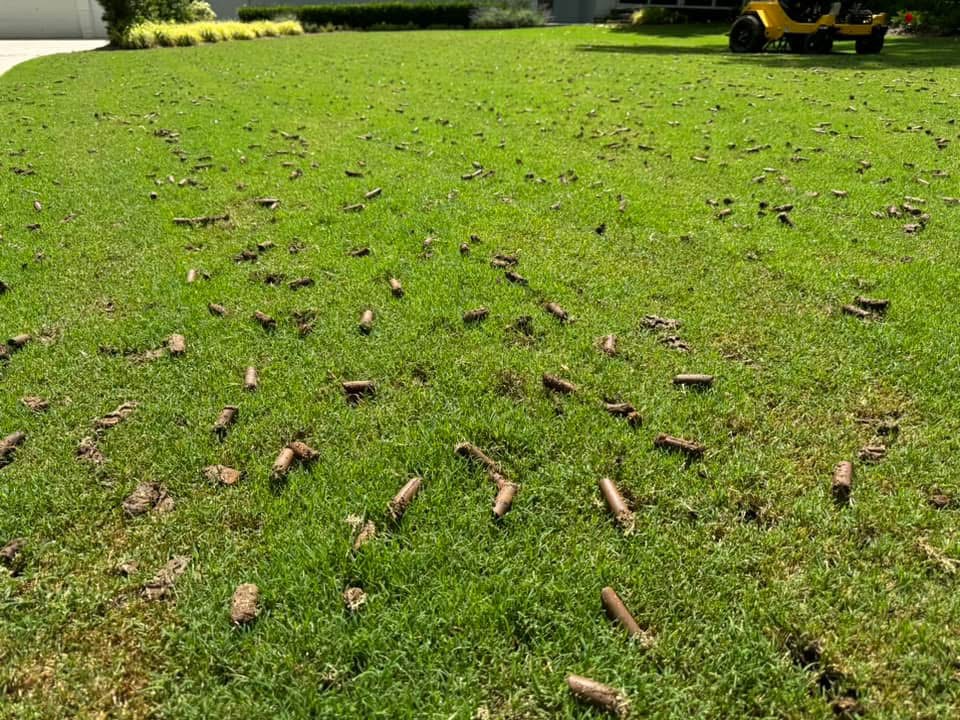
  • You will see on the surface of your lawn little plugs of soil; this is normal.
  • Such plugs are naturally decomposed, which enhances the soil and is better than turf health.

Short-Term Care & Recovery

  • Water the lawn sparingly, but avoid overwatering as it causes washing away of seeds and nutrients.
  • Reduce the amount of foot traffic over a period of a few days to enable the soil and roots to settle.
  • Make sure to follow any fertilization or seeding advice your technician gives you after aeration.

Long-Term Benefits

  • Slow progress on the level of the grass density and coloring, and the general well-being of the lawn.
  • Increased intake of water, nutrients, and remedies towards a stronger lawn.
  • You’ll get less thatch buildup, stronger roots, and a lawn that’s healthier and better able to handle droughts or diseases.

Our Commitment to You: We stand behind our work with a clear service guarantee, giving you confidence and peace of mind.

lawn care services in rock hill sc

Enhance Your Results: Aeration + Overseeding & Fertilization

Aeration of the lawn combined with overseeding and fertilization provides the maximum health of the lawn. The combined method guarantees a deeper growth of grass, a better root system, and permanency.

Why Combine Services?

  • Aeration exposes the soil and provides the seeds and nutrients with direct access to roots.
  • A combination of aeration, overseeding, and fertilization results in healthier, more resilient, and denser lawns.

Overseeding for a Thicker Lawn

  • Plants are disease-resistant and dense grasses.
  • Our blends of grass seed are of high quality and are locally adapted.

Fertilization for Optimal Growth

  • Aeration enhances the uptake of nutrients due to their deeper penetration.
  • Starter fertilizers applied post-aeration promote rapid, strong growth.

Long-Term Lawn Strategy

  • Aeration isn’t just a one-time fix; it’s a key part of an annual or bi-annual lawn health program.
  • Combine with overseeding, fertilization, and soil testing for year-round lawn resilience and long-term value.

Serving the Greater Charlotte Metro Area

We are delighted to offer professional lawn aeration services throughout the Charlotte area and the surrounding communities to enable residents of the area to have healthier, greener, and stronger lawns.

Aeration & Overseeding FAQs

Everything you need to know about relieving soil compaction and invigorating your Charlotte lawn.

How often should I aerate my lawn in Charlotte? +
Frequency really depends on your grass type, soil compaction level, and foot traffic. Annual aeration is beneficial for most Charlotte lawns due to our heavy clay soil. However, thickly compacted areas or high-traffic yards might require a bi-annual schedule to maintain peak health.
Will aeration damage my sprinkler system or invisible fence? +
No! We work closely with homeowners to identify and mark underground utilities and obstacles before we begin. Our certified technicians are trained to navigate these areas carefully, ensuring a deep aerate with minimal risk to your infrastructure.
What are those “plugs” left on my lawn? Should I remove them? +
Those are soil cores removed during the aeration process. You should leave them in place! As they decompose, they return valuable nutrients and organic matter to your lawn while helping to break down thatch. They typically disappear after a few mowings or a good rain.
Can I aerate my lawn myself? +
While DIY is possible, professional-grade core aerators are significantly more effective than many rental units. Our commercial equipment ensures deep soil penetration and complete coverage, maximizing the benefit to your root system while saving you the physical labor and risk of hitting shallow utilities.
How long until I see results after aeration? +
You will likely notice visible improvements within a few weeks as the roots begin to breathe. The full benefits—thicker grass, better nutrient absorption, and a more resilient root system—will be realized throughout the following growing season.
Is aeration worth the cost? +
Absolutely! Aeration is one of the most cost-effective ways to ensure the long-term health of your lawn. By opening up the soil, it makes every other treatment—like fertilization and overseeding—significantly more effective, preventing wasted money on treatments that can't reach the roots.
What if it rains after aeration? +
A light rain is actually helpful as it helps the soil settle and keeps the core plugs moist so they break down faster. While heavy downpours can wash away seed if you've done overseeding, typical rain supports recovery and nutrient absorption.