You’re staring at the same bare patch for the third spring in a row. The seed went down, the sprinklers ran, and for a few weeks it looked like this time might be different. Then the heat hit, or the fungus crept in, and the new grass melted back into the soil.
You’ve spent hundreds on seed, water, and chemicals, and you’ve got nothing but a patchy lawn and a growing suspicion that the problem isn’t your effort. It’s your grass choice.
The hidden costs of choosing the wrong grass add up quietly. A turf that needs constant moisture in a July drought can turn your water bill into a second lawn-care expense. A grass that suffers from disease every summer can lock you into repeat fungicide treatments, weekend repairs, and another round of reseeding.
That is why your zip code and microclimate matter more than any seed-catalog promise. A shaded backyard, a south-facing slope, or heavy clay soil can completely change which grass survives. This guide treats Kentucky Bluegrass and Turf-Type Tall Fescue not as rivals, but as tools. KBG repairs itself through rhizomes. TTTF handles heat, drought, and lower water use better. In many cool-season and transition-zone lawns, the smartest answer is not one or the other, but knowing where each grass belongs.
Head-to-Head: The Specifications That Actually Matter
Before choosing a grass, you need to see the numbers side by side: not the marketing claims, but the specifications that determine whether your lawn survives July. The table below strips away the adjectives and gives you the engineering data. Every row is a decision point that will either match your property’s reality or set you up for a costly redo.
At-a-Glance Comparison Table
| Characteristic | Kentucky Bluegrass | Turf-Type Tall Fescue | Homeowner Impact |
|---|---|---|---|
| Growth Habit | Rhizomatous (spreading) | Bunch-type with weak rhizomes | KBG fills bare spots naturally; TTTF won’t spread into damage, so you’ll need to overseed thin areas. |
| Blade Texture | Fine to medium | Medium, finer in newer cultivars | TTTF’s improved varieties look closer to KBG than old pasture types, but KBG still feels softer underfoot. |
| Color | Deep blue-green | Medium to dark green | Color difference is subtle in well-fed lawns, but KBG often reads as richer in cool weather. |
| Shade Tolerance | Poor to moderate | Moderate | Neither thrives in deep shade. A north-facing slope under a dense canopy will thin both, but TTTF hangs on longer. |
| Drought Tolerance | Low to moderate | High | TTTF roots can reach 2–3 feet or more, letting it stay green weeks longer without water. KBG will go dormant and brown quickly. |
| Heat Tolerance | Low | High | The dealbreaker for transition-zone summers. TTTF keeps growing at temperatures that send KBG into summer dormancy. |
| Cold Tolerance | Excellent | Good | In true northern winters, KBG’s cold hardiness is superior. But in the transition belt, this advantage rarely matters. |
| Traffic Tolerance | Moderate | High | Kids and dogs? TTTF’s thicker cell walls handle wear better. KBG repairs faster afterward, if it survives the stress. |
| Recommended Mowing Height | 2.5–3.5 inches | 3–4 inches | Taller mowing benefits both, but TTTF’s deeper root system demands you keep the canopy high during heat. |
| Water Requirements | 1–1.5 inches per week | 0.75–1 inch per week | TTTF’s lower water need is a direct cost and labor savings, especially where watering restrictions kick in. |
| Nitrogen Needs | 2 lbs/1,000 sq ft/year | 2 lbs/1,000 sq ft/year | Fertility is identical. You can’t differentiate these grasses by feeding schedule; both want split applications with a heavy fall push. |
| Establishment Speed | Slow (14–30 days germination) | Moderate (7–14 days germination) | KBG tests your patience. TTTF comes in faster, which means less time fighting weeds on bare soil. |
| Thatch Tendency | High | Low | KBG’s rhizomes build thatch quickly, and excess thatch magnifies drought stress and disease. You’ll dethatch KBG regularly; TTTF rarely needs it. |
| Ideal Soil pH | 6.0–7.0 (target 6.5) | 5.5–7.0 (target 6.5) | Both perform best at 6.5, but TTTF tolerates slightly more acidic soils, giving you a buffer if your soil is less than perfect. |
Reading the Specs Through Your Local Lens
A specification table is a starting point, not a verdict. The phrase “moderate shade tolerance” means nothing until you walk your property at 8 a.m., noon, and 4 p.m. and map the light.
A mature oak on the south side of your house casts a completely different shadow than a birch on the north. Under that oak, even TTTF will thin, but KBG will vanish within a season. The spec only becomes useful when you overlay it on your actual light patterns.
Heat tolerance tells a similar story. If you live north of the transition zone, cold tolerance might top your list. But for anyone in the belt, including places like St. Louis, Kansas City, and Raleigh, July heat is the primary stressor.
This difference often becomes clear during a July heat wave when Kentucky Bluegrass and Turf-Type Tall Fescue are growing in similar conditions. In side-by-side lawns with comparable sun exposure and limited watering, the tall fescue usually holds its color longer. Even with once-a-week watering, it may look slightly stressed, but it often remains green enough to recover quickly when temperatures cool.
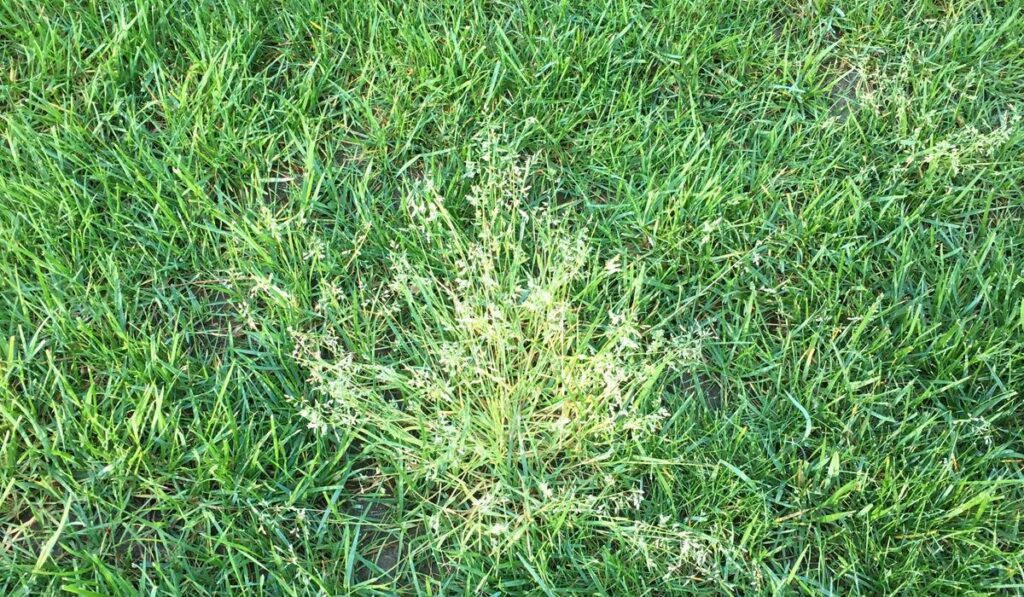
Kentucky Bluegrass usually reacts differently under the same pressure. In open, sunny areas, it can begin browning out after repeated 90-degree days, especially when irrigation is limited. Shaded areas may hold on longer, but the exposed sections often thin and lose density. By early fall, the KBG may green up again, but it does not always fully recover its original thickness that season. Some areas can stay weak or patchy, showing how much summer heat and drought stress affected the lawn.
The table also reveals what doesn’t differentiate these grasses. Nitrogen needs are identical. Soil pH targets overlap. You won’t choose a winner based on a fertility program. The real differentiators are water, heat, and repair mechanism, and those only matter when matched to the conditions outside your window.
The Transition Zone Trap: Geography Before Seed
Specifications are meaningless until you overlay them on your property’s actual climate. The transition zone is where standard cool-season advice goes to die.
Cool-Season Certainties vs. Transition-Zone Compromises
Cool-season turf has a reliable home. Where winters deliver consistent freezes and summers stay moderate, Kentucky Bluegrass and Turf-Type Tall Fescue perform with predictable rhythm. In those regions, summer heat rarely punishes a lawn for weeks on end, and humidity stays low enough that a well-aerated root zone can handle the stress.
The transition zone breaks that rhythm. This belt mixes hot, humid summers with cold winters that stress both cool- and warm-season species. Summer highs above 88°F and sticky nights can push KBG past its limits, while TTTF, though more heat-tolerant, can still fight disease or root pressure if drainage is poor.
That’s why you don’t pick a species and hope. You let your zip code’s summer humidity, winter lows, shade patterns, and irrigation access filter the options first. Plant TTTF where the sun punishes, and reserve KBG for pockets that stay cooler, wetter, or better irrigated.
Microclimates That Override Hardiness Maps
USDA hardiness zones tell you the average winter minimum. They say nothing about the south-facing slope that bakes in July, the urban heat island that holds nighttime temperatures above the airport reading, or the mature oak canopy that drops a backyard into deep shade. Those microclimates are the real decision-forcing factors.
A single property often contains two or three turf environments. The full-sun front yard may dry out in 48 hours. The north side of the house may stay damp and cool until noon. A shaded back corner under a silver maple may never see direct sun. Treating all of them with one grass species guarantees failure in at least one zone.
South-facing, full-sun slopes demand a grass with deeper roots and better drought tolerance. North-facing or tree-shaded pockets can support the finer texture and spreading habit of KBG, provided irrigation reaches them consistently. A one-size-fits-all lawn plan dies in the transition zone.
The Zip-Code Decision Checklist
Zip code, not hardiness zone, is your real filter. Pull the 30-year climate normals from your county extension office, not a generic plant tag. You need five data points:
- Last spring frost date
- Average July high temperature
- Typical July humidity or dew point
- Existing tree cover and shade patterns
- Irrigation access and coverage
If your July highs average above 88°F and humidity routinely exceeds 60%, KBG becomes a high-maintenance gamble without dedicated irrigation and preventive disease management. TTTF, especially a blend of modern cultivars, handles that same environment with far less intervention.
Local extension data also gives you the real frost-free window, which dictates seeding timing far more accurately than a USDA zone number. Use it. The transition zone punishes guesses.
Geography sets the stage, but the grass itself writes the script. Next, we examine what each species actually does in your yard, starting with the growth habit that determines whether your lawn repairs itself or waits for you to fix it.
What Each Grass Actually Does in Your Yard
Geography narrows the field. Now let’s look at what each grass actually does once it’s in the ground, starting with the trait that determines whether your lawn fixes itself or stays broken.
Rhizomes vs. Bunches: Repair, Density, and Long-Term Behavior
Kentucky Bluegrass spreads through underground rhizomes. These lateral stems push new shoots into bare soil, knitting the turf into a dense, self-repairing carpet. A thin spot in September can fill in by May without you touching a seed spreader. The trade-off is thatch. That same rhizome network adds organic material at the soil surface, and left unmanaged, that layer can choke roots, hold heat, and invite disease.
Turf-Type Tall Fescue stays put. It’s a bunch-type grass that thickens by tillering: each plant produces more upright shoots, but it won’t creep into a bare patch. Even modern cultivars with weak rhizomes can’t close a gap larger than a few inches. If the dog kills a spot or a chair leg scalps a divot, that scar remains until you overseed it.
But TTTF won’t colonize flower beds either, which can be useful for gardeners who want a stable, non-invasive turf.
Blade Texture, Color, and Seasonal Presentation
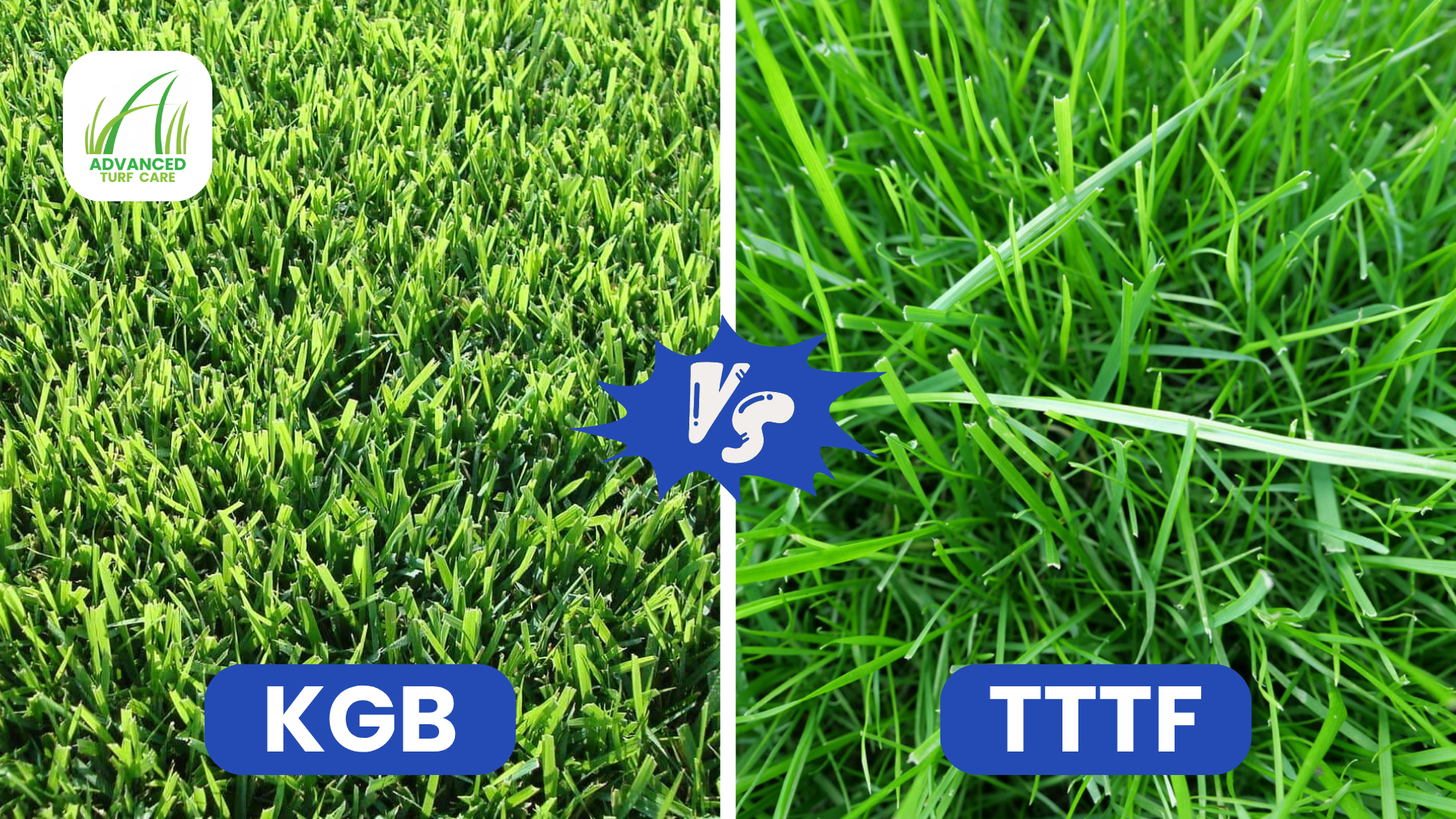
KBG gives you that fine, blue-green carpet that looks like a golf course fairway. The blades are narrow and soft underfoot. TTTF is coarser, with wider, medium-green leaves that can feel stiffer. Improved turf-type fescue cultivars have narrowed the gap, but side by side, KBG still wins on looks.
Seasonal color tells a different story. KBG holds its deep hue through mild weather but fades fast under heat and drought, often going straw-colored and dormant. TTTF keeps a functional green longer because its deeper roots access moisture that KBG can’t reach. In a transition-zone July, the TTTF lawn may look tired while the KBG lawn looks dead.
Both green up in fall, but KBG’s recovery is more dramatic because the rhizomes are ready to push new growth as soon as temperatures drop.
Traffic, Wear, and Realistic Recovery
TTTF takes a beating better. Its deeper roots and tougher blades help it handle foot traffic, play sets, and high-use areas where the grass just needs to survive. But damage that does occur, like a worn path or a urine burn, won’t fill in on its own. You’ll be patching those spots with seed every fall.
KBG is the opposite. A summer party can mat it down and leave it looking ragged, but the rhizomes begin repairing the damage within weeks. That self-healing is what makes KBG useful for families who want a lawn that forgives. A dog urine spot that kills a dinner-plate-sized patch in June can shrink by August and disappear by October without reseeding.
Set your expectations accordingly. KBG is a repair machine that demands thatch management and punishes neglect with a spongy, disease-prone mat. TTTF is a stay-put survivor that tolerates wear but can’t fix itself. Neither is perfect. Both work when you match the behavior to the way you actually use your yard.
Knowing how each grass behaves is one thing; getting it established is another. The next section covers the seeding window, weed pressure, and soil prep that make or break a new lawn.
Seeding, Waiting, and Weeding: Establishment Realities
You’ve chosen your grass. Now comes the part where many lawns fail before they start: the waiting period between seed and established turf. What happens in those first few weeks determines whether you get a dense stand or a patchy mess.
Germination Timelines and Weed Pressure

The two grasses start very differently. Turf-Type Tall Fescue comes up faster, usually in 7 to 14 days. Kentucky Bluegrass takes longer, often 14 to 30 days. That slower start matters because bare soil gives weeds more time to move in before the grass can cover the ground.
This is where KBG tests your patience. While you’re waiting for bluegrass seedlings, crabgrass and broadleaf weeds may already be taking advantage of the open space. TTTF closes that window faster, which makes establishment easier for many homeowners.
Spring seeding also creates a timing problem. Weed preventers can block new grass seed too, so you usually can’t apply them at the same time as seeding. A safer approach is to let the new grass mature first, usually after it has been mowed a couple of times, then deal with the weeds that came through.
Fall seeding gives both grasses a better chance, but timing still matters. TTTF can establish faster, while KBG needs extra weeks before frost because of its slower germination.
Soil Preparation and pH Amendment
Dumping bagged topsoil and raking in seed is a recipe for thin, struggling turf. The real foundation is soil chemistry. Both species perform best when soil pH sits near 6.5, but the consequences of poor pH are more noticeable with KBG.
For KBG, soil below 6.0 can limit phosphorus availability, slowing root development and weakening seedlings. TTTF tolerates slightly more acidic conditions, down to about 5.5, but it still performs best in the 6.0–7.0 range.
A lab soil test from your county extension or a trusted testing service is cheap insurance before seeding. If lime is needed, apply pelletized lime at the recommended rate 2 to 4 weeks before seeding so the soil has time to adjust.
Equipment, Rates, and Seed Quality Verification
Even good soil and timing won’t save a seeding job if the seed goes down unevenly. Broadcast spreaders can overapply or underapply seed if they are not calibrated. Too much seed does not create a better lawn; it creates crowded seedlings, poor airflow, and more disease risk.
Use the seeding rate on the bag and test your spreader over a small known area before covering the full lawn. It takes a few minutes and can prevent a patchy or overcrowded stand.
Seed quality matters just as much. Look for certified blue-tag seed with named turf-type cultivars, not “VNS” or “common” seed. Named cultivars give you a better chance of getting the fine texture, disease resistance, and performance you expected.
The Real-World Maintenance Ledger
A grass that survives establishment still has to survive you: your mowing habits, your watering schedule, your willingness to fertilize on time. This is the ledger where good intentions meet reality.
The Seasonal Side-by-Side Care Calendar
Early spring, when soil temperatures cross around 40°F, is the first decision point. KBG benefits from a light 0.5 lb nitrogen push if you skipped the late-fall application; TTTF stays quiet until around 55°F soil triggers active growth. Mow KBG at around 2 inches, TTTF at around 3 inches, and bag the first clippings to clear winter debris. As forsythia blooms, apply pre-emergent to both lawns.
Late spring through June raises the stakes: inch mowing heights up to 2.5 for KBG and 3.5 for TTTF. Water TTTF deeply once a week, KBG twice a week to maintain color.
July and August are the transition-zone stress test. Both grasses need another half-inch of mowing height and weekly pest scouting. TTTF is vulnerable to brown patch; look for circular tan lesions. KBG faces summer patch, marked by crescent-shaped dead rings.
September and October shift to repair. Core-aerate KBG and apply the season’s heaviest feeding: 1 lb N for TTTF, 0.75 lb for KBG. November brings the final mow (2 inches for KBG, 2.5 for TTTF) and a 0.5 lb N application to build winter reserves.
Water Budgets and Irrigation Strategy
TTTF’s drought tolerance is an invitation to water differently. In most lawns, it performs well with about 0.75 to 1 inch of water per week, applied deeply and infrequently. A single weekly soaking is often enough unless extreme heat, sandy soil, or local restrictions require adjustment. This deep, infrequent protocol drives roots downward and cuts seasonal water use by around 20–30% compared to daily shallow cycles. On a 5,000 sq ft lawn, that often trims $50 to $100 off the summer water bill.
KBG, with its shallower rhizomatous roots, wilts faster. To prevent heat dormancy and keep active growth, you’ll typically need three to four light irrigations weekly (0.5 inch each) through July and August. The trade-off is a higher water bill but a green, self-repairing lawn instead of a dormant, thinning one.
Mowing Heights and Mechanical Stress

KBG’s rhizomes let you run the deck lower. A 2.0 to 2.5 inch cut produces a dense, manicured turf that crowds out weeds, but you’ll mow more often and thatch will build faster.
TTTF has no such margin. Its bunch-type crown stores energy above ground, and never mow below 3 inches is the rule. Scalping a TTTF lawn even once exposes the crown to direct heat, causing permanent thinning and drought vulnerability. If you can’t commit to a 3-inch floor year-round, TTTF is the wrong grass.
Fertilizer Schedules and Nitrogen Timing
NC State’s baseline for both species is 2 lbs nitrogen per 1,000 sq ft annually, split as 0.5 lb in September, 1 lb in October–November, and 0.5 lb in February.
In practice, KBG typically responds better to lighter, more frequent feedings. Spreading 0.5 to 0.75 lb N four times between April and October avoids the surge growth that thickens thatch. TTTF handles heavier fall applications of 1 lb each and forgives a missed spring feeding entirely. Skip a KBG feeding and thin spots appear by midsummer; TTTF shrugs it off.
Aeration and Thatch Management
KBG’s rhizomes knit a self-repairing turf but build thatch faster than any other cool-season grass. Excess thatch blocks water and air, amplifying drought stress and disease. Annual core aeration, pulling 2- to 3-inch plugs in early fall, is non-negotiable.
TTTF’s bunch-type habit produces far less thatch. Aerate every one to two years, or sooner if you’re on heavy clay that compacts easily. A single pass in September keeps both grasses breathing.
Even perfect maintenance can’t prevent every problem. The next section covers what happens when things go wrong: the diseases and failures that signal a mismatch between your grass and your conditions.
When Things Go Wrong: Disease and Pest Vulnerability Profiles
You’ve followed the calendar, set the irrigation, and kept the mower high. But when brown patches appear anyway, you need to read the failure signals before they spread. Both Kentucky Bluegrass and Turf-Type Tall Fescue have distinct disease profiles, and misreading the symptoms can turn a recoverable outbreak into a full renovation.
Kentucky Bluegrass: Summer Patch, Rust, and Dollar Spot
KBG’s aggressive rhizomes create a dense, interwoven mat, but that same growth habit fuels thatch accumulation. Thatch isn’t just a cosmetic issue. It creates a humid, pathogen-friendly microclimate at the soil surface that amplifies summer patch and dollar spot severity.
When soil temperatures climb above roughly 65°F and moisture is trapped in the thatch layer, the fungus that causes summer patch thrives. The first sign is often a small, circular patch of wilted, blue-gray grass that rapidly turns brown. Many homeowners mistake this for grub damage and apply insecticide, a costly error.
Dollar spot appears as silver-dollar-sized bleached spots in the morning dew, often linked to low nitrogen. Rust, by contrast, is a reliable indicator of nitrogen deficiency and slow growth. It rarely kills turf but signals that the plant is too weak to outgrow the fungus. You’ll see orange powder on shoes and mower blades. The fix is simple: a light nitrogen application to push growth.
For summer patch and dollar spot, cultural prevention is more effective than fungicides. Maintain a mowing height of 3 to 3.5 inches, never remove more than one-third of the blade, and core-aerate annually to relieve thatch and soil compaction. Avoid heavy nitrogen in late spring, which can fuel disease.
Turf-Type Tall Fescue: Brown Patch and Gray Leaf Spot
TTTF’s bunch-type growth avoids thatch buildup, but it faces other threats. Brown patch is the most predictable disease in cool-season lawns.
When nighttime lows stay above roughly 68°F and leaf wetness exceeds about 10 hours, infection is almost certain regardless of cultivar resistance. You’ll see roughly circular, brownish patches with a smoke ring on the outer edge in the morning.
The fix is cultural: water deeply but infrequently in the early morning so leaves dry quickly, and avoid nitrogen applications during summer heat.
Gray leaf spot is a relatively new threat in the transition zone, and many homeowners mistake it for drought stress. The leaves develop small, dark spots that expand into bleached lesions, and the turf looks like it’s wilting. The instinct is to water more, but that accelerates the disease. Instead, you need to reduce leaf wetness and, in severe cases, apply a targeted fungicide.
Improved cultivars have partial resistance, but they don’t eliminate risk. The best defense is to keep the canopy dry and avoid mowing when the grass is wet.
The Lifestyle Matcher: Picking Grass for Your Actual Life
All the specs, calendars, and disease profiles lead to one question: which grass fits the life you actually live? This section matches the decision to your time, your budget, and your tolerance for lawn-related weekends.
Most grass selection fails before a single seed hits the ground. Homeowners pick a species for its magazine-cover color, ignoring the weekly hours they can actually commit. That mismatch is why Kentucky Bluegrass lawns thin out while Turf-Type Tall Fescue keeps growing. The difference isn’t just botanical; it’s a matter of maintenance capacity.
TTTF’s deep roots and drought tolerance make it the default for low-input lawns. KBG demands consistent irrigation and fertility to thrive. If you can’t supply that, the grass will tell you, and not in a way you’ll like.
The Weekend Warrior: High Input, High Reward
This is the homeowner who genuinely enjoys mowing, fertilizing, and fine-tuning irrigation. For them, lawn care is a hobby, not a chore. A KBG monoculture or a KBG-dominant blend is the viable path. Kentucky Bluegrass rewards that attention with a dense, self-repairing carpet, but it will punish neglect faster than you can cancel a Saturday plan. If you’re willing to invest the time, KBG delivers. If not, you’re setting yourself up for a summer of disappointment.
The Eco-Minimalist: Low Water, Low Fertilizer
Here, the priority is a lawn that survives on minimal water and few chemicals. TTTF is the default. Its deep root system buffers against drought, and it grows in poor soils without heavy feeding. You won’t get the velvet uniformity of KBG, but you’ll get a green lawn that stays green through July without daily sprinkler runs. This profile works for anyone who wants a functional turf that doesn’t demand a second mortgage in water bills or fertilizer bags.
The Perfectionist: Uniformity and Curb Appeal
This homeowner will irrigate, scout for disease, and accept some summer browning if the payoff is a classic dark-blue lawn.
KBG is the only choice here, but it comes with a contract: disciplined mowing, precise fertility, and a realistic expectation that August will test your resolve. Turf-type fescues won’t give you that uniform look, because they grow in clumps.
KBG’s rhizomes fill gaps, but they need water and food to do it. If you can’t commit to that regimen, you’ll end up with a patchy lawn and a grudge.
The Realistic Default: Set It and (Mostly) Forget It
This is the largest group: homeowners with travel schedules, young families, or zero interest in turf micromanagement. They need a lawn that survives a missed mowing or a vacation without a caretaker. TTTF or a TTTF-heavy blend fits. Pair it with automated irrigation and a simplified fertility schedule, and you’ve got a lawn that bounces back from neglect. A skipped week of mowing in July? The TTTF will look shaggy but recover. KBG, in the same situation, often thins permanently.
These four profiles aren’t rigid boxes. Most homeowners land somewhere between the Eco-Minimalist and the Realistic Default, wanting a decent lawn without becoming a slave to it. A lawn’s survival depends more on matching maintenance capacity to grass traits than on any single product or schedule.
But what if you don’t have to choose? The next section explores the third option most guides ignore: blending both species into a single resilient lawn.
Mixology for Turf: The Resilience Blend Blueprint

The either/or debate misses the point. A blended lawn isn’t a compromise: it’s a hedge against the season that would kill a monoculture. Here’s how to build one.
Why a Monoculture Lawn Is a Single Point of Failure
A monoculture lawn is a single point of failure. One extreme season, one disease outbreak, and you’re reseeding from scratch.
In the transition zone, where neither cool- nor warm-season grasses are fully adapted, that volatility is the norm, not the exception.
A pure Kentucky Bluegrass lawn bakes under a heat dome and can’t recover because its shallow roots and slow germination leave it wide open. A pure tall fescue stand may shrug off drought but can’t fill a bare spot: it’s bunch-type, and even the improved varieties with weak rhizomes won’t knit the turf back together the way KBG does.
Diversity is your insurance. When KBG falters, TTTF plugs the stress gaps. When TTTF wears thin, KBG rhizomes creep in and repair. The result is a lawn that doesn’t just survive a bad year: it keeps you from starting over.
Research-Backed Blend Ratios and Spatial Zoning
A reliable starting point is 80% Kentucky Bluegrass and 20% Turf-Type Tall Fescue by weight. This puts KBG’s aggressive lateral spread in charge of long-term self-repair while TTTF’s heat and traffic tolerance buffers the whole stand. The fescue’s weak rhizomes add density without competing with bluegrass for dominance.
For existing KBG lawns that need a resilience boost, overseeding with just 10–20% TTTF by weight can make the difference between a lawn that checks out in July and one that stays green.
Microclimates on your property call for spatial zoning. South-facing slopes are blast furnaces: plant them to a TTTF-dominant mix (70% TTTF, 30% KBG) or even pure TTTF.
North-facing, irrigated zones stay cooler and moister; they’re KBG country, where rhizomes can work uninterrupted. The blend goes in the transition areas: the broad, level spaces where you want both resilience and repair.
Overseeding Timing and Establishment Coordination
Late summer to early fall is the only serious window for cool-season seeding. In the upper transition zone, that means mid-August through late September.
TTTF germinates in 7 to 14 days; KBG can take up to 30. Seed both together, and the fescue emerges fast, holding soil and shading out weed seedlings while the bluegrass creeps along. Expect a patchy look for a few weeks: that’s not failure, it’s just two species running on different clocks.
By the following spring, the blend will have filled in and evened out. Don’t chase visual perfection in the establishment phase. The goal is survival, not curb appeal on day 30.
A blend changes the long-term economics. The final section tallies the true cost of ownership for each path: seed to sod, water bills to renovation, so you know what you’re signing up for.
The True Cost of Ownership
The seed bag price is the smallest number in this equation. Water, fertilizer, and renovation costs compound over years; the wrong choice costs far more than the right seed ever could.
Upfront Investment: Seed, Sod, and Soil Amendments
Quality KBG and TTTF seed cost within a few dollars per pound of each other. The sticker shock arrives when you price KBG sod against TTTF seed. KBG sod is the only path to an instant bluegrass lawn. It can run several times the cost of seeding TTTF.
Before any seed or sod touches the ground, a soil test and pH correction to 6.5 is non-negotiable. Both species demand that same target, and lime or sulfur amendments add a line item that most budgets overlook. Equipment costs for site prep (a rental tiller, a leveling rake, a spreader) are identical regardless of species choice.
Long-Term Maintenance Spending
Fertilizer costs track closely. University guidelines peg both KBG and TTTF at 2 pounds of nitrogen per 1,000 square feet per year, split into three applications. The real cost divergence is water. KBG’s shallow, thirsty root system demands frequent irrigation in transition-zone summers. TTTF’s deep roots and drought tolerance let it coast on a single weekly soaking. The utility bill reflects that gap every July.
Equipment maintenance (sharpening mower blades, calibrating a spreader, renting a core aerator) hits both lawns roughly the same. Irrigation system upgrades, however, often become a hidden cost for KBG lawns that can’t tolerate a sprinkler timer’s failure.
Renovation and Recovery Economics
KBG’s rhizomatous spread is a financial asset. Foot traffic, pet damage, or a bad mow day heals itself without a seed bag. TTTF’s bunch-type habit leaves bare divots that don’t fill in. Over a 5- to 10-year horizon, that means periodic overseeding for TTTF: seed, labor, and the timing headache of keeping the area moist for germination.
KBG’s self-repair can offset its higher water and sod costs, especially in yards where kids and dogs stress the turf. But in a drought-prone climate, TTTF’s lower water demand often wins the total-cost race.
Numbers and recommendations are only as good as the methodology behind them. The final section discloses how this guide was built and how to keep its advice honest as climates and cultivars change.
How This Guide Was Built
There is no universal winner between Kentucky Bluegrass and Turf-Type Tall Fescue. Each grass performs well under certain conditions and fails under others.
The recommendations in this guide are based on regional fit, drought tolerance, disease pressure, maintenance intensity, and real homeowner use cases. A lawn in central Ohio and a lawn in northern Georgia do not face the same stress, so they should not be judged by the same standard.
This guide uses extension-style turf guidance and research-backed performance factors, not seed-bag marketing claims. The goal is simple: help you choose the grass, blend, or zoning strategy that fits your climate, soil, water access, and maintenance capacity.
Frequently Asked Questions
Which grass is better for shady areas?
Neither thrives in deep shade, but Turf-Type Tall Fescue tolerates moderate shade longer than Kentucky Bluegrass, which has poor to moderate shade tolerance and will thin quickly under tree canopies.
How much water does each grass need per week?
Kentucky Bluegrass requires 1 to 1.5 inches of water per week, while Turf-Type Tall Fescue needs only 0.75 to 1 inch, making TTTF more drought-tolerant and cheaper to irrigate.
Can I mix Kentucky Bluegrass and Tall Fescue in the same lawn?
Yes, a blend of 80% KBG and 20% TTTF by weight combines KBG’s self-repair with TTTF’s heat and drought resilience. You can also zone them by microclimate, using TTTF on sunny slopes and KBG in shaded, irrigated areas.
Why does my Kentucky Bluegrass lawn get brown patches in summer?
Brown patches in KBG are often caused by summer patch disease, which thrives in thatch and high soil temperatures. Other causes include drought stress or inadequate irrigation depth. Check thatch and soil moisture before applying fungicides.
How long does it take for each grass to germinate?
Turf-Type Tall Fescue germinates in 7 to 14 days, while Kentucky Bluegrass takes 14 to 30 days. This slower establishment makes KBG more vulnerable to weeds during the seeding window.
Need Help With Your Lawn?
Get professional lawn care built around your property, grass type, and seasonal needs.
Get a Free Quote