You fertilize your lawn, water it, and wait for the grass to turn green. But a few weeks later, some areas still look yellow. Others grow faster than the rest. You start wondering if you used the wrong fertilizer or applied too little.
This happens to many homeowners. Fertilizing a lawn sounds simple, but there is more to it than spreading a bag of fertilizer over the grass.
The good news is that you do not need to be a lawn care expert to understand the basics.
This guide explains what lawn fertilizer does, how to choose the right type, when to apply it, and how to avoid common mistakes.
Why Should You Fertilize Your Lawn?
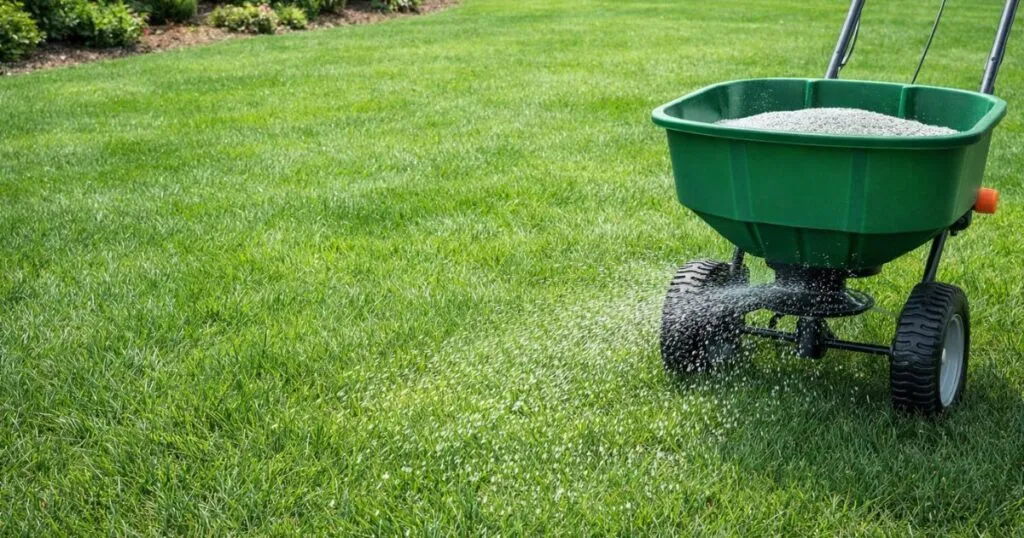
Grass needs nutrients to grow, just like any other plant. Some nutrients come from the soil, but over time, your lawn may need more than the soil can supply.
Fertilizer helps fill those gaps.
Healthier, Greener Grass
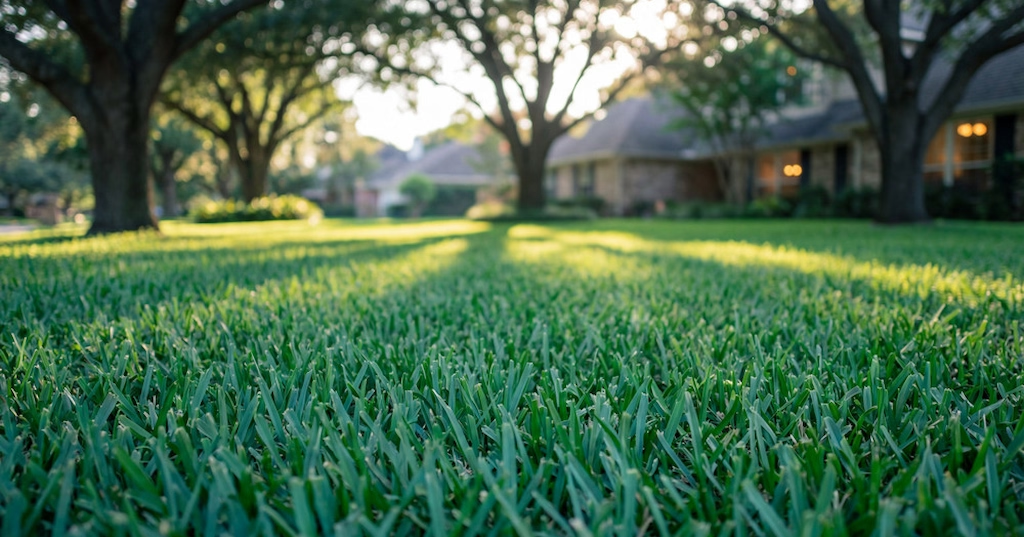
Nitrogen helps grass produce chlorophyll, which gives the blades their green color and helps them use sunlight to make food.
When grass receives the right amount of nitrogen, it often looks greener and grows more steadily.
Thicker Grass and Fewer Weeds
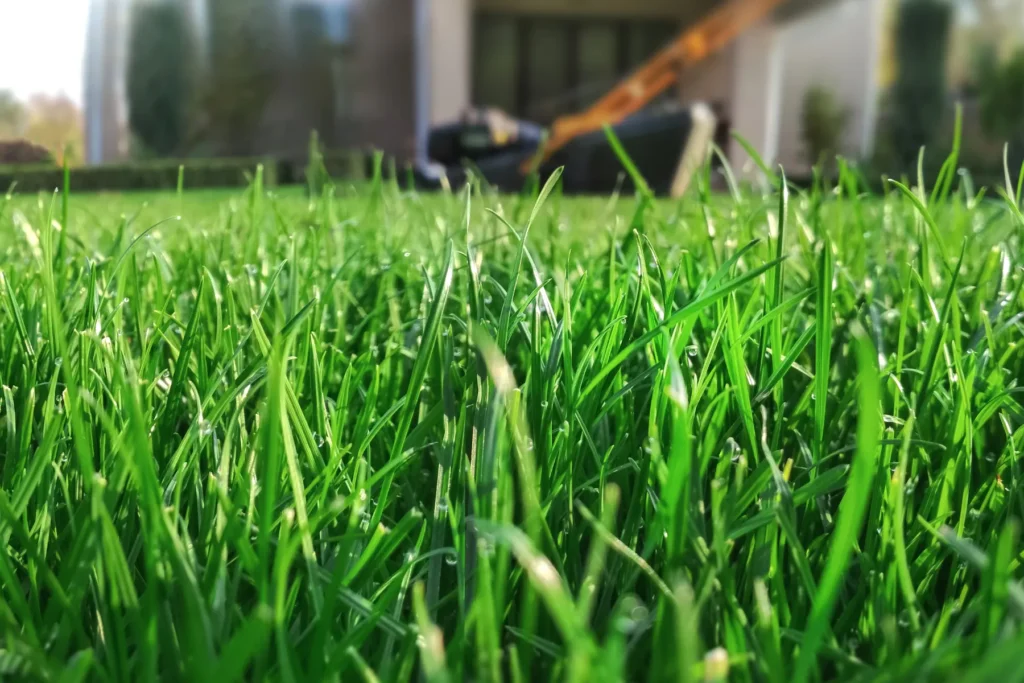
A well-fed lawn can grow thicker and fill small gaps.
Thick grass also leaves less room for weeds to grow. It blocks some sunlight from reaching the soil, making it harder for many weed seeds to sprout.
Fertilizer does not kill existing weeds, but it can help healthy grass compete with them.
Stronger Roots
Roots help grass collect water and nutrients from the soil.
Phosphorus supports root growth and helps plants move energy between cells. Potassium helps grass manage water and handle stress.
Both are important, but adding more only helps when the lawn needs them.
Better Resistance to Stress
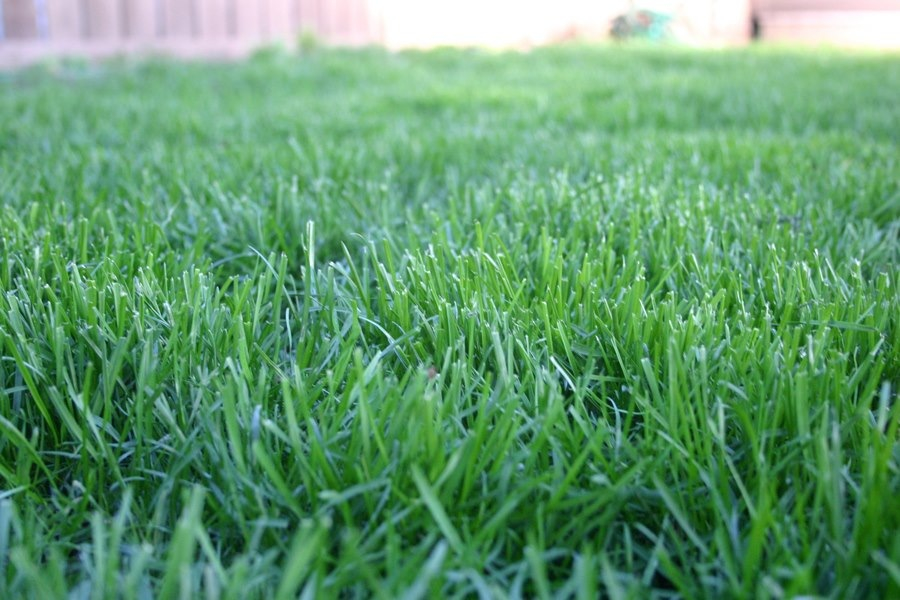
Healthy grass is often better able to recover from heat, foot traffic, and minor damage.
Proper feeding also supports normal plant growth, which can help a lawn withstand some pest and disease pressure.
However, too much fertilizer can have the opposite effect. Excess nitrogen may produce weak, soft growth that is more prone to certain diseases.
Long-Term Lawn Health
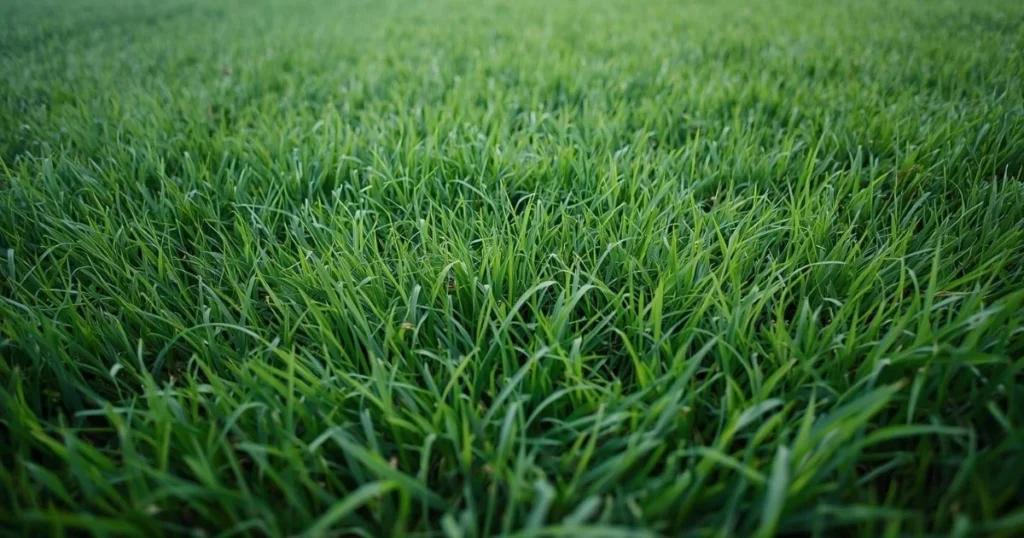
The greatest benefit comes from consistent, balanced care.
When fertilization is paired with proper mowing, watering, and healthy soil, grass can develop better coverage and stronger roots.
This may reduce some weed problems and help your lawn use water more effectively.
What Do the Numbers on Lawn Fertilizer Mean?
Look at almost any fertilizer bag, and you will see three numbers, such as 16-4-8 or 28-0-3.
These numbers represent three major nutrients: nitrogen, phosphorus, and potassium.
They are known as N-P-K.
Nitrogen (N): For Green Growth
Nitrogen is the first number.
It helps grass grow green leaves and make proteins needed for new plant cells.
For example, a fertilizer labeled 20-5-10 contains 20% nitrogen by weight.
Nitrogen is often the nutrient lawns need most during their active growing season.
However, applying too much can cause rapid growth, fertilizer burn, or greater disease pressure.
Phosphorus (P): For Roots and New Growth
Phosphorus is the second number.
It helps plants store and move energy, which supports new roots and cell growth.
It can be useful when establishing a new lawn, especially if a soil test shows low phosphorus levels.
But an established lawn with enough phosphorus may not benefit from more.
Excess phosphorus can also contribute to water pollution.
Potassium (K): For Stress Tolerance
Potassium is the third number.
It helps grass control water movement within its cells and supports many processes needed for healthy growth.
A lawn with adequate potassium may cope better with drought, cold, and disease stress.
Still, extra potassium is not a cure for every stressed lawn.
How to Read a Fertilizer Label
Suppose you buy a 40-pound bag labeled 20-5-10.
That bag contains:
- 8 pounds of nitrogen (20%)
- 2 pounds of phosphate (5%)
- 4 pounds of potash (10%)
The remaining weight comes from other ingredients and materials in the product.
Always check the label’s application rate before using the product.
Different Types of Lawn Fertilizers
Not all fertilizers work the same way. Some release nutrients quickly, while others feed the lawn over several weeks.
The best choice depends on what your grass needs.
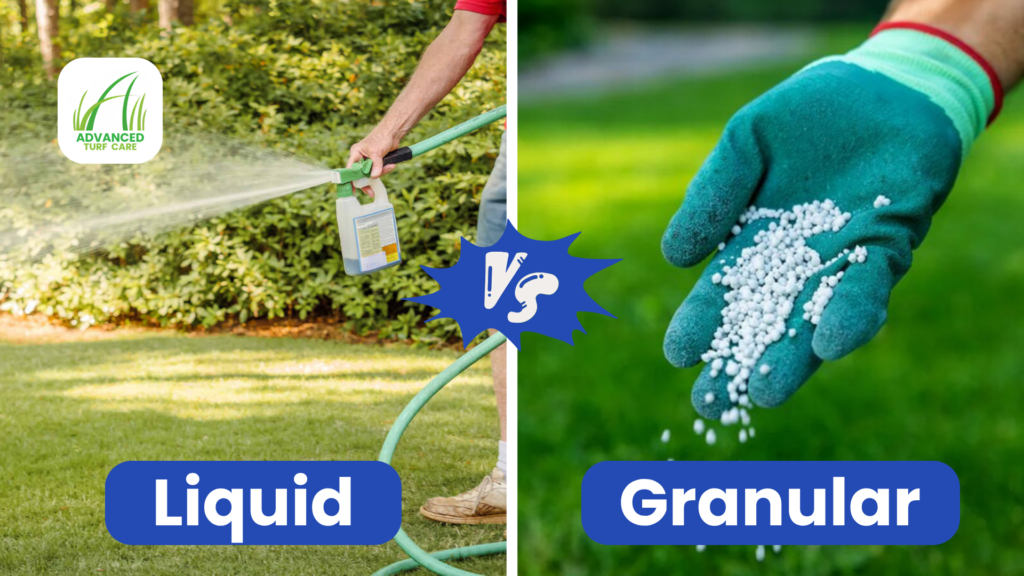
Granular vs. Liquid Fertilizer
Granular fertilizer comes in small pellets or granules.
You spread it over the lawn using a broadcast or drop spreader.
Many granular products release nutrients slowly, making them useful for regular lawn feeding.
They are easy to store and can cover large areas. However, uneven spreading may leave dark green stripes or burned patches.
Granular products often need watering after application, depending on the label.
Liquid fertilizer is mixed with water or sold ready to use.
You apply it with a sprayer.
Some liquid products provide nutrients quickly, making them useful for targeted treatments or correcting certain deficiencies.
They can also provide even coverage when applied correctly.
However, many liquid fertilizers need more frequent applications. Incorrect mixing or overlapping spray passes may also damage grass.
Quick-Release vs. Slow-Release Fertilizer
Quick-release fertilizers contain nutrients that become available to grass relatively fast.
They can help correct a confirmed nutrient shortage, but applying too much at once increases the risk of fertilizer burn.
Slow-release fertilizers feed grass more gradually.
Their nutrients may become available over several weeks, depending on the product, soil moisture, and temperature.
This can support steady growth and reduce the need for frequent feeding.
Slow-release fertilizers often cost more upfront, but the longer feeding period may make them worthwhile.
Organic vs. Synthetic Fertilizers
Organic fertilizers come from natural materials, including composted manure, plant meals, and other animal or plant sources.
Many organic products depend on soil microbes to break down their nutrients before grass can use them.
This takes time, especially in cold or dry soil.
Some organic materials also add organic matter, which can help support soil life and soil structure.
The drawbacks include slower results, possible odors, and the need to apply larger amounts.
Synthetic fertilizers contain manufactured or processed nutrient sources.
They offer predictable nutrient percentages, and some provide faster results. Others are made to release nutrients slowly.
They are often less expensive per pound of nutrient.
However, incorrect application can cause fertilizer burn, nutrient buildup, or runoff.
Neither type is automatically better for every lawn.
Fertilizer Type Comparison Chart
| Type | Nutrient Release | Main Benefit | Main Drawback | Best For |
|---|---|---|---|---|
| Granular | Fast or slow | Easy to spread over large lawns | Uneven application | Regular feeding |
| Liquid | Often fast | Quick, targeted feeding | May need more applications | Small areas and targeted care |
| Quick-release | Fast | Corrects nutrient shortages quickly | Greater burn risk | Confirmed deficiencies |
| Slow-release | Gradual | Steady feeding | Slower initial results | Long-term maintenance |
| Organic | Often gradual | Some products add organic matter | Slower, less predictable release | Soil-focused care |
| Synthetic | Fast or slow | Precise nutrient amounts | Damage if overapplied | Planned nutrient feeding |
These are general characteristics. A fertilizer may fit more than one category, so always read its label.
Why You Should Test Your Soil Before Fertilizing
You might have enough fertilizer in your garage, but that does not mean your lawn needs every nutrient inside it.
A soil test helps you understand what is already in the ground.
Without one, you may spend money on nutrients your grass does not need.
Why Soil Testing Matters

A soil test measures soil pH and several important nutrient levels.
It helps you decide whether your lawn needs phosphorus, potassium, lime, or other soil amendments.
A test helps separate soil chemistry problems from other lawn issues.
If you want to understand this process in more detail, read our guide on why soil testing matters for your lawn.
How to Collect a Soil Sample
You will need a clean plastic bucket and a soil probe or small trowel.
- Take small samples from 10 to 15 spots across the lawn.
- For an established lawn, follow the testing lab’s instructions, usually sampling the upper 3 to 4 inches of soil.
- Remove grass, leaves, and other surface debris.
- Mix the soil samples in the bucket.
- Place the required amount into the testing container.
Keep areas with very different soil conditions separate.
Do not collect samples immediately after fertilizing because recent applications may affect the results.
Where to Send Your Soil Sample
North Carolina homeowners can use the North Carolina Department of Agriculture’s soil testing service.
Your local Cooperative Extension office can provide information about sampling and submission.
Private laboratories are another option.
DIY kits may give you a rough idea of soil conditions, but laboratory testing generally provides more useful nutrient recommendations.
Understanding Your Results
Most common lawn grasses grow well in slightly acidic to near-neutral soil.
For many North Carolina lawns, a pH around 6.0 to 7.0 is suitable, although the ideal range depends on the grass species.
When soil is too acidic or too alkaline, some nutrients become harder for grass roots to absorb.
A test may recommend lime to raise pH or, where appropriate, sulfur to lower it.
Do not add either without checking your results.
One important detail: routine soil tests do not directly measure how much nitrogen your grass needs. Nitrogen recommendations depend largely on the grass type and its growing season.
When Should You Fertilize Your Lawn?
Applying the right fertilizer at the wrong time can waste money and stress your grass.
The best time depends on whether you have cool-season or warm-season grass.
Cool-Season Grasses
Tall fescue, Kentucky bluegrass, and perennial ryegrass grow best during cooler weather.
In Charlotte, tall fescue lawns benefit most from fertilization in fall, when growth picks up again after summer.
A typical plan may include:
- Early fall: Main feeding as grass resumes growth
- Late fall: Another feeding to support healthy growth
- Late winter or early spring: Fertilization based on lawn condition and local recommendations
Avoid heavy nitrogen applications during late spring and summer.
Summer heat already places stress on tall fescue, and extra nitrogen can increase the risk of brown patch.
Warm-Season Grasses
Bermuda and Zoysia grow most actively during warm weather.
Their feeding season usually begins after spring green-up.
A typical schedule includes:
- Late spring: Begin feeding after active growth starts
- Summer: Feed according to grass type and nutrient needs
- Late summer: Adjust or stop feeding as growth slows
Bermuda usually needs more nitrogen than Zoysia.
Avoid high-nitrogen applications close to winter dormancy because they may increase cold damage risk.
Seasonal Considerations
Spring is a time of new growth, but cool-season and warm-season grasses have different needs.
Summer is the main growing season for Bermuda and Zoysia, while tall fescue often struggles with heat.
Fall is especially important for tall fescue because cooler conditions support recovery and root growth.
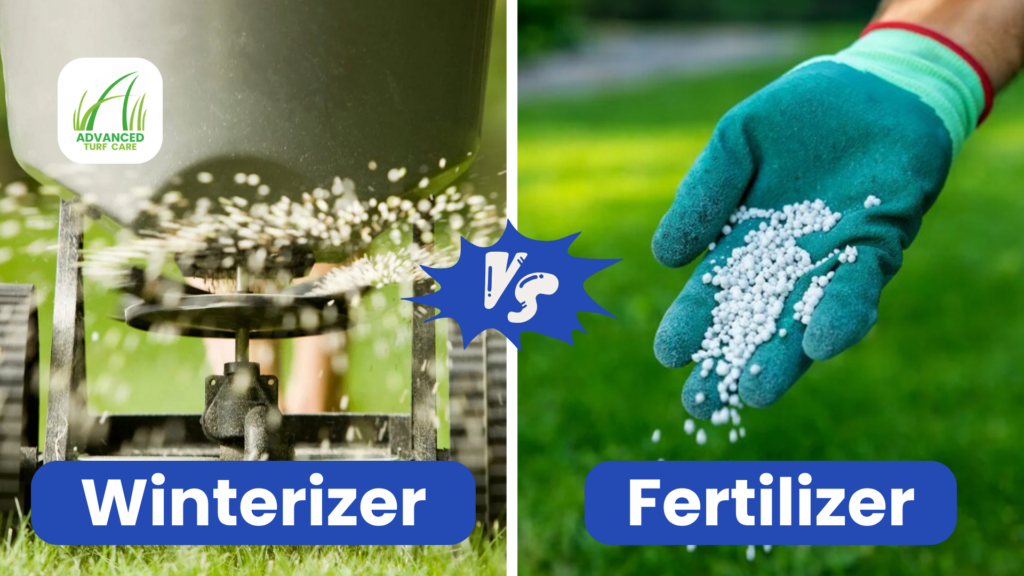
Some homeowners also use winterizer fertilizer during the cool-season feeding period.
Winterizer is not simply fertilizer applied in winter. Its value depends on nutrient content, grass type, and timing.
Our article on winterizer vs. regular lawn fertilizer explains those differences.
Signs Your Lawn May Need Fertilizer

Watch for pale green grass, weak growth, or thinning areas.
These can suggest poor nutrition, but they are not proof.
Shade, drainage problems, drought, and disease may cause similar symptoms.
Check your soil and growing conditions before adding more fertilizer.
Creating a Fertilization Plan
Start with three things: your grass type, your location, and your soil test.
Then use a local fertilization calendar to identify the growing season.
For a Charlotte tall fescue lawn, fall will usually be the main feeding period. For Bermuda, most feeding takes place after spring green-up and during summer.
A personalized lawn planner can use those details, along with lawn condition, to suggest suitable application windows.
Treat any automatic schedule as a starting point. Soil test results, weather, and the product label should guide the final decision.
How to Apply Lawn Fertilizer
Applying fertilizer correctly is just as important as choosing it.
You want an even amount across the lawn, with no missed areas or heavy patches.
Step 1: Prepare Your Lawn
Mow a day or two before fertilizing if the grass needs cutting.
Remove fallen leaves, branches, and other debris.
For most granular fertilizers, apply when the grass blades are dry and the soil has some moisture.
Wet leaves may cause granules to stick in one place, increasing the chance of damage.
Read the product label before opening the bag.
Step 2: Choose the Right Spreader
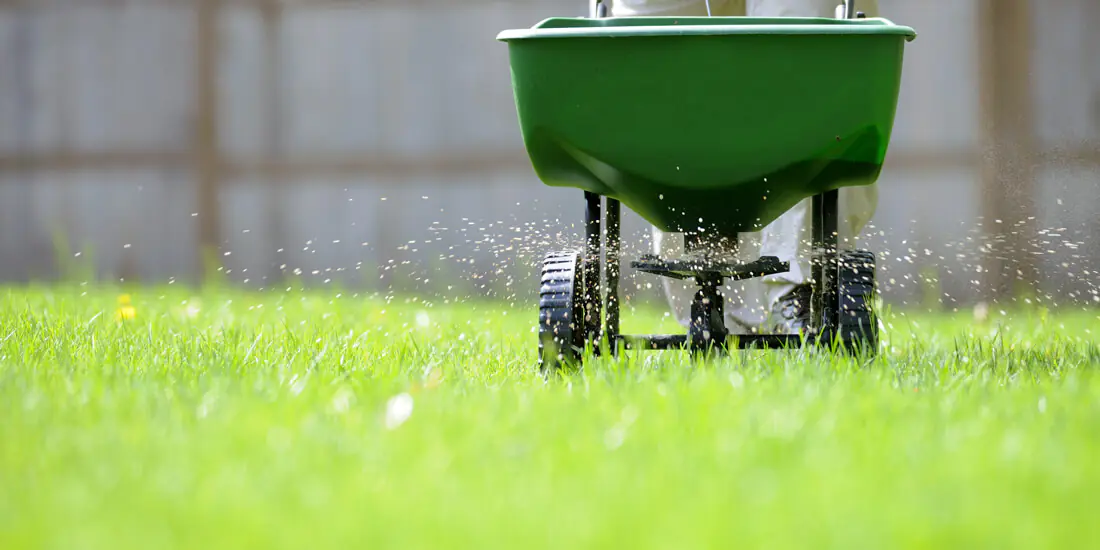
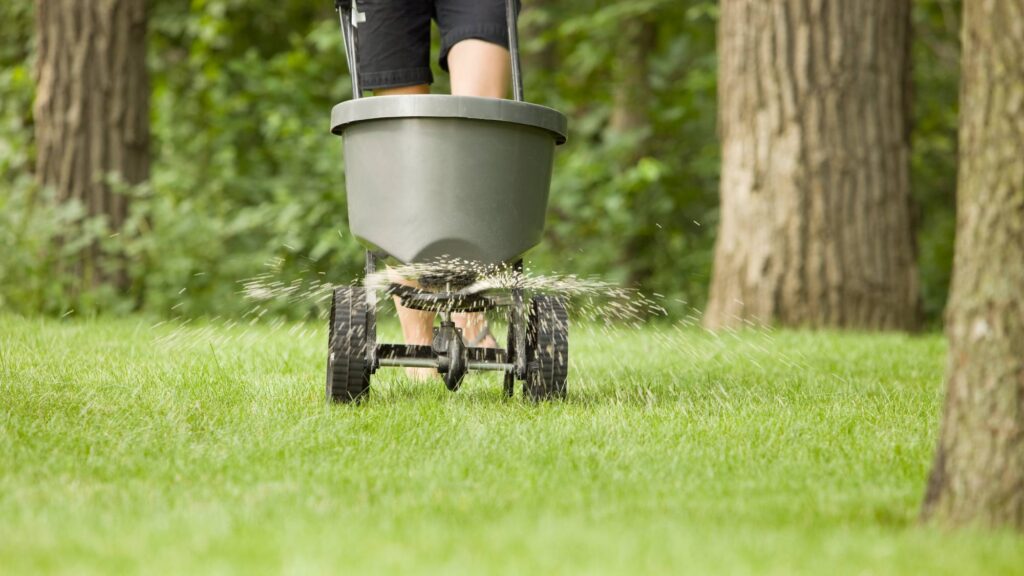
A broadcast spreader throws granules over a wide area.
It works well for medium and large lawns.
A drop spreader releases fertilizer directly beneath the machine.
It gives you more control near flower beds and sidewalks, but you must keep your passes even.
A setting that worked with your last fertilizer may not work with a different one.
Step 3: Spread Fertilizer Evenly
Measure the correct amount before filling the spreader.
When suitable for your spreader and product, divide the fertilizer into two equal portions.
Apply one half while walking in one direction, then apply the other half at right angles.
This cross-hatch method helps reduce stripes and missed spots.
Keep a steady walking pace. Close the spreader gate when stopping or turning.
Be careful near lawn edges so fertilizer does not land on patios or driveways.
Step 4: Apply Liquid Fertilizer Correctly
If using liquid fertilizer, follow the dilution instructions.
A hose-end sprayer may work for smaller lawns, while larger areas may require more controlled equipment.
Keep the spray pattern even and avoid spraying the same area repeatedly.
Do not assume every liquid product should be watered afterward. Some need time on the grass blades, while others need irrigation.
Always follow the label.
Step 5: Calculate How Much Fertilizer You Need
First, measure your lawn.
For a rectangular area, multiply the length by the width.
For example:
50 feet × 60 feet = 3,000 square feet.
Now suppose your fertilizer is 20-5-10, and the recommended application rate is 1 pound of nitrogen per 1,000 square feet.
Since the fertilizer contains 20% nitrogen:
1 ÷ 0.20 = 5 pounds of fertilizer per 1,000 square feet.
For 3,000 square feet:
5 × 3 = 15 pounds of fertilizer.
You would need 15 pounds of that product for the example application.
This is a calculation example, not a recommended rate for every lawn.
You can also use our guide on how much fertilizer your lawn needs to understand the numbers.
A fertilizer calculator can make this easier by combining lawn area, nitrogen percentage, and the recommended nitrogen rate.
Step 6: Protect Yourself and Others
Wear gloves, closed-toe shoes, and eye protection as directed on the label.
Keep children and pets away during application.
Do not allow them back until the product’s re-entry instructions have been met.
Store leftover fertilizer in its original packaging, away from children, pets, and moisture.
What to Do After Fertilizing Your Lawn
The job is not always finished when the spreader is empty.
What you do next affects how well the fertilizer works.
Watering After Fertilizing
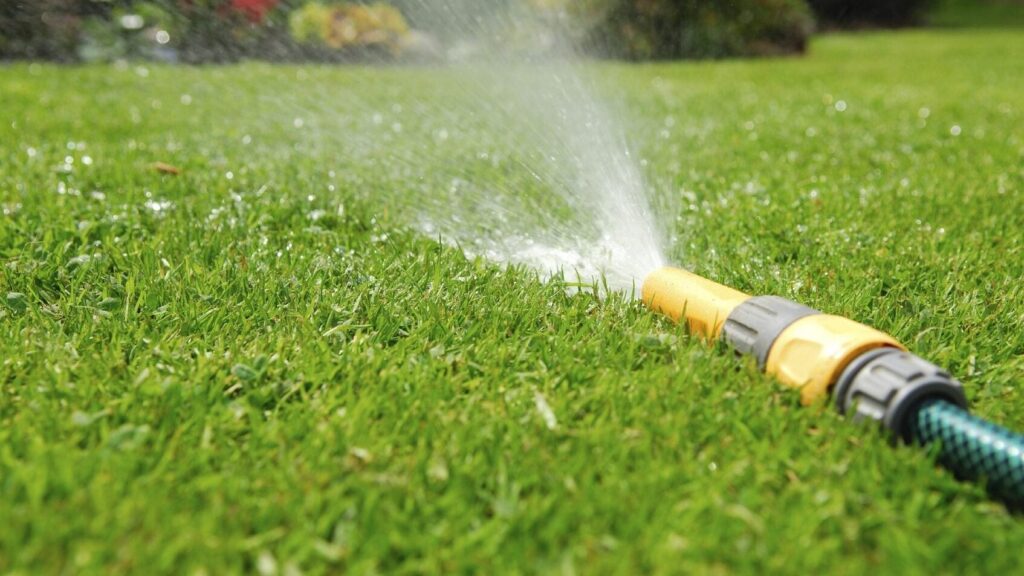
Many granular fertilizers need light watering to move nutrients off the grass blades and toward the soil.
Use the amount recommended on the product label.
Avoid watering so heavily that fertilizer washes away.
If rain is expected, check the forecast. Light rain may help some products, but heavy rain can carry nutrients into drains and nearby waterways.
Liquid fertilizers have different instructions, so do not follow the granular watering routine unless the label tells you to.
When to Mow Again
Allow fertilizer to settle or be watered in as directed before mowing.
For many granular products, waiting around 24 to 48 hours is a practical choice, although there is no universal rule.
With liquid fertilizer, allow the product to dry or follow the specified waiting period.
Continue mowing at the recommended height for your grass.
Tall fescue generally benefits from a higher mowing height than Bermuda.
Clean Up After Application
Sweep fertilizer from driveways, sidewalks, and patios back onto the lawn, spreading it within the correct application area.
Never wash spilled granules into storm drains.
Seal leftover fertilizer, and dispose of empty packaging according to the label and local waste rules.
Common Lawn Fertilizing Mistakes
Most fertilizer problems come from applying too much, using the wrong product, or feeding at the wrong time.
Applying Too Much Fertilizer
More fertilizer does not mean faster, healthier growth.
Excess nutrients, especially soluble salts, can damage grass roots and blades.
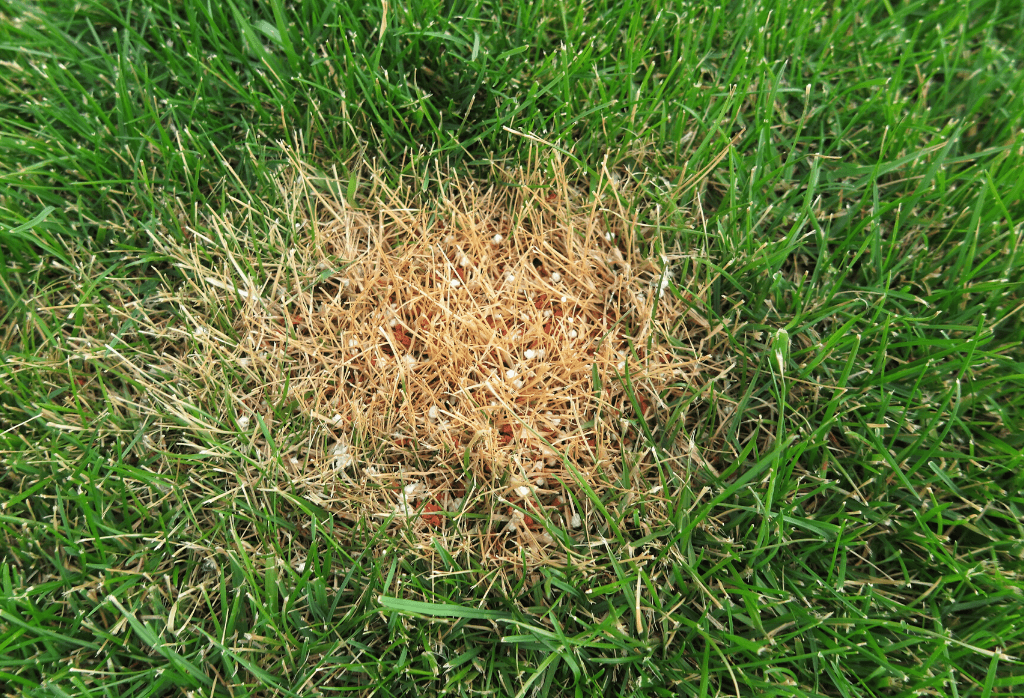
Fertilizer burn may appear as yellow or brown patches, streaks, or dead areas soon after application.
If you suspect burn, remove any visible piles of granules and water appropriately to dilute excess salts, provided the soil drains well.
Avoid creating runoff.
Severely damaged grass may need time to recover or may require reseeding.
A visual comparison of healthy grass, fertilizer burn, and common lawn diseases can help identify the likely cause.
Fertilizing Dormant Grass
Dormant grass is not actively growing.
Adding nitrogen during dormancy may provide little benefit and increase nutrient losses.
Wait until the grass is growing at the appropriate seasonal rate.
Uneven Fertilizer Application
Dark green stripes often mean some areas received more nitrogen than others.
Pale strips may have received less.
This can happen when spreader passes overlap too much or leave large gaps.
Use a calibrated spreader and an even walking pace.
Feeding at the Wrong Time
Heavy summer fertilization can stress tall fescue.
Late-season nitrogen may harm warm-season grass preparing for winter.
Heavy rain soon after application can also wash nutrients away.
Always consider the grass type and weather.
Ignoring Soil Test Results
Using the same fertilizer every year may lead to unnecessary nutrient applications.
Your lawn might need nitrogen but already have enough phosphorus.
A soil test helps prevent these mistakes.
Common Fertilizer Myths
Myth: More fertilizer means greener grass.
Too much can burn your lawn. Use the recommended amount.
Myth: Winterizer only works in winter.
Winterizer is generally used during a suitable late-season feeding period, often while cool-season grass is still growing.
Myth: Any fertilizer will work.
Different fertilizers contain different nutrients and release them at different rates.
Choose what your lawn actually needs.
Troubleshooting Lawn Problems with Fertilizer
Sometimes fertilizer helps. Other times, the real problem has nothing to do with nutrients.
Knowing the difference can save you money.
Yellow or Pale Green Grass
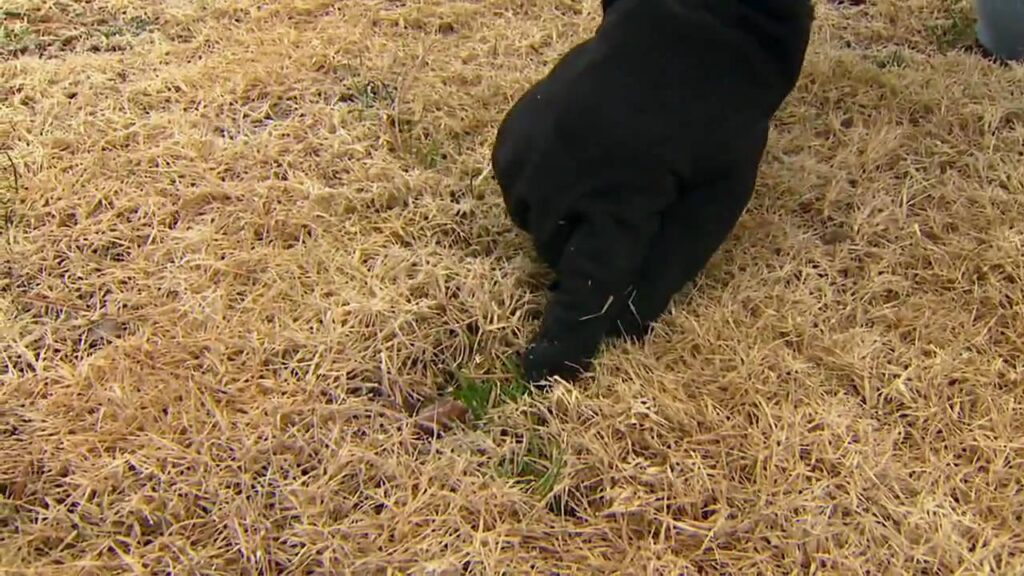
If yellowing covers the entire lawn, check the season, recent feeding, and soil conditions.
Yellow grass may suggest low nitrogen, but other causes include iron deficiency, wet soil, root damage, and compacted ground.
If only a few patches are affected, look for drainage issues, insects, or disease.
Do not apply high-nitrogen fertilizer until you understand the cause.
Thin or Patchy Grass
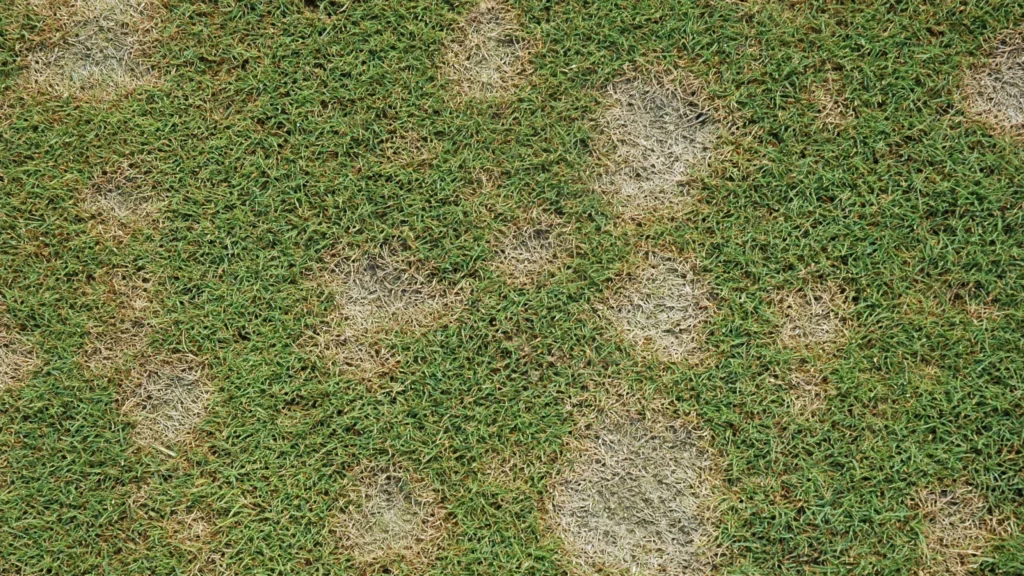
Thin grass may result from poor nutrition, heavy foot traffic, shade, disease, or compacted soil.
Regular feeding can support growth, but it cannot replace dead grass.
Tall fescue lawns with bare areas may benefit from fall overseeding.
Where soil is compacted, aeration may also help roots grow.
Starter fertilizer should be selected according to soil nutrient needs rather than used automatically.
Too Many Weeds
Weeds often spread where grass is thin.
Proper fertilization can help grass fill some gaps, leaving less space for new weeds.
However, fertilizer does not remove established weeds.
Weed-and-feed products combine nutrients with herbicides, but the ideal fertilizer timing may not match the best weed-control timing.
Targeted weed treatment is often the better choice.
Slow Grass Growth
Grass may grow slowly when nutrients are low, but sunlight, temperature, water, and soil conditions also matter.
For example, Bermuda may grow slowly in spring before the soil warms.
Tall fescue often slows down during summer heat.
Applying balanced fertilizer will not fix shade or poor drainage.
Look at the full lawn environment before choosing a treatment.
How to Fertilize Your Lawn Without Harming the Environment
Healthy lawns can help hold soil in place and reduce erosion.
However, fertilizer used incorrectly can harm nearby streams, ponds, and waterways.
A few simple habits make a difference.
Prevent Fertilizer Runoff
Keep granules off hard surfaces and away from drains.
Apply only the amount recommended for your lawn.
Slow-release fertilizers may reduce the chance of rapid nutrient losses when used correctly, but they can still cause pollution if misused.
Use Only the Nutrients Your Lawn Needs
Phosphorus is important for grass, especially when soil levels are low.
But adding phosphorus to soil that already contains enough provides little benefit and increases pollution risk.
Many established lawns can use fertilizer with no added phosphorus when soil testing supports that choice.
Learn more about when phosphorus-free lawn fertilizer is the right choice.
Support Healthy Soil
Soil contains bacteria, fungi, and other small organisms.
Some help break down organic matter, making nutrients available to grass roots.
Organic fertilizers can support this process, especially when they contain useful organic material.
Leaving grass clippings on the lawn can also return some nutrients to the soil.
However, organic products still need careful application. Natural does not automatically mean harmless.
Reduce Unnecessary Treatments
A healthy lawn can better compete with some weeds and recover from minor damage.
This is part of integrated pest management, which focuses on preventing problems and using treatments only when needed.
Proper mowing, watering, soil care, and fertilization work together.
The goal is not to apply more products. It is to give the lawn what it needs.
Frequently Asked Questions About Lawn Fertilizer
How Often Should I Fertilize My Lawn?
It depends on the grass type, growing season, soil conditions, and fertilizer.
Many lawns receive two to four feedings a year, but some need more or fewer.
For tall fescue in North Carolina, fall is the most important feeding period.
Bermuda usually needs more frequent feeding during warm weather.
Follow a grass-specific schedule rather than fertilizing on the same dates every year.
Can I Fertilize a Newly Seeded or Sodded Lawn?
Yes, but new lawns need careful feeding.
Starter fertilizers may help young grass establish, particularly when soil testing shows a need for phosphorus.
Too much fertilizer can damage young seedlings.
Apply the correct product at the recommended rate, and follow the establishment instructions for your grass type.
New sod also needs enough water and good contact with the soil before it can develop strong roots.
Are Weed-and-Feed Fertilizers a Good Idea?
They can be convenient, but they are not always the best choice.
The lawn may need fertilizer when the weeds are not at the right growth stage for treatment.
Some products are also unsuitable for certain grass types or newly seeded areas.
If weeds only cover a small part of the lawn, treating those areas separately may avoid unnecessary herbicide use.
What Is the Best Time of Day to Fertilize?
Morning is often convenient, particularly when temperatures are mild.
For granular fertilizer, dry grass blades are usually preferred.
Avoid applying during strong winds, extreme heat, or immediately before heavy rain.
The growing season, soil moisture, and product instructions matter more than choosing a particular hour.
Do I Need Winterizer Fertilizer?
Not every lawn needs a product labeled winterizer.
For cool-season grass such as tall fescue, late-fall fertilization can support growth and nutrient storage while the grass remains active.
But regular fertilizer with the correct nutrients may provide the same benefit.
For Bermuda and Zoysia, avoid applying unnecessary nitrogen as the grass enters winter dormancy.
Choose based on the grass and nutrient needs, not the product name.
Is Lawn Fertilizer Safe for Kids and Pets?
Fertilizers should always be handled carefully.
Keep children and pets off the lawn during application and follow the label’s instructions before allowing them back.
Some products require watering and drying before normal lawn use.
Never assume organic fertilizer is automatically safe for pets or wildlife.
Store all products securely and clean up spills promptly.
Final Thoughts
Lawn fertilizer works best when you understand what your grass needs.
Start with a soil test. Learn what the N-P-K numbers mean, choose the right fertilizer, and apply it during your grass’s active growing season.
Measure carefully, spread evenly, and follow watering instructions.
Most importantly, remember that fertilizer is only one part of lawn care. Healthy soil, proper mowing, and good watering habits matter just as much.
If you have a lawn in Charlotte or a nearby community and are unsure where to begin, Advanced Turf Care can help you build a fertilization plan suited to your grass, soil, and local growing conditions.
A healthy lawn does not come from using the most fertilizer. It comes from using the right amount at the right time.
Give Your Lawn the Nutrition It Needs
Get a fertilization program designed for healthier color, stronger growth, and better seasonal performance.
Explore Fertilization