You walk into a garden store looking for lawn fertilizer. One bag says regular fertilizer, while another says winterizer. Both promise healthier grass, but they have different numbers on the label.
So, which one does your lawn actually need?
The answer depends on your grass type, the time of year, and what nutrients your soil already has.
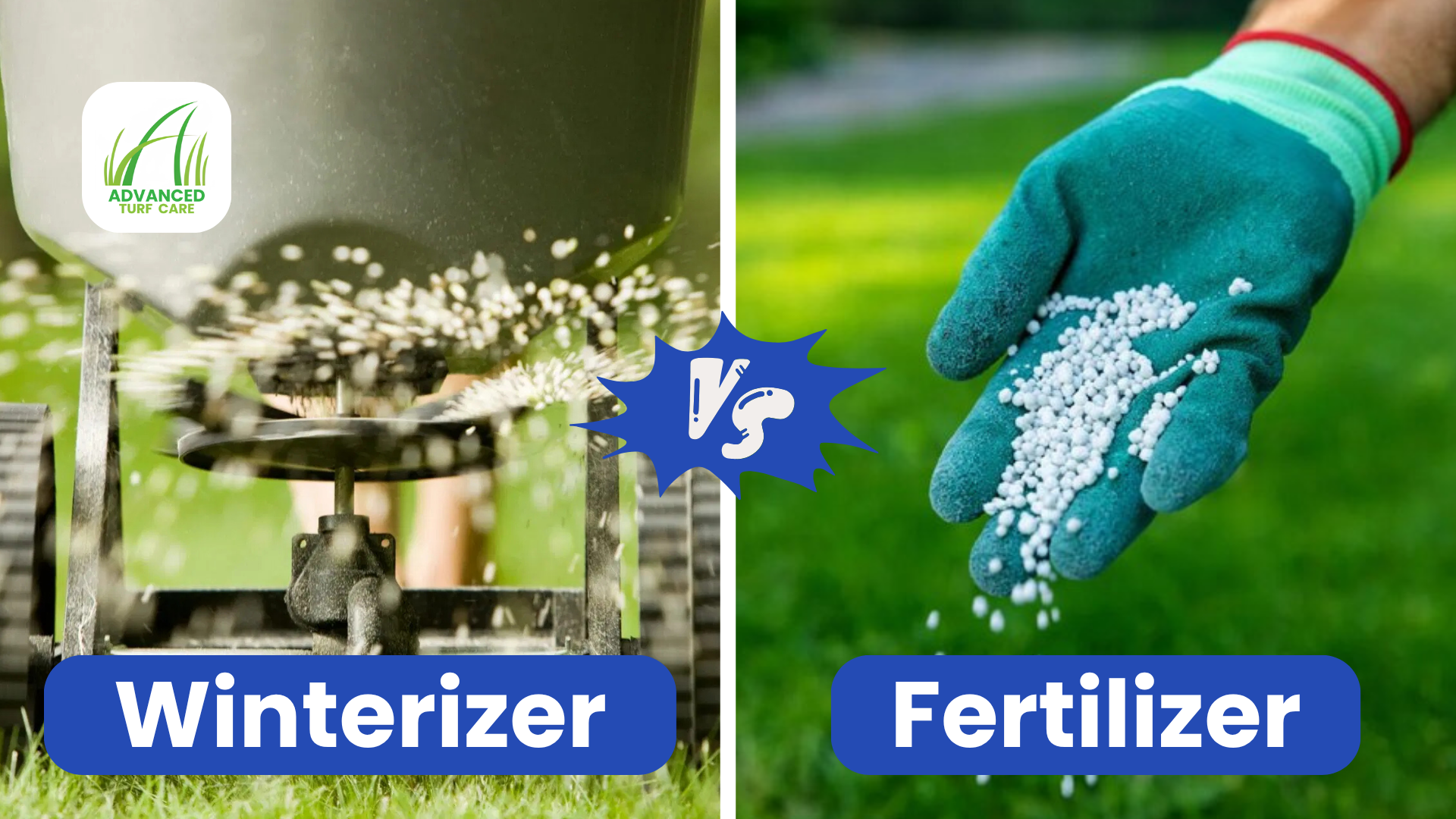
Lawn winterizer is a type of fertilizer made for late-season use. Regular lawn fertilizers are used throughout the growing season to support healthy growth and green color. Winterizers are often used in fall to help grass prepare for colder weather.
But there’s something many homeowners miss. Not every lawn needs the same winterizer, and some lawns may not need one at all.
This matters in places like Charlotte, North Carolina, where tall fescue, Bermuda, and Zoysia lawns grow on different schedules.
Let’s look at what each fertilizer does, when to use it, and how to avoid wasting money on the wrong product.
What Is Lawn Fertilizer?
Lawn fertilizer gives your grass nutrients it needs to grow, stay green, and recover from stress.
Grass gets some nutrients from the soil, but those nutrients may not always be available in the amounts it needs. Fertilizer helps fill that gap.
A properly fed lawn can grow thicker, develop healthy roots, and recover better from normal wear.
However, fertilizer does not fix every lawn problem. If your grass is struggling because of poor drainage, compacted soil, or disease, adding more fertilizer may not help.
Understanding N-P-K Ratios
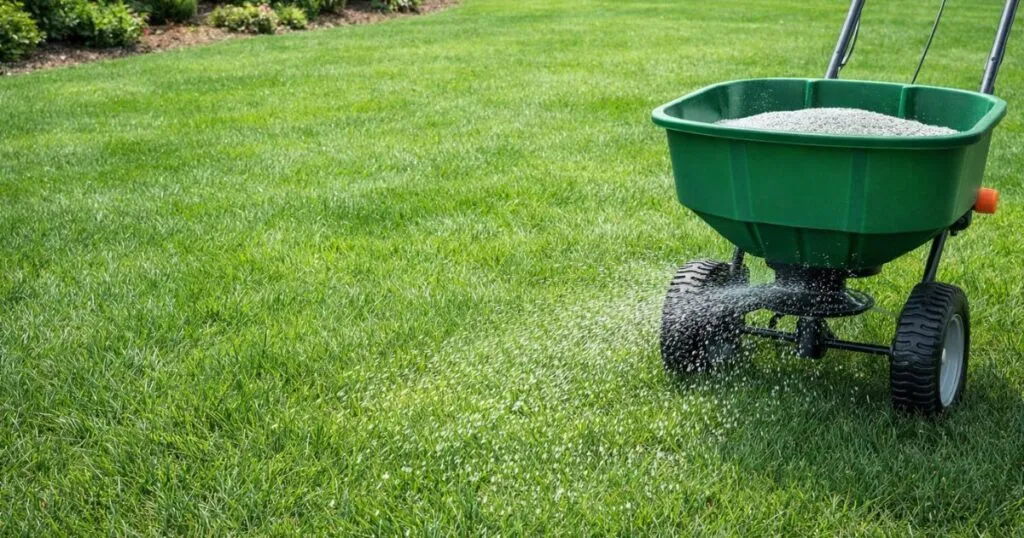
Every fertilizer bag has three numbers printed on it. You might see 20-5-10, 28-0-4, or 12-12-12.
These numbers show the percentage of three main nutrients:
Nitrogen (N): Helps grass grow green leaves. It also supports the process grass uses to turn sunlight into food.
Phosphorus (P): Helps with root growth, energy use, and the early development of new grass.
Potassium (K): Helps grass manage water, maintain healthy cells, and handle stress from heat, cold, and disease.
For example, a 20-5-10 fertilizer contains 20% nitrogen, 5% phosphate, and 10% potash. The remaining material contains other ingredients or nutrients.
You don’t need to memorize these numbers. You just need to understand what your lawn requires.
If you want to understand these nutrients in more detail, our complete guide to lawn fertilizer explains how they support healthy grass.
Types of Lawn Fertilizers
Fertilizers also come in different forms.
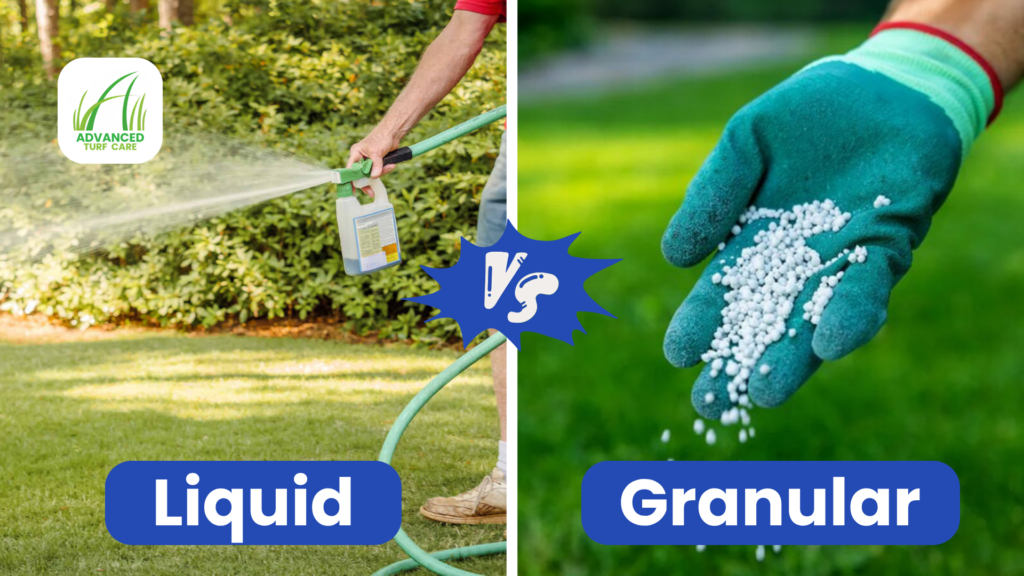
Granular fertilizer comes in small pellets that you spread across the lawn. Some release nutrients quickly, while others feed the grass over several weeks.
Liquid fertilizer is mixed with water or sold ready to spray. It can provide a quick nutrient boost and may be useful for small lawns or targeted treatments.
Slow-release fertilizer feeds grass over time. It can provide steadier growth and lower the risk of applying too much soluble nitrogen at once.
Quick-release fertilizer makes nutrients available faster. It can improve color sooner, but careful application is important to avoid lawn burn.
Here are some common fertilizer examples.
| Fertilizer type | Example N-P-K | Main purpose |
|---|---|---|
| All-purpose | 20-5-10 or 28-0-4 | General growth and color |
| Starter fertilizer | 18-24-6 or 12-12-12 | Helping new grass establish where nutrients are needed |
| Weed and feed | 28-0-3 | Feeding grass and controlling certain weeds |
| Organic or natural | 8-2-4 | Supplying nutrients, often more slowly |
These are examples, not formulas every lawn needs. Always check the label and match the product to your grass type and soil conditions.
What Is a Lawn Winterizer?
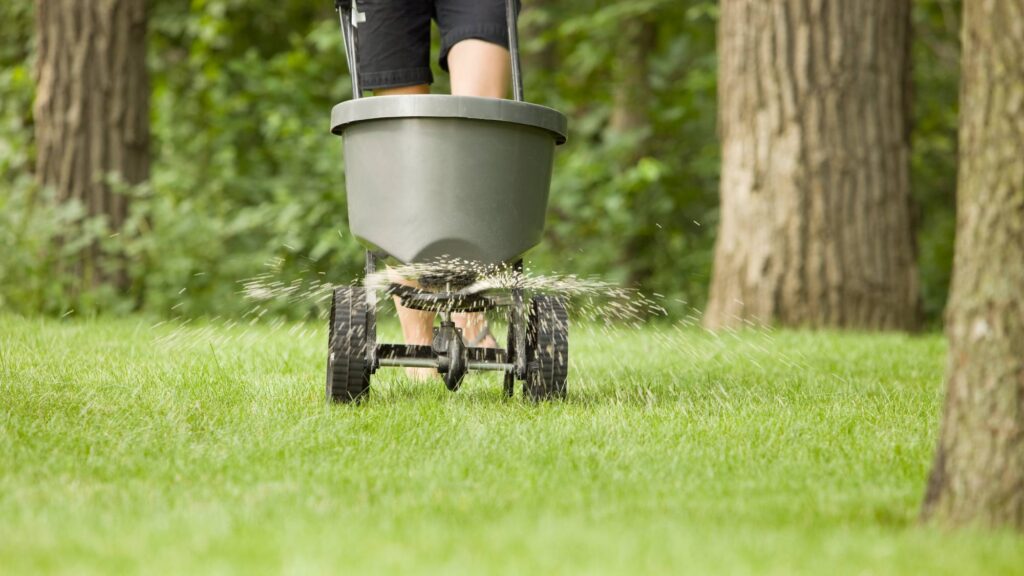
A lawn winterizer is fertilizer sold for use near the end of the growing season.
Its purpose is to supply nutrients that help grass stay healthy as temperatures drop and prepare for growth when warmer weather returns.
During fall, grass begins changing how it grows. Cool-season grasses such as tall fescue can remain active in cooler weather. Warm-season grasses such as Bermuda and Zoysia slow down and eventually turn brown as they enter winter dormancy.
Good fall nutrition can help grass maintain healthy roots and use the food it makes before winter.
What Makes Winterizer Different?
Many winterizer products contain more potassium than some regular fertilizers.
Potassium helps grass control water movement within its cells. It also supports normal plant functions that help grass cope with stress.
You may find winterizer formulas such as 5-10-20, 10-0-14, or 0-0-10.
However, a winterizer does not always need to be high in potassium or low in nitrogen.
For example, tall fescue can benefit from nitrogen during fall because it grows well in cooler weather. Bermuda and Zoysia have different needs as they approach dormancy.
Adding potassium to soil that already has enough may provide little benefit.
Can Winterizer Help Your Lawn in Spring?
It can, when the lawn needs the nutrients being applied.
Healthy grass can enter winter with stronger roots and better nutrient reserves. This may help it recover and begin growing when conditions improve.
Imagine your fescue lawn looked thin and pale last spring. Poor fall nutrition might have contributed to the problem.
But fertilizer alone may not explain it. Summer heat, shade, disease, or compacted soil could also be responsible.
Winterizer supports good lawn care. It cannot guarantee that your grass will survive every winter without damage.
What’s the Difference Between Winterizer and Regular Fertilizer?
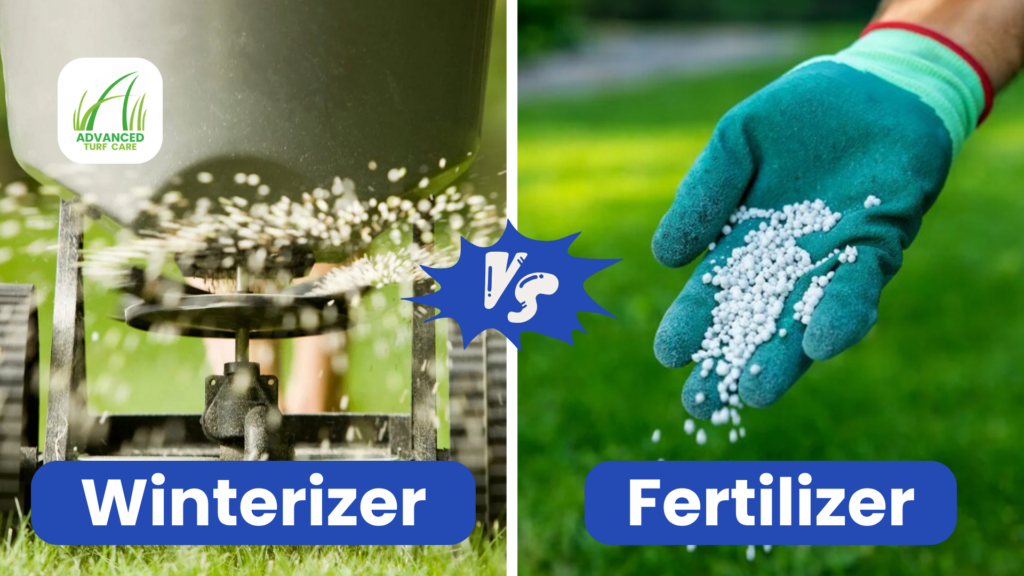
The biggest difference is how each product fits into your lawn’s feeding schedule.
Regular fertilizers are commonly used to support active growth. Winterizers are marketed for late-season feeding, when grass is preparing for cooler weather.
Nutrient Ratios
Regular lawn fertilizer often contains enough nitrogen to support leaf growth and green color.
Winterizer formulas may contain more potassium for stress tolerance. Some also contain nitrogen to support fall growth in cool-season grass.
The right nutrient ratio depends on your soil, not just the season.
Main Purpose
Regular fertilizer helps grass grow, maintain its color, and recover from wear.
Winterizer is used to provide needed nutrients before winter. Depending on the grass type, it may support root health, nutrient reserves, and normal cold tolerance.
Application Timing
Regular fertilizer is generally applied during the grass’s active growing season.
Winterizer is usually applied during fall, while the lawn can still use the nutrients.
That does not mean every lawn should receive fertilizer just before freezing temperatures.
How They Affect Grass Growth
Nitrogen can encourage leaf growth. Phosphorus supports several plant functions, including root development. Potassium helps grass manage stress.
A fertilizer does not force grass to send all its energy into the roots. Temperature, sunlight, moisture, and grass type also affect how the plant grows.
Here is a simple comparison.
| Feature | Lawn winterizer | Regular fertilizer |
|---|---|---|
| Main use | Late-season nutrition | Feeding during active growth |
| Nutrients | Often higher potassium, but formulas vary | Often nitrogen-focused |
| Best timing | Fall, when suitable for the grass type | During the grass’s growing season |
| Main benefit | Helps meet nutrient needs before winter | Supports growth, color, and density |
| Main risk | Wrong nutrients or poor timing | Too much fertilizer or feeding during stress |
| Spring results | May support recovery when nutrients were needed | Helps support growth when applied at the right time |
Neither product is automatically better. The best choice is the one that matches your lawn’s needs.
Why Does the Difference Matter for Your Lawn?
Using the wrong fertilizer at the wrong time can lead to weak growth, wasted money, and lawn damage.
For example, applying too much nitrogen to Bermuda late in fall may encourage growth when the grass should be slowing down. That new growth can be more vulnerable to cold weather.
But applying nitrogen to tall fescue in fall is different. Fescue grows well in cool weather, making fall one of its most important feeding periods.
What Happens When You Use the Wrong Product?
Too much fertilizer can burn grass, especially when high amounts of soluble nutrients are applied.
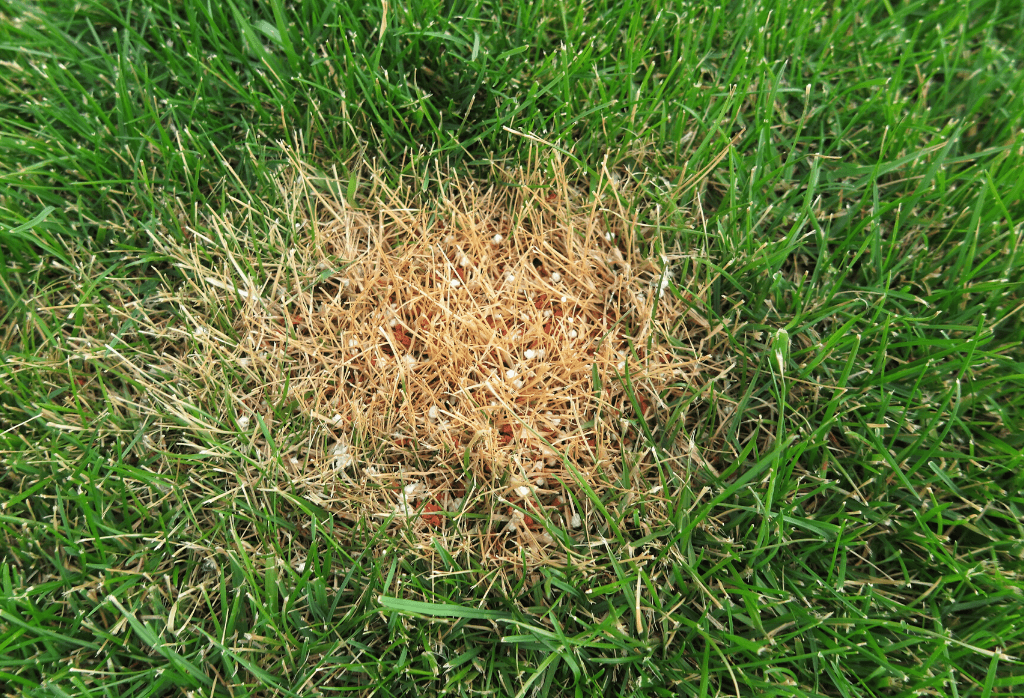
You may notice yellow or brown streaks where too much product landed. In severe cases, grass can die.
Excess nitrogen can also produce soft, fast growth that may be more prone to certain diseases.
Using a low-nitrogen winterizer during an active growing period may leave a nitrogen-hungry lawn looking pale. On the other hand, applying potassium that your soil does not need may simply waste money.
How Proper Feeding Helps Over Time
Grass that receives the right nutrients at the right time has a better chance of staying thick and healthy.
A dense lawn can also leave less room for weeds to establish.
Proper feeding may reduce the need for some lawn repairs, but it cannot replace watering, disease care, or overseeding when those are needed.
There is a money-saving benefit, too.
Buying fertilizer based on your grass and soil means you are less likely to pay for nutrients you already have. You also reduce the risk of damaging your lawn with unnecessary treatments.
When Should You Apply Winterizer and Regular Fertilizer?
Fertilizer timing depends more on your grass type and growing conditions than on the date printed on a calendar.
This is especially true in North Carolina.
When to Apply Regular Lawn Fertilizer
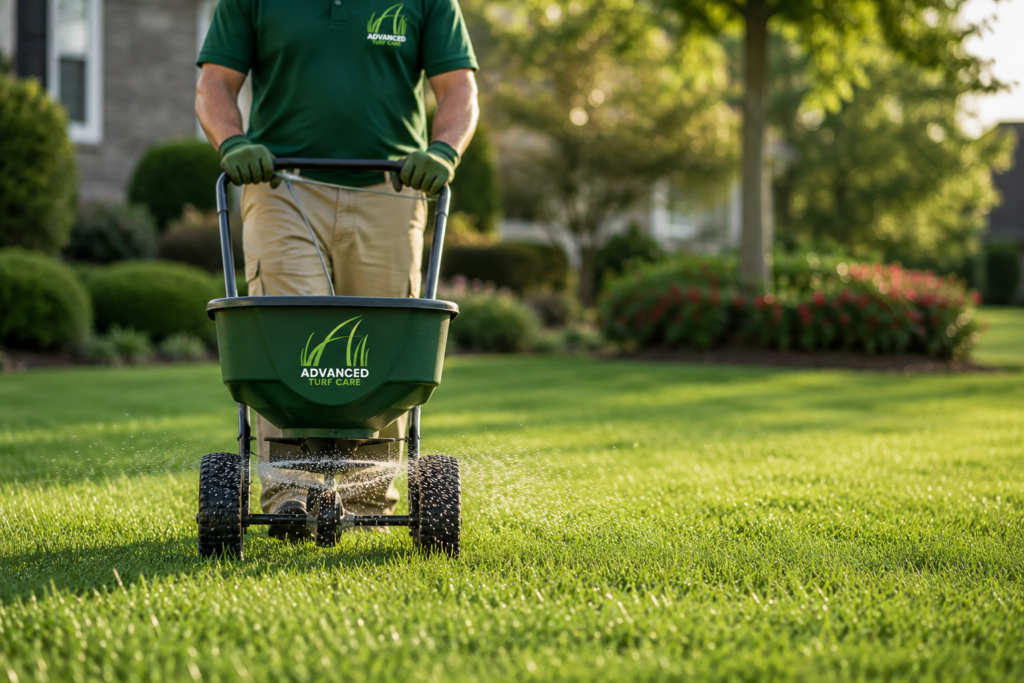
For Bermuda and Zoysia lawns, the main feeding season begins after the grass has turned green in spring and is actively growing.
Most of their nitrogen feeding belongs in warmer months.
Tall fescue follows a different schedule. It grows best in cooler weather, so fall and late winter are important feeding periods.
Heavy summer nitrogen applications can create problems for fescue during Charlotte’s hot, humid weather.
That’s why a fertilizer schedule that works for Bermuda may not work for fescue.
When to Apply Lawn Winterizer
Late-season feeding is often associated with September through November, but the right window depends on the grass.
Tall fescue: NC State Extension recommends fall feeding, including applications around mid-September and November. The November application can occur while the grass is green but growing slowly.
Bermuda: Fall nitrogen should be limited as the grass approaches dormancy. NC State advises no more than half a pound of nitrogen per 1,000 square feet in September or about four weeks before the expected first frost.
Zoysia: NC State recommends avoiding fall nitrogen. A potassium application may be appropriate under its fall maintenance guidance, while soil testing helps determine the lawn’s nutrient needs.
Avoid applying fertilizer to frozen ground or when heavy rain could wash nutrients away.
Does Your Local Climate Matter?
Yes.
Charlotte sits in North Carolina’s transition zone. That means homeowners often grow both cool-season and warm-season grasses.
A fescue lawn in Huntersville may still be green and growing in November, while a Bermuda lawn nearby is already turning brown.
The same bag of winterizer will not suit both lawns in the same way.
You can make a quick decision by asking yourself three questions: What grass do I have? Is it actively growing or becoming dormant? What does my soil need?
Those answers are more useful than relying on a date or a winterizer label alone.
How to Choose the Right Fertilizer for Your Lawn
Before buying fertilizer, look at your grass, the time of year, and the condition of your soil.
Start With Your Grass Type
If you have tall fescue, focus on its cool-season feeding schedule.
If you have Bermuda or Zoysia, plan most nitrogen applications around active warm-weather growth.
The same principle applies to ryegrass, Kentucky bluegrass, and St. Augustine grass. Each has its own needs.
If you’re unsure what grass you have, identifying it is the best place to start.
Consider What Your Lawn Needs
A pale lawn might need nitrogen, but yellow grass can also result from disease, poor drainage, drought, or unhealthy roots.
Thin grass may need better growing conditions or overseeding rather than another fertilizer application.
If weeds are the main problem, fertilizer alone will not remove them.
Choosing a product based only on the color of your grass can lead to unnecessary treatments.
Test Your Soil Before Buying

Soil testing helps you understand what is happening beneath the grass.
A test can reveal soil pH and the amounts of important nutrients such as phosphorus and potassium.
This matters around Charlotte, where red clay soils can become compacted and where soil acidity may affect nutrient availability.
You can use a home testing product such as Rapitest or MySoil, but laboratory testing provides a more detailed basis for fertilizer decisions.
North Carolina homeowners can also use the NC Department of Agriculture’s soil testing service.
If you haven’t tested your yard before, read about why soil testing matters for your lawn before choosing a fertilizer.
A Simple Way to Decide
Think of fertilizer selection as a short decision tree.
If your lawn is actively growing in spring or summer, first check whether that is the normal feeding season for your grass.
If it is fall and your grass is fescue, look at its fall nitrogen needs.
If it is Bermuda or Zoysia preparing for dormancy, avoid assuming that a high-nitrogen winterizer is suitable.
Finally, check the soil test and product label before making a choice.
A good lawn care professional should be able to explain why a particular fertilizer fits your grass, rather than simply recommending the same bag for every yard.
How to Apply Fertilizer and Winterizer Correctly
Even the right fertilizer can cause problems when applied incorrectly.
The goal is to spread the correct amount evenly, keep it where it belongs, and follow the product’s watering instructions.
Before You Apply Fertilizer
Read the entire product label first.
Check that the fertilizer is suitable for your grass and that the recommended application rate matches your lawn’s needs.
Avoid spreading during strong wind, before heavy rain, or when the grass is suffering from severe drought or heat stress.
Measure your lawn area before opening the bag. Do not include patios, driveways, or flower beds in your calculation.
Choose the Right Spreader
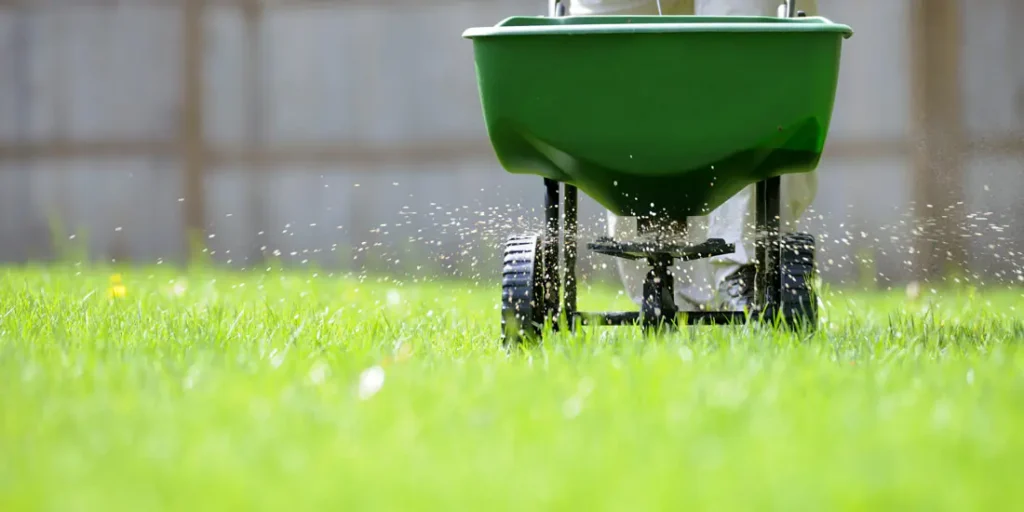
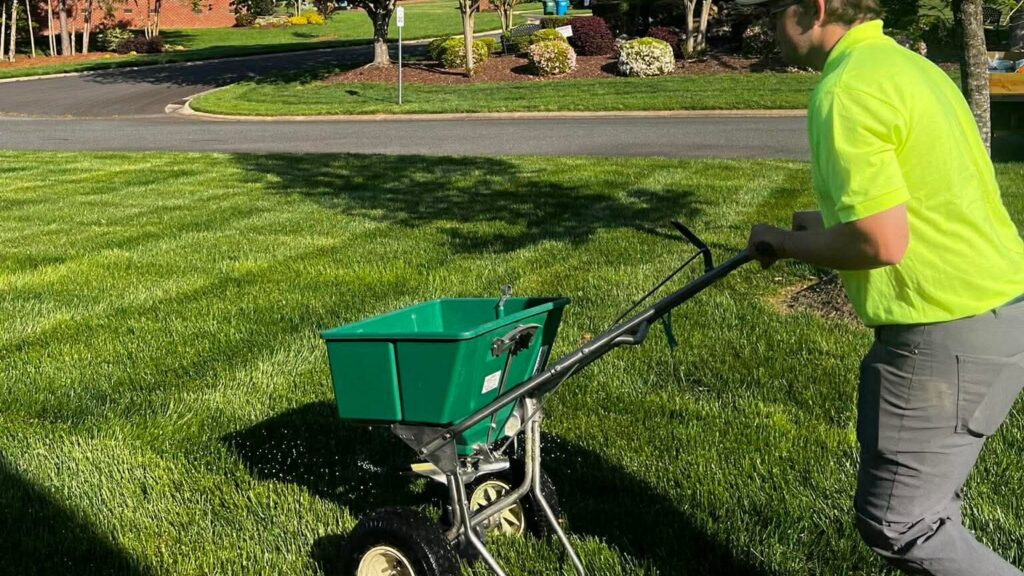
A broadcast spreader covers larger lawns quickly by throwing granules over a wider area.
A drop spreader places fertilizer in a more controlled strip. It can be useful near driveways, paths, and garden beds.
Brands such as Scotts and EarthWay make lawn spreaders, but the type and condition of the equipment matter more than the name.
Some broadcast models also have edge guards that help keep fertilizer away from hard surfaces.
Measure and Calibrate Carefully
Spreader settings are not universal.
A setting that works for one fertilizer may release too much or too little of another.
Follow the product’s suggested setting, then check that your spreader is distributing the correct amount.
Walk at a steady pace and overlap passes as directed.
For suitable granular products, two crossing passes at half the total rate can improve even coverage when your equipment is calibrated for that method.
If you’re unsure about application amounts, our guide on how much fertilizer your lawn needs explains how to calculate them.
Protect Yourself, Children, and Pets
Wear gloves when handling fertilizer. Eye protection is also sensible when filling spreaders or mixing liquid products.
Keep children and pets away during application and follow the label’s re-entry instructions.
Some products allow access after watering and drying. Others require a longer waiting period.
Do not assume every fertilizer has the same safety instructions.
Clean up granules from driveways and sidewalks before they can wash into storm drains.
Water After Application
Many granular fertilizers need watering to help move nutrients into the soil.
Use a sprinkler or gentle hose spray to water evenly without creating runoff.
However, watering instructions vary. Some weed-and-feed products need different conditions, so always follow the label.
Avoid flooding the lawn. Too much water can carry fertilizer away before the grass benefits from it.
Common Fertilizer Mistakes to Avoid
Many fertilizer problems come from small mistakes that are easy to prevent.
Mistake 1: Thinking More Fertilizer Means Greener Grass
More is not always better.
Excess fertilizer can damage grass roots and leaves, increase disease risk, and allow nutrients to wash into nearby waterways.
Use only the amount your lawn needs.
Mistake 2: Applying Winterizer Whenever It’s Cold
Winterizer is not something you spread simply because winter has arrived.
Your lawn must be in the right condition to use the nutrients. Frozen ground and dormant warm-season grass are not good reasons to apply fertilizer.
Mistake 3: Skipping Soil Testing
An all-purpose fertilizer may seem convenient, but it cannot tell you what is already in your soil.
You could be adding phosphorus or potassium your lawn does not need.
Mistake 4: Fertilizing Dormant Grass
When Bermuda and Zoysia are fully dormant, applying nitrogen generally provides little benefit.
Wait for the correct growing season instead.
Cool-season grass has different winter feeding needs, so always identify your grass before following this advice.
Mistake 5: Ignoring the Weather
Fertilizing before heavy rain can cause runoff.
Applying fertilizer during severe heat or drought stress can also place more pressure on an already struggling lawn.
Choose suitable weather and follow the label.
Mistake 6: Using the Wrong Spreader Setting
Uneven spreading can leave visible green and yellow stripes across your yard.
Calibrate your spreader and keep a consistent walking speed.
Mistake 7: Skipping Important Fall Feeding
For tall fescue, missing fall fertilization can mean losing a key chance to support growth after summer stress.
But not every grass needs fall nitrogen.
The mistake is skipping a needed application, not skipping a product simply because it says winterizer.
FAQs About Lawn Winterizer and Fertilizer
A winterizer with very little nitrogen may not provide enough for a lawn that needs nitrogen during spring growth. Read the label and check your soil needs before using it.
Can I Use Winterizer in Spring?
Yes, some winterizer products can be used in spring, but only if their nutrients and application rate suit your grass.
Organic fertilizers can supply nutrients and may support soil health, but they are not automatically better for winter use. The important factors are the nutrients provided, how quickly they become available, and whether your grass needs them. Some organic products release nutrients slowly as soil microbes break them down. This process becomes slower in cold soil. Choose based on your lawn’s needs rather than the word organic on the bag.
Is Organic Fertilizer Better for Winterizing?
Not necessarily.
For many basic granular fertilizers, pets can return once the fertilizer has been watered in as directed and the grass has dried. However, products containing weed killers or other active ingredients may have different restrictions. There is no single 24-hour or 48-hour rule that applies to every fertilizer. Keep pets away until all label instructions have been met.
How Long After Fertilizing Can Pets Go on the Lawn?
Follow the product label.
A fertilizer with an unsuitable nutrient ratio may simply provide little benefit. Applying too much can cause yellowing, brown patches, or lawn burn. If you realize you’ve made a mistake, check the product label before applying water or another treatment. Do not immediately add more fertilizer to correct the problem. For a large spill or serious damage, contact a local lawn care professional or Cooperative Extension office for guidance.
What Happens If I Use the Wrong Fertilizer?
It depends on the product and how much you applied.
Many established lawns receive several fertilizer applications throughout the year, but the number and timing depend on grass type, soil conditions, and growth needs. Tall fescue usually receives much of its nitrogen in fall and late winter. Bermuda and Zoysia receive most of their nitrogen during warmer months. A soil test and a grass-specific maintenance calendar will help you decide how often to feed your lawn.
How Often Should I Fertilize My Lawn?
There is no single schedule for every lawn.
If your grass remains actively growing in a warm climate, its fertilizer needs may be different from those of a lawn that becomes dormant. Some warm-season lawns benefit from late-season potassium, but that does not mean every lawn needs a winterizer. Look at your grass type, soil test results, and local climate before applying anything.
Do I Need Winterizer If I Live Somewhere Warm?
Not always.
Choosing the Right Fertilizer Makes a Difference
Lawn winterizer and regular fertilizer are not completely different products. Both supply nutrients to your grass, but they may serve different needs at different times.
Regular fertilizer supports healthy growth during the right growing season. Winterizer is used for late-season feeding when the lawn needs those nutrients.
The most important thing is knowing your grass.
Tall fescue needs a different feeding schedule from Bermuda and Zoysia. Soil testing also helps you avoid applying nutrients that your lawn already has.
If you’re not sure what your yard needs, Advanced Turf Care can help you choose a fertilization plan suited to your grass, soil, and Charlotte-area growing conditions.
The right nutrients at the right time can make a real difference, without wasting money on products your lawn doesn’t need.
Give Your Lawn the Nutrition It Needs
Get a fertilization program designed for healthier color, stronger growth, and better seasonal performance.
Explore Fertilization