You fertilized your lawn hoping for thicker, greener grass. But a few days later, you noticed yellow patches, brown streaks, or grass that looked dry and dead. Now you’re wondering if the fertilizer caused the damage.
The good news is that not every brown patch means your lawn is dead. Mild fertilizer burn can often recover with proper care. More serious damage may need new grass.
The first step is to find out what went wrong. Once you know the cause, you can take the right steps to help your lawn recover and avoid making the same mistake again.
What Is Fertilizer Burn?
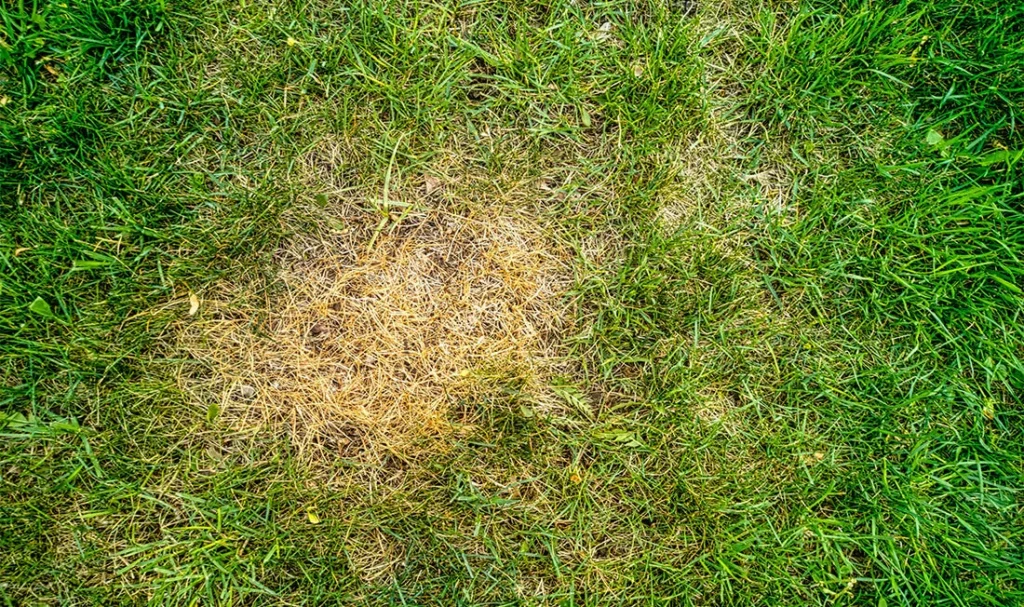
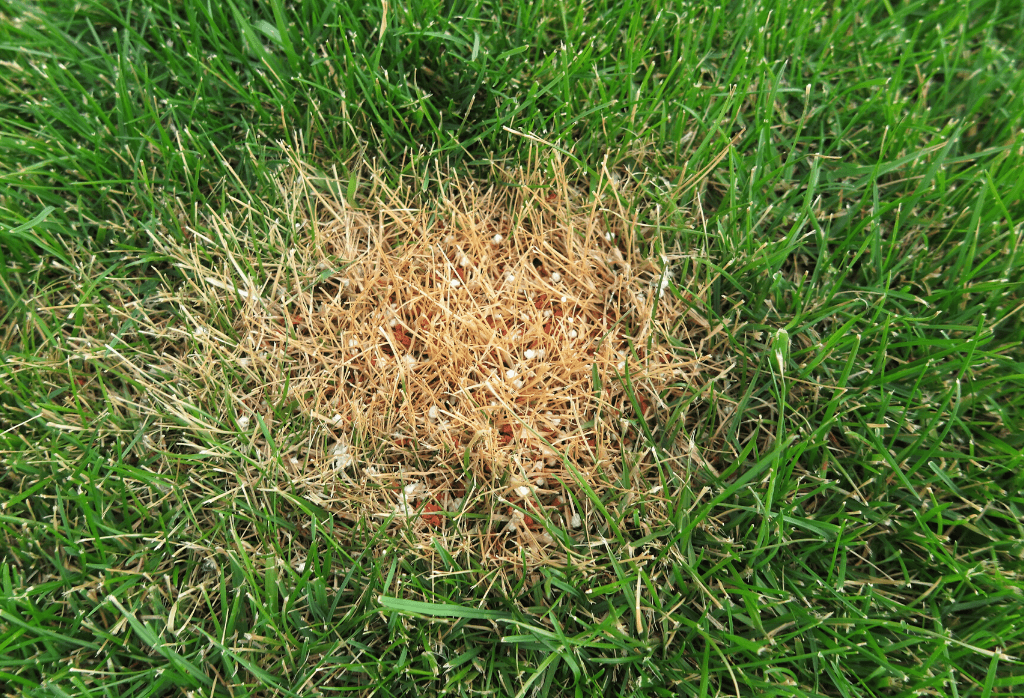
Fertilizer burn happens when fertilizer damages grass blades or roots. It is usually caused by too much concentrated fertilizer in one area.
Most fertilizers contain nutrients that help grass grow. Nitrogen supports green growth, phosphorus helps with root development, and potassium supports the grass during stress.
But too much of these nutrients can cause problems.
How does fertilizer burn grass?
Many fertilizers contain soluble salts. When too much fertilizer collects around grass roots, these salts make it harder for the roots to take in water.
Water can even move out of plant cells toward the more concentrated salts in the soil. This process is called osmosis.
Think of it like this. Your grass may be sitting in moist soil, but its roots cannot use that moisture properly. The grass starts to dry out even though water is nearby.
Nitrogen fertilizers, especially quick-release products containing urea, can cause this problem when applied at excessive rates.
Fertilizers also have something called a salt index. It helps show how much a fertilizer source can raise salt levels in the soil. Products with a higher salt index generally have a greater chance of causing damage when misused.
This does not mean nitrogen or other nutrients are bad for your lawn. Grass needs them. The problem is applying more than it can safely handle.
What does fertilizer burn look like?
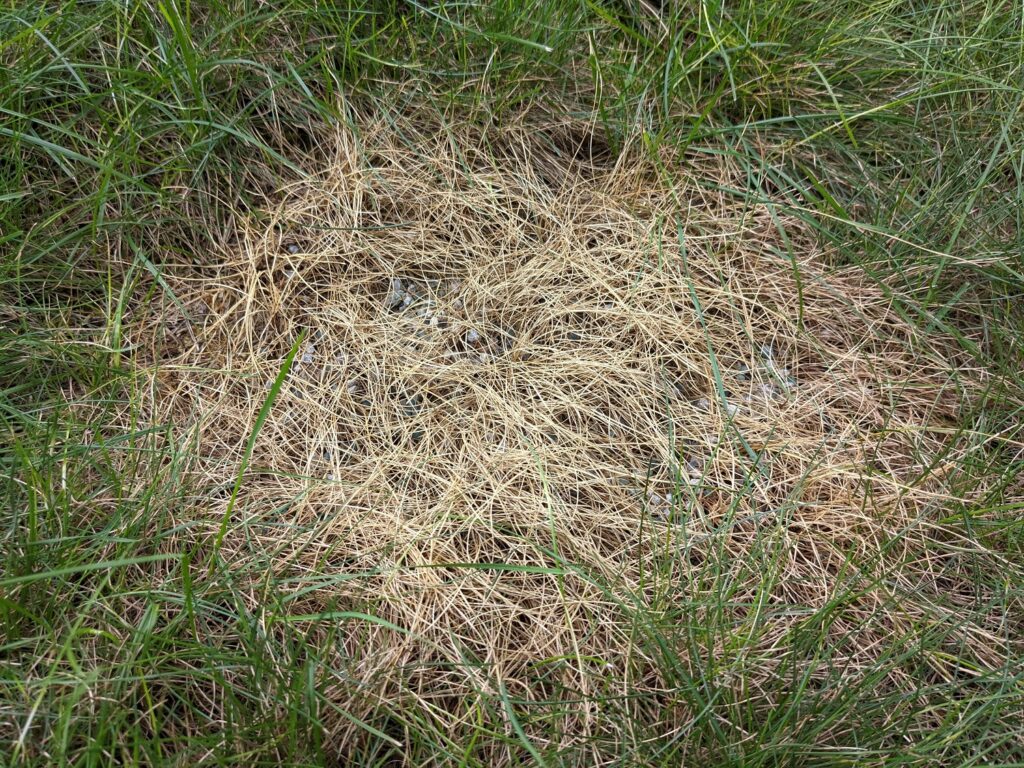
The damage can appear in different ways depending on how much fertilizer was applied.
| Sign | What you may notice |
|---|---|
| Yellowing | Grass tips or whole blades begin turning yellow |
| Browning | Yellow areas become brown or reddish-brown |
| Dry grass | Blades feel brittle and break easily |
| Brown streaks | Straight lines appear where fertilizer was spread |
| Dead patches | Some areas stop growing and lose their green color |
These signs often develop within several days of fertilizing, although the timing can vary.
A small spill might leave one badly damaged spot. An incorrectly adjusted spreader may leave several brown lines across the lawn.
The pattern can tell you a lot about what happened.
Why Does Fertilizer Burn Happen?
Most fertilizer burns happen because of application mistakes. Sometimes, the product itself is suitable, but the amount, weather, or application method creates a problem.
1. Applying too much fertilizer
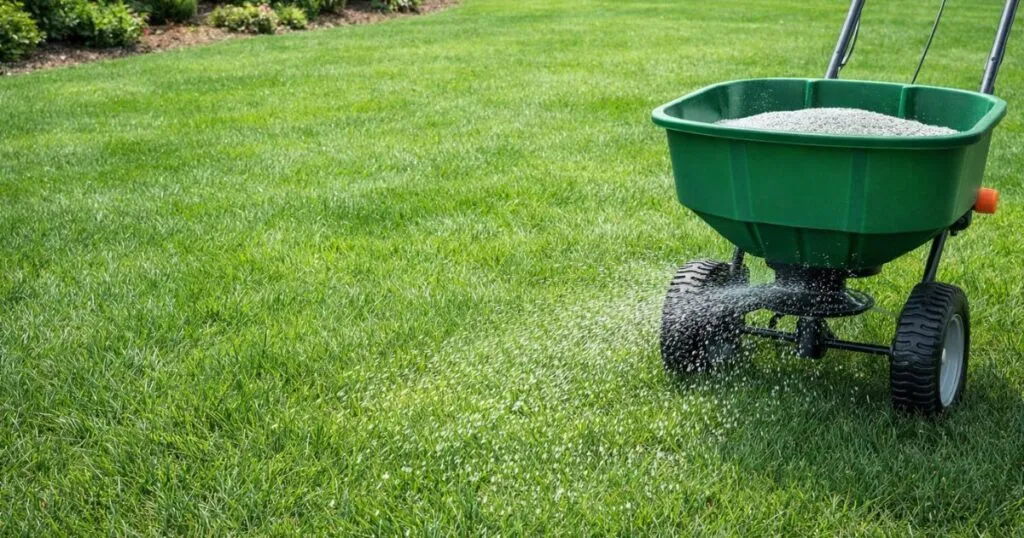
This is one of the most common causes.
Every fertilizer has a recommended application rate. If the bag says to use a certain amount per 1,000 square feet, applying twice that amount will not make your lawn twice as green.
Instead, excess nutrients can build up around the roots.
This often happens when homeowners guess the size of their lawn or pour extra fertilizer into areas that look weak.
Spills are another common problem. A pile of fertilizer left on the grass can cause serious damage in a small area.
If you are unsure how much to apply, do not guess. Use the product label and your lawn’s actual size.
2. Fertilizing wet grass or during hot weather
Granular fertilizer can stick to wet grass blades. Depending on the product, concentrated nutrients may dissolve against the leaves and cause injury.
Many standard granular fertilizers are best applied when the grass blades are dry, followed by watering as directed on the label.
Hot weather creates another problem.
The grass may not have enough moisture to support the new growth encouraged by nitrogen.
Avoid fertilizing grass that is wilted, severely dry, or struggling through extreme heat.
3. Using too much quick-release fertilizer
Quick-release fertilizer provides nutrients that become available to grass relatively fast.
That can help with green growth, but it also increases burn risk if too much is applied.
Slow-release fertilizers feed the grass over a longer period. This usually lowers the chance of a sudden buildup of soluble nutrients.
Both types can work well when used correctly.
If you want to understand how different nutrients support lawn growth, our guide to lawn fertilizer explains the basics.
4. Spreader mistakes and poor watering
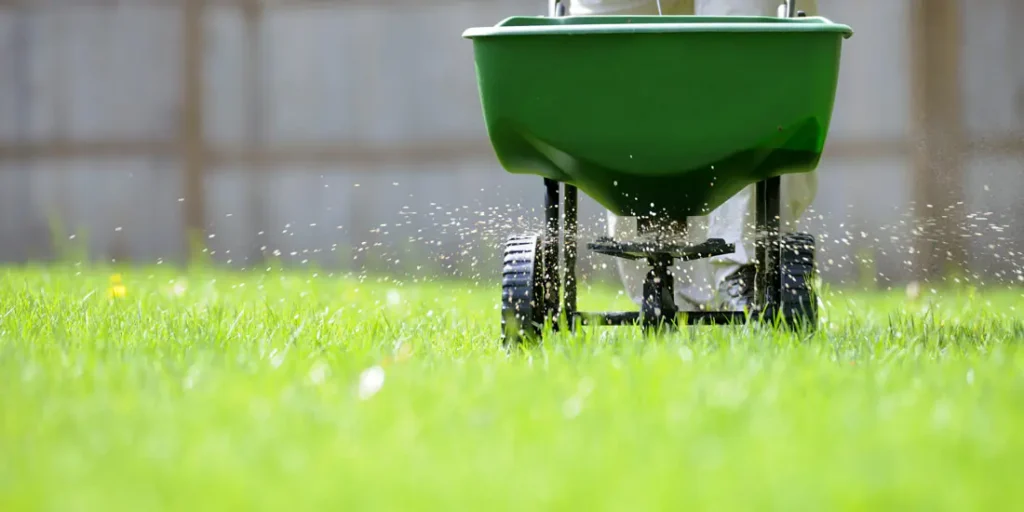
Your spreader may be putting down more fertilizer than you realize.
A setting that works for one product may not work for another. Walking too slowly, stopping while the spreader is open, or overlapping passes too much can all leave heavy deposits.
Watering also matters.
Many granular fertilizers need water after application to move nutrients off the blades and into the soil. Without proper watering, the risk of damage may increase.
Always follow the watering instructions on your fertilizer label. Some products, especially those combined with weed control, have different requirements.
How to Tell if Your Grass Has Fertilizer Burn
Brown grass does not always mean fertilizer burn.
Drought, fungal diseases, insects, and nutrient problems can all change the color of your lawn. Before trying to fix it, look closely at when and where the damage appeared.
Signs that point to fertilizer burn
Ask yourself three questions:
- Did the damage appear soon after fertilizing?
- Are the brown areas shaped like spreader lines, overlaps, or spills?
- Does the grass feel dry and brittle?
If you answered yes to all three, fertilizer burn is a strong possibility.
But you should still check for other problems.
Fertilizer burn vs. drought stress
Drought-stressed grass often turns dull green or bluish-gray before becoming brown.
You may also notice footprints remaining visible after walking across the lawn. The grass struggles to spring back because it lacks water.
Drought damage often affects large sunny or dry areas, rather than following fertilizer application patterns.
Fertilizer burn is more likely when damage appears shortly after feeding the lawn, particularly in places where extra fertilizer was applied.
Both problems can happen at the same time, so check the soil moisture as well.
Fertilizer burn vs. fungal disease
Fungal diseases can look very similar to fertilizer damage.
Brown patch, for example, is a common problem on tall fescue lawns in North Carolina. It often develops during warm, humid weather.
You may see brown or tan patches with damaged leaves. Some leaves have tan spots with dark borders. Fungal growth is not always visible.
Fertilizer burn is more closely tied to application timing and uneven fertilizer coverage.
If the damage appeared during a long period of humid weather and keeps spreading, a disease may be involved.
Do not apply a fungicide simply because your lawn has brown patches. Identify the problem first.
Fertilizer burn vs. insect damage
White grubs feed on grass roots beneath the soil.
When damage becomes severe, affected grass may pull up easily because the roots have been eaten.
Lift a small section of damaged turf and inspect the soil underneath.
If you find damaged roots and grubs, insects may be responsible. However, finding one grub does not automatically mean you have a serious infestation.
Fertilizer burn usually follows a more direct pattern related to where the product was applied.
Could it be a nutrient deficiency?
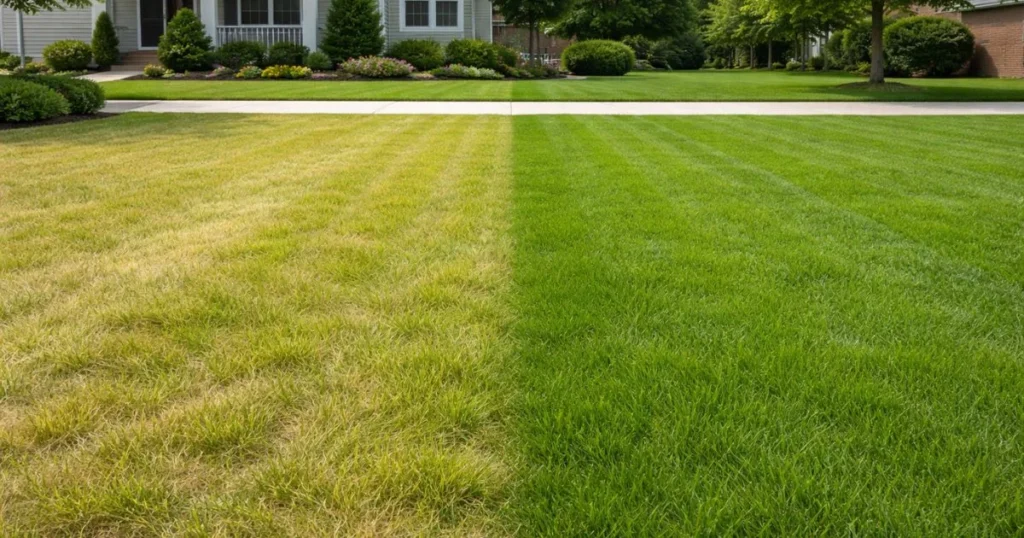
Nutrient deficiencies can also cause yellow grass.
The difference is often how slowly the problem develops.
A nutrient deficiency may cause gradual yellowing or poor growth. Fertilizer burn can cause faster damage, especially following an excessive application.
A soil test can help identify nutrient problems, while your fertilizer application history can help explain sudden injury.
Burn or not burn? Check these examples
Imagine these four lawns:
Lawn A: Brown lines appeared three days after a homeowner used a spreader. The grass looks crispy along the lines.
Most likely: Fertilizer burn from uneven application.
Lawn B: The lawn looks bluish-gray after two weeks without rain. Footprints stay visible.
Most likely: Drought stress.
Lawn C: A tall fescue lawn develops spreading brown patches during humid summer weather. Some leaves have dark-edged spots.
Possible cause: Brown patch disease.
Lawn D: Several brown areas pull away from the soil easily. The roots appear badly damaged.
Possible cause: Root-feeding insects.
These clues can help you narrow down the problem, but they do not replace a proper lawn inspection when the cause is unclear.
Which Fertilizers Are More Likely to Burn Grass?
Not all fertilizers carry the same burn risk.
The ingredients, amount applied, and speed of nutrient release all make a difference.
Understanding the numbers on fertilizer bags
Most fertilizer bags show three numbers, such as 20-0-10.
These numbers stand for:
- Nitrogen (N): Supports green leaves and grass growth.
- Phosphorus (P): Supports root growth and plant development.
- Potassium (K): Helps grass handle stress.
A 20-0-10 fertilizer contains 20% nitrogen, 0% phosphate, and 10% potash by weight.
Some lawns already have enough phosphorus in the soil. In those cases, adding more may not help. Our article on phosphorus-free lawn fertilizer explains when a product without added phosphorus may be suitable.
Granular vs. liquid fertilizer
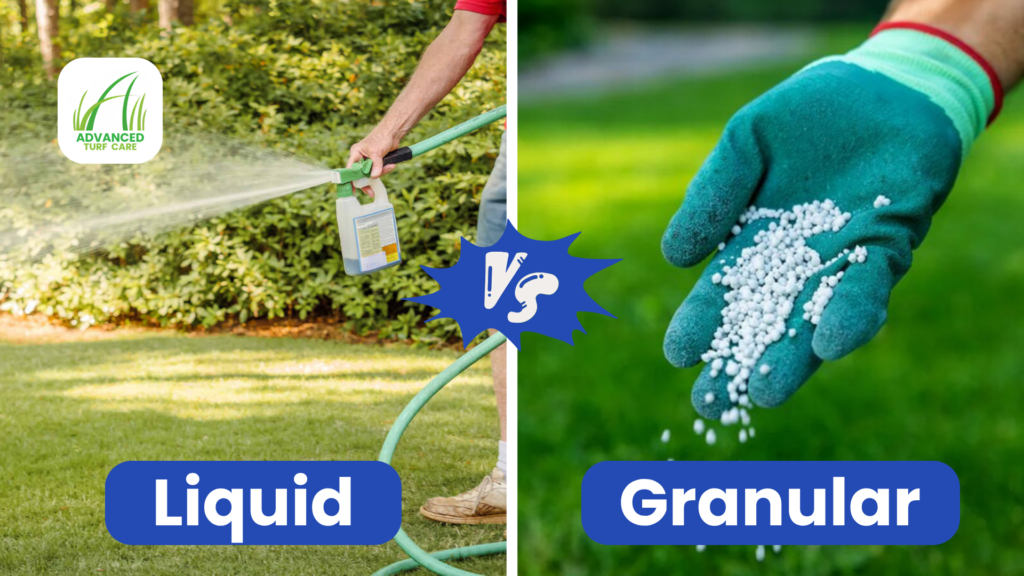
Granular fertilizers are dry particles spread across the lawn.
They are easy to store and come in both quick-release and slow-release forms. However, poor spreading can leave too much fertilizer in certain spots.
Liquid fertilizers are mixed with water and applied using a sprayer.
They can provide even coverage when the sprayer is properly calibrated. But applying a mixture that is too strong can damage grass blades.
A hose-end sprayer can make application easier, provided the product is designed for that equipment.
Neither form is automatically safer. The label rate and application method matter more.
Quick-release vs. slow-release fertilizer
Quick-release fertilizer works faster because much of its nitrogen is readily available.
Slow-release fertilizer delivers nutrients gradually, often over several weeks or longer.
This makes slow-release products a useful choice for homeowners who want steady feeding with less risk of applying too much available nitrogen at once.
Some granular products use coated urea to slow nutrient release.
Even slow-release fertilizer can damage grass when used in excessive amounts.
Organic vs. synthetic fertilizer
Organic fertilizers are made from materials such as plant meals, composted manure, and other natural sources.
Many release nutrients slowly and have lower burn potential. They can also add organic matter, depending on the product.
Synthetic fertilizers offer more precise nutrient amounts and can supply nutrients quickly or slowly.
The choice depends on your lawn, soil, and goals.
| Fertilizer Type | General burn risk |
|---|---|
| Quick-release granular | Higher if overapplied |
| Slow-release granular | Generally lower |
| Liquid quick-release | Depends on concentration and application |
| Organic fertilizer | Often lower, but not zero |
| Synthetic blended fertilizer | Depends on its ingredients and release rate |
The safest product is one that meets your lawn’s needs and is applied at the correct rate.
How to Prevent Fertilizer Burn
Preventing fertilizer burn is much easier than repairing dead grass.
A few simple checks before you start can save you weeks of lawn trouble.
Test your soil first

Your lawn may not need every nutrient found in a fertilizer bag.
A soil test helps show whether your soil needs phosphorus, potassium, or lime. It can also reveal soil pH problems that affect nutrient availability.
This is useful in the Charlotte area, where clay soils and soil acidity can affect lawn care decisions.
North Carolina homeowners can use soil testing services through the NC Department of Agriculture and Consumer Services.
If you have never tested your lawn, read about why soil testing matters before fertilizing.
A reliable test gives you a better starting point than choosing fertilizer based only on the color of your grass.
Read the fertilizer label
Before opening the bag, check:
- Recommended amount for your lawn size
- Grass types listed on the product
- Best season for application
- Watering instructions
- Safety guidance for people and pets
Do not assume two fertilizers with similar N-P-K numbers should be applied at the same rate.
Their nitrogen sources and directions may differ.
Measure your lawn and choose the right spreader
You need to know the area you plan to fertilize.
For a simple rectangular lawn, multiply its length by its width.
A lawn measuring 50 feet by 40 feet has 2,000 square feet of area.
For an irregular lawn, divide it into smaller shapes and add the areas together.
Then choose your equipment.
A broadcast spreader throws fertilizer over a wider area and works well for larger lawns.
A drop spreader releases fertilizer in a narrow strip beneath the machine. It offers greater control around driveways, flower beds, and other edges.
Both need proper adjustment.
Calibrate your spreader
Spreader calibration means checking how much fertilizer your equipment actually puts down.
Do not rely on a setting simply because you used it last year.
Check the spreader instructions and fertilizer label for the correct starting setting. If needed, measure the output over a known area and adjust it.
This helps reduce missed areas and heavy overlaps.
Never open the spreader while standing still.
Apply fertilizer in suitable conditions
For products that require dry grass, wait until morning dew has dried.
Avoid fertilizing when the lawn is suffering from drought or extreme heat.
Also check the weather. Heavy rain soon after fertilizing can carry nutrients into storm drains rather than allowing them to remain in the lawn.
Once the product has been applied, water according to its label.
For many granular fertilizers, this means watering the product off the grass blades and into the soil.
Liquid products, including foliar fertilizers, may need different treatment.
Check your lawn after fertilizing
Watch for unusual yellowing, wilting, or sudden brown patches over the next several days.
If you notice a spill, remove any visible excess fertilizer before it dissolves.
Keep children and pets away from treated areas for the period stated on the product label.
Fertilizer application checklist
Use this checklist before your next application. You can print it and keep it with your lawn supplies.
- Read the full product label.
- Test your soil and review its nutrient needs.
- Measure the area you plan to fertilize.
- Check and calibrate your spreader.
- Make sure the grass is in suitable condition for application.
- Follow the product’s watering instructions.
- Avoid excessive overlap between spreader passes.
- Check for heat, drought, or heavy rain.
- Clean fertilizer spills from sidewalks and driveways.
- Follow all safety directions for children and pets.
Clean up fertilizer from hard surfaces rather than washing it into storm drains.
Taking a little extra care during application can prevent serious lawn damage.
Can Fertilizer Burn New Grass?
New grass needs nutrients, but it also needs careful treatment.
Young roots are still developing, so a heavy fertilizer application can cause more trouble than it would on a healthy, established lawn.
New grass seedlings
Small seedlings have limited root systems. They cannot handle stress as well as mature grass.
Fertilizer can help new grass establish, but timing and nutrient amounts matter.
Starter fertilizers are sometimes used when preparing soil for new grass. They may contain more phosphorus to support root development.
However, not every new lawn needs extra phosphorus. The best choice depends on the soil test and the type of grass being planted.
Do not automatically use half the label rate or apply fertilizer every time seedlings look pale.
Follow a suitable establishment plan for your grass type.
Newly installed sod
New sod already has grass blades and roots, but those roots need time to grow into the soil below.
Until they establish, the sod depends on careful watering and suitable growing conditions.
Too much fertilizer can add stress during this stage.
Avoid heavy nitrogen applications unless they are part of an appropriate sod establishment program.
Rooting hormones are not a routine requirement for new lawn sod.
Instead, focus on proper soil preparation, moisture, and the right fertilizer recommendations.
Established lawns
Mature lawns have stronger root systems, but they are not safe from fertilizer burn.
The amount of fertilizer they need depends on the grass species, season, and growing conditions.
For example, tall fescue in Charlotte needs most of its nitrogen during cooler growing periods, especially fall.
Bermuda and Zoysia are warm-season grasses. They grow most actively in warmer weather and have different feeding schedules.
These differences affect how much fertilizer your lawn needs.
Applying fertilizer at the wrong time can place extra stress on grass that is already struggling.
How to Fix Fertilizer Burn
If you think fertilizer has damaged your lawn, act as soon as you notice the problem.
Some grass may recover. Other areas may need to be repaired or replaced.
The goal is to reduce any remaining excess fertilizer, protect surviving grass, and give the lawn suitable conditions to grow again.
Step 1: Remove any fertilizer you can still see
If fertilizer has spilled in one spot, carefully collect as much of the dry material as possible.
Use a broom, dustpan, or suitable vacuum if necessary.
Do not spread a large pile of spilled fertilizer into nearby grass. That could create more damaged areas.
Once you have removed the excess, you can address what has already dissolved into the soil.
Step 2: Water the affected area
Water can help dilute and move excess soluble fertilizer salts away from grass roots.
The University of Maryland Extension recommends soaking areas affected by excessive fertilizer to help move salts through the soil.
However, there is no single watering time that works for every lawn.
A garden hose may deliver water very differently from an irrigation system. Clay soil may also absorb water more slowly than sandy soil.
Water the affected soil thoroughly while allowing time for the water to soak in. If puddles or runoff appear, stop and let the water drain before continuing.
Do not wash fertilizer into streets, drains, or nearby waterways.
Severe spills may need several careful watering sessions. If the soil stays saturated or drains poorly, get advice before adding more water.
Watering cannot bring dead grass back to life, but it may help reduce further damage.
Step 3: Check whether the grass is still alive
Brown leaves do not always mean the entire grass plant is dead.
Look closely at the base of the plant, where the leaves meet the roots.
This area is called the crown.
If the crown is alive and the roots are healthy, the grass may produce new green leaves when conditions improve.
If the crown and roots are dead, watering alone will not restore that plant.
Give mildly damaged areas time to show new growth before deciding to replace them.
Step 4: Repair areas that do not recover
When an area is completely dead, you may need to reseed or install sod.
Start by removing loose dead material and checking the soil.
If a large fertilizer spill occurred, the soil may still contain enough salts to harm new grass. In severe cases, the affected soil may need testing or replacement before planting.
For small bare patches, loosen the top layer of soil and prepare a clean seedbed.
Choose grass suited to your existing lawn and local growing conditions.
For tall fescue lawns around Charlotte, early fall is generally the preferred time for seeding.
Bermuda and Zoysia usually establish best during their active warm-season growth period. Many Zoysia lawns are repaired using sod or plugs rather than seed.
A thin layer of suitable compost or topsoil can help improve a prepared seedbed, but it will not remove excess fertilizer salts.
Step 5: Monitor the lawn as it recovers
Recovery takes time.
You may notice improvement in mildly burned areas after new growth begins. More serious damage can leave bare patches that need a full growing period or longer to repair.
Use the condition of your grass, not a fixed deadline, to judge progress.
| Damage level | What to do | What to expect |
|---|---|---|
| Mild | Water appropriately and monitor | Surviving grass may produce new leaves |
| Moderate | Reduce excess salts and protect surviving grass | Some patches may recover while others need repair |
| Severe | Assess soil, roots, and crowns; reseed or sod if necessary | Dead grass must be replaced |
For the next few weeks, avoid adding stress through excess fertilizer, very short mowing, or unnecessary foot traffic.
Keep watering suited to the grass and weather conditions.
If your lawn is not improving, the original problem may have been more severe than it first appeared, or something else may be causing the damage.
Common Myths About Fertilizer Burn
There is plenty of conflicting lawn advice online. Some common beliefs about fertilizer burn can lead homeowners to make the problem worse.
Myth 1: Organic fertilizer cannot burn grass
Organic fertilizers often have a lower chance of burning grass, but they are not completely safe from overapplication.
Concentrated organic materials, including some manures, can contain enough soluble nutrients or salts to injure grass.
Natural does not mean you can apply unlimited amounts.
Always follow the recommended application rate.
Myth 2: More fertilizer makes grass greener faster
Grass needs enough nutrients to grow, but adding more than it needs can damage it.
Excess nitrogen can also encourage too much leaf growth, increase mowing needs, and make some lawn diseases worse.
A healthy lawn needs balanced feeding, not the largest possible dose.
Myth 3: Burned grass can never recover
This depends on how badly the plant was injured.
If the roots and crown survive, the grass may recover and produce new leaves.
If the entire plant has died, it will need to be replaced.
Acting early may reduce further damage, but not every burned patch can be saved.
Myth 4: Liquid fertilizer never needs watering
Some liquid fertilizers are meant to remain on the grass blades for a period of time. Others are intended to reach the soil and roots.
Watering requirements depend on the product.
Always read the label instead of assuming that liquid fertilizer never needs water.
Myth 5: Any spreader setting will work
Different fertilizers have different particle sizes, densities, and application rates.
Even two bags with the same N-P-K numbers may need different spreader settings.
Using the wrong setting can cause missed strips or areas that receive too much fertilizer.
Check and calibrate your equipment before each type of application.
Protecting Your Lawn From Fertilizer Burn
Fertilizer burn is real, but most application-related problems can be avoided with proper planning.
The most important things are simple: know your grass type, check what your soil needs, measure the correct amount, and apply fertilizer at the right time.
If your grass has already turned brown, identify the cause before trying to fix it. Mild damage may recover with proper watering and care. Severe damage may need reseeding or sod.
Remember that Charlotte lawns do not all need the same treatment. Tall fescue, Bermuda, and Zoysia have different growth seasons and fertilizer needs.
At Advanced Turf Care, we help homeowners across Charlotte, Gastonia, Huntersville, and nearby areas care for their lawns with feeding programs suited to local grass and soil conditions.
If you are unsure what your lawn needs or why it has started turning brown, getting the problem checked before adding more fertilizer can save you from making the damage worse.
Give Your Lawn the Nutrition It Needs
Get a fertilization program designed for healthier color, stronger growth, and better seasonal performance.
Explore Fertilization