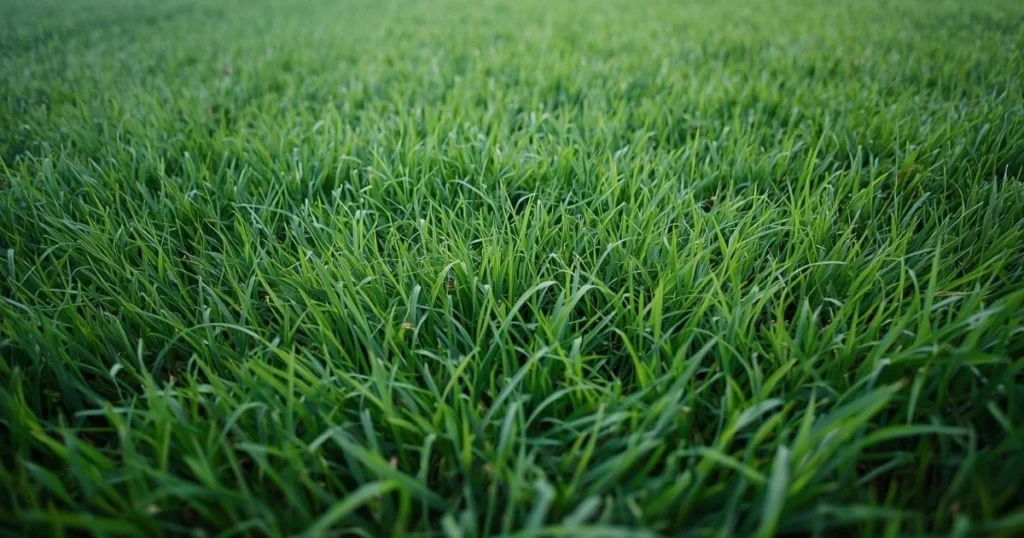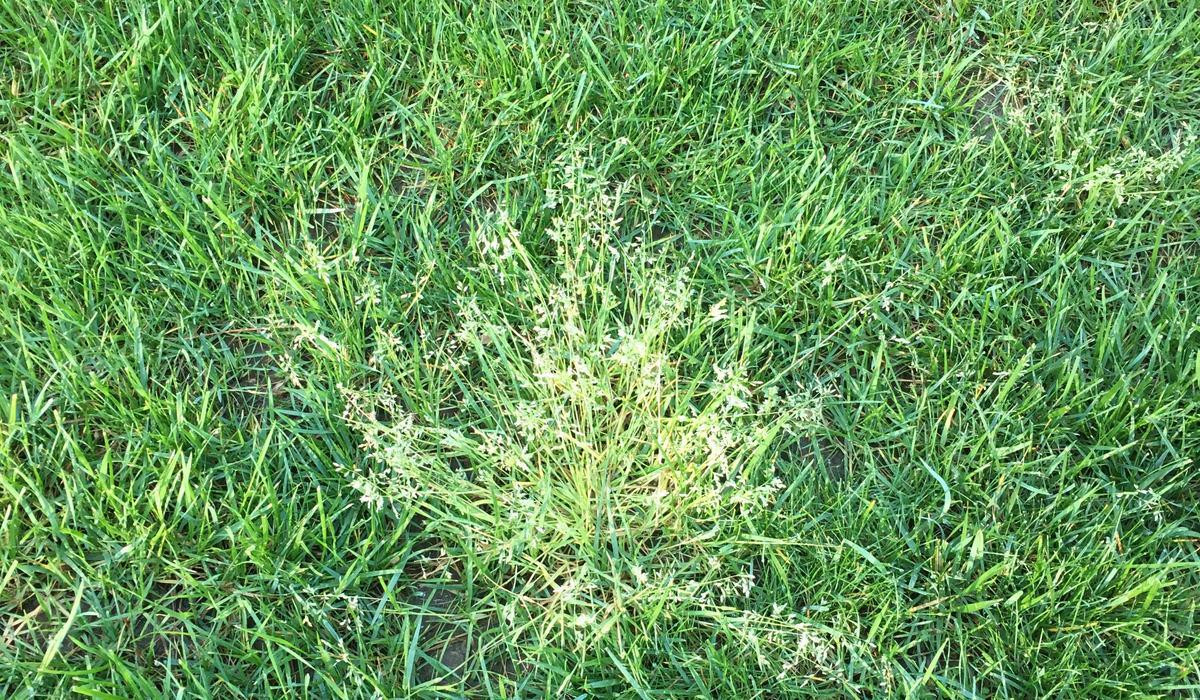
You walk across your lawn in late winter or early spring and notice something different.
Small patches of bright, light green grass are growing faster than the turf around them. A few weeks later, tiny pale seed heads start showing up. You mow them down, but they seem to come right back.
There is a good chance you are looking at Poa annua.
Poa annua, commonly called annual bluegrass, is one of the most common grassy weeds found in lawns. It can be especially frustrating in North Carolina because our transition-zone climate gives it plenty of cool, moist weather to grow before summer arrives.
The problem is not only how Poa annua looks.
It can produce large amounts of seed, build up a seed bank in the soil, and return season after season if the conditions in your lawn continue to favor it.
The good news is that Poa annua can be managed. The first step is understanding what it is, why it grows in your lawn, how its lifecycle works, and which prevention or control method fits your type of grass.
What Is Poa Annua?
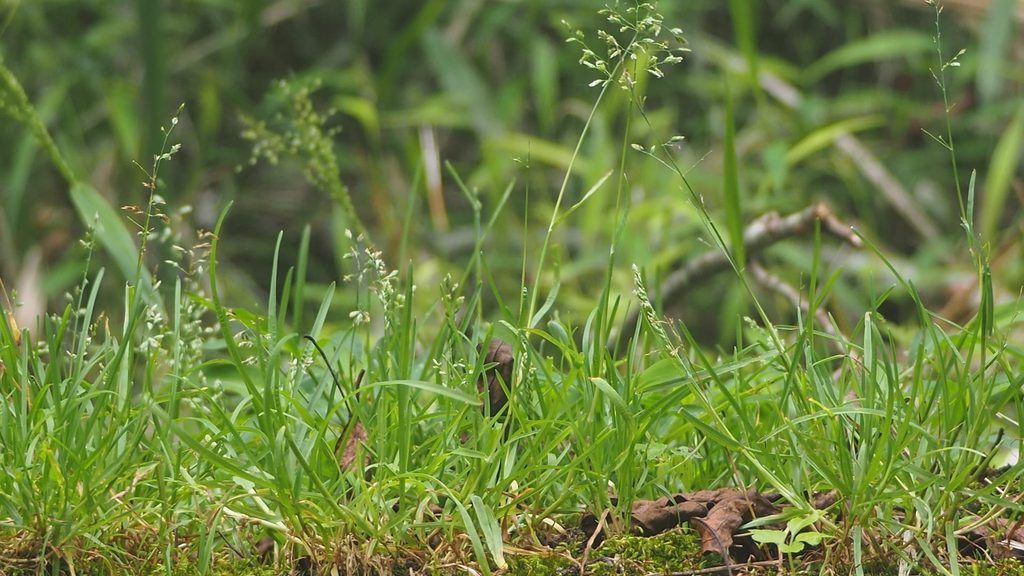
Poa annua is a cool-season grassy weed in the bluegrass family. Its common name is annual bluegrass.
In most home lawns, it behaves as a winter annual. Seeds begin germinating as temperatures cool in late summer and fall. The young plants grow through the cooler months, become very noticeable in late winter and spring, produce seed, and often decline when summer heat arrives.
NC State Extension describes annual bluegrass as a light green, bunch-type to slightly spreading winter annual grass. It also notes that some forms can behave as short-lived perennials.
That difference helps explain why Poa annua does not behave exactly the same way in every lawn.
Annual and Perennial Forms of Poa Annua
The name “annual bluegrass” makes the plant sound simple, but Poa annua has different growth types.
The common annual form, often referred to as Poa annua var. annua, relies heavily on seed production. It germinates, grows, produces seed, and usually declines as conditions become hot and stressful.
A more persistent form, commonly associated with Poa annua var. reptans, can behave more like a short-lived perennial. These types are seen more often in closely managed and heavily irrigated turf, especially golf course turf.
For the average Charlotte-area homeowner, the important point is simple:
Most Poa annua problems are driven by repeated germination from seed.
Killing the plants you can see today does not automatically solve the problem waiting in the soil.
Why Is Poa Annua a Problem in Lawns?
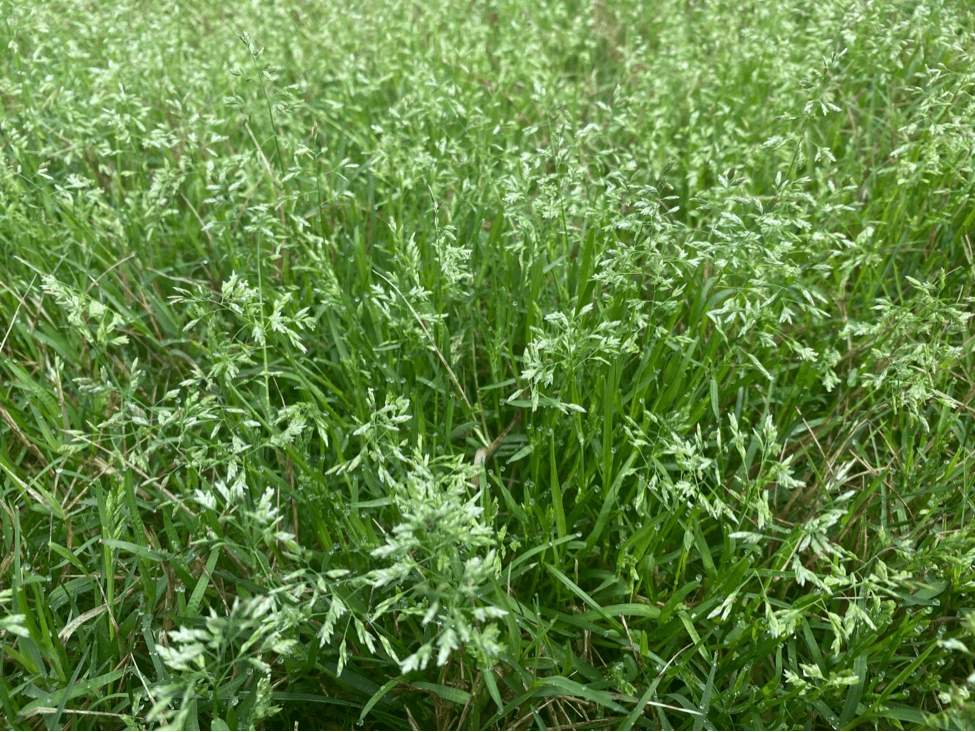
Poa annua is not harmful just because it is technically a weed. The real problem is how poorly it fits into a uniform lawn.
It is usually lighter green than tall fescue, Bermuda, or Zoysia. This can create obvious patches across the lawn.
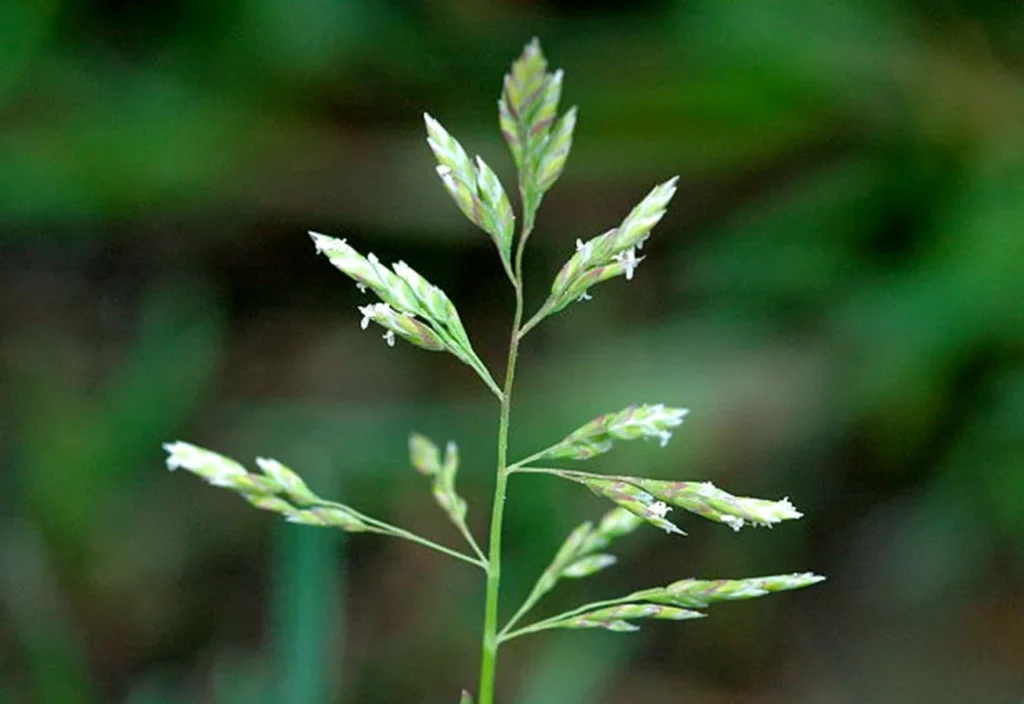
Then the plant starts producing pale seed heads. Poa annua can produce seed even when it is kept quite short, which is one reason mowing alone rarely solves the problem. NC State Extension lists its light-colored seed head and ability to tolerate close mowing among its key traits.
The shallow root system creates another weakness.
Poa annua can grow very well during cool, wet weather, but it does not handle summer stress like healthy, established turf. As temperatures climb, annual plants may thin out or die.
That leaves openings behind.
Those bare areas can then be filled by other weeds, weak grass, or another generation of Poa annua when conditions become favorable again.
So the real cycle often looks like this:
Poa annua grows → produces seed → declines → leaves thin turf → seeds germinate again later.
Breaking that cycle is the goal.
How to Identify Poa Annua
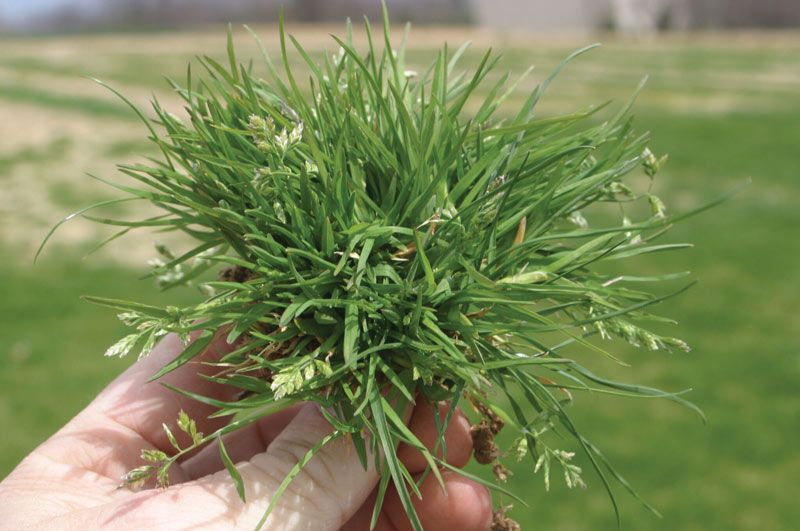
Poa annua is usually lighter and brighter green than the turf around it. The leaves are soft, often have boat-shaped tips, and the plant has shallow roots. One of the easiest clues is the appearance of pale white or greenish seed heads, even when the lawn is mowed regularly.
That is enough for a first check, but grassy weeds can look very similar. Kentucky bluegrass, tall fescue, young crabgrass, and several other grasses can cause confusion.
If you are trying to confirm exactly what is growing in your yard, use our detailed guide on how to tell if you have Poa annua in your lawn before choosing a treatment.
Correct identification matters because a herbicide that is safe for one turfgrass species may damage another.
Why Do I Have Poa Annua?
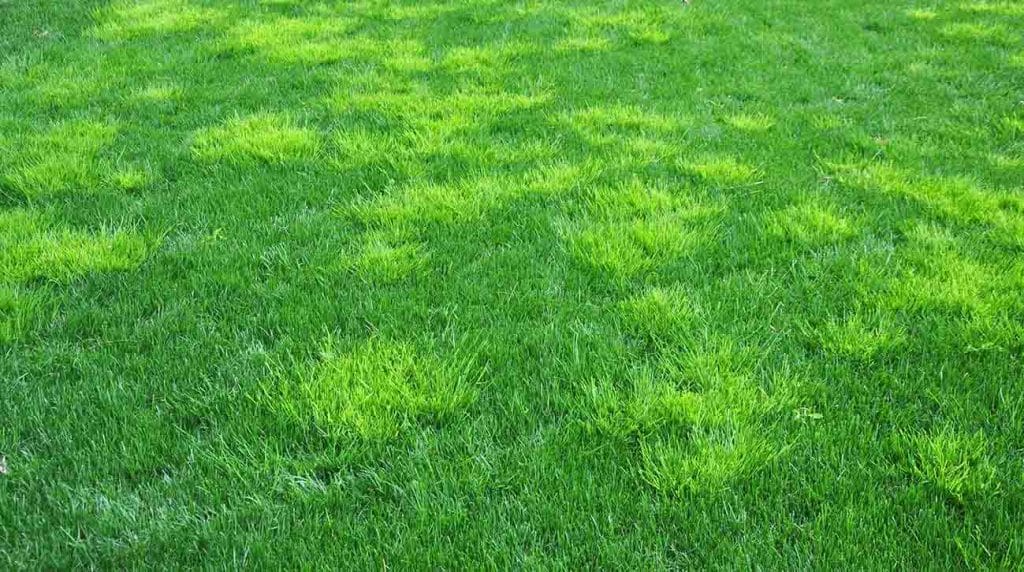
Finding Poa annua does not always mean your lawn has been neglected.
Its seeds can already be present in the soil. Once the right mix of moisture, temperature, light, and open space appears, those seeds have an opportunity to germinate.
Still, certain lawn conditions make the problem much easier for Poa annua.
Compacted Soil
Compacted soil limits the movement of air and water and makes it harder for desirable grass roots to grow deeply.
Poa annua has a shallow root system and often takes advantage of these stressed areas.
This is one reason patches may show up around walkways, driveways, play areas, or other parts of the lawn that receive regular foot or equipment traffic.
NC State identifies compaction as one of the conditions that can encourage annual bluegrass.
Core aeration can help relieve compaction, but timing matters. Opening the soil during a major Poa annua germination period can also create new places for seeds to establish.
Frequent, Shallow Watering
A lawn that gets a small amount of water every day can stay wet near the surface while remaining dry deeper down.
That setup works well for shallow-rooted plants.
Healthy turf usually benefits more from watering deeply enough to encourage roots to move farther into the soil, then allowing some drying between irrigation cycles.
NC State also lists shallow, frequent irrigation and poor drainage as practices that can encourage annual bluegrass.
Poor Drainage
Low areas that remain wet after rain or irrigation create favorable conditions for Poa annua.
Fixing the weed without fixing the drainage problem may only provide short-term relief.
If the same section of your lawn stays wet long after surrounding areas have dried, look at drainage, soil compaction, grading, and irrigation coverage.
Mowing Too Low
Mowing below the recommended height for your grass weakens the turf canopy and exposes more soil to light.
That gives weed seeds another opportunity to germinate.
The correct mowing height is not the same for every lawn. Tall fescue should not be managed at the same height as Bermuda or Zoysia.
Instead of using one universal mowing height, keep your specific grass type within its recommended range.
Poorly Timed Fertilization
More fertilizer does not automatically mean a healthier lawn.
Heavy nitrogen at the wrong time can push soft growth and may also benefit Poa annua while it is actively growing.
A soil test is a much better starting point than guessing.
It can show whether your soil actually needs lime or certain nutrients before you spend money applying them.
A Large Poa Annua Seed Bank
This is one of the biggest reasons the weed seems to “come back.”
Removing mature plants does not remove all the seeds already in the soil.
Poa annua can produce a large number of seeds, and some can remain dormant until conditions are right for germination. UGA Extension notes that seeds may remain dormant in soil for years.
That is why successful control usually takes more than one treatment or one season.
Seeds Moving Around the Lawn
Seeds can move with soil, water, footwear, lawn equipment, and other materials.
If one part of the property has a heavy infestation, mowing it and immediately moving into a clean area can help move seed around.
Cleaning equipment after working in heavily infested areas can reduce that risk.
The Lifecycle of Poa Annua
Understanding the lifecycle makes Poa annua much easier to manage.
Trying to control it without knowing when it germinates is like trying to close a door after the weed has already walked through it.
Late Summer and Fall: Germination Begins
For much of the Southeast, Poa annua begins germinating as soil temperatures cool in late summer and fall.
UGA Extension reports that major germination begins once soil temperatures fall below about 70°F. Seedlings then establish during fall.
This is why fall prevention can be so important.
A pre-emergent needs to be in place before the main flush of seeds germinates.
Waiting until mature green plants are visible means the prevention window for those plants has already passed.
Winter: Quiet Growth
Poa annua handles cool weather well.
Growth may slow during colder periods, but plants can remain green while other lawn grasses are less active.
This is especially obvious in dormant warm-season lawns. Bright green Poa annua can stand out strongly against brown Bermuda or Zoysia.
Late Winter and Spring: Rapid Growth and Seed Production
As conditions become milder, Poa annua becomes much more noticeable.
Plants grow, produce pale seed heads, and add more seed to the soil.
Mowing off the seed heads may improve appearance for a short time, but the plant can continue producing more.
Preventing seed production where practical can help reduce future pressure, but mowing alone should not be treated as a full control plan.
Summer: Stress and Decline
Many annual Poa annua plants struggle once Carolina heat arrives.
Plants may turn brown and die, especially in sunny areas with summer heat and moisture stress.
Unfortunately, that does not mean the problem is gone.
The plants may have already completed the most important part of their lifecycle by leaving seed behind.
Poa Annua Throughout the Seasons
A lawn with Poa annua can look very different depending on the time of year.
Fall: Small, light green plants begin appearing as seeds germinate.
Winter: Plants remain green and may become easier to notice, especially in dormant warm-season turf.
Early to mid-spring: Growth increases and pale seed heads become much more visible.
Late spring and summer: Annual plants begin to struggle or die as heat increases, sometimes leaving thin or bare areas behind.
This seasonal change is why homeowners sometimes believe they solved the problem during summer, only to see Poa annua return months later.
The visible plants disappeared. The seed bank did not.
How to Prevent Poa Annua
Long-term Poa annua control starts by making the lawn a harder place for it to establish.
Herbicides can be useful, but they work better when healthy turf is already competing for the same space.
Keep Your Lawn at the Right Mowing Height
Do not scalp the lawn in an attempt to remove Poa annua.
Close mowing can stress desirable turf while Poa annua continues producing seed at a low height.
Instead, mow according to your grass type and keep mower blades sharp.
Dense turf shades the soil and leaves less room for weed seedlings to establish.
Water Deeply Instead of a Little Every Day
Frequent surface moisture favors shallow-rooted weeds.
When your grass type and soil conditions allow it, water deeply and less often. Early morning is normally the best time because less water is lost to evaporation and the turf has time to dry.
Always adjust irrigation for rainfall.
A lawn sitting wet after a week of rain does not need another scheduled watering just because the sprinkler timer says so.
Fertilize According to What the Lawn Needs
Use soil testing and your turf type to guide fertility.
Applying extra nitrogen during cool weather can sometimes feed the weed you are trying to control.
A balanced program should strengthen the desired grass without creating unnecessary growth.
Reduce Compaction
Core aeration creates channels for air, water, and roots.
This can be valuable in Charlotte-area red clay soils, where compaction can become a major limit on turf health.
The important detail is timing.
Aeration should be planned around the grass species, overseeding schedule, and any pre-emergent program. Some pre-emergent strategies and fall seeding strategies directly conflict with one another.
Manage Excessive Thatch
A small thatch layer is normal.
A heavy layer can interfere with water movement and make turf management harder. If thatch becomes excessive, correcting it can improve the growing environment for your desired grass.
Again, timing matters because aggressive dethatching during a major weed germination period can disturb the soil surface.
Fill Thin Areas With the Right Grass
Bare soil gives weeds space.
Once the Poa annua problem has been addressed, thin cool-season lawns may need overseeding to rebuild turf density.
Seed choice matters just as much as seeding itself. Sun exposure, traffic, irrigation, lawn type, and the Carolina transition-zone climate all affect which grass will perform well.
Our guide to choosing the best grass seed for North Carolina lawns can help you choose a variety that fits the conditions in your yard.
Do not overseed blindly after applying a pre-emergent. Many pre-emergent products that stop Poa annua seeds can also stop desirable grass seed from establishing.
Always check the product label and required seeding interval.
Treatment Options for Existing Poa Annua
Once Poa annua is already growing, the right approach depends on how much you have, what grass you want to protect, and what time of year it is.
There is no single treatment that is right for every lawn.
Hand-Pulling Small Patches
For a few isolated plants, hand removal may be the simplest option.
Poa annua has shallow roots, so plants can often be pulled more easily when the soil is slightly moist.
Remove as much of the plant as possible and avoid shaking mature seed heads across the surrounding lawn.
This is practical for ten plants.
It is not practical for thousands.
Renovating Small, Severe Areas
A small area that is almost completely Poa annua may sometimes be easier to renovate than manage plant by plant.
Methods such as solarization can kill vegetation in a contained area, but they can also kill desirable turf. They make more sense as part of a full renovation than as routine weed control.
The area then needs to be rebuilt with the correct turf at the right planting time.
Organic Pre-Emergent Options
Corn gluten meal is sometimes sold as a natural pre-emergent option.
Homeowners should keep expectations realistic. Results can be less predictable than conventional pre-emergent herbicides, timing is still important, and corn gluten meal also supplies nitrogen.
It should not be treated as a guaranteed organic solution to an established Poa annua problem.
Pre-Emergent Herbicides
Pre-emergents are designed to stop seeds from successfully establishing.
Common active ingredients used for annual bluegrass prevention include prodiamine and dithiopyr. Extension guidance supports fall applications before Poa annua germination, but product selection and timing must match the lawn.
Pre-emergents do not normally kill mature Poa annua that is already visible.
They are aimed at the next generation.
They can also interfere with desirable seed establishment, which creates an important issue for fall-seeded fescue lawns.
Always read the full label before application.
Post-Emergent Herbicides
Post-emergent products target weeds that are already growing.
Poa annua control becomes more complicated here because turf safety varies greatly by grass species.
Ethofumesate is one active ingredient used for annual bluegrass management in certain cool-season turf situations. Warm-season grasses may have other selective options. Some treatments that are acceptable on Bermuda or Zoysia may seriously injure a cool-season lawn.
Do not choose a product simply because the front label says “Poa annua control.”
Check:
- Your exact turfgrass species
- Whether Poa annua is listed on the label
- Application temperature and timing
- Rate and repeat-application rules
- Seeding or overseeding restrictions
- Whether the turf is actively growing or dormant
Mesotrione is also sometimes discussed online in connection with Poa annua. It should not be assumed to be a universal post-emergent solution. Use only products whose current label specifically supports your turf type and intended use.
For small infestations, a targeted application may make more sense than treating the entire lawn.
Poa Annua Treatment Options at a Glance
| Method | Best Use | Main Advantage | Main Limitation |
|---|---|---|---|
| Hand pulling | A few isolated plants | No herbicide needed | Impractical for large areas |
| Cultural control | Every lawn | Improves turf health and long-term competition | Takes time |
| Pre-emergent | Preventing future germination | Can greatly reduce new plants | Does not remove established plants and may interfere with seeding |
| Selective post-emergent | Existing Poa annua | Can target active plants | Turf safety varies by product and grass species |
| Renovation | Small areas dominated by Poa annua | Allows the area to be rebuilt | Also removes desirable turf |
No herbicide should be applied based only on a general online recommendation. The product label is the legal guide for where and how that product can be used.
Poa Annua Control by Lawn Type
This is where many DIY Poa annua plans go wrong.
North Carolina sits in the transition zone, which means homeowners may have cool-season grass, warm-season grass, or different grasses on nearby properties.
Your treatment needs to match the lawn you actually have.
Tall Fescue and Other Cool-Season Lawns
Fescue and Poa annua both grow well during cooler parts of the year.
That makes competition difficult.
There is also a major scheduling problem. Fall is one of the most important times for fescue aeration and overseeding, but it is also a major Poa annua germination period.
Many pre-emergents that help prevent Poa annua can also interfere with new fescue seed.
That means you may have to prioritize.
A thin lawn that badly needs renovation may require a different strategy from a dense lawn that already has a serious Poa annua seed-bank problem.
Bermuda and Zoysia Lawns
Warm-season lawns create a different situation.
Bermuda and Zoysia become dormant or much less active during winter, while Poa annua remains green.
That often makes infestations very obvious.
Because these lawns are not normally being fall-overseeded with the permanent turf species, a preventative fall program may be easier to build.
Post-emergent options also differ from those used in fescue.
Do not copy a Bermuda weed-control program onto tall fescue.
Make Sure You Know Your Grass First
If you are unsure whether you have tall fescue, Bermuda, Zoysia, Kentucky bluegrass, or another species, start with our North Carolina grass identification guide.
That one step can prevent an expensive herbicide mistake.
Poa Annua Seasonal Action Plan Checklist
| Season | What to Watch For | Main Goal |
|---|---|---|
| Late summer | Soil begins cooling and thin lawn areas remain open | Plan fall prevention before major germination |
| Fall | New seedlings may begin appearing | Prevent germination where compatible with your turf and seeding plan |
| Winter | Bright green plants become noticeable | Monitor infestations and identify problem areas |
| Early spring | Fast growth and seed heads | Limit seed production and treat where appropriate |
| Late spring | Heavy seed production and thinning | Plan how bare areas will be repaired |
| Summer | Annual plants may decline | Improve soil, drainage, irrigation, and turf density before the next cycle |
Exact dates can change from year to year.
Soil temperature and local conditions are more useful than treating the calendar as a fixed rule.
Long-Term Lawn Health and Poa Annua Prevention
A healthy lawn does not make Poa annua impossible.
It does make invasion harder.
The strongest long-term approach combines prevention, good turf care, monitoring, and targeted treatment instead of depending on one herbicide every year.
Treat the Conditions, Not Only the Weed
If Poa annua keeps appearing in the same wet corner every year, killing it without fixing the wet soil misses the bigger problem.
If it is strongest beside a walkway, compaction may be involved.
If it keeps filling bare sections of fescue, turf density may be the real weakness.
The weed can tell you something about the lawn around it.
Check the Lawn Before the Problem Becomes Severe
Small patches give you more options.
By the time Poa annua covers a large part of the lawn and produces seed everywhere, control becomes harder and the next generation may already be waiting in the soil.
Regular lawn checks during fall, winter, and early spring can help you catch problems earlier.
Think in Seasons, Not Days
A heavy Poa annua infestation is rarely a one-week problem.
You may remove existing plants this spring, improve soil and watering through summer, prevent new germination in fall, then continue managing escape plants through winter.
That is normal.
The goal is to reduce the population over time while making the desired turf stronger.
DIY Control vs. Professional Treatment
DIY treatment can make sense when the infestation is small, you know your turf species, and you are comfortable reading and following herbicide labels.
Professional help becomes more useful when Poa annua is widespread, the lawn contains mixed grass species, fall overseeding conflicts with pre-emergent timing, or previous treatments have failed.
There is also a cost beyond the product itself.
Repeatedly applying the wrong treatment, damaging your turf, or missing the main prevention window can cost more time and effort than building the correct plan from the beginning.
Advanced Turf Care manages both fescue and warm-season lawns across the Charlotte area. With more than 20 years of Carolina turf experience, Andrew Powell and the team build programs around the grass species, season, soil conditions, and weed pressure rather than treating every lawn the same way.
Tired of Fighting Weeds in Your Lawn?
Advanced Turf Care can build a weed-control plan around your lawn, grass type, and the season.
Explore Weed ControlFrequently Asked Questions About Poa Annua
Why does Poa annua come back every year?
Poa annua produces seed before many annual plants die in summer. Those seeds can remain in the soil and germinate when favorable conditions return. If you only kill visible plants but do not reduce future germination, the problem can appear again.
Is Poa annua always an annual grass?
No. The most common form in home lawns behaves as a winter annual, but short-lived perennial forms also exist. NC State notes that perennial types are especially associated with closely managed turf such as bentgrass golf greens.
Can I mow Poa annua low enough to stop it?
Usually not.
Poa annua is able to produce seed heads even at very low mowing heights. Mowing too low can also weaken your desirable turf and make the lawn more open to weeds.
Does fertilizer kill Poa annua?
No.
Fertilizer is not a Poa annua herbicide. Poorly timed or excessive nitrogen can actually encourage unwanted growth while failing to solve the weed problem.
Use fertilizer to meet the needs of your desired turf, preferably based on a soil test and a proper lawn program.
When should I apply a pre-emergent for Poa annua?
A pre-emergent must be applied before the main germination period.
For annual bluegrass in the Southeast, the important window is generally late summer into early fall as soil temperatures cool toward the range where Poa annua begins germinating. Research-based Extension guidance reports germination starting as soil temperatures fall below roughly 70°F.
Do not wait for a lawn full of green Poa annua and expect a pre-emergent to kill those mature plants.
Is Tenacity safe for Poa annua control?
Do not treat Tenacity, or mesotrione, as a universal Poa annua solution.
Herbicide performance and turf safety depend on the exact product label, grass species, application timing, and intended use.
Read the current label before applying any herbicide to your lawn.
What should I do if I missed the fall pre-emergent window?
Do not try to make up for a missed prevention window by applying extra product.
Identify what has already emerged, improve the lawn conditions that favor Poa annua, and determine whether a turf-safe post-emergent option is appropriate.
Then plan ahead for the next germination cycle.
A Better Poa Annua Strategy Starts With Understanding the Weed
Poa annua is difficult because it takes advantage of the exact conditions many stressed lawns already have: shallow moisture, compacted soil, weak turf, poor drainage, and open areas where seed can germinate.
It also plays a long game.
The green plants you see this spring may disappear in summer, but the seed they leave behind can start the cycle again.
That is why lasting control means doing more than killing what you can see.
Understand your lawn type. Keep your turf dense. Fix watering and drainage problems. Reduce compaction. Plan seeding and pre-emergent applications so they do not work against one another. Use post-emergent products only when they are suitable for your exact grass.
Most of all, stay consistent.
Poa annua can be persistent, but once you understand its lifecycle and the conditions that help it grow, you can build a lawn that gives it fewer opportunities to come back.
Need Help With Your Lawn?
Get professional lawn care built around your property, grass type, and seasonal needs.
Get a Free Quote