Are You Battling a Mystery Weed in Your Lawn?
You walk across your lawn and notice something that does not quite match the rest of the grass.
Maybe there are small, bright green patches mixed into darker fescue. Maybe pale seedheads keep showing up only a few days after mowing. Or perhaps the strange grass looked healthy all winter, then started turning yellow as the weather warmed.
It could be Poa annua.
But color alone is not enough to know for sure.
Poa annua can be confused with desirable turf and other cool-season grasses. Treat the wrong plant and you may waste time and money. Worse, a product that is safe for one lawn type may damage another.
The better approach is to identify the plant using several clues.
In this guide, you will learn what to look for from a few feet away, what to inspect on an individual leaf, how Poa annua changes through the seasons, and how to separate it from common look-alikes.
By the end, you should have a much clearer answer to one question:
Do I actually have Poa annua in my lawn?
What Is Poa Annua (Winter Grass)?
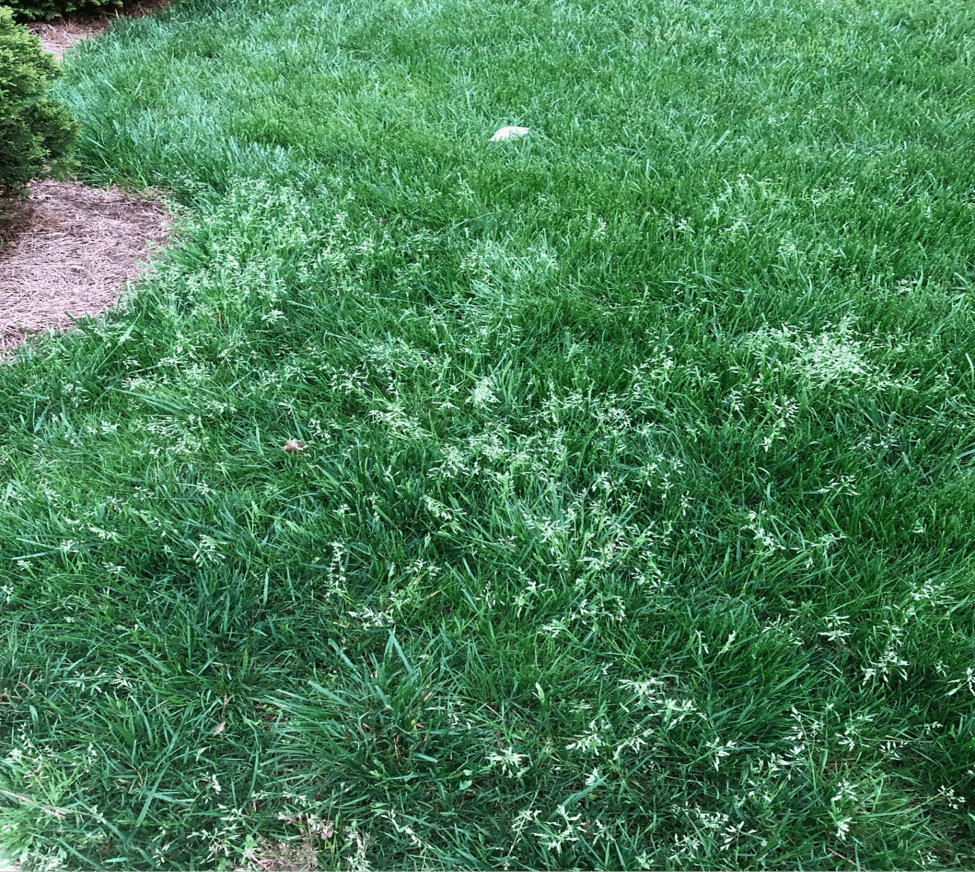
Poa annua, also called annual bluegrass or sometimes winter grass, is a cool-season grassy weed that often shows up as lighter green patches in lawns. Most plants behave as winter annuals, although some types can survive longer under favorable conditions. If you want the full explanation of its life cycle, growth habits, and why it becomes a lawn problem, read our guide to what Poa annua is.
For this guide, the important part is recognizing it correctly.
Why Accurate Identification Matters for Your Lawn
The Crucial First Step in Effective Lawn Care
A patch of unwanted grass may look obvious from across the yard, but grassy weeds are easy to confuse.
Poa annua is a good example. A young plant may not have seedheads yet. Its color can also change with weather, moisture, and growing conditions. A homeowner who judges the plant only by its bright green color can easily make the wrong call.
That matters because weed-control options depend on both the weed and the desirable turf growing around it. A treatment that makes sense in one type of lawn may not be appropriate in another.
Correct identification also affects timing. Preventing new Poa annua plants and dealing with plants that are already growing are two different jobs. You first need to know what is actually in the lawn before deciding what comes next.
Do not rely on one clue.
A much stronger identification combines the plant’s color, leaf shape, seedhead, ligule, growth habit, season, and root structure.
Key Characteristics of Poa Annua: What to Look For
Distinguishing Features for Precise Identification
Start with the easy clues, then move closer.
NC State Extension describes annual bluegrass as a light-green grass with leaves folded in the bud, a boat-shaped leaf tip, a pointed membranous ligule, no auricles, and no stolons or rhizomes. It also produces a light-colored panicle seedhead, often even when the grass is kept short.
No single feature is perfect on its own. Several matching features give you much more confidence.
Leaf Blades: Color, Texture, Tip, and Crinkled Appearance
From a standing position, color is often the first thing you notice.
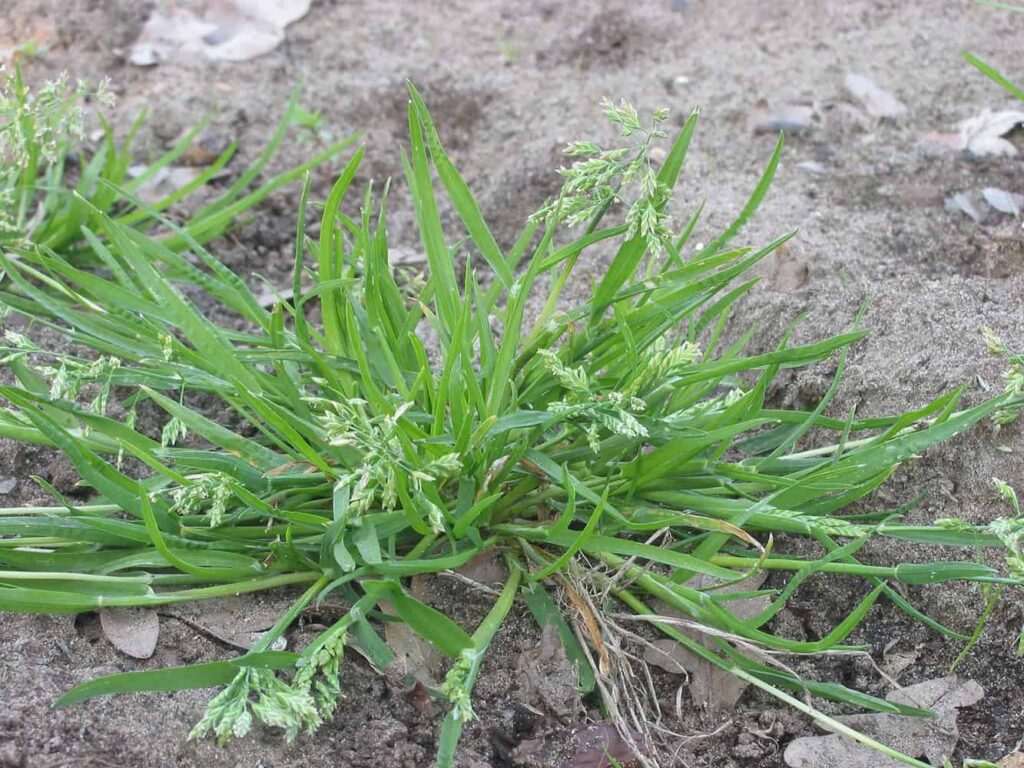
Poa annua commonly looks lighter or brighter green than the turf around it. In a darker fescue lawn, that contrast can make individual clumps easy to spot during cool weather.
Move closer and inspect an individual leaf.
One of the better clues is the boat-shaped leaf tip. Instead of narrowing into a sharp point, the end looks slightly rounded and keeled, similar to the front of a small boat.
The blade is generally smooth rather than hairy. You may also notice some waviness or crinkling, especially near the lower part of the blade. Treat that as a supporting clue rather than proof by itself.
A bright green leaf is not enough.
A bright green leaf plus the right tip shape, growth habit, ligule, and seedhead is much more useful.
Ligule: The Critical Identification Feature
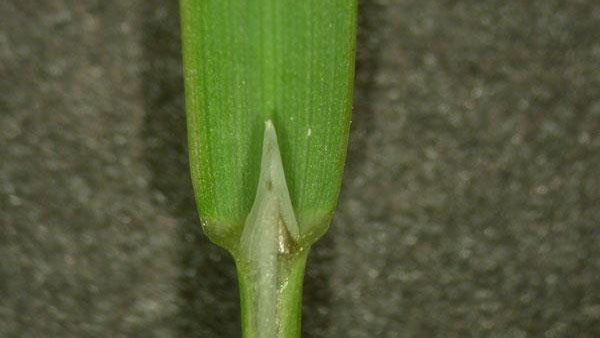
If the plant still has you guessing, inspect the point where the leaf blade meets the sheath around the stem.
There is a small structure there called the ligule.
On Poa annua, the ligule is membranous, fairly noticeable, and pointed. NC State lists it at about 1 to 3 mm long.
You do not need to memorize the measurement.
Gently pull the blade away from the stem and look for a thin, pale piece of tissue pointing upward from the junction. A small hand lens can make this much easier to see.
Also look for auricles, the tiny claw-like structures that some grasses have around the stem.
Poa annua does not have auricles.
That missing feature becomes very useful when comparing it with ryegrass.
Seed Heads: The Most Obvious Indicator
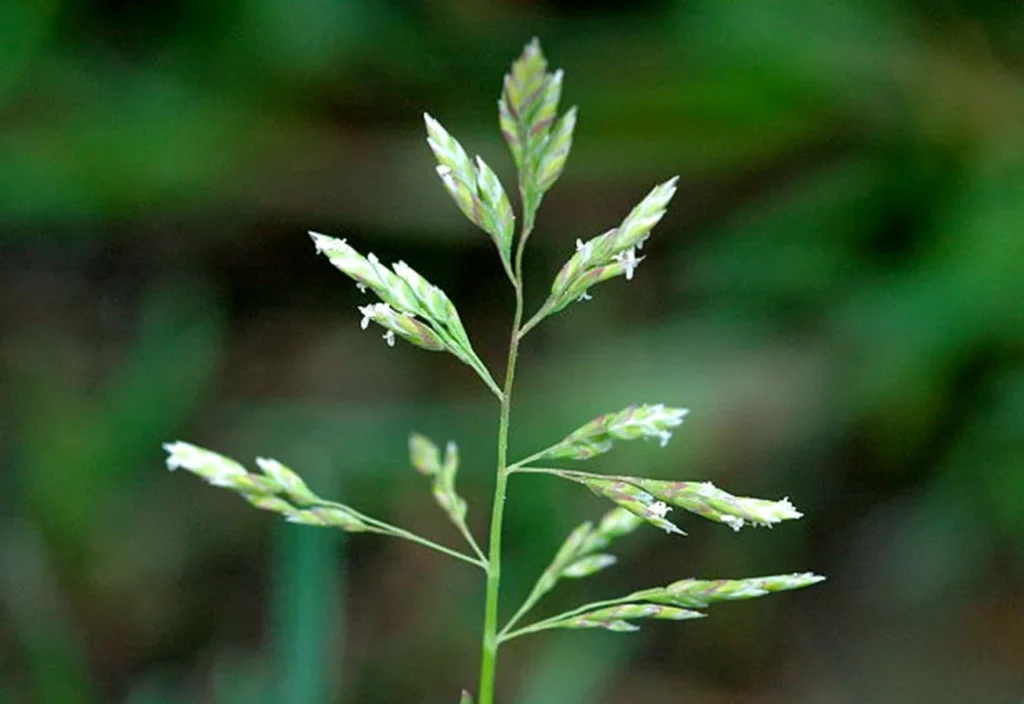
Once Poa annua begins producing seed, identification becomes easier.
Look for small, pale, open panicle seedheads held above the leaves. They may appear light green, cream, or whitish when seen across the lawn.
One reason they stand out so much is that Poa annua can produce seedheads even when kept at a low mowing height. NC State specifically notes this ability as one reason annual bluegrass looks so different in managed turf.
Do not confuse the seedhead with the boat-shaped feature mentioned earlier.
The leaf tip is boat-shaped. The seedhead is a light-colored, branching panicle.
If pale seedheads keep appearing in bright green clumps shortly after mowing, Poa annua should move higher on your list of suspects.
Growth Habit & Root System
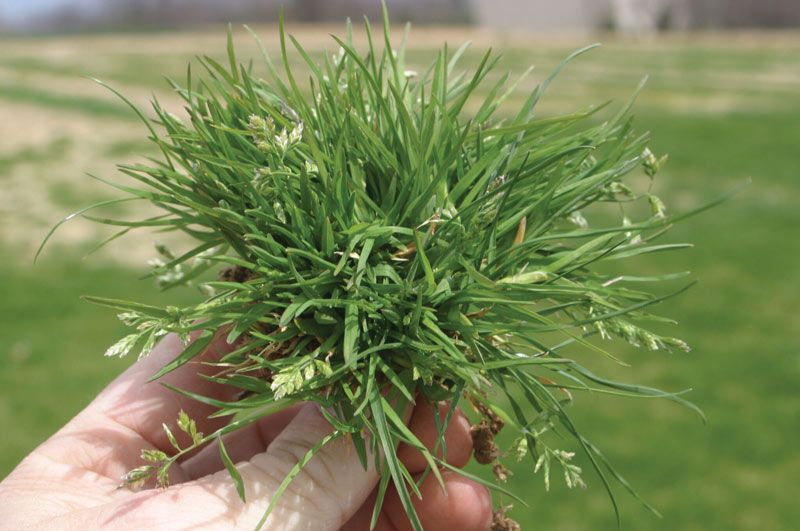
Step back again and look at how the suspicious grass sits in the lawn.
Poa annua commonly grows as small clumps or slightly spreading patches. These patches can stand out because of their color and texture.
If the visible features are still not enough, carefully remove one small plant.
You should find a fibrous root system rather than obvious underground rhizomes or above-ground stolons. NC State identifies both stolons and rhizomes as absent in annual bluegrass.
This becomes especially useful when separating Poa annua from rough bluegrass, which can spread through stolons.
Overall Appearance in the Lawn
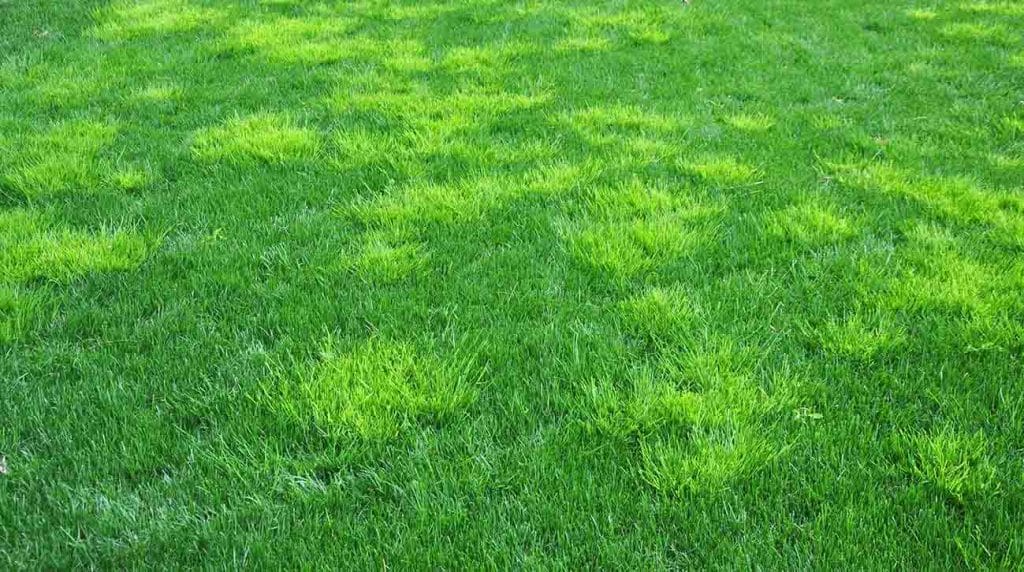
Sometimes the whole patch tells you where to start.
Suspect Poa annua when you see several of these signs together:
- Noticeably lighter green grass among darker turf
- Small clumps or irregular patches
- Active growth during cool weather
- Pale seedheads appearing even after mowing
- Soft, smooth leaves
- Boat-shaped leaf tips
- A pointed membranous ligule
- No auricles
- No obvious stolons or rhizomes
Still, do not diagnose it from the lawn’s color alone.
Several grasses can look lighter or darker depending on weather, fertility, moisture, stress, and turf type.
Seasonal Changes: How Poa Annua Appears Year-Round
Identifying Poa Annua Across Its Life Cycle
The same patch may look very different in October, February, April, and July.
Season gives you another clue.
Fall Germination (Late Summer to Early Fall)
Young Poa annua plants can begin appearing as conditions cool.
At this stage, identification is harder because the plants are small and may not have seedheads.
They can look similar to desirable grass seedlings.
Look for small areas that differ slightly in color and texture, but avoid making a treatment decision from appearance alone.
This is the time to inspect the leaf tip, ligule, and growth habit carefully.
Winter Growth (Cool Season)
Cool, moist weather can make Poa annua much easier to notice.
Light-green clumps may become more obvious against surrounding turf. As plants mature, some can begin producing seedheads even while the lawn is being mowed.
This is a good time to compare several features rather than relying on one.
If you are unsure whether the unusual patch is a weed or simply a different desirable grass, our North Carolina grass identification guide can help you first identify the turf growing around it.
Knowing what your lawn is supposed to contain makes the odd patch much easier to judge.
Spring Seeding (Late Winter to Mid-Spring)
Spring is often when homeowners finally realize something is different.
Poa annua can become very noticeable as pale seedheads appear across the lighter green patches. A lawn that looked only slightly uneven in winter may suddenly look speckled with white or light-green seedheads.
This is one of the best times to inspect the plant because several identifying features may be visible at once.
Check the seedhead.
Then check the leaf tip.
Then check the ligule.
Three matching clues are much stronger than simply saying, “It looks like Poa.”
Summer Dormancy (Late Spring to Summer)
As temperatures rise, many annual Poa annua plants struggle and die.
The bright green patches may turn yellow or brown, sometimes leaving thin or bare areas behind.
Do not assume every summer brown spot used to be Poa annua. Heat stress, disease, insects, irrigation problems, and other turf issues can create similar damage.
Once the plant has died, identification becomes much harder.
That is why checking suspicious grass while it is actively growing is far more reliable.
Poa Annua Look-Alikes: Avoiding Common Misidentifications
Distinguishing Poa Annua from Other Grasses and Weeds
The hardest part of Poa annua identification is often proving that the plant is not something else.
Features such as vernation, ligules, auricles, leaf tips, seedheads, and spreading structures are widely used in turfgrass identification because color alone can be misleading.
Here is a practical comparison of several common look-alikes.
| Feature | Poa Annua | Annual Ryegrass | Rough Bluegrass | Tall Fescue |
|---|---|---|---|---|
| Leaf tip | Boat-shaped | Pointed or keeled | Boat-shaped | Pointed |
| Vernation | Folded | Rolled | Folded | Rolled |
| Ligule | Pointed, membranous | Short, membranous | Long, pointed, membranous | Short, membranous |
| Auricles | Absent | Long and clasping | Absent | Absent |
| Seedhead | Light, open panicle | Spike-type | Panicle | Panicle |
| Growth habit | Bunch-type to slightly spreading | Bunch-type | Spreads by stolons | Mainly bunch-type |
| Typical color | Light green | Often shiny green | Light to yellow-green | Usually darker green |
| Best clue | Boat tip + pointed ligule + pale seedheads | Clasping auricles | Stolons + longer ligule | Wider, firmer leaves + rolled vernation |
Poa annua characteristics are documented by NC State Extension. Annual ryegrass identification, including its rolled vernation and long clasping auricles, is documented by Penn State. Rough bluegrass produces stolons and has a longer pointed ligule. Tall fescue has rolled vernation, pointed leaves, and a mainly bunch-type growth habit.
Common Misidentifications and How to Avoid Them
Annual Ryegrass
Annual ryegrass can also be green and active during cooler weather, but look closely at the collar.
Annual ryegrass has long, clasping auricles that wrap partly around the stem. Poa annua has no auricles.
Annual ryegrass also has rolled vernation, while Poa annua is folded in the bud.
If you can clearly see those claw-like auricles, you are probably not holding Poa annua.
Rough Bluegrass (Poa trivialis)
This one can be much more difficult.
Both plants belong to the Poa genus. Both can have light-green leaves, boat-shaped tips, folded vernation, and pointed membranous ligules.
The growth habit gives you another clue.
Rough bluegrass is a perennial that spreads through stolons, which are creeping stems running across the soil surface. Poa annua does not normally produce stolons. Rough bluegrass also tends to have a longer ligule.
If the patch appears to be creeping outward through visible runners, inspect it carefully before calling it Poa annua.
Tall Fescue (Seedling)
Tall fescue matters because it is desirable turf in many North Carolina lawns.
A young fescue plant should not be removed simply because it looks slightly different from the surrounding lawn.
Tall fescue has rolled vernation, a pointed leaf tip, wider and firmer blades, and a mainly bunch-type growth habit. Poa annua has folded vernation and a boat-shaped tip.
If you are also trying to determine which main turf type you have, our guide comparing tall fescue and Bermuda grass in the Carolinas can help you identify the lawn before judging the weed inside it.
Crabgrass
Crabgrass creates a different type of confusion.
Both can appear as unwanted clumps, but their seasons are almost opposite.
Poa annua is mainly a cool-season problem. Crabgrass is a warm-season annual that becomes active as conditions warm. Smooth crabgrass has a prostrate growth habit and can root at lower stem nodes, while large crabgrass often has noticeable hairs on the leaves.
If the suspicious grass first becomes aggressive during warm spring and summer weather, check carefully before assuming it is Poa annua.
Your Step-by-Step Guide to Identifying Poa Annua in Your Lawn
A Practical Checklist for Homeowners
You do not need to identify every grass in your yard from memory.
Follow the clues in order.
Step 1: Observe Overall Lawn Appearance (Seasonally Vigilant)
Stand several feet away.
Look for lighter green clumps or patches that do not match the surrounding turf.
Then consider the season.
Poa annua becomes especially noticeable during cooler weather. If the grass only appears to become aggressive during summer heat, another species may be more likely.
Do not use wet-versus-dry color as proof. Moisture and lighting can change how almost any turf looks.
Use color to find the suspicious patch, not to confirm the species.
Step 2: Look for Seed Heads (The Easiest Indicator)
Get closer and check for pale seedheads.
Poa annua produces light-colored, branching panicles and can produce them even when the grass is mowed short.
If you see them, move to the leaf.
A seedhead is strong evidence, but checking another feature makes the identification safer.
Step 3: Examine the Leaf Blades for Key Characteristics
Pick one intact leaf from the suspicious plant.
Look at the tip.
A Poa annua leaf usually ends in a small boat-shaped tip rather than a sharp point.
Then run your fingers gently along the blade. It should feel smooth rather than obviously hairy.
You may also notice some waviness or crinkling near the lower portion of the leaf.
Step 4: Inspect the Ligule (Use Magnification)
Pull the leaf blade gently away from the stem.
Look directly where the blade and sheath meet.
You are looking for a thin, pointed, membranous ligule.
A hand lens can help, but a phone camera with good close focus may be enough.
Also check for auricles.
If you find long claw-like auricles wrapping around the stem, compare the plant with annual ryegrass before deciding it is Poa annua.
Step 5: Check the Root System (For Confirmation)
Still unsure?
Use a small trowel to remove one plant with its base and roots intact.
Poa annua has a fibrous root system and does not normally have obvious stolons or rhizomes.
If you find runners spreading across the soil surface, rough bluegrass becomes a stronger possibility.
Do not dig up a large part of the lawn. One intact sample is normally enough for closer inspection.
Step 6: Take Photographs & Seek Expert Opinion (If Unsure)
If the clues do not match cleanly, stop before treating.
Take clear photos of:
- The whole patch
- One complete plant
- The leaf tip
- The collar and ligule
- The seedhead, if present
- The roots and base of the plant
A smartphone macro lens can help with very small features, but it is not required.
Plant identification apps can also suggest possibilities, but do not base a turf treatment on an app result alone. Grasses can be difficult to separate from photographs, especially when seedheads or collar structures are missing.
For an important treatment decision, compare your sample with a trusted Extension resource or have the plant checked by a lawn professional.
Poa Annua ID Field Guide Checklist
Use this quick checklist while standing in the lawn:
- [ ] Lighter green than surrounding turf
- [ ] Most noticeable during cool weather
- [ ] Pale seedheads appear even when mowed
- [ ] Leaf tip is boat-shaped
- [ ] Leaves are folded in the bud
- [ ] Ligule is pointed and membranous
- [ ] Auricles are absent
- [ ] No obvious stolons or rhizomes
- [ ] Fibrous root system
- [ ] Features match Poa annua better than the common look-alikes
One checked box does not confirm Poa annua.
Several matching features create a much stronger identification.
Conclusion & What to Do After Identification
Confirming Your Findings and Planning Next Steps
Before calling the light-green patch in your lawn Poa annua, make sure several clues agree.
Look for the combination:
Light-green cool-season growth, pale panicle seedheads, a boat-shaped leaf tip, folded vernation, a pointed membranous ligule, no auricles, and no obvious stolons or rhizomes.
If only the color matches, keep checking.
If several physical features match and the seasonal behavior also fits, you can be much more confident that Poa annua is the grass you are dealing with.
What happens next depends on your lawn type, the time of year, how widespread the Poa is, and whether the plants have already matured and produced seed. Pre-emergent prevention, post-emergent treatment, and cultural lawn practices serve different purposes, so identification should come before choosing a control method.
If you still cannot separate Poa annua from the grass around it, have the plant confirmed before treating the lawn.
Advanced Turf Care works with Carolina lawns and can help identify the turf and weed first, then determine whether professional Poa annua control makes sense for the lawn you actually have.
Correct identification comes first.
Everything you do after it depends on getting that first step right.
Tired of Fighting Weeds in Your Lawn?
Advanced Turf Care can build a weed-control plan around your lawn, grass type, and the season.
Explore Weed Control