
Grass Types & Identification in North Carolina
Tall Fescue vs. Bermuda Grass in the Carolinas: Which Is Best for Your Lawn?
Use this guide to compare Tall Fescue and Bermuda grass, exploring the unique characteristics, growth habits, and maintenance requirements of each to determine the best fit for your North Carolina lawn.
- By Advanced Turf Care
- 21 Minutes Read
- Updated 2026

Navigating the Carolina Lawn Dilemma
Brown patches in July. A lawn that turns brown every winter. Water bills that climb every summer. If any of that sounds familiar, you’re not alone — and the problem often starts with the wrong grass.
The Carolinas sit in what turf scientists call the “transition zone” — a climate that’s too hot for cool-season grasses to thrive all summer, and too cold for warm-season grasses to stay green all winter. It’s one of the most challenging regions in the country to grow a consistently healthy lawn.
That’s exactly why choosing between Tall Fescue and Bermuda Grass matters more here than almost anywhere else. This guide breaks down both grasses side by side — their strengths, their weaknesses, and which one actually fits your yard, your lifestyle, and your corner of the Carolinas.
Understanding the Carolina Climate: The Transition Zone Challenge
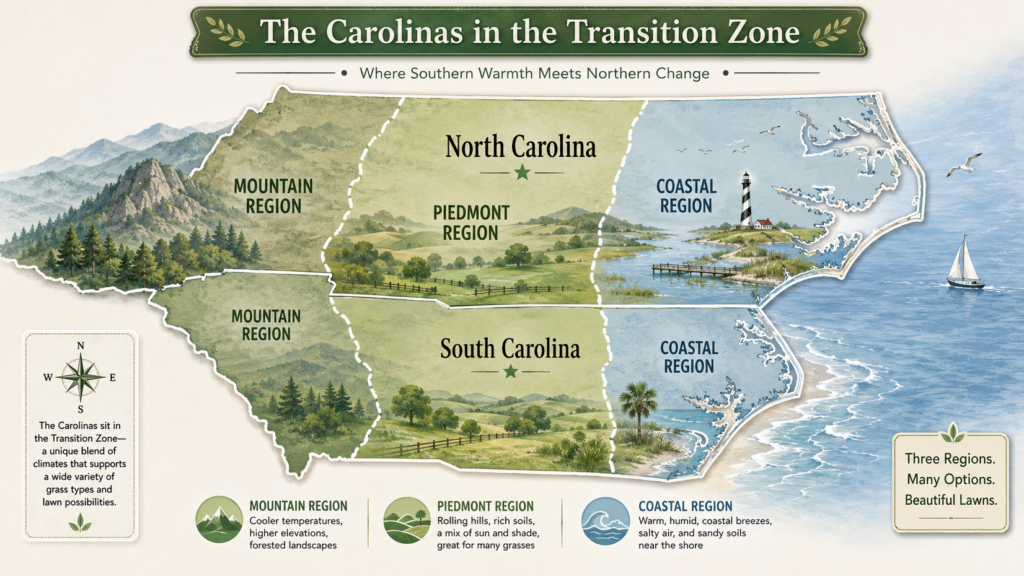
The Carolinas don’t fit neatly into either the “warm-season” or “cool-season” grass category. That’s the challenge — and why so many lawns here struggle.
Summers are brutal. Temperatures regularly push into the 90s with high humidity from June through September. For cool-season grasses like Tall Fescue, that kind of heat triggers stress, thinning, and browning — even with regular watering.
Winters are inconsistent. Charlotte and the Piedmont rarely see the deep freezes of the northern states, but temperatures still drop low enough to push warm-season grasses like Bermuda into full dormancy by November. The result: a brown lawn for three to four months every year.
This back-and-forth is what makes grass selection in the Carolinas so critical. Get it wrong, and you’re fighting your lawn’s natural response to the climate every single season.
Carolina Microclimates: One State, Multiple Realities
Where you live within the Carolinas changes the equation significantly.
| Region | Climate Profile | USDA Zone | Turf Impact |
|---|---|---|---|
| Mountains (Asheville area) | Cooler summers, colder winters | 6a–6b | Fescue performs better; Bermuda struggles |
| Piedmont (Charlotte, Gastonia) | Hot summers, mild winters, clay soil | 7b–8a | True transition zone; both grasses face seasonal stress |
| Coastal Plain & Low Country | Hottest summers, rarely freezes | 8a–9a | Bermuda thrives; Fescue often fails in summer heat |
Soil matters just as much as temperature. The Piedmont — including the Charlotte area — is dominated by heavy red clay soil. Clay drains poorly, compacts easily, and holds moisture in ways that can promote fungal disease in Fescue lawns. It also makes core aeration a critical annual practice for both grass types.
Sandy coastal soils drain fast, which suits Bermuda’s drought tolerance but can make consistent Fescue irrigation even more demanding.
Knowing your region and your soil type before you choose a grass isn’t just helpful — it’s the difference between a lawn that thrives and one you’re constantly trying to rescue.
Tall Fescue: The Year-Round Green Contender
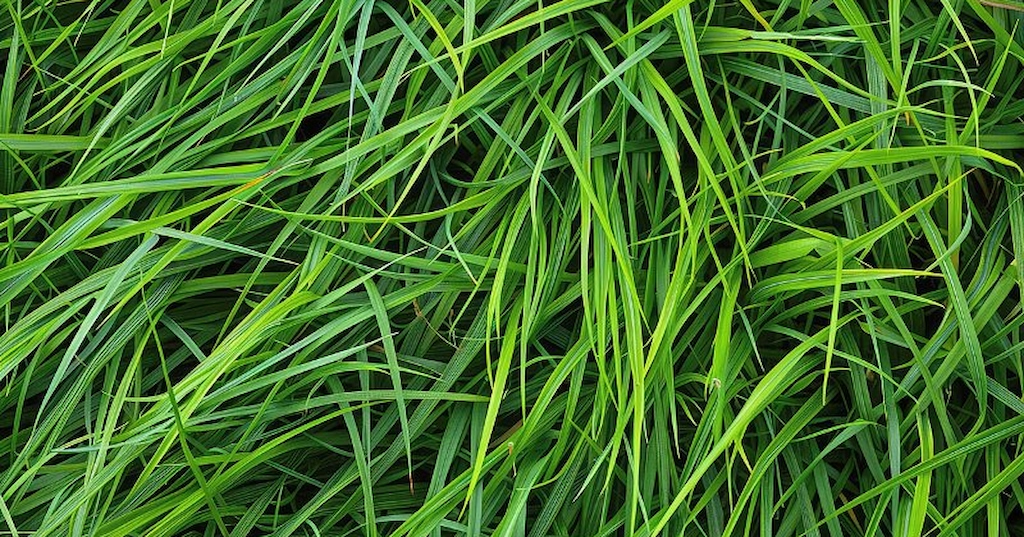
Tall Fescue is the most widely grown cool-season grass in the Carolinas — and for good reason. It stays green through fall and winter, handles shade better than any warm-season alternative, and can be established from seed without the cost of sod.
But it comes with real limitations in this climate. Understanding both sides helps you set the right expectations before you commit.
What Tall Fescue Looks Like
• Texture: Coarse, wide-bladed grass with an upright growth habit
• Color: Deep green through fall and winter; can fade or thin during peak summer heat
• Spread: Bunch-type grass — it doesn’t spread aggressively, so bare spots need reseeding
• Shade tolerance: Performs well with as little as 4 hours of direct sunlight per day
In established Carolina neighborhoods with mature trees, Tall Fescue is often the only grass that will grow reliably in shaded areas.
Pros of Tall Fescue in the Carolinas
• Year-round green color — stays active and visible through mild Carolina winters
• Best shade tolerance of any common Carolina lawn grass
• Faster, cheaper establishment — seed in fall and it fills in within weeks
• Good fit for the Piedmont — performs well in the Charlotte region’s cooler microclimates and partially shaded yards
• Improved cultivars available — newer turf-type tall fescue varieties like Titan Rex and Houndog 5, recommended by NC State Extension, offer better heat tolerance and disease resistance than older varieties
Cons and Challenges for Carolina Fescue Lawns
• Summer heat stress — sustained temperatures above 90°F cause thinning, browning, and dormancy in Fescue
• Higher water demand in summer — needs consistent irrigation during June–August to prevent significant dieback
• Brown patch risk — warm, humid Carolina nights create ideal conditions for brown patch fungus, one of the most common Fescue problems in the region
• Low traffic tolerance — heavy foot traffic, pets, and play areas wear Fescue thin quickly, especially during summer stress
• Annual overseeding often required — summer thinning means fall reseeding is a near-annual task for most Carolina Fescue lawns
If you have a lawn that sees a lot of activity or sits in full sun all day, Fescue will require more intervention to stay healthy through the summer months.
Expert Tips for Fescue Success in the Carolinas
• Mow at 3–4 inches. Taller grass shades the soil, reduces moisture loss, and crowds out weeds naturally. Cutting Fescue too short accelerates summer stress.
• Water deeply, not daily. Watering 2–3 times per week to a depth of 6 inches encourages deep root growth, making the grass far more resilient during dry spells.
• Treat brown patch early. In Charlotte’s humid summers, brown patch can spread fast. Watch for circular brown patches with a darker outer ring — early fungicide application makes a significant difference. Advanced Turf Care’s brown patch and disease control treatments are timed specifically for Carolina’s seasonal disease windows.
• Fall is your reset window. Core aeration followed by overseeding in September and October gives Fescue its best chance to recover from summer and build density before winter.
For region-specific cultivar recommendations and seeding rates, NC State Extension’s Tall Fescue lawn management guide is one of the most reliable resources available to Carolina homeowners.
Bermuda Grass: The Resilient Warm-Season Champion
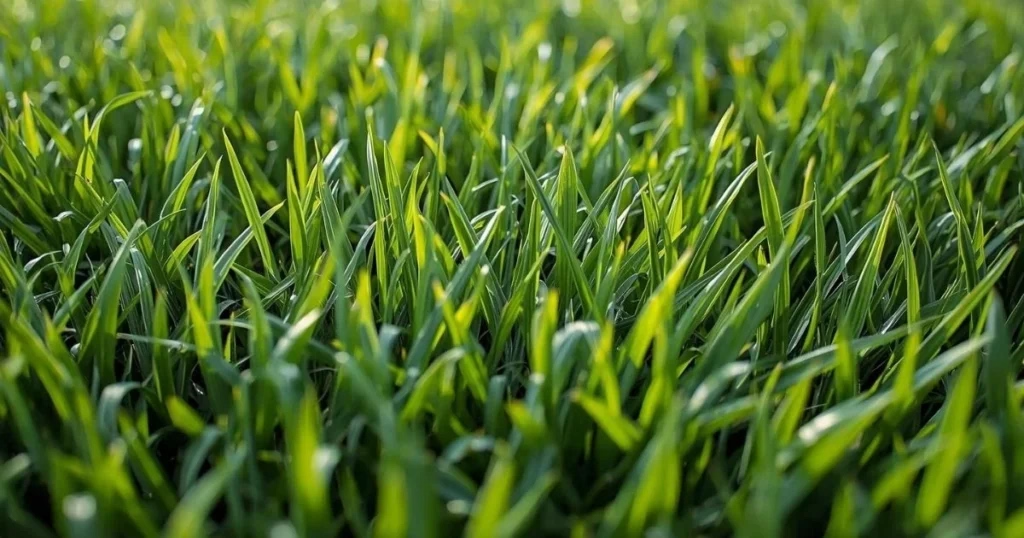
If Tall Fescue is built for shade and winter color, Bermuda Grass is built for survival. It thrives in the conditions that punish every other grass — scorching summer heat, dry spells, and heavy foot traffic. For the right yard, it’s one of the toughest, most low-drama lawn options available in the Carolinas.
The trade-off is winter. Come November, it goes brown and stays that way until spring.
What Bermuda Grass Looks Like
• Texture: Fine to medium blade width, creating a dense, carpet-like appearance at proper mowing height
• Color: Vibrant dark green during summer; straw-brown during winter dormancy
• Spread: Spreads aggressively through both above-ground stolons and below-ground rhizomes — fills in bare spots fast but requires consistent edging
• Sun requirement: Needs 6+ hours of direct sunlight daily; struggles significantly in shade
In full-sun Charlotte yards, Bermuda produces one of the densest, most durable lawns you can grow in the transition zone.
Pros of Bermuda Grass in the Carolinas
• Best heat and drought tolerance of any common Carolina lawn grass — goes semi-dormant during drought to conserve water, then rebounds quickly when rain returns
• Handles heavy traffic better than any alternative — recovers fast from kids, pets, and high-use areas
• Self-repairing — aggressive spread means thin spots and damaged areas fill back in without reseeding
• Lower water demand in summer compared to Fescue — a meaningful advantage during dry Carolina summers
• Strong cultivar options — varieties like Tifway 419 and Latitude 36 are widely used across the Carolinas for their wear tolerance, finer texture, and improved cold hardiness compared to common Bermuda
Clemson University Extension specifically recommends Celebration and TifTuf Bermuda for South Carolina lawns, noting TifTuf’s exceptional drought resistance — requiring up to 38% less water than Tifway 419 in university trials.
Cons and Considerations for Carolina Bermuda Lawns
• Winter dormancy — goes fully brown from roughly November through March in most of the Piedmont; this is normal, but it’s a dealbreaker for homeowners who want year-round color
• Shade intolerance — thins out and eventually dies in areas receiving less than 6 hours of sun; no amount of care fixes a shaded Bermuda lawn
• Aggressive spreading — without regular edging, Bermuda will creep into flower beds, driveways, and neighboring turf areas
• Frequent mowing required — during peak summer growth, weekly or even twice-weekly mowing is often necessary to prevent scalping and thatch buildup
• Thatch accumulation — dense growth habit means thatch can build up quickly, restricting water and nutrient penetration if not managed annually
Expert Tips for Bermuda Success in the Carolinas
• Mow at 1–2 inches. Bermuda cut too high develops thatch quickly and loses its dense, carpet-like appearance. A sharp rotary mower works for most homeowners; a reel mower produces the best results at lower heights.
• Don’t panic in November. Bermuda going brown is not a lawn dying — it’s a lawn surviving. Dormancy is a natural stress response that protects the root system through winter. It will green back up in spring once soil temperatures consistently reach 65°F.
• Follow a soil test before fertilizing. Bermuda is a heavy feeder, but over-fertilization drives excessive top growth and thick thatch layers that create long-term problems. NC State Extension recommends a soil test every 2–3 years to dial in your fertilization program accurately.
• Dethatch and aerate annually. Given Bermuda’s aggressive growth, annual dethatching and core aeration keep the soil open and the lawn absorbing water and nutrients efficiently — especially important in the Charlotte area’s clay-heavy soils.
Direct Comparison: Tall Fescue vs. Bermuda Grass in the Carolinas
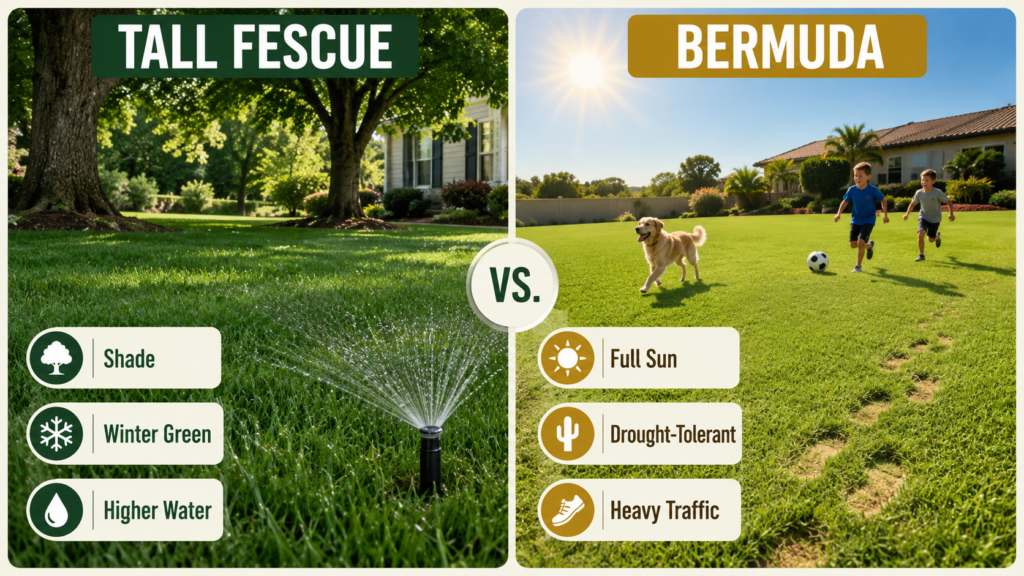
No single grass wins in every category. The right choice comes down to your yard’s specific conditions, your maintenance tolerance, and what you’re willing to accept each season. This table gives you the full picture at a glance.
Performance & Maintenance
| Factor | Tall Fescue | Bermuda Grass | Best Choice |
|---|---|---|---|
| Winter Color | Stays green through winter | Dormant and brown Nov–Mar | Tall Fescue |
| Summer Heat | Fair to moderate | Excellent | Bermuda |
| Drought Tolerance | Moderate | Excellent | Bermuda |
| Shade Tolerance | Good | Poor | Tall Fescue |
| Traffic Tolerance | Low to moderate | High | Bermuda |
| Maintenance | Moderate-high | High | Depends on homeowner |
| Mowing Height | 3–4 inches | 1–2 inches | Depends on desired look |
Establishment, Soil & Carolina Considerations
| Factor | Tall Fescue | Bermuda Grass |
|---|---|---|
| Pest & Disease Issues | Brown patch, dollar spot, armyworms | Spring dead spot, nematodes, mole crickets |
| Establishment | Seed only; fall planting preferred | Seed, sod, or sprigs; spring planting preferred |
| Soil Preference | Well-drained loam; pH 5.5–6.5 | Adaptable to clay, sand, and varied pH |
| Charlotte Area Performance | Excellent winter appearance but summer stress common | Thrives in summer heat and clay soils |
| Best Fit | Homeowners wanting year-round green color and moderate shade tolerance | Homeowners prioritizing durability, drought tolerance, and summer performance |
Which Grass Is Right For You?
Answer a few quick questions and discover whether Tall Fescue, Bermuda Grass, or a hybrid approach is the best fit for your Carolina lawn.
1. How much direct sunlight does your lawn receive?
2. How important is year-round green color?
3. Do you have irrigation?
4. How much traffic does your lawn receive?
5. What best describes your maintenance style?
The Bottom Line
If your yard has significant shade, Fescue is your answer — full stop.
If your yard gets full sun all day and you have active kids, pets, or high foot traffic, Bermuda will outperform Fescue every summer.
If year-round green color is non-negotiable, Fescue is the practical choice for most of the Carolinas.
If water efficiency and summer durability matter most, Bermuda is the stronger long-term investment.
Many Carolina properties actually have both — Fescue under trees and in shaded beds, Bermuda in open sunny areas. It’s not always an either/or decision.
Making Your Choice: When Each Grass Excels in the Carolinas
The comparison table tells you how each grass performs. This section helps you apply that to your actual yard.
Answer these three questions first:
• How much sun does my yard get? (Full sun vs. partial or heavy shade)
• How much activity does my lawn see? (Kids, pets, foot traffic)
• Do I want green grass in December?
Your answers will point clearly to one or the other in most cases.
Choose Tall Fescue If…
• Your yard has moderate to heavy shade — mature trees, fences, or structures blocking 4+ hours of direct sun make Bermuda impractical
• Year-round green color matters to you — Fescue stays active and visible through Carolina winters when Bermuda is fully dormant
• Your lawn is mostly ornamental — low-traffic front yards, decorative side yards, or areas where appearance matters more than durability
• You’re in a cooler microclimate — mountain regions, higher elevations, or northern NC where summer heat is less extreme give Fescue a meaningful advantage
• Your soil is well-amended and drains well — Fescue rewards good soil preparation with strong, deep root development
Choose Bermuda Grass If…
• Your yard gets 6+ hours of direct sun daily — full-sun exposure is where Bermuda pulls away from every other option
• You have kids, pets, or heavy foot traffic — Bermuda recovers from damage faster than any common Carolina lawn grass
• Water efficiency is a priority — Bermuda’s drought dormancy-and-recovery cycle uses significantly less water than keeping Fescue alive through a Carolina summer
• You can accept a brown lawn in winter — dormancy is natural, predictable, and temporary; green-up returns reliably each spring
• You’re in the Coastal Plain or lower Piedmont — the hotter and longer your summers, the more Bermuda outperforms every cool-season alternative
5-Year Cost Comparison: What to Expect
Cost is rarely discussed honestly in lawn care content. Here’s a realistic breakdown for a typical 5,000 sq ft Carolina lawn over five years.
| Cost Category | Tall Fescue (5 Years) |
Bermuda Grass (5 Years) |
Notes |
|---|---|---|---|
| Water / Irrigation | $1,200–$1,800 | $600–$900 | Fescue needs consistent summer irrigation; Bermuda tolerates drought with minimal input. |
| Fertilization | $400–$600 | $500–$800 | Bermuda is a heavier feeder during its long active season; Fescue requires less total nitrogen. |
| Weed & Pest Control | $300–$500 | $300–$500 | Both require pre-emergent programs; costs are roughly comparable. |
| Disease Control | $200–$400 | $100–$200 | Fescue's brown patch vulnerability adds recurring treatment costs in humid summers. |
| Overseeding / Repair | $300–$600 | $100–$200 | Fescue typically needs annual or biannual overseeding after summer thinning; Bermuda self-repairs. |
| Mowing Equipment | $300–$500 rotary mower | $400–$800 reel mower optimal | Bermuda's low mowing height produces best results with a reel mower, which costs more upfront. |
| Estimated 5-Year Total | $2,700–$4,400 | $2,100–$3,400 | Bermuda is generally more cost-efficient over time in full-sun Carolina yards. |
Important caveat: These are estimates for DIY homeowners. Professional lawn care programs adjust these numbers significantly based on your specific yard conditions, treatment frequency, and product selection.
The real cost difference isn’t just dollars — it’s time and intervention. Fescue asks for more active management during summer. Bermuda asks for more consistent mowing during the growing season. Neither is truly low-maintenance in the Carolinas.
Mastering Carolina Lawn Care: Seasonal Maintenance Guides
Timing is everything in the Carolinas. The same treatment applied two weeks too early or too late can produce completely different results. Use these calendars as your seasonal reference.
Tall Fescue Care Calendar
| Month | Priority Tasks |
|---|---|
| March | Apply pre-emergent herbicide before soil temps hit 55°F. Light nitrogen fertilization if grass shows slow green-up. |
| April | Monitor for early brown patch and dollar spot. Spot-treat weeds. Mow at 3–4 inches. |
| May | Reduce fertilization. Increase watering frequency as temperatures climb. |
| June | Switch to deep, infrequent watering 2–3x per week, 6 inches deep. Mow high — never below 3 inches. Watch for brown patch. |
| July–Aug | Survival mode. Maintain irrigation, avoid fertilizing, treat disease promptly. Accept some summer thinning as normal. |
| Sept | Most important month. Core aerate, overseed, apply starter fertilizer. Soil temps should be 50–65°F for best germination. |
| Oct | Follow-up fertilization to support new seedling establishment and root development before winter. |
| Nov–Feb | Minimal activity. Monitor for winter weeds like Poa annua. Avoid traffic on frost-covered turf. |
NC State Extension recommends seeding Tall Fescue in the Piedmont between September 1 and October 15 for optimal establishment before winter.
Bermuda Grass Care Calendar
| Month | Priority Tasks |
|---|---|
| March | Scalp lawn to ½ inch to remove dormant material and encourage faster green-up. Apply pre-emergent herbicide. |
| April | Monitor for spring dead spot — circular dead patches from winter fungal activity. Do not fertilize until grass is actively greening. |
| May | Apply first nitrogen fertilization once 50%+ of lawn has greened up. Begin weekly mowing at 1–2 inches. |
| June–Aug | Peak maintenance season. Mow weekly or more. Fertilize every 6–8 weeks. Water deeply 2–3x per week. Dethatch if needed. |
| Sept | Begin tapering fertilization — no nitrogen after mid-September in the Piedmont. Final cleanup mow. |
| Oct | Last mow before dormancy. Apply potassium-based winterizer fertilizer to strengthen root hardiness. |
| Nov–Feb | Fully dormant. No fertilization, no herbicide. Temporary ryegrass overseeding can restore winter color if desired. |
Clemson Extension advises against applying nitrogen to Bermuda after September 15 in the Upstate SC and Piedmont NC regions — late nitrogen pushes tender growth vulnerable to early frost damage.
Sustainability Notes
Both grasses can be managed with a lighter environmental footprint with a few intentional choices:
• Smart irrigation controllers (Rachio, Hunter Hydrawise) reduce water waste by 30–50% by adjusting schedules based on real-time weather data — a worthwhile investment for either grass type
• Rain sensors are low-cost additions to existing systems that prevent irrigation during and after rainfall
• Bermuda’s drought dormancy is a natural water conservation mechanism — working with it rather than fighting it significantly reduces overall water use
• Fescue’s dense canopy at 3–4 inches naturally suppresses weeds, reducing herbicide dependency when maintained properly
Troubleshooting Common Carolina Lawn Issues
Even well-maintained Carolina lawns run into problems. Knowing what to look for — and when to act — makes the difference between a quick fix and a full recovery project.
Fescue-Specific Problems
Brown Patch
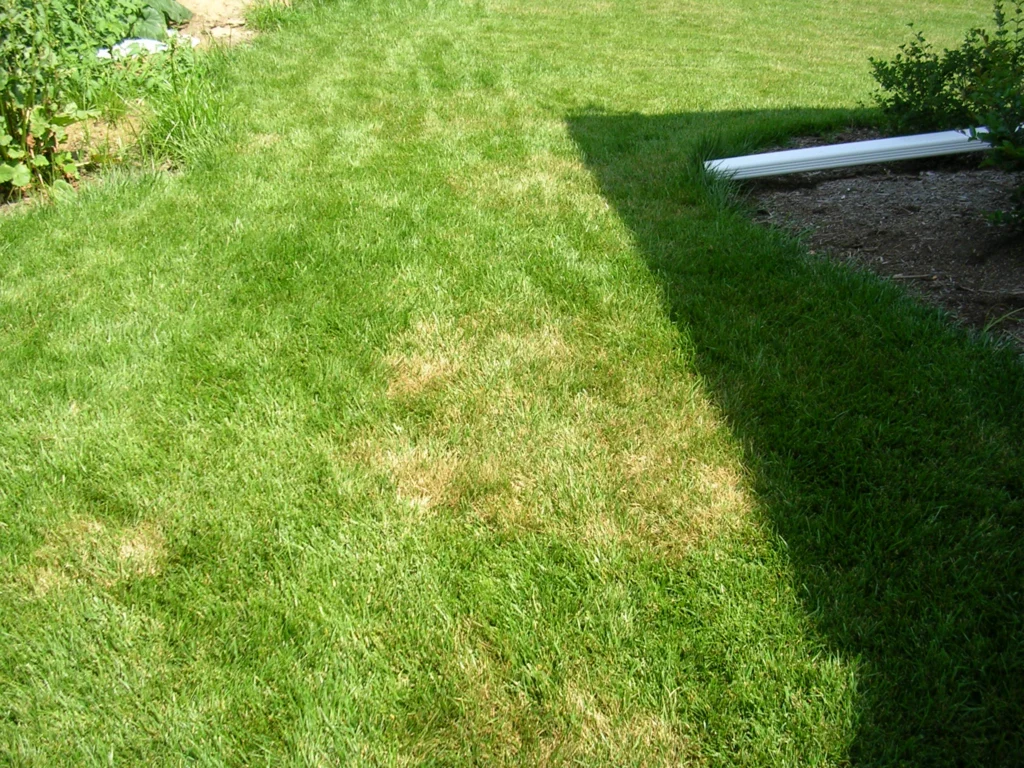
The most common Fescue disease in the Carolinas. Caused by Rhizoctonia solani fungus during warm, humid nights above 70°F.
• Symptoms: Circular brown patches 6 inches to several feet wide, often with a darker “smoke ring” border
• Prevention: Avoid evening watering, don’t over-fertilize with nitrogen in summer, maintain proper mowing height
• Treatment: Apply a systemic fungicide at first sign. Repeated applications may be needed through humid stretches. Advanced Turf Care’s disease control program is timed specifically around Charlotte’s brown patch season
Heat Stress & Summer Drought
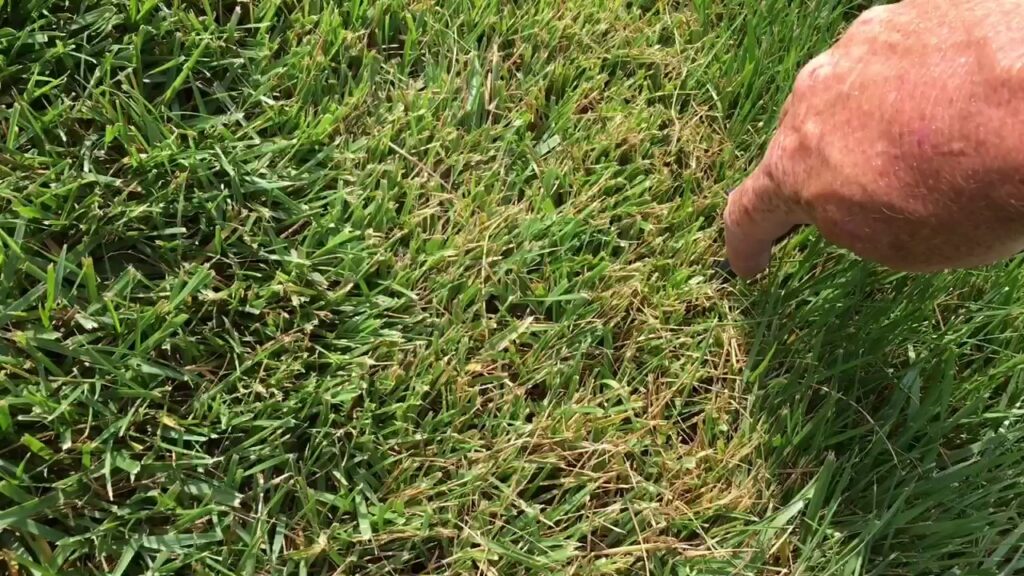
• Symptoms: Grass blades folding lengthwise, blue-gray tint, footprints remaining visible in turf
• Recovery: Water immediately and deeply. Avoid fertilizing stressed turf — it accelerates damage
• Prevention: Keep mowing height at 3–4 inches, water before 10am, and irrigate to 6-inch depth rather than frequent shallow watering
Winterkill
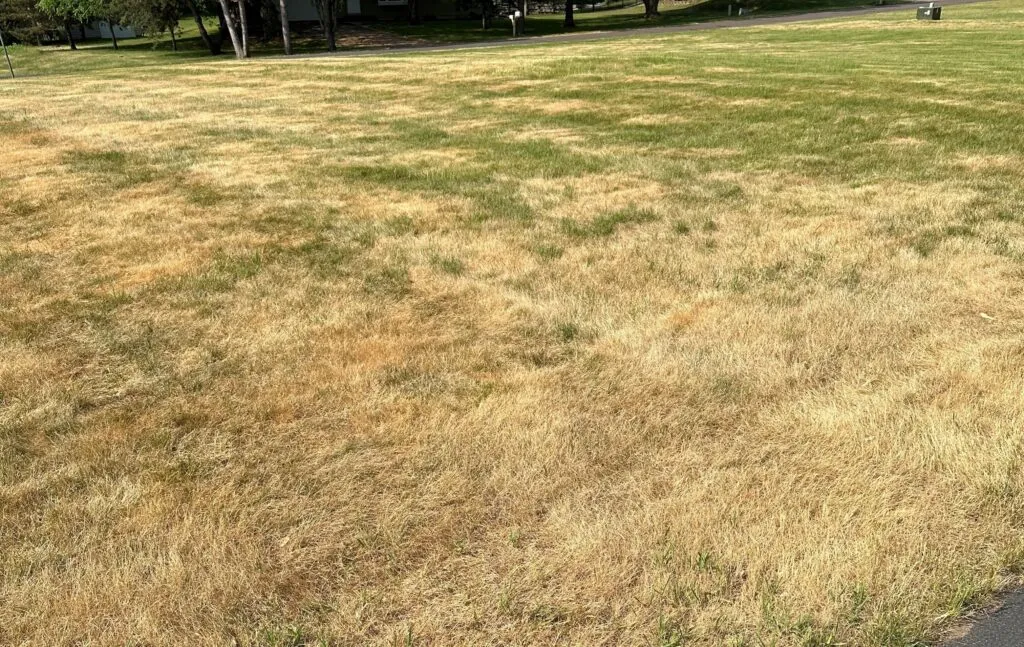
Rare in the Carolinas but possible after severe cold snaps.
• Symptoms: Large irregular dead areas that don’t green up in spring
• Recovery: Wait until mid-April before reseeding — confirm the grass is truly dead, not slow to green up. Overseed affected areas and apply starter fertilizer
Bermuda-Specific Problems
Spring Dead Spot
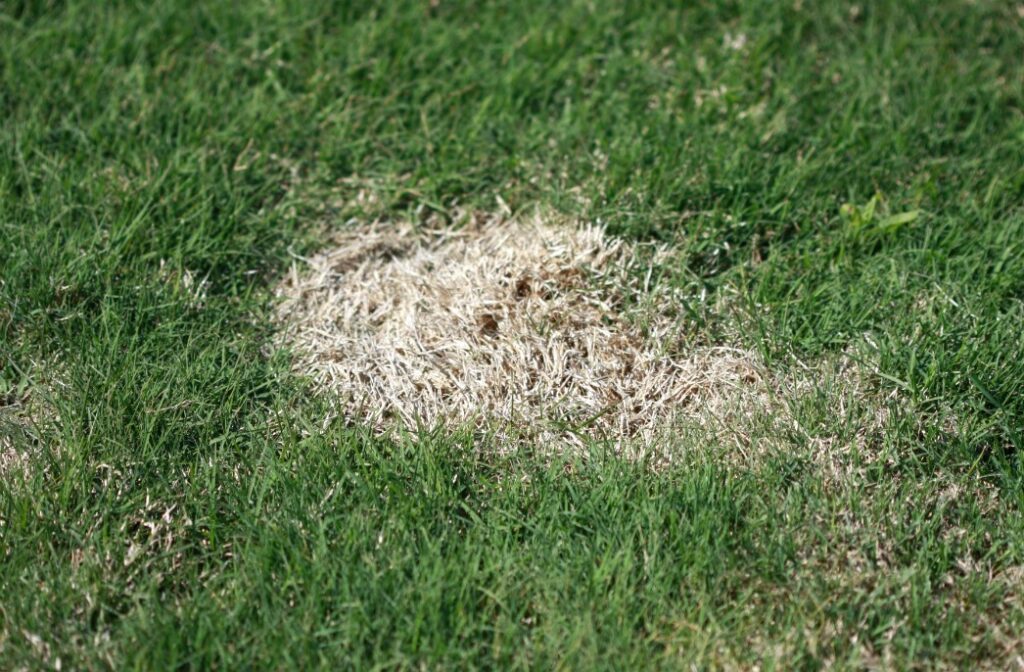
The most damaging Bermuda disease in the transition zone. Caused by root-rotting fungi that attack during dormancy.
• Symptoms: Circular dead patches 6 inches to 3 feet wide appearing as Bermuda greens up in spring
• Prevention: Avoid late-season nitrogen, maintain proper pH (6.0–6.5), aerate annually
• Treatment: Fungicide applications in fall (Sept–Oct) are most effective — spring treatment addresses appearance only, not the underlying infection
Thatch Buildup
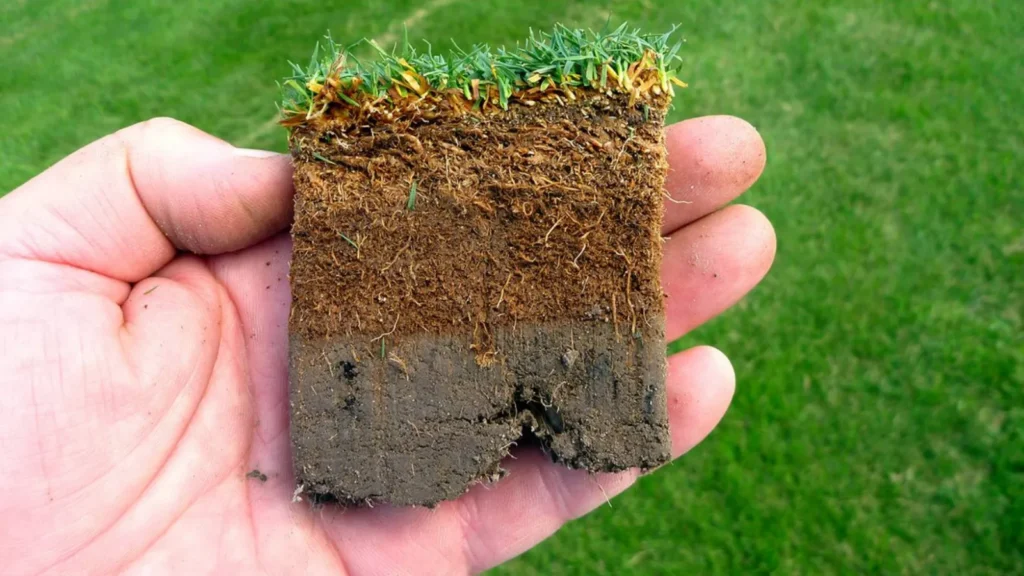
Bermuda’s aggressive growth produces thatch faster than almost any other common lawn grass.
• Symptoms: Spongy feel underfoot, water beading on surface, scalping during mowing
• Solutions: Annual dethatching in late spring, followed by core aeration to restore water and nutrient penetration into the soil
Winter Dormancy
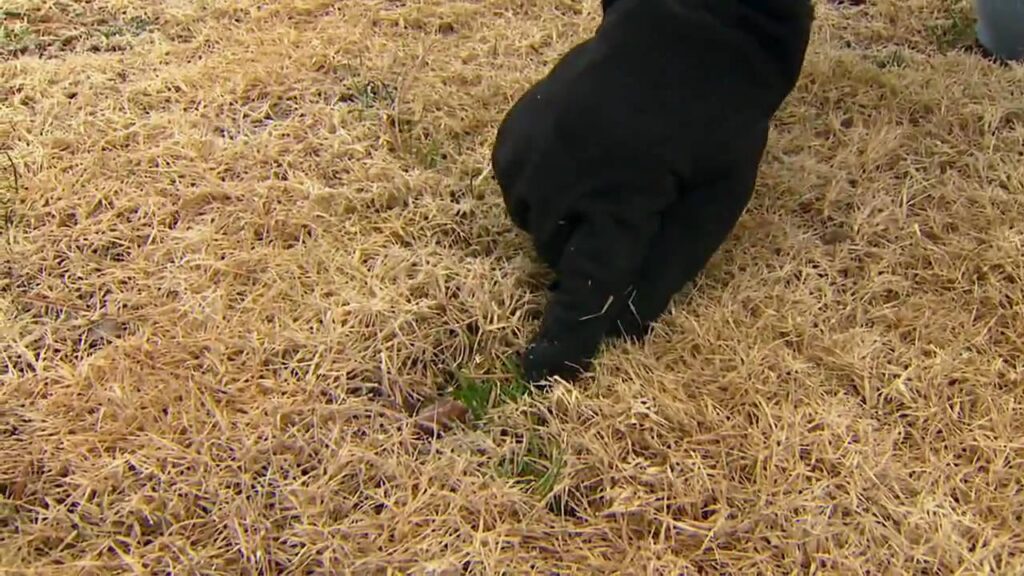
Brown Bermuda is not dead Bermuda — but it does require some management.
• Avoid heavy foot traffic on dormant turf — it damages crowns that won’t recover until spring
• Temporary overseeding with annual ryegrass in October restores green color through winter
• Do not apply herbicides or fertilizers to fully dormant Bermuda
Aggressive Spreading
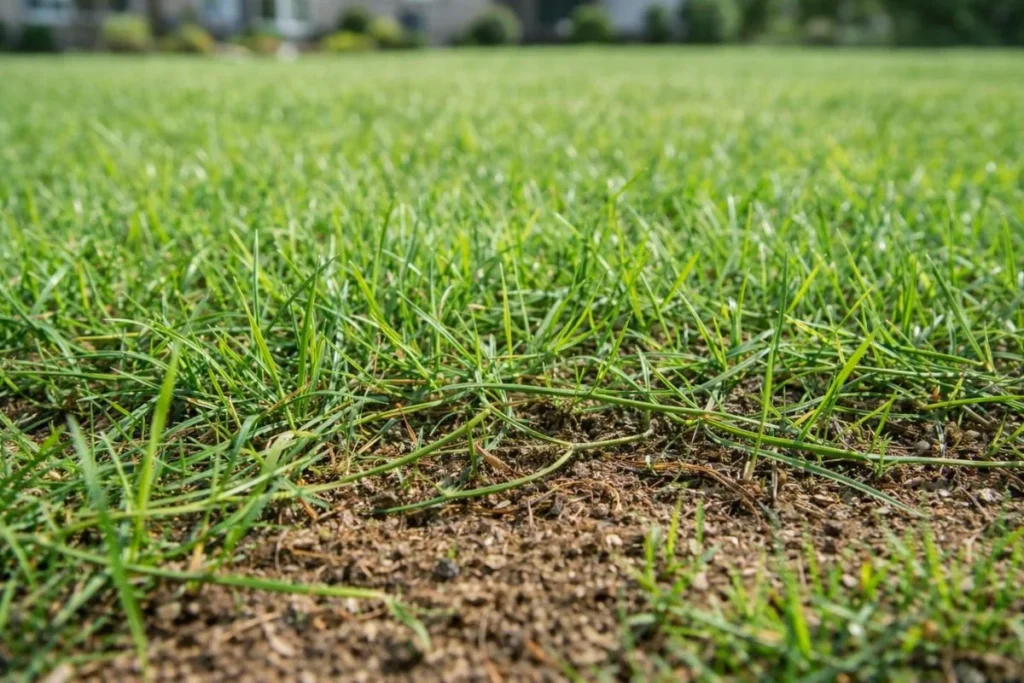
• Edge beds, sidewalks, and driveways every 2–3 weeks during the growing season
• Use a physical edging barrier (steel or aluminum) between Bermuda and flower beds
• Spot-treat invasions with a non-selective herbicide carefully — Bermuda’s rhizomes run underground and re-emerge if not fully treated
General Carolina Lawn Pests & Weeds
Proactive weed control is always cheaper than reactive treatment. A pre-emergent herbicide applied in early March and again in mid-September blocks the majority of annual weeds before they establish in either grass type.
Common regional pests to watch for:
| Pest | Grass Affected | Signs | Action |
|---|---|---|---|
| Grub Worms | Both | Spongy turf, brown patches that lift like carpet, increased bird activity. | Treat with grub control in late spring to early summer before larvae mature. Advanced Turf Care offers targeted grub control treatments timed for Charlotte's grub activity window. |
| Armyworms | Fescue primarily | Rapidly expanding brown patches, visible caterpillars at lawn edges, birds feeding heavily. | Act within 48 hours — armyworms consume turf fast. Apply curative insecticide immediately. |
| Mole Crickets | Bermuda primarily | Spongy, tunneled soil surface, thinning turf, visible tunneling near surface after rain. | Apply insecticide in late spring when nymphs are small and most vulnerable. |
Conclusion: Cultivating Your Ideal Carolina Lawn
There’s no universal right answer between Tall Fescue and Bermuda Grass — but there is a right answer for your yard.
Fescue wins in shade, delivers year-round color, and suits cooler Carolina microclimates. Bermuda wins in full sun, outlasts every heat wave, and rebuilds itself after heavy use. The transition zone doesn’t favor either grass unconditionally — it rewards homeowners who match the right grass to the right conditions.
Before you seed, sod, or overseed this season, revisit the fundamentals:
• How much sun does your yard actually receive?
• What does your soil look like — compacted clay or well-drained loam?
• How much foot traffic, pet activity, or play happens on your lawn?
• Are you willing to manage summer irrigation for Fescue, or accept winter dormancy with Bermuda?
Honest answers to those four questions will point you in the right direction almost every time.
Lawn care in the Carolinas is an ongoing process, not a one-time decision. Conditions change, trees grow, shade patterns shift, and soil health evolves. NC State Extension and Clemson University’s turfgrass resources are updated regularly and remain the most reliable, region-specific references available to Carolina homeowners — bookmark them and revisit annually.
Frequently Asked Questions
Can I have both Fescue and Bermuda in my Carolina yard?
Yes — and many Carolina homeowners do. Use Bermuda in open, full-sun areas and Fescue under tree canopies or shaded beds. Keep a clean border because Bermuda can spread aggressively into Fescue areas.
How often should I water my Carolina lawn?
Fescue in summer usually needs watering 2–3 times per week to a 6-inch soil depth. Bermuda usually needs deep watering 1–2 times per week. Always water deeply and infrequently instead of shallow daily watering.
When is the best time to fertilize in the Carolinas?
Tall Fescue should be fertilized mainly in fall from September to November. Bermuda should be fertilized from spring green-up through mid-September, with peak feeding during summer.
What are the best shade-tolerant Fescue varieties for NC and SC?
Good turf-type tall fescue options include Titan Rex, Houndog 5, Firecracker SLS, and Rebel Exeda. Always choose certified seed and look for endophyte-enhanced varieties.
How do I deal with weeds in my Bermuda lawn?
Apply pre-emergent before soil temperatures reach 55°F in spring, then again in fall for winter weeds like Poa annua. For existing weeds, identify the weed first and use a Bermuda-safe post-emergent.
What should I do if my Fescue lawn turns brown in summer?
First, check whether it is drought stress or brown patch. Drought stress usually browns evenly and improves with irrigation. Brown patch often forms circular patterns and needs fungicide treatment.
Is organic lawn care realistic in the Carolinas?
Yes, but it works best as a long-term soil health strategy. Compost topdressing, soil testing, proper mowing, and smart watering help, but some lawns may still need targeted treatments during summer stress.
Where can I get a soil test in North or South Carolina?
North Carolina homeowners can use the NC State Extension Soil Testing Lab through their local county Extension office. South Carolina homeowners can use Clemson University’s Agricultural Service Laboratory.
Still Unsure Which Lawn Program Fits Your Yard?
Advanced Turf Care provides honest, experienced, and dependable lawn care services in Charlotte. With 20+ years of turf experience, our team can help you understand what your lawn actually needs — from fertilization and weed control to aeration, seeding, disease control, and grub control.
Best For Charlotte Homeowners Who Need:
- Lawn fertilization and weed control
- Aeration and overseeding guidance
- Disease and brown patch support
- Grub control and turf health help
- Clear answers from experienced lawn pros