A North Carolina lawn can look thin, dry, or tired even when you water and fertilize it on schedule. Sometimes the problem is not what is happening above the soil. It is what is happening underneath it.
Foot traffic, mowing, construction, and naturally dense soil can press soil particles together. When that happens, roots have less room to grow, water has a harder time moving into the soil, and oxygen does not reach the root zone as easily. Aeration can help, but only if you do it at the right time for your grass.
That timing matters more in North Carolina than many homeowners realize. Fescue, Bermuda, and Zoysia do not grow on the same schedule, and conditions in the mountains are different from those in the Piedmont or Coastal Plain.
The goal is simple: aerate when your grass is actively growing and able to recover.
Understanding Your North Carolina Lawn: Warm-Season vs. Cool-Season Grasses
Before you choose a month, identify the type of grass you have.
Tall fescue is a cool-season grass. It grows best when temperatures are milder, which is why fescue lawns are usually at their strongest in fall and spring. North Carolina summers can be hard on fescue, especially during long periods of heat and dry weather.
Bermuda and Zoysia are warm-season grasses. They become active as temperatures rise in late spring, grow strongly through summer, and go dormant during cold weather.
That difference controls aeration timing.
Aeration temporarily disturbs the soil and turf. You want the grass to be growing strongly enough to repair that disturbance. Aerating dormant or heat-stressed grass can slow recovery and create new problems.
North Carolina’s climate also changes from west to east. Mountain areas cool earlier in fall. The Piedmont has a longer warm period, while the Coastal Plain often stays warm later into the year. Those regional differences can shift the best aeration window by several weeks.
Why Aeration Helps North Carolina Soil
Many Piedmont lawns sit on dense clay soil. Clay can hold water and nutrients well, but when it becomes compacted, the small spaces between soil particles become even tighter.
That is where core aeration helps.
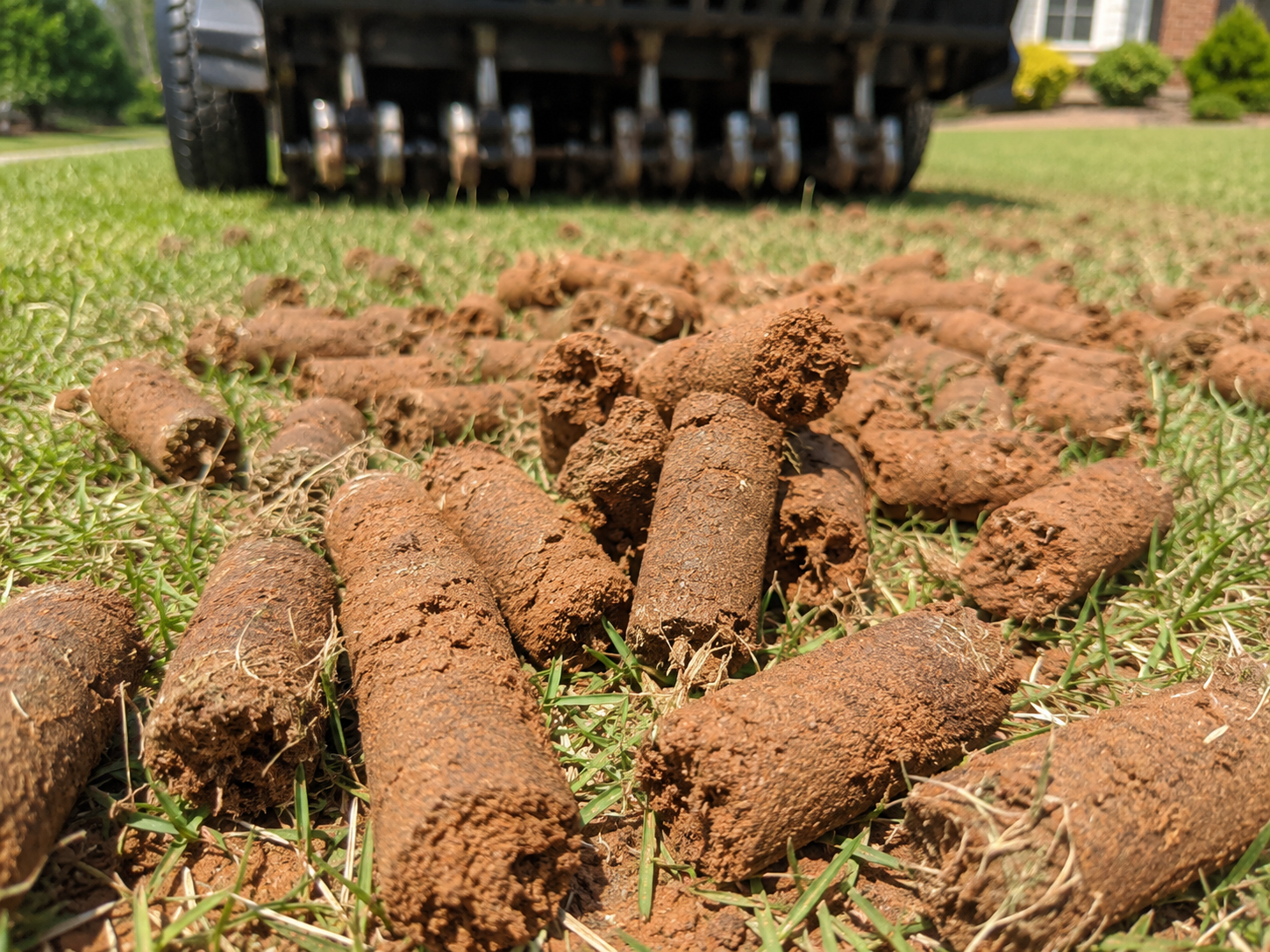
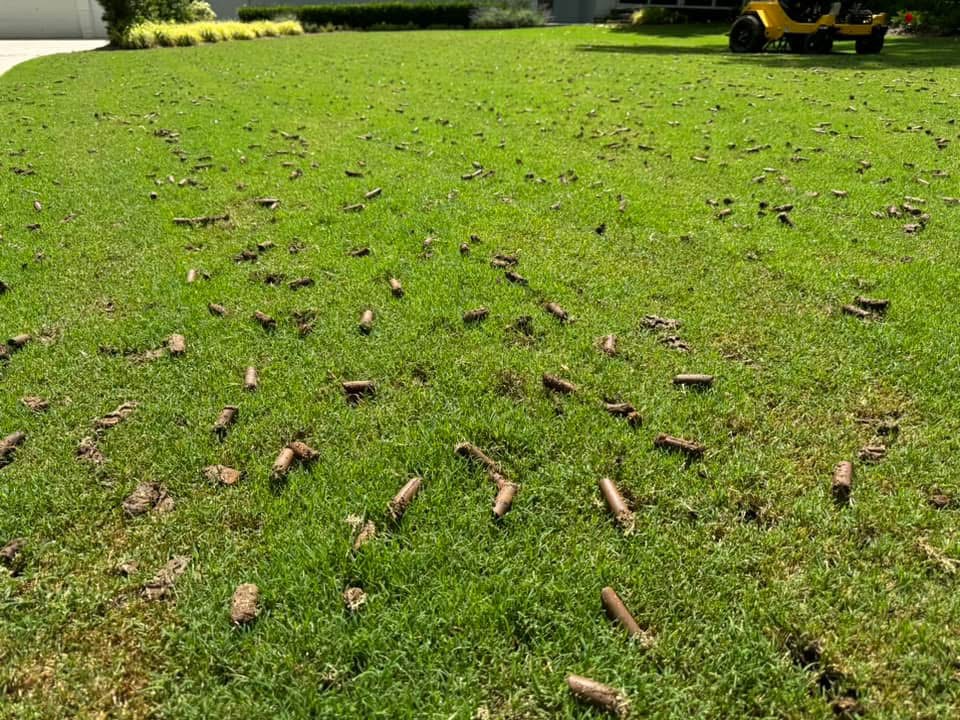
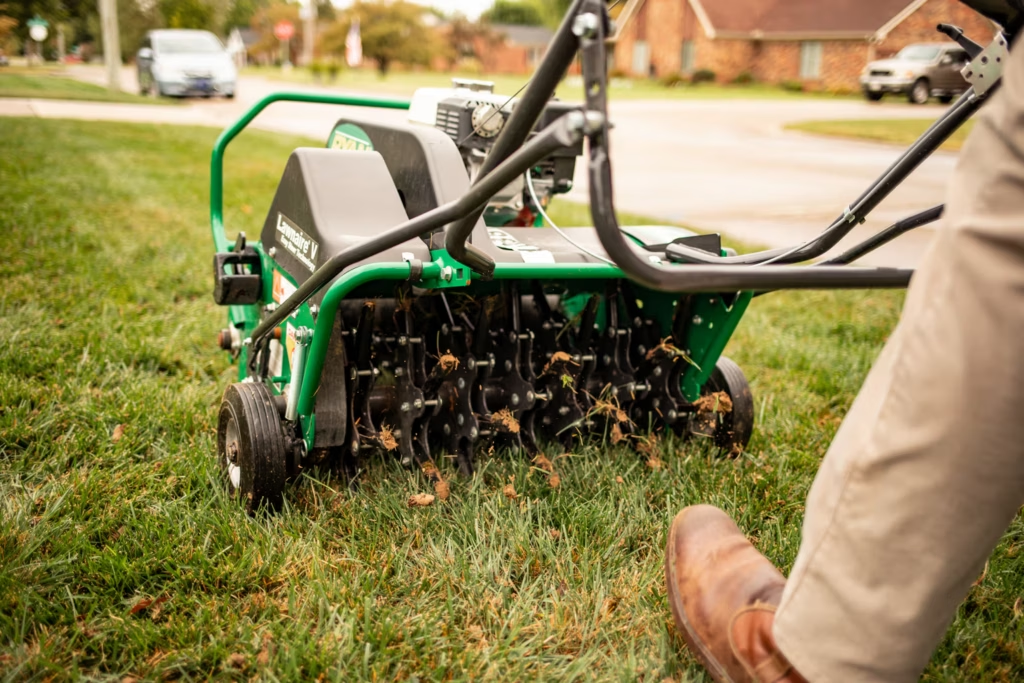
A core aerator removes small plugs of soil from the lawn. Those openings give water, oxygen, and nutrients a clearer path into the root zone while creating space for roots to spread.
If you want a deeper explanation of how the process works, our guide to the importance of core aeration and how it compares with liquid aeration explains the difference in more detail.
Aeration can be especially useful when water runs across the surface instead of soaking in. It can also help roots grow deeper into the soil, which gives the lawn better access to moisture during hot weather.
Coastal soils can present a different challenge. Sandier soil may drain quickly, so the goal is not always to solve the same heavy-compaction problem found in Piedmont clay. This is why the condition of your own lawn matters more than following a statewide calendar without checking the soil first.
A healthier root zone also helps turf grow more densely. Dense grass gives weeds less open space to move into.
When Should You Aerate Your Lawn in North Carolina?
The safest rule is to aerate during your grass’s active growing season.
For fescue, that usually means late summer into early fall. For Bermuda and Zoysia, it means late spring through summer after the grass has fully greened up and is growing strongly.
Here is a practical North Carolina guide:
| Grass type | NC region | Best general aeration window | Why |
|---|---|---|---|
| Fescue | Mountains | Late August to September | Cooler fall weather arrives earlier |
| Fescue | Piedmont | September to early October | Mild fall conditions support recovery and overseeding |
| Fescue | Coastal Plain | Late September to October | Warm fall weather can extend the growing window |
| Bermuda | Most NC regions | Late May through July | Grass is actively growing and can recover quickly |
| Zoysia | Most NC regions | June through July | Strong warm-season growth supports recovery |
| Centipede | Piedmont and Coastal Plain | Late May through June | Slow-growing turf should be aerated during active growth |
These are general windows, not fixed dates. Weather matters.
If September is unusually hot and dry, a fescue lawn may be too stressed to aerate comfortably. If spring stays cool, Bermuda may not be growing strongly enough in May to recover quickly.
For Charlotte and much of the Piedmont, fall is usually the key aeration period for fescue lawns because it also lines up well with overseeding. Warm-season lawns should generally be handled after spring green-up and before growth begins slowing later in the season.
Avoid aerating during drought stress, extreme heat, or winter dormancy.
Signs Your North Carolina Lawn Needs Aeration
You do not need to aerate just because another homeowner does it every year. Look at what your lawn is telling you.
Compaction often shows up first in areas that receive regular foot traffic. Grass may become thin around walkways, play areas, gates, or places where equipment passes over the lawn.
Standing water after rain can also point to poor infiltration. If water stays on the surface instead of soaking in, compacted soil may be part of the problem.
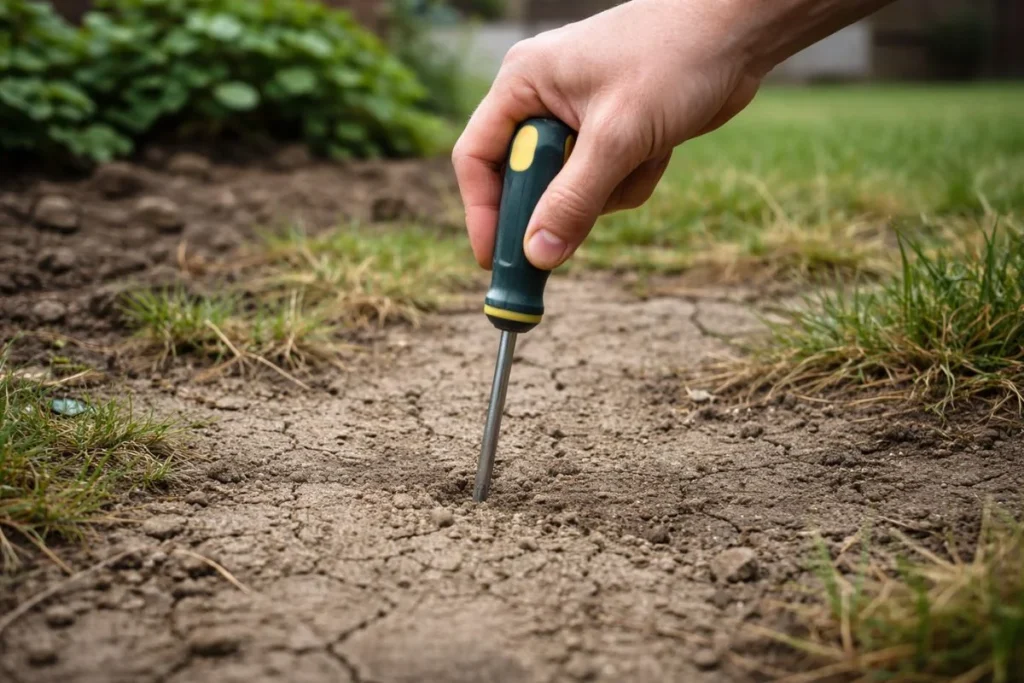
Try pushing a screwdriver several inches into moist soil. If it is very difficult to push down, the soil may be heavily compacted. If it moves in easily, serious compaction may not be the main problem.
Thatch is another issue homeowners often confuse with compaction. A small amount of thatch is normal, but a thick layer can interfere with water and air movement. If you are not sure what you are seeing, read our guide on what thatch is and how it affects a lawn.
Also be careful with discoloration. Brown or thinning grass does not automatically mean the lawn needs aeration. Heat, drought, poor irrigation, insects, or disease can create similar symptoms. For example, dollar spot can cause small discolored patches that have nothing to do with soil compaction.
Aeration is useful when compaction is the problem. It is not a cure for every lawn symptom.
DIY Aeration vs. Hiring a Professional in North Carolina
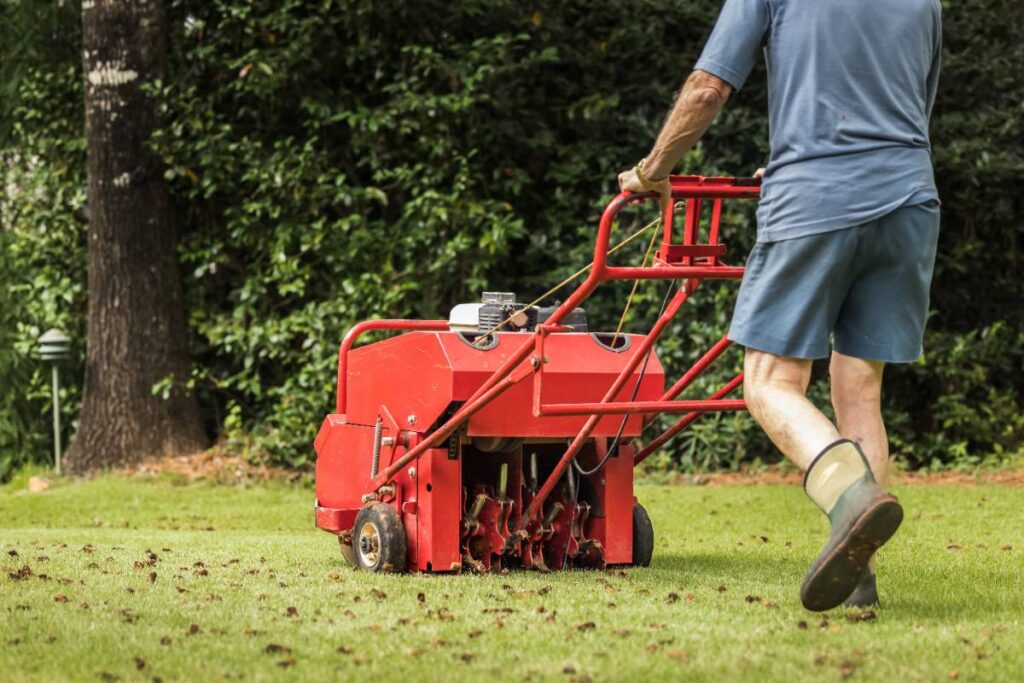
DIY aeration can make sense if you have a smaller lawn, level ground, and enough time to use rented equipment correctly.
The main advantage is control. You choose the day and can focus extra passes on compacted areas. The downside is that core aerators are heavy machines, and using one well takes more effort than many homeowners expect.
A professional service becomes more useful when the lawn is large, the soil is severely compacted, or you are combining aeration with overseeding and fertilization. It can also reduce the risk of using the wrong equipment or choosing the wrong timing.
For homeowners in Charlotte and surrounding areas, Advanced Turf Care can handle core aeration as part of a lawn care plan built around the grass type, soil condition, and time of year.
For meaningful compaction, core aeration is usually more useful than simple spike aeration. A core aerator removes soil plugs. A spike aerator only pushes holes into the ground, which may provide limited relief in dense soil.
You may also hear about liquid aeration. It uses soil-applied products rather than mechanically removing plugs. It is a different approach, with different uses and limits. Our guide to what liquid lawn aeration is explains how it works and where it may fit.
For heavy Piedmont clay, mechanical core aeration is often the more direct way to relieve physical compaction.
A Step-by-Step Guide to DIY Lawn Aeration
Start by confirming that your grass is in the right growing season. Timing is more important than getting the job done on a specific weekend.
A few days before aeration, mow the lawn to a normal, manageable height for your grass. Do not scalp it simply to make aeration easier.
Remove sticks, stones, toys, and other debris. Mark sprinkler heads, irrigation parts, shallow lines, invisible fence wires, and anything else the aerator could hit.
The soil should be moist, not muddy. Watering a day or two before aeration can help if the ground is dry. Tines have a harder time entering hard, parched soil, while saturated soil can become messy and easily damaged.
For compacted soil, use a core aerator. Make several passes over problem areas so the machine creates enough openings across the lawn.
Leave the plugs where they fall. They will break apart naturally as you mow, water, and walk across the lawn. There is usually no need to rake them up.
Once aeration is finished, move directly into the next part of your lawn plan, especially if you are working on a fescue lawn in fall.
What to Do After Aeration: Overseeding and Fertilizing for Better Results
Fall aeration and overseeding work well together on fescue lawns.
The holes created during core aeration improve seed-to-soil contact, which gives new seed a better chance to establish. Spread the seed evenly soon after aeration, then manage watering carefully so the upper soil stays consistently moist during germination.
Warm-season lawns are different. An established Bermuda or Zoysia lawn does not automatically need overseeding just because it was aerated. The goal is often to help the existing turf spread and recover.
Fertilizer should match what the lawn actually needs. A soil test can help you understand pH and nutrient levels before you apply products. It does not diagnose compaction, but it can prevent you from guessing about fertility.
After aeration, continue normal watering based on your grass type and weather. If you have also seeded fescue, watering must be more frequent while the seed is germinating.
Avoid applying a pre-emergent herbicide at the same time as fescue overseeding unless the product label clearly allows it. Many pre-emergent products that stop weed seeds can also stop desirable grass seed from establishing.
For a simple seasonal approach, think of the year this way: fescue aeration and overseeding belong around the fall growing window, while Bermuda and Zoysia aeration belongs in the warm growing season.
Common Aeration Mistakes to Avoid in North Carolina
The most common mistake is aerating at the wrong time.
Fescue should not be heavily aerated during peak summer stress. Bermuda and Zoysia should not be aerated while dormant in winter. In both cases, the grass has less ability to recover.
Another mistake is aerating bone-dry soil. Hard ground can prevent the tines from reaching the depth you want. On the other hand, saturated soil can become damaged under heavy equipment.
Do not assume spike aeration will solve severe compaction. Pushing holes into dense clay is not the same as removing soil cores.
Post-aeration care matters too. If you overseed fescue and then allow the soil surface to dry out, germination can suffer. If you fertilize without knowing what the lawn needs, you may spend money without fixing the real problem.
Finally, do not aerate just because the lawn looks bad. Diagnose the cause first. Disease, shade, poor irrigation, fertility problems, and insects can all produce symptoms that look like compaction.
Frequently Asked Questions
How often should I aerate my lawn?
Many compacted or high-traffic lawns can benefit from annual aeration. Lawns with loose soil and little traffic may need it less often. Base the decision on soil condition rather than automatically aerating every year.
Should I remove the soil plugs after aeration?
No. Leave them on the lawn. They will break down naturally and return soil and organic material to the surface.
Can I aerate if I have weeds?
You can, but first consider how serious the weed problem is and whether you plan to overseed. Weed-control timing and new grass seed do not always work well together, so the order of treatments matters.
Should I get a soil test before aerating?
A soil test is useful for checking pH and nutrient levels, especially if you also plan to fertilize. It does not tell you whether the soil is compacted, so use physical signs such as hard soil, poor water infiltration, and restricted root growth when deciding whether aeration is needed.
How long does a lawn take to recover after aeration?
Recovery depends on the grass type, weather, soil moisture, and how actively the lawn is growing. Grass aerated during its proper growth period normally recovers much faster than turf aerated during stress or dormancy.
A Healthier Lawn Starts With the Right Timing
Aeration works best when you stop thinking of it as a date on the calendar.
First, identify your grass. Then look at the condition of the soil. If the lawn is compacted, aerate while the turf is actively growing and able to recover.
For North Carolina fescue lawns, that usually means fall. For Bermuda and Zoysia, it usually means the warm growing season.
The timing may be simple, but getting it right can make the rest of your lawn care work much better.
Ready for a Thicker, Healthier Lawn?
Professional aeration can reduce compaction and help seed, water, and nutrients reach the root zone.
Explore Aeration