Have you ever walked across your lawn and noticed that the ground feels soft and spongy, almost like a thick carpet? Maybe you’ve been watering your grass regularly, but it still looks dry, thin, or unhealthy.
The problem might be hiding just below the green grass blades.
It’s called thatch.
A little thatch is normal and can even help your lawn. But when the layer gets too thick, it can make it harder for water and air to reach the soil. It can also leave your grass more likely to suffer from heat, drought, and other problems.
The good news is that you don’t always need expensive equipment or major lawn work to manage it.
First, you need to know what thatch looks like, how much is too much, and whether your lawn actually needs treatment.
What Is Thatch?
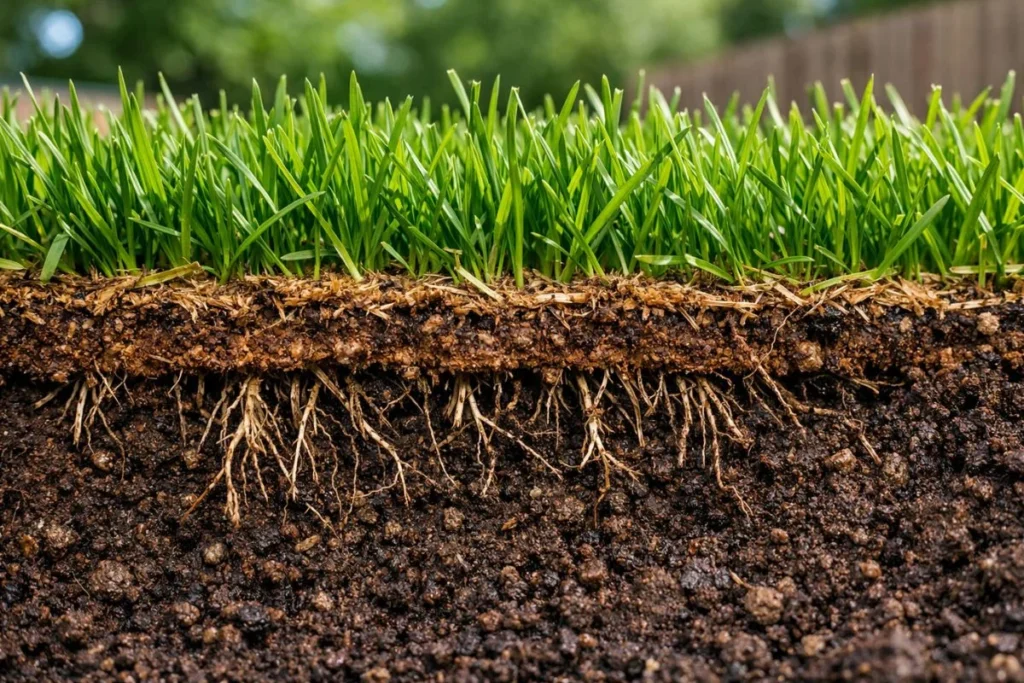
Thatch is a layer of living and dead plant material that builds up between the green grass blades and the soil.
It contains grass stems, roots, and the runners that help some grasses spread. These parts are tougher than ordinary grass blades, so they take longer to break down.
Think of thatch as a woven mat sitting on top of your soil.
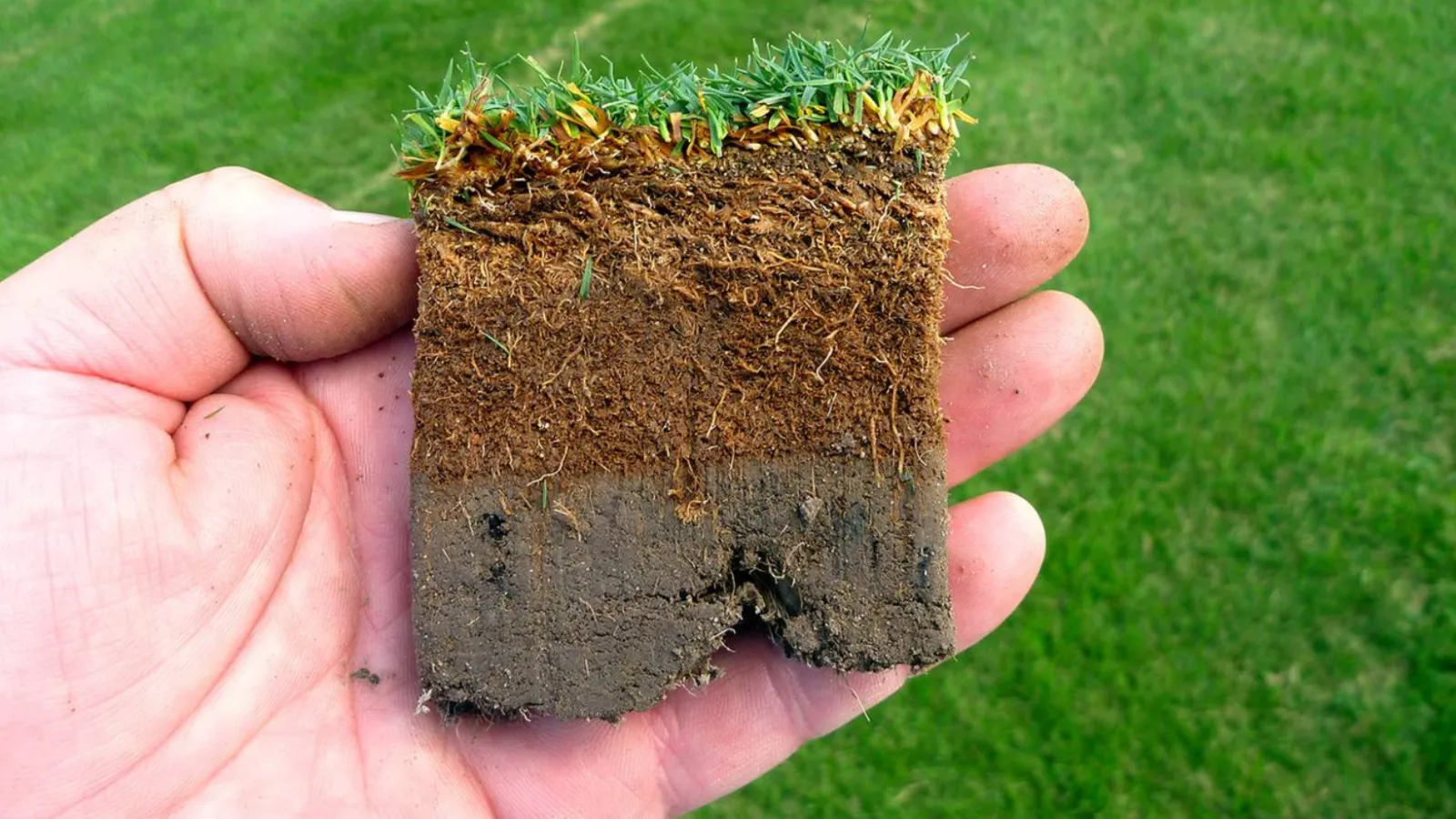
When you look at a small piece of turf from the side, you can usually see three main layers:
- Green grass: The blades growing above the ground.
- Thatch: A brown, fibrous layer of stems and roots.
- Soil: The ground beneath the thatch where healthy roots should grow.
Thatch is not the same as a pile of grass clippings.
Fresh clippings break down fairly quickly when you mow often. The tougher stems and roots that make up thatch take much longer to decay.
The problem begins when new plant material builds up faster than the older material can break down.
Good Thatch vs. Bad Thatch
Not all thatch needs to be removed.
A thin layer can actually benefit your lawn. It helps protect the grass from sudden temperature changes, holds some moisture, and provides a little cushioning when people walk across the yard.
It can also protect the soil surface from wear.
For many lawns, a thatch layer around half an inch or less is considered manageable.
But thickness alone doesn’t tell the whole story.
A lawn with a small amount of thatch might be perfectly healthy. Another lawn with a thicker layer may struggle to absorb water or grow strong roots.
Grass type matters, too. Zoysia naturally produces more thatch than tall fescue and may tolerate a somewhat thicker layer.
Here’s a simple way to understand the difference:
| Healthy thatch | Excessive thatch |
|---|---|
| A thin, firm layer | A thick, springy layer |
| Helps protect the soil | May slow water movement |
| Offers some cushioning | Can hold roots above the soil |
| Usually needs no removal | May need treatment |
| Grass grows normally | Grass may appear weak or thin |
The goal isn’t to remove every bit of thatch. It’s to keep the layer from interfering with healthy grass growth.
How Does Thatch Form?
Every lawn produces organic material as it grows.
Old roots die, new stems develop, and grasses such as Bermuda and zoysia spread through aboveground or underground runners.
Normally, soil organisms break down this material.
Bacteria, fungi, earthworms, and other organisms slowly turn dead plant matter into simpler materials.
But several lawn care habits can disturb that balance.
Too much fertilizer
Applying more nitrogen than your grass needs can cause very fast growth. The lawn produces new stems and roots faster than older material can break down.
Poor mowing habits
Mowing too infrequently can leave heavy clumps of clippings that shade or smother the grass. These clumps are not the main cause of true thatch, but poor mowing can weaken the lawn.
Certain grass types
Bermuda, zoysia, and Kentucky bluegrass naturally produce runners and dense root systems. These plant parts contribute to thatch buildup.
Tall fescue is generally less prone to serious thatch problems.
Compacted soil
Many Charlotte-area lawns have clay-heavy soil.
When that soil becomes tightly packed, there is less space for air and water to move. This can slow the activity of organisms that break down dead plant material.
Poor soil conditions
Soil that is too acidic, poorly drained, or lacking healthy biological activity may not break down organic matter efficiently.
Unnecessary pesticide use
Some pesticides can affect earthworms and other helpful soil organisms. That’s one reason treatments should be used only when needed and according to the label.
Healthy soil does much of the work for you. When grass grows at a steady rate and the soil supports natural decay, thatch is less likely to become excessive.
Why Is Too Much Thatch Bad for Your Lawn?
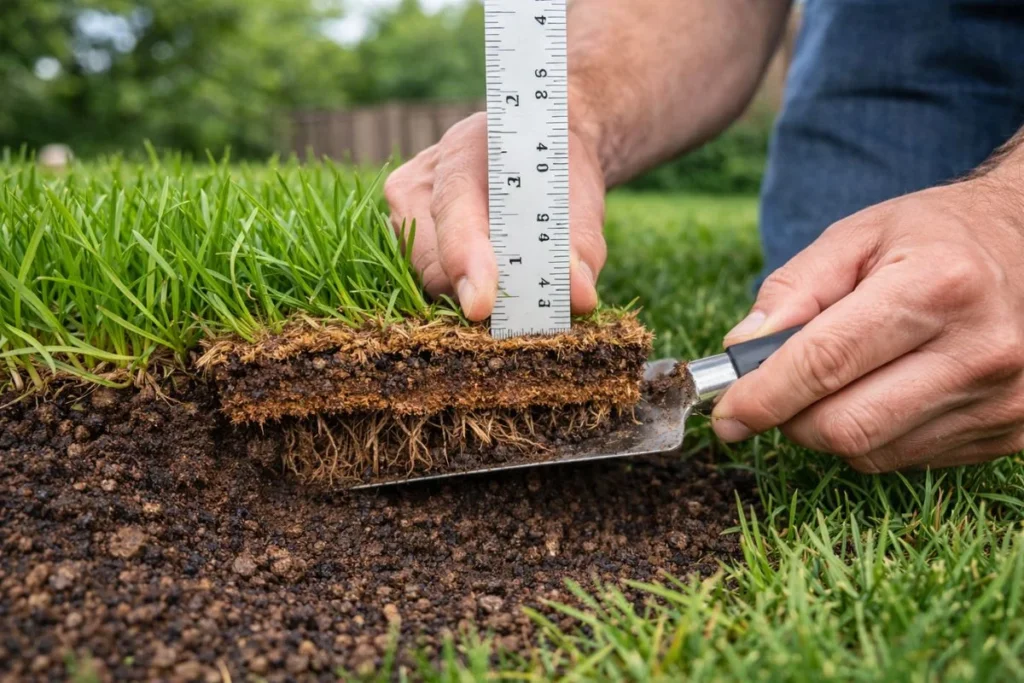
A thick thatch layer can cause problems even when your grass looks fairly green.
One of the biggest issues is water movement.
Imagine pouring water onto a thick, dry sponge. Some water stays inside the sponge instead of passing through.
Thatch can behave in a similar way.
When the layer becomes too thick, it may slow water movement into the soil. Some areas can remain unusually wet while the soil below stays dry.
Your grass may then develop roots within the thatch layer instead of extending deeper into the ground.
Those shallow roots are more exposed to heat and drying.
This becomes a serious concern during Charlotte’s hot summers.
A lawn with shallow roots may wilt sooner because it cannot reach moisture deeper in the soil.
Excessive thatch can also:
- Reduce the movement of air and some lawn treatments into the soil.
- Create protected areas where certain insects can live.
- Hold moisture around the base of the grass.
- Increase the risk of uneven drying and drought stress.
- Make the lawn more vulnerable to some diseases and winter injury.
Thatch doesn’t automatically cause fungal disease, but it can add to poor growing conditions.
For example, tall fescue lawns in Charlotte often deal with brown patch during warm, humid weather. Excess moisture, long periods of leaf wetness, and poor lawn conditions can increase disease pressure.
If you’re seeing brown areas in summer, our guide to brown patch fungus on tall fescue can help you understand what to look for.
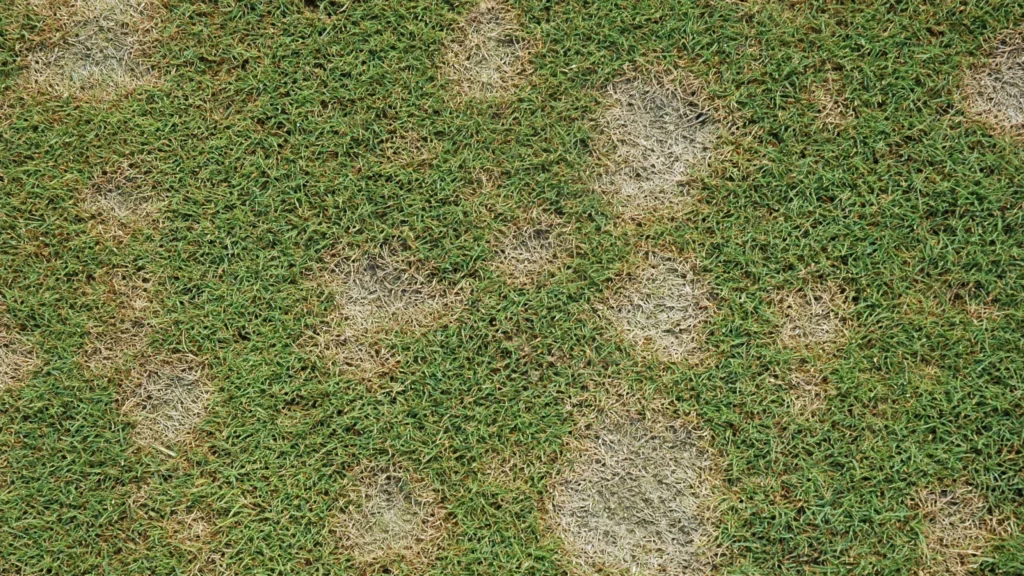
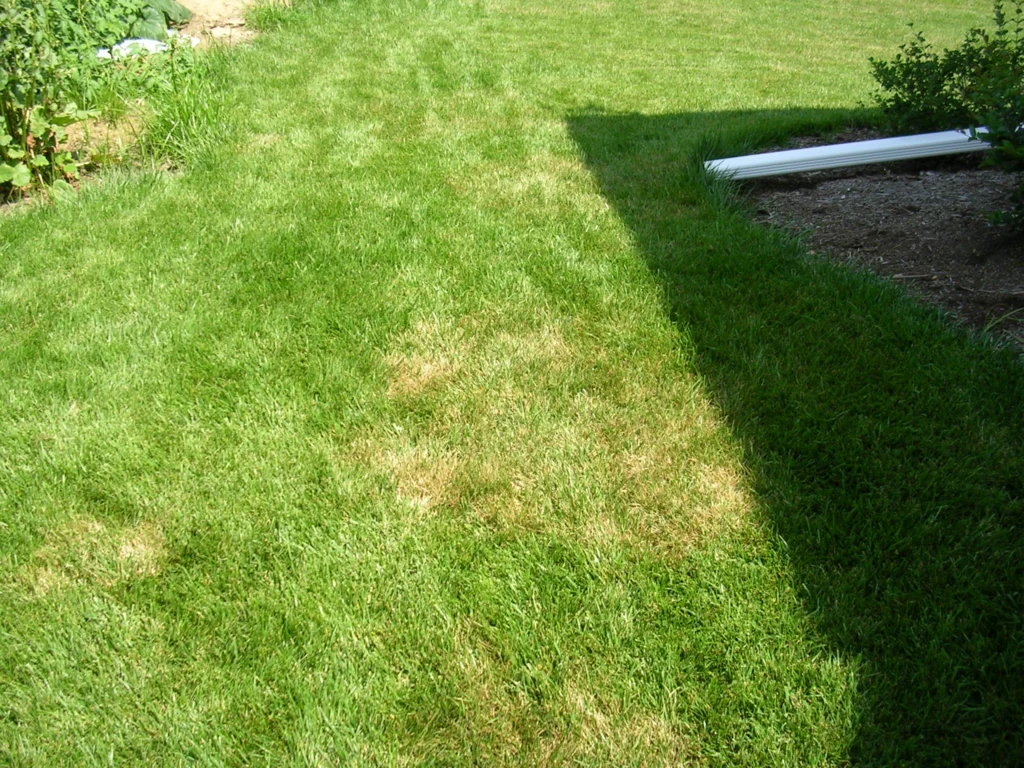
Remember that brown grass doesn’t always mean excessive thatch. Drought, compacted soil, disease, and insect damage can produce similar symptoms.
That’s why checking the lawn before treating it matters.
How to Identify Thatch in Your Lawn
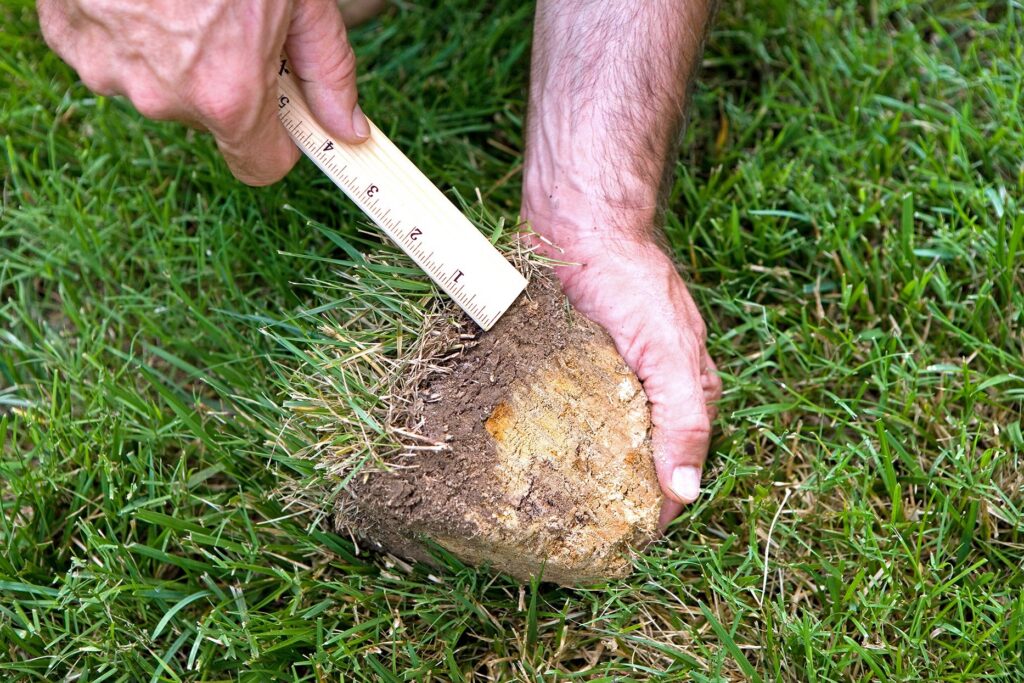
You don’t need special equipment to start checking for thatch.
Begin by walking across different parts of your yard.
Does one area feel much softer or springier than another?
Does water run off after irrigation? Does the grass look stressed even though you’re caring for it?
These can be warning signs.
But they don’t prove thatch is the problem. Compaction, poor drainage, and other soil issues can look similar.
The best approach is to check the layer beneath your grass.
Try the Finger Test
The finger test is a quick way to look for a thick layer of organic material.
- Find an area near a sidewalk, driveway, or another firm edge.
- Part the grass blades so you can see closer to the soil.
- Push your finger gently into the base of the grass.
- Feel for a dense, springy layer between the grass and the ground.
If you can feel a thick, fibrous mat before reaching the soil, you may have excessive thatch.
Try this in several places.
One soft spot doesn’t mean your whole lawn has a problem.
The finger test is only an initial check. It cannot measure thatch thickness accurately.
Check a Small Piece of Turf
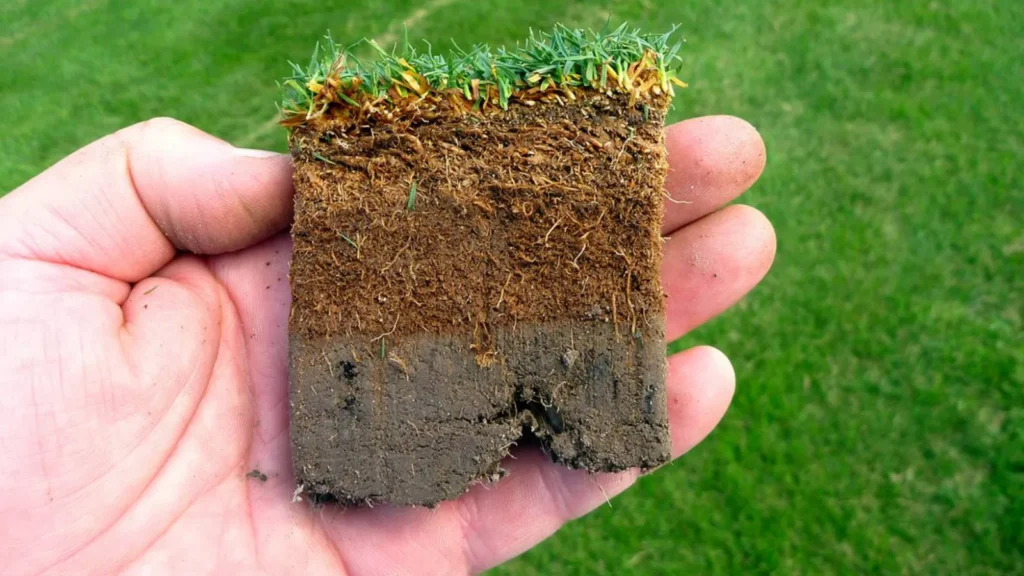
For a better answer, take a small sample from your lawn.
You’ll need a garden trowel or spade and a ruler.
Step 1: Choose a spot that represents the area you’re concerned about.
Step 2: Cut a small piece of turf about three to four inches deep.
Step 3: Lift it carefully so you can see the grass, thatch, and soil from the side.
Step 4: Find the brown, fibrous layer between the green grass and the soil.
Step 5: Measure that layer with your ruler.
Don’t include loose grass blades above the thatch or the dark soil beneath it.
If the layer is thicker than half an inch, it’s worth checking whether management is needed.
For Bermuda lawns, this can be an important warning sign. Zoysia may tolerate more buildup, depending on its condition and the guidance you follow.
Check a few areas before deciding. Then put the turf samples back and water them lightly.
Quick Thatch Check: Does Your Lawn Need Attention?
Answer these five questions:
- Does your lawn feel unusually spongy when you walk on it?
- Does water run off or struggle to soak into the soil?
- Have you noticed repeated disease or insect problems?
- Can you feel a thick, fibrous layer before reaching the soil?
- Is the measured thatch layer less than half an inch, between half an inch and one inch, or more than one inch?
Here’s how to use your answers.
Less than half an inch: If your grass looks healthy, removal is usually unnecessary. Continue normal lawn care.
Half an inch to one inch: Look at your grass type and symptoms. You may need closer monitoring, core aeration, or careful thatch removal.
More than one inch: A heavy layer often needs professional assessment or mechanical removal, sometimes over more than one growing season.
This is a guide, not a diagnosis. The measured layer and the health of your grass matter more than how many questions you answered yes to.
When and How to Dethatch Your Lawn
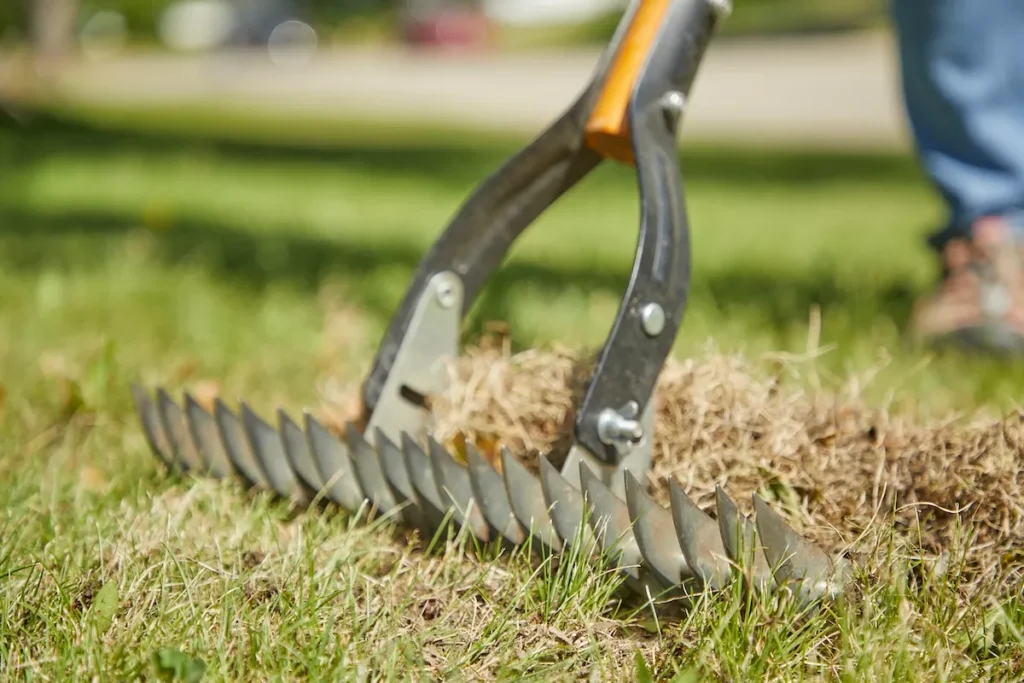
Dethatching means removing some of the built-up organic material from the base of your grass.
It can help when the layer becomes excessive, but it also disturbs the lawn.
That makes timing important.
When Is the Best Time to Dethatch?
The best time depends on your grass type.
You want to work when the grass is actively growing and has enough time to recover.
Tall fescue
Early fall is usually the better time for major lawn work around Charlotte. Cooler weather helps fescue recover, and the season also suits overseeding.
However, tall fescue rarely needs aggressive dethatching. Check for actual buildup before using a machine.
Bermuda grass
Late spring to early summer is generally best.
Wait until the Bermuda has fully turned green and is growing strongly. NC State Extension recommends late May for thatch removal when needed.
Bermuda can recover from mechanical work more quickly during active growth.
Zoysia grass
Late spring through early summer is also suitable for zoysia, after full green-up.
But be gentle. Zoysia grows more slowly than Bermuda and may take longer to fill damaged areas.
Avoid heavy dethatching during drought, extreme heat, winter dormancy, or when the grass is already struggling.
How to Dethatch Your Lawn
There are two main approaches.
Manual dethatching
For a small lawn or light buildup, a dethatching rake may be enough.
Start with slightly moist soil and grass that is actively growing.
Pull the rake through the lawn using firm but controlled strokes. The teeth should catch loose thatch without digging deeply into the soil.
Work in small sections, then collect the debris.
Don’t keep raking until you reach bare ground. You only want to remove the material causing trouble.
Mechanical dethatching
Larger lawns or thicker buildup may need a powered dethatcher, power rake, or vertical mower.
These machines use rotating tines or blades to pull or cut through thatch.
Before starting:
- Check your thatch thickness.
- Confirm that your grass is growing actively.
- Mow at an appropriate height for your grass type.
- Remove stones and other objects.
- Mark sprinkler heads and shallow irrigation parts.
- Test the machine on a small, less visible area.
Use a shallow setting and make a light pass first.
Going too deep can tear out healthy grass, damage roots, and leave large bare patches.
For very heavy thatch, it’s often safer to spread removal over more than one season.
Can core aeration help?
Yes, but it works differently.
Core aeration removes small plugs of soil. This helps relieve compaction and brings soil into contact with the thatch layer, supporting natural decomposition.
It doesn’t replace a dethatcher when thick material needs to be physically removed.
Sometimes core aeration is enough to improve a lawn with mild thatch and compacted soil.
If you’re unsure which treatment makes sense, read our comparison of core aeration and liquid aeration.
Dethatching Tools and Equipment
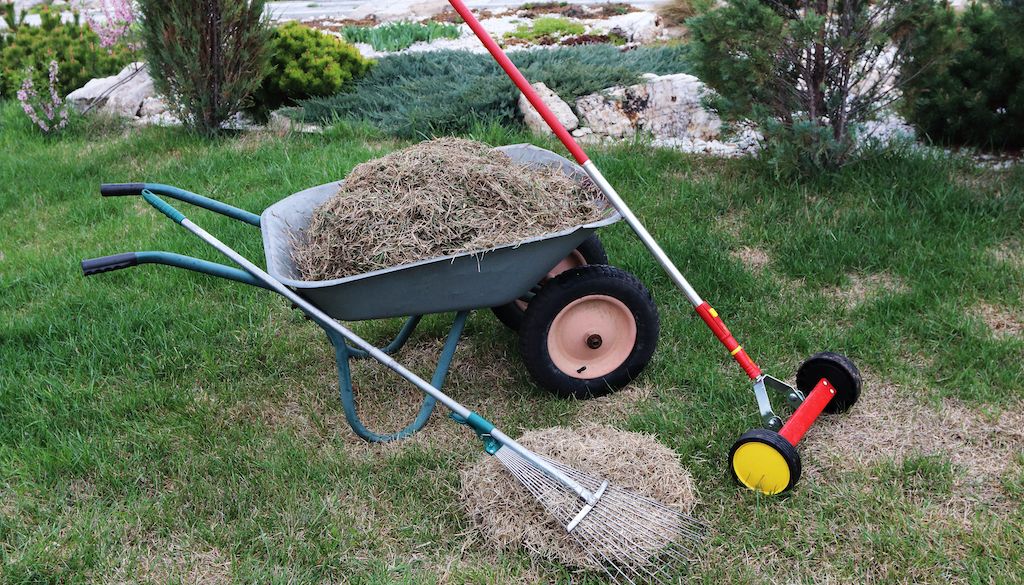
Different tools suit different lawns.
| Tool | Best use | Main limitation |
|---|---|---|
| Dethatching rake | Small lawns and light buildup | Requires physical effort |
| Electric dethatcher or scarifier | Small to medium lawns | Can damage grass if set too deep |
| Tow-behind dethatcher | Larger lawns with suitable equipment | Some models remove only loose surface debris |
| Vertical mower | Thick thatch requiring mechanical removal | Greater risk of turf damage |
| Core aerator | Compacted soil and supporting thatch breakdown | Doesn’t fully remove thick thatch |
For a small problem area, buying a manual rake may make more sense than renting a large machine.
For a large Bermuda lawn with significant buildup, mechanical equipment may be more practical.
Remember that a soil test kit can help with lawn nutrition and pH, but it cannot measure how much thatch you have.
Choose equipment based on the actual problem, not simply the size of your yard.
What to Do After Dethatching
Don’t be surprised if your lawn looks rough immediately afterward.
You may see thin areas, exposed soil, and loose brown material scattered across the grass.
That’s normal to a point.
Recovery depends on the grass type, weather, how much thatch was removed, and how much healthy turf remains.
Remove the debris
Rake up the loosened thatch so it doesn’t sit in thick piles over the grass.
Water carefully
Water enough to keep the root zone adequately moist without making the ground soggy.
Your lawn may need closer moisture checks while recovering.
Check before fertilizing
Don’t automatically apply a heavy dose of fertilizer.
A soil test can show whether your lawn needs nutrients or a pH adjustment. Fertilize according to your grass type and growing season.
Overseed when appropriate
Fall dethatching may leave thin spaces in a tall fescue lawn. If conditions are suitable, overseeding can help fill them.
Established Bermuda and zoysia lawns often spread through existing runners, so overseeding isn’t always necessary.
Limit heavy traffic
Give damaged areas time to recover before using them heavily.
You may notice new growth within a few weeks during good growing weather, but complete recovery can take longer.
If large areas are torn out or the grass was already weak, the lawn may need additional repair.
How to Prevent Thatch Buildup
The easiest way to manage thatch is to prevent it from becoming excessive.
You don’t need a complicated routine. Good mowing, sensible watering, balanced nutrition, and healthy soil do most of the work.
Mow at the Right Height
Avoid cutting too much grass at once.
A useful rule is to remove no more than one-third of the blade height during a normal mowing.
Keep your mower blades sharp, too.
For tall fescue in Charlotte, mowing higher during summer helps the lawn handle heat. Bermuda and zoysia usually need shorter mowing heights suited to their grass type.
You can leave finely cut clippings on the lawn. They break down quickly and return nutrients to the soil.
If clippings form thick, wet piles, spread or remove those clumps so they don’t smother the grass.
Water Deeply Without Overwatering
Frequent, shallow watering can encourage roots to remain near the surface.
For established grass, water deeply when needed rather than giving the lawn a little water every day.
Early morning is usually best.
Watering at night may keep grass wet for too long, which can increase certain disease problems.
Also pay attention to drainage. If water regularly stands in one area, simply reducing irrigation may not solve the underlying issue.
Avoid Excess Fertilizer
More fertilizer doesn’t always mean healthier grass.
Too much nitrogen can encourage rapid growth and increase the amount of plant material entering the thatch layer.
Use a soil test to guide nutrient applications.
For Charlotte homeowners, NC State Extension provides soil testing guidance that can help you understand pH and nutrient needs.
Improve Compacted Soil
Compacted soil makes it harder for air and water to move around the roots.
Core aeration can help by removing small plugs and opening the soil.
For lawns with heavy clay or frequent foot traffic, regular assessment and aeration when needed can support healthier growing conditions.
Timing still matters. Our guide explains when to aerate lawns in North Carolina based on your grass type and the local growing season.
Liquid aeration products are sometimes sold as an easier alternative.
Some are designed to improve soil wetting or conditioning, but they don’t physically remove soil plugs or thatch.
If you’re considering one, learn what liquid lawn aeration does and where it may help before buying it.
Support Healthy Soil
Your soil contains organisms that help break down organic matter.
Protecting those organisms is one of the best long-term ways to manage thatch.
Avoid unnecessary pesticide applications, maintain suitable soil pH, and prevent severe compaction.
A thin layer of suitable compost may help improve some soil conditions, but don’t bury your grass under heavy topdressing.
You’ll also see products sold as microbial thatch-control granules.
These claim to speed up decomposition, but their results are not consistently supported by independent research. Don’t rely on them to remove a thick thatch layer.
Finally, choose grass suited to your yard’s sunlight, soil, and local weather.
A well-adapted lawn is easier to maintain without excessive watering or fertilization.
Seasonal Thatch Care in North Carolina
Charlotte sits in a transition zone where cool-season and warm-season grasses grow under different conditions.
Here’s a practical seasonal guide.
| Season | Tall fescue | Bermuda and zoysia |
|---|---|---|
| Spring | Check lawn condition and soil health; dethatch only if necessary | Wait for green-up, then check for thatch |
| Summer | Manage heat stress; avoid aggressive dethatching | Dethatch if needed during active growth |
| Fall | Best main recovery period for aeration and overseeding | Reduce disruptive work as growth slows |
| Winter | Monitor the lawn and avoid unnecessary disturbance | Leave dormant turf undisturbed |
These are general guidelines.
Weather can move the best treatment window earlier or later.
A cool, wet spring can delay Bermuda growth, while a dry fall may make fescue recovery harder.
Always look at the grass before choosing a treatment date.
Common Questions and Myths About Thatch
There are several common beliefs about thatch that lead homeowners to do unnecessary lawn work.
Frequently Asked Questions
Fine grass clippings break down relatively quickly. They can also return valuable nutrients to the soil. The stems, roots, and runners beneath the grass are the main materials that create thatch. Leaving large clumps of wet clippings can still damage grass by blocking light, but that isn’t the same as true thatch buildup.
Do Grass Clippings Cause Thatch?
No, not under normal mowing conditions.
Some lawns go years without needing mechanical dethatching. Tall fescue often needs little or no thatch removal, while Bermuda and zoysia may require closer monitoring. Measure the layer before scheduling work. Unnecessary dethatching can weaken an otherwise healthy lawn.
Do You Need to Dethatch Every Year?
Not necessarily.
Thatch contains both living and dead plant parts. The dense layer includes roots, stems, and grass runners. That’s why it looks and feels different from loose dead leaves or grass clippings.
Is Thatch Just Dead Grass?
No.
But you can help the soil break it down at a healthy rate. Proper mowing, sensible fertilization, core aeration when needed, and good soil care can keep thatch from becoming excessive.
Can You Prevent Thatch Completely?
You can’t stop a growing lawn from producing organic material.
Using aggressive equipment, working during drought, or dethatching dormant grass can cause serious damage. Even proper dethatching temporarily disturbs the lawn. The safest approach is to confirm that removal is necessary, choose the right growing season, and avoid taking out too much material at once.
Will Dethatching Damage My Lawn?
It can if it’s done incorrectly.
More Tips for Managing Lawn Thatch
Before spending money on a dethatcher or hiring someone, think about what your lawn actually needs.
A small section with light buildup is very different from a large lawn with an inch of dense thatch.
DIY Dethatching vs. Professional Help
| Factor | DIY dethatching | Professional service |
|---|---|---|
| Equipment cost | Rake purchase or machine rental | Equipment is usually included in the quote |
| Your time | Requires setup, work, and cleanup | Usually less hands-on work for the homeowner |
| Best suited for | Small or manageable areas | Large lawns or difficult buildup |
| Main risk | Wrong depth or poor timing | Results depend on the provider’s methods |
| Follow-up care | You arrange watering and repairs | Services vary; confirm what’s included |
Exact costs depend on lawn size, equipment, location, and how much work is needed.
For a small yard, manual dethatching may be economical.
For severe buildup, professional assessment can help you avoid damaging the grass with unsuitable equipment.
Always confirm whether debris removal and follow-up care are included before accepting a quote.
Compare Healthy and Excessive Thatch
A useful way to recognise thatch is to compare two turf samples side by side.
In a healthy sample, you’ll usually see green grass, a relatively thin organic layer, and roots extending into the soil.
In a sample with excessive thatch, the brown layer may look much thicker. Some roots may remain within that layer rather than growing deeply into the ground.
You can also compare the same lawn before and after correctly timed treatment.
Look for changes in water movement, grass growth, and root health over time rather than expecting an instant colour change.
If you watch a dethatching demonstration, pay close attention to the machine’s depth setting, the amount of grass removed, and how the debris is collected.
Those details matter more than how much brown material a machine pulls up.
Keep Your Lawn Healthy by Managing Thatch
Thatch is a natural part of most lawns. A thin layer helps protect the grass, but too much can interfere with water movement, root growth, and overall lawn health.
The first step is simple: check what’s happening beneath your grass.
If the thatch layer is thin and your lawn looks healthy, there’s usually no reason to remove it.
If the layer is thick and causing problems, choose a treatment that suits your grass type and the season.
For homeowners around Charlotte, Gastonia, Huntersville, and nearby communities, that often means treating fescue differently from Bermuda and zoysia.
At Advanced Turf Care, Andrew Powell brings more than 20 years of experience working with Carolina turf. Our team helps homeowners improve lawn health through proper soil care, core aeration, fertilization, and grass-specific treatment programs.
If your lawn feels spongy, drains poorly, or keeps developing thin areas, a professional lawn assessment can help identify the real cause.
With the right care, you can keep thatch under control and give your grass better conditions to grow.
Seeing Spots, Patches, or Turf Decline?
Lawn disease can spread quickly. Get help identifying the problem and choosing the right treatment.
Explore Disease Control