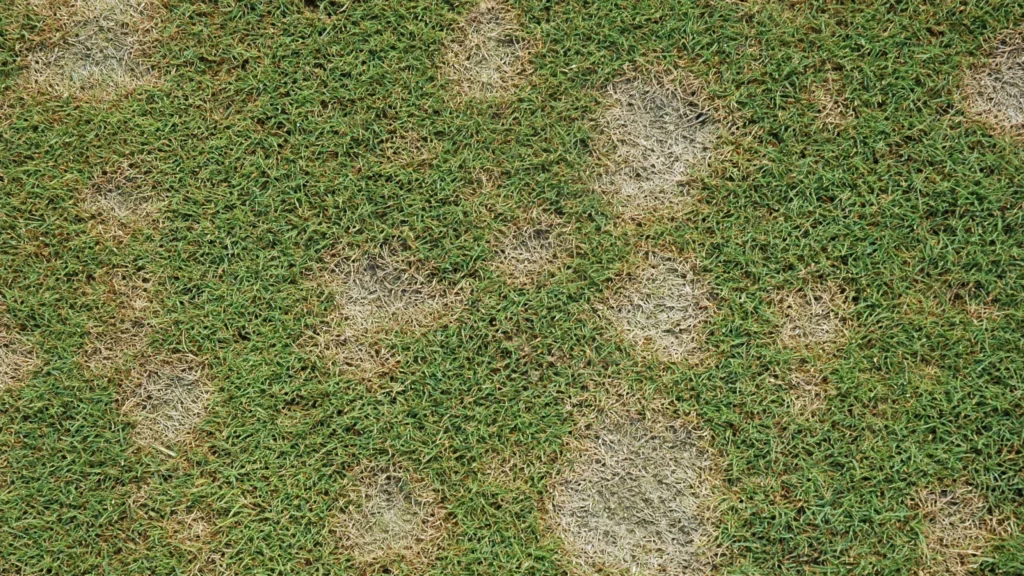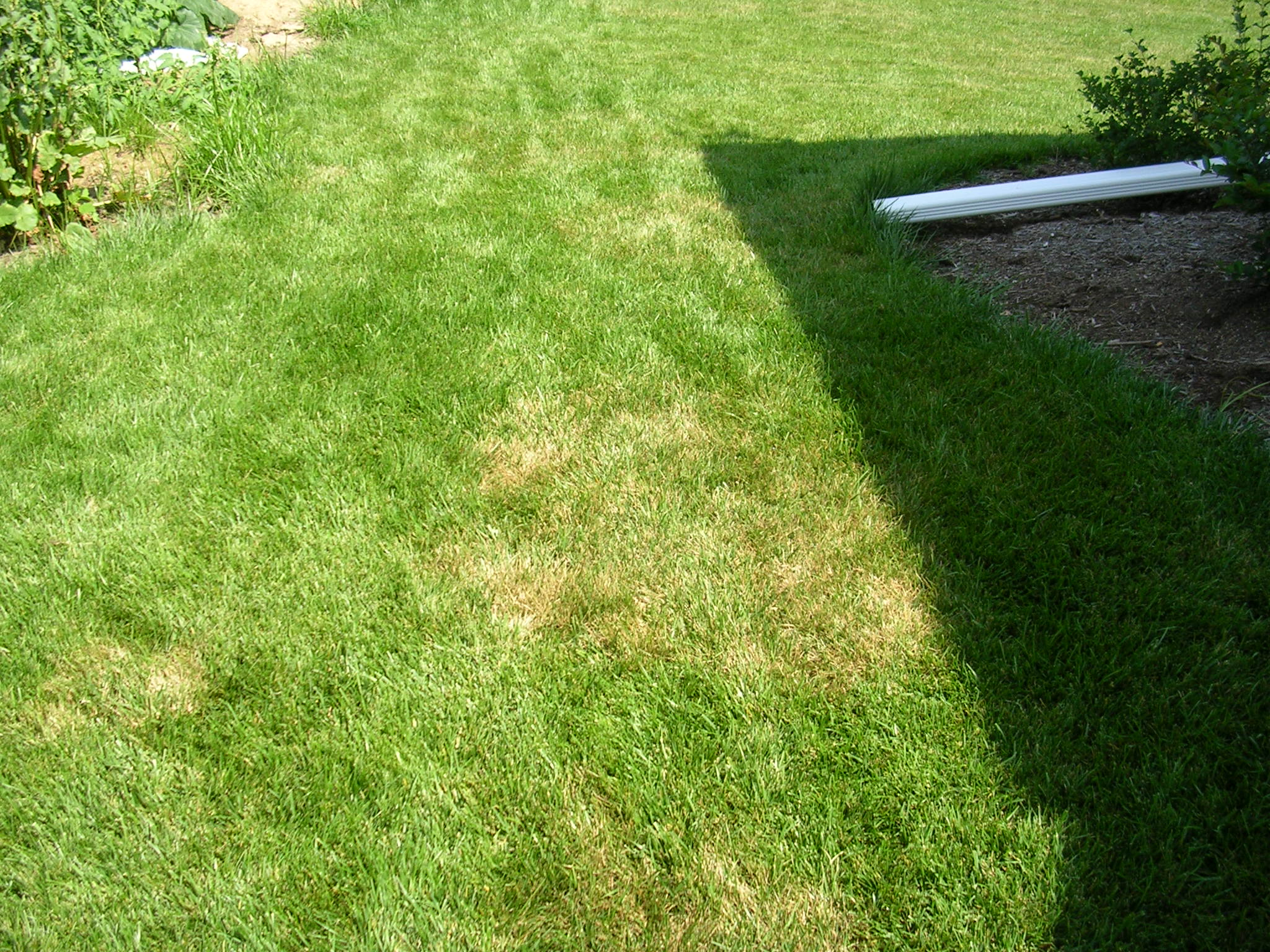
You walk outside one summer morning and notice a few brown spots in your tall fescue lawn. At first, you think the grass needs more water. But a few days later, those spots have grown larger, and some of the grass looks completely dead.
If this sounds familiar, your lawn may have brown patch fungus.
Brown patch is one of the most common diseases affecting tall fescue lawns in Charlotte, NC. It often appears during hot, humid weather and can spread quickly when conditions are right.
The good news is that brown patch can be managed. Some lawns recover with better watering and mowing habits. Others need fungicide treatment to stop further damage.
The first step is knowing what you’re dealing with.
What Is Brown Patch Fungus?
Brown patch is a fungal disease caused mainly by Rhizoctonia solani. The fungus lives in the soil and infected grass. It can remain there even when your lawn looks healthy.
When the weather becomes warm and humid, the fungus starts growing. It attacks grass leaves, causing them to turn brown and die.
Tall fescue is especially vulnerable because it is a cool-season grass. It grows best during spring and fall but struggles with the heat and humidity of North Carolina summers.
During summer, tall fescue grows more slowly. This makes it harder for damaged grass to recover.
Not every type of tall fescue is equally vulnerable. Some newer varieties handle brown patch better than older ones, although none are completely resistant.
According to NC State Extension, brown patch is most severe during long periods of hot, humid weather, especially when grass leaves remain wet for many hours.
How to Identify Brown Patch on Tall Fescue

Brown patch usually starts as small areas of brown or yellow grass. These areas may grow into large, uneven patches.
However, brown grass does not always mean fungus. Heat, insects, and poor watering can cause similar damage.
Here is what to look for.
1. Circular brown patches
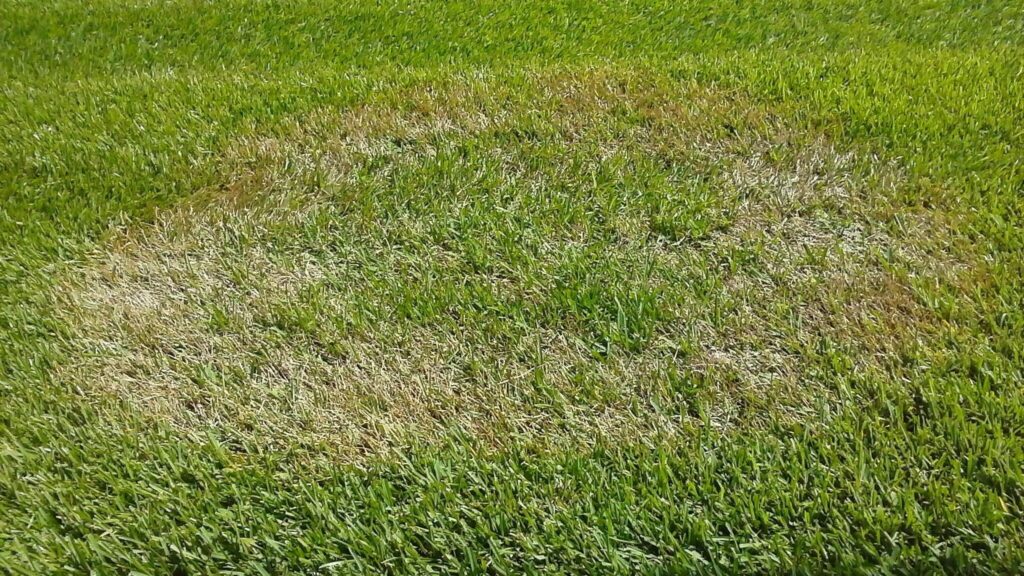
Brown patch often forms roughly circular areas ranging from a few inches to several feet wide.
You may notice a darker edge around an active patch, sometimes called a smoke ring. This is more common on closely mowed grass and may be hard to see on taller fescue lawns.
Some patches have green grass in the middle, while others appear brown throughout.
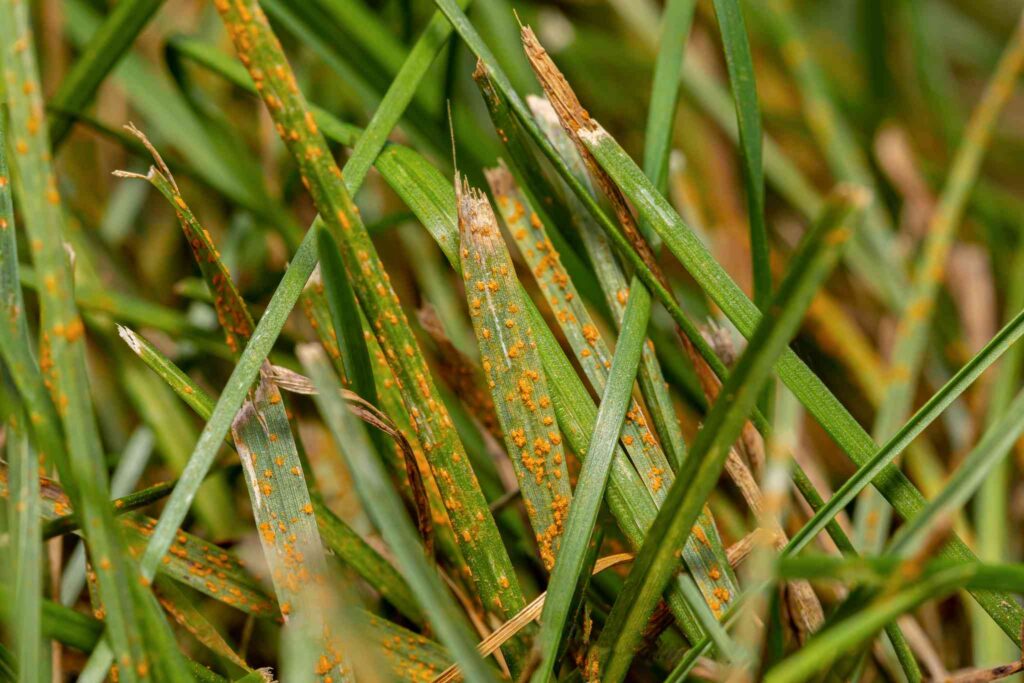
2. Brown spots on individual grass blades
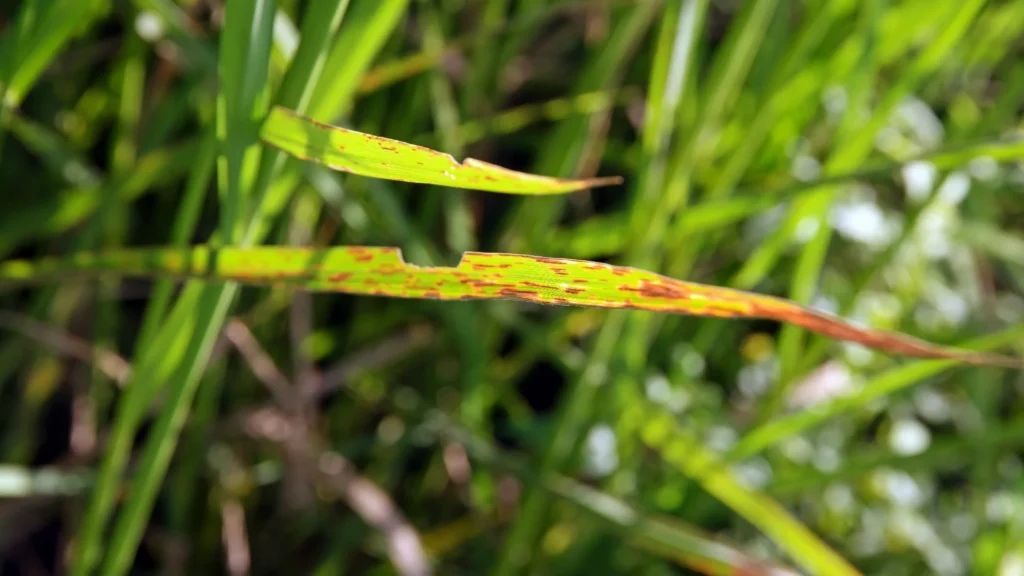
This is one of the best ways to identify brown patch.
Look closely at the grass near the edge of an affected area. You may find:
- Tan or light-brown spots on the blades.
- Dark-brown borders around those spots.
- Irregular patches of dead tissue on otherwise green leaves.
- Grass that looks wet or dark before turning brown.
The fungus mainly attacks the leaves. The roots and crowns often remain healthy, especially during mild outbreaks.
That means the grass may produce new green leaves once conditions improve.
3. How brown patch differs from other problems
Several lawn problems can look similar.
Dollar spot: Often begins as small patches with pale, straw-colored leaf lesions. These spots can grow together and resemble brown patch. Learn more about how dollar spot affects lawn grass.
Pythium blight: Can cause greasy, water-soaked grass that becomes matted. It is more likely in very wet areas and can spread rapidly.
Gray leaf spot: Causes distinct spots on grass blades and can lead to widespread thinning. It is another serious summer disease of tall fescue in North Carolina.
Drought stress: Grass may turn bluish-gray before becoming brown. Leaves often curl or fold, and the damage may follow areas that receive less water.
Insect damage: Some insects feed on grass roots or blades, leaving irregular brown areas. Checking the soil and grass closely can help identify the problem.
You may also notice reddish or pinkish growth on affected grass during cooler, damp weather. This can indicate red thread disease rather than brown patch.
If you’re unsure, take clear photos of the affected grass and individual leaves. Your local Cooperative Extension office can help with diagnosis.
How serious is your brown patch problem?
Use this simple scale to decide what to do next.
| Level | What you see | What to do |
|---|---|---|
| 1. Early | A few discolored blades | Check symptoms and monitor |
| 2. Mild | Small brown areas | Correct watering and mowing |
| 3. Moderate | Several growing patches | Confirm the disease and consider fungicide |
| 4. Serious | Large patches spreading | Seek targeted treatment |
| 5. Severe | Widespread thinning and damage | Get professional diagnosis and a recovery plan |
This scale is a practical guide, not a formal disease test. Even a small patch deserves attention if it is growing quickly.
What Causes Brown Patch on Tall Fescue?
Brown patch needs the right weather conditions to become active.
In Charlotte, those conditions often arrive between late spring and summer.
Hot days and humid nights
Brown patch can become active when nighttime temperatures rise above 60°F. The risk increases when nights stay above 70°F and daytime temperatures approach 90°F.
Warm nights, heavy dew, and high humidity create a good environment for fungal growth.
Grass staying wet too long
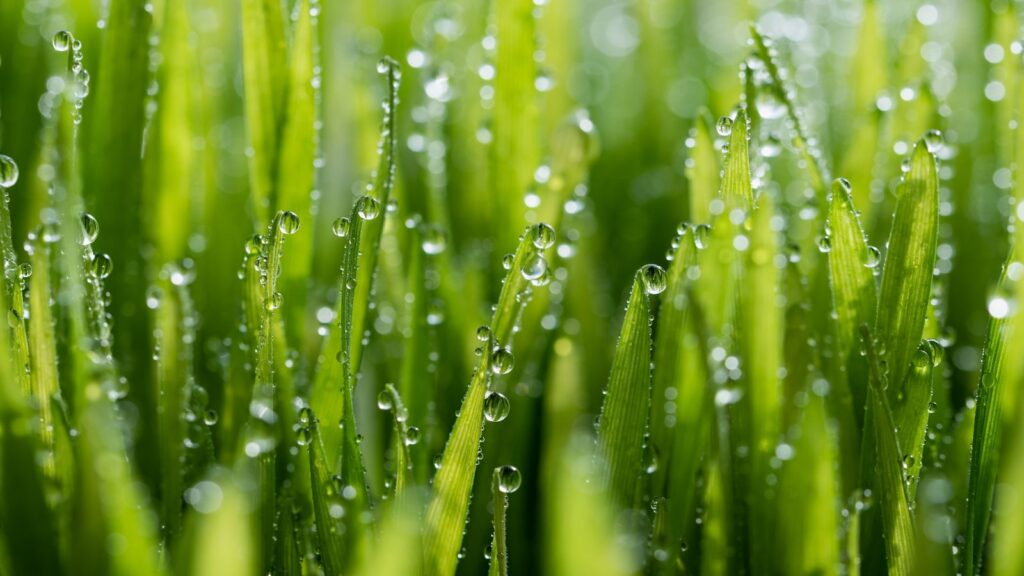
Brown patch develops more easily when grass leaves remain wet for 10 to 12 hours.
Late-evening watering, frequent rain, and heavy morning dew can all increase this risk.
Too much nitrogen fertilizer
Nitrogen helps grass grow, but too much during summer produces soft, fast-growing leaves that are more likely to develop disease.
Fertilizing heavily just before hot, humid weather can make brown patch worse.
Compacted soil and poor drainage
Charlotte-area lawns often have dense clay soil. When soil becomes compacted, water may drain slowly, and grass roots struggle to grow.
Wet areas can keep grass leaves damp longer, which favors disease.
Excess thatch and poor airflow
A thick thatch layer can interfere with water movement. Dense shrubs, low tree branches, and heavy shade also slow the drying of grass.
Mowing too low or using dull blades adds stress.
These problems do not cause the fungus by themselves, but they can make an outbreak more severe.
How to Treat Brown Patch on Tall Fescue
If you notice brown patch spreading, don’t rush to apply several lawn products.
First, confirm the symptoms. Then correct the conditions that are helping the fungus grow.
Step 1: Change your watering habits
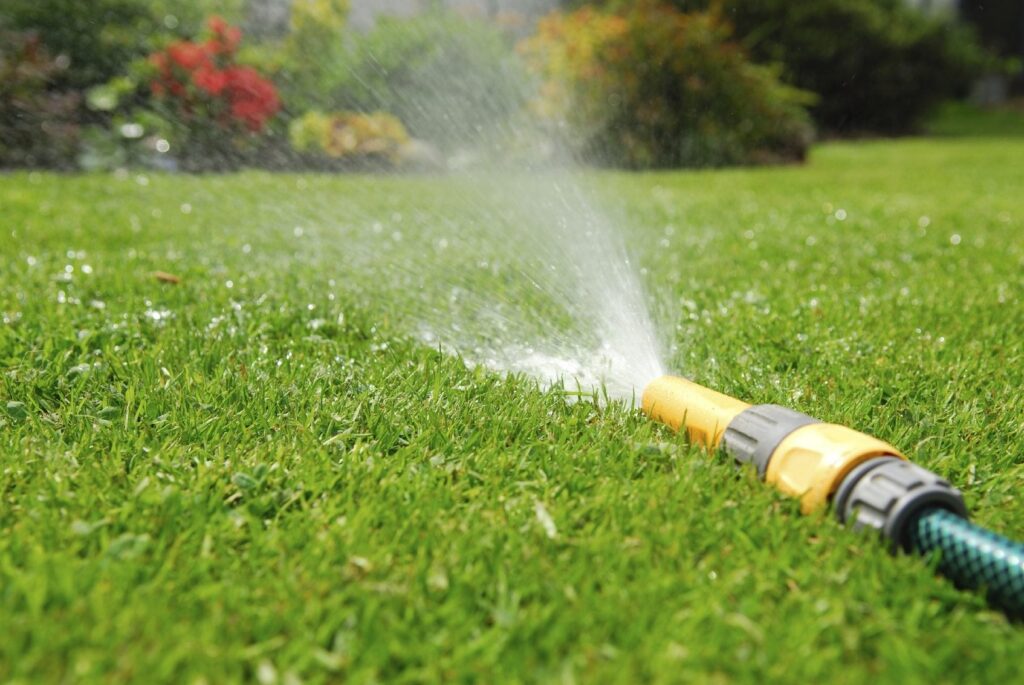
Stop watering late in the day.
Check whether the soil actually needs water before turning on your sprinklers. If rain has already soaked the ground, additional watering may make conditions worse.
Avoid keeping the lawn constantly wet.
Step 2: Protect the grass from more stress
Keep mowing at the proper height and avoid cutting wet grass.
Hold off on heavy nitrogen applications. Don’t try to make the brown areas green again by adding extra fertilizer.
Also, avoid aggressive dethatching or aeration during a hot summer outbreak. Both can place more stress on already weak grass.
Step 3: Choose the right fungicide when needed
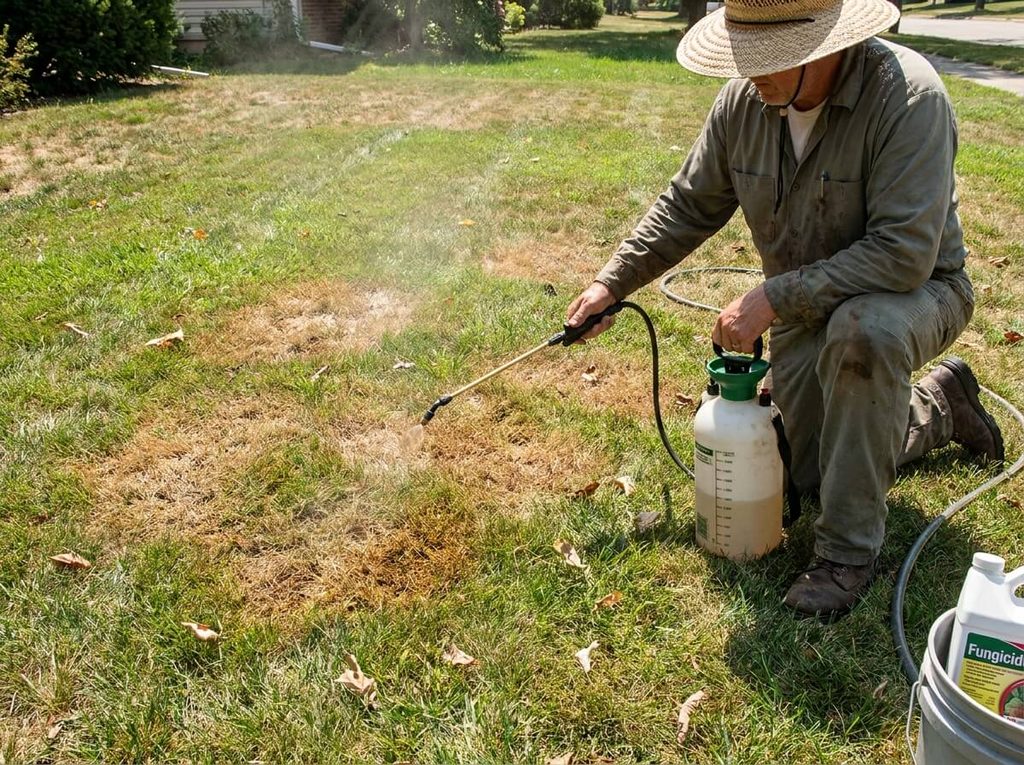
Fungicides can help protect healthy grass and slow an active outbreak.
There are two main types:
Contact fungicides stay mainly on treated surfaces. They protect grass where the product is applied.
Systemic or penetrant fungicides enter plant tissue and can provide protection within treated parts of the grass.
Two active ingredients used for brown patch management are:
- Azoxystrobin: A fungicide that can provide good protection against brown patch.
- Propiconazole: Another fungicide used for controlling fungal diseases in turfgrass.
Some products combine both ingredients.
When choosing a product, check that its current label allows use on residential tall fescue lawns and lists brown patch as a target disease.
NC State Extension’s 2026 disease management guidance lists fungicide options and explains their effectiveness.
One important point: brown patch and gray leaf spot may require different treatment choices. A product that works well on one disease may not control the other.
Step 4: Apply fungicide correctly
Fungicides come in liquid and granular forms.
Granular products are usually applied with a broadcast or drop spreader. They may be easier for some homeowners to handle, but even coverage is important.
Liquid products are applied with suitable sprayers. They allow targeted coverage but need careful mixing and calibration.
Before applying either type:
- Read the full product label.
- Wear the protective equipment required by the label, including gloves or eye protection where specified.
- Measure the lawn area and calibrate the spreader or sprayer.
- Apply the labeled amount evenly, following the equipment instructions.
- Follow the label’s directions for watering, rainfall, repeat applications, and when people or pets can return.
Store unused products in their original containers, away from children, pets, food, and heat.
Do not assume that more fungicide means better results. Overapplication can damage the lawn and create safety risks.
Preventive applications may work better than waiting until severe damage appears. But they are not necessary for every lawn.
Step 5: Help your lawn recover
Even after the fungus is controlled, the brown areas may remain visible.
Continue proper watering and mowing. Keep an eye on the edges of affected patches to see whether the disease is still spreading.
Clean grass debris from mowing equipment after working in affected areas, and avoid moving wet clippings across healthy turf.
If the grass crowns survive, new growth may appear as temperatures become cooler.
Badly damaged areas may need overseeding in fall.
A fungicide cannot turn dead leaves green again. Its main job is to control disease and protect the grass that is still alive.
How to Prevent Brown Patch From Coming Back
A healthy tall fescue lawn can still develop brown patch, but good lawn care greatly reduces the risk.
The goal is to help grass grow strong without creating wet, humid conditions that favor the fungus.
Water deeply, but not too often
Tall fescue generally needs about 1 inch of water per week during active growth, including rainfall. The actual amount depends on weather and soil conditions.
Rather than watering every evening, check the soil first.
NC State recommends watering until the soil is moist about 4 to 6 inches deep. A screwdriver or soil probe can help you check.
For established lawns, watering between 2 AM and 8 AM helps reduce the time grass stays wet.
A soil moisture meter can be useful, although a simple soil check also works. A rain gauge helps you avoid watering after enough rainfall.
Clay soil absorbs water slowly, so you may need to water in shorter cycles to prevent runoff.
Mow tall fescue at the proper height
Tall fescue needs enough leaf growth to handle summer stress.
During summer, aim for about 3½ inches. Keeping grass above 3 inches helps protect it during hot weather.
Use sharp mower blades and avoid removing more than one-third of the grass height in a single mowing.
Mow when the grass is dry whenever possible.
A taller lawn is helpful, but don’t let it become so overgrown that the blades fold over and stay wet.
Avoid heavy summer fertilization
Tall fescue grows best during cooler months, so fall is the main time to support healthy growth with fertilizer.
Heavy nitrogen applications during summer can increase brown patch damage.
If your lawn needs summer fertilizer, use only a modest amount based on its condition and reliable local guidance.
A soil test is the best starting point. It helps show whether your soil needs phosphorus, potassium, lime, or other changes.
Balanced nutrition matters more than simply adding more fertilizer.
Slow-release nitrogen can be useful as part of a planned feeding schedule, especially during the cooler growing season.
Improve soil health with aeration
Compacted soil makes it harder for grass roots to reach water and air.
Core aeration removes small plugs of soil, opening paths for water and root growth.
This is particularly useful for tall fescue lawns with heavy foot traffic or compacted clay soil.
For most Charlotte lawns, fall is the preferred time to aerate because tall fescue is actively growing and better able to recover.
You can learn more about when to aerate your lawn in North Carolina before planning the work.
A rented core aerator can handle larger lawns. Manual aerators may work for small areas, though they require more effort.
Aeration improves growing conditions, but it is not a direct cure for brown patch.
Remove thatch only when necessary
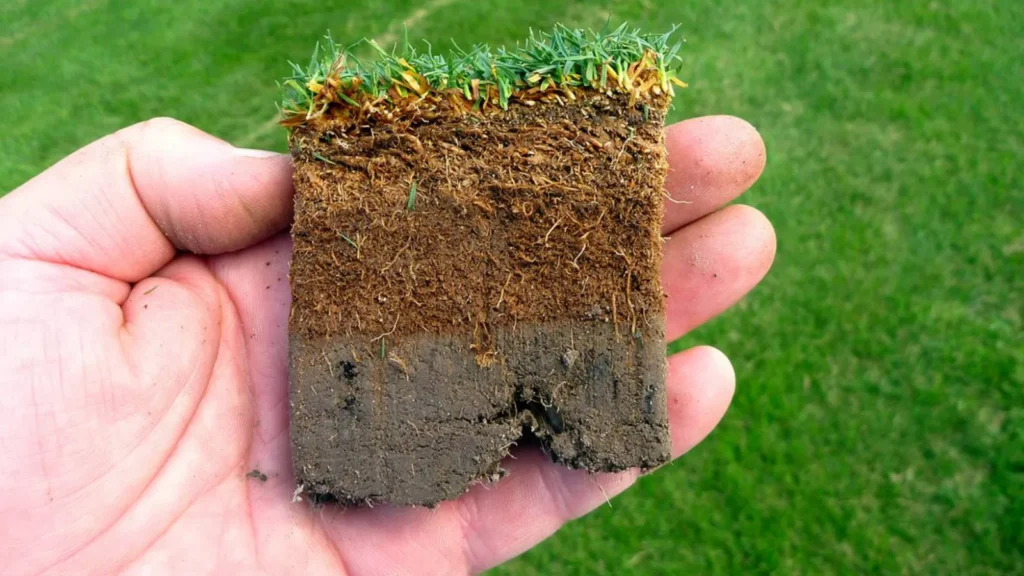
Thatch is a layer of dead and living stems and roots between the green grass and soil.
A thin layer is normal. A thick layer can interfere with water movement and hold moisture near the grass.
If you’re not sure what to look for, our explanation of what thatch is and how it affects your lawn can help.
Check the layer before using a dethatching rake or machine.
If it becomes excessive, around half an inch or more, removal may be worth considering. However, tall fescue lawns rarely need routine dethatching.
Avoid aggressive dethatching during summer heat.
Use soil amendments only when needed
A soil test can tell you whether the pH needs adjusting.
Adding lime or other amendments without testing may create new problems.
A light compost topdressing can help improve some soil conditions over time. However, compost cannot replace proper drainage or disease control.
Choose amendments based on what your lawn actually needs.
Improve sunlight and airflow
Grass surrounded by thick shrubs or low tree branches may stay wet long after the rest of the lawn dries.
Prune overhanging branches where practical and improve airflow around shaded areas.
Avoid planting shrubs so close together that they block air movement.
These small changes can help grass dry more quickly after rain or morning dew.
Build your own prevention checklist
Use this checklist to find the most important changes for your lawn.
- Grass stays wet overnight: Change watering to early morning.
- Soil feels hard and compacted: Plan fall core aeration.
- Lawn gets too much shade: Improve light and airflow where possible.
- Brown patch returns every summer: Monitor weather and discuss preventive treatment.
- Grass is thin after summer: Plan fall overseeding with improved tall fescue varieties.
- Fertilizer is applied without testing: Arrange a soil test.
- Water collects in low areas: Correct drainage problems before they get worse.
Start with the problems that apply to your lawn. You don’t need every treatment or tool to keep tall fescue healthy.
When Should You Call a Lawn Care Professional?
Small brown patch outbreaks can sometimes be managed with basic lawn care changes.
But professional help may be useful when:
- Brown patches keep returning each summer.
- Large areas are turning brown quickly.
- You’re unsure which lawn disease is present.
- Fungicide treatment hasn’t worked.
- Your lawn has serious drainage or soil problems.
- You need specialized application equipment.
A professional can examine the grass, identify likely causes, and decide whether fungicide treatment is appropriate.
At Advanced Turf Care, we help homeowners in Charlotte, Gastonia, Huntersville, and nearby communities manage lawn diseases using treatments suited to local growing conditions.
DIY treatment vs. professional lawn care
| Factor | DIY treatment | Professional service |
|---|---|---|
| Cost | Product and equipment costs | Service and treatment fees |
| Time | Requires your own work | Less work for the homeowner |
| Diagnosis | Depends on your knowledge | Experienced assessment |
| Equipment | May need to buy or rent | Professional equipment |
| Results | Depend on correct treatment | Depend on diagnosis, weather, and treatment |
DIY may cost less for a small, correctly diagnosed problem. However, buying several products or renting equipment can increase the total cost.
Professional service costs more upfront in many cases but may help avoid wasted treatments.
Neither option guarantees that brown patch will never return. Weather and lawn care habits still matter.
Year-Round Brown Patch Prevention Calendar
Brown patch prevention is easier when you follow the natural growth cycle of tall fescue.
Here is a seasonal plan for Charlotte and nearby North Carolina communities.
| Season | What to do | Why it matters |
|---|---|---|
| Spring (March–May) | Test soil, use light fertilizer if needed, check drainage, and monitor rising temperatures. Apply pre-emergent weed control where appropriate. | Helps prepare the lawn before summer disease pressure increases. |
| Early Summer (June–July) | Mow around 3½ inches, water early, avoid heavy nitrogen, and watch for leaf lesions. | Hot, humid conditions make this a high-risk period. |
| Late Summer (August–September) | Continue careful watering and mowing. Watch for spreading patches and plan fall repairs. Consider preventive fungicide only when disease history and conditions justify it. | Brown patch may remain active until the weather cools. |
| Fall (September–November) | Aerate compacted soil, overseed thin areas, test soil, and follow a fall fertilizer plan. Dethatch only if needed. | Cool weather supports root growth and repair after summer damage. |
| Winter (December–February) | Remove fallen leaves, maintain drainage, manage winter weeds when needed, and plan spring care. | Keeps the lawn in better condition for the next growing season. |
For Charlotte-area lawns, the preferred tall fescue overseeding window is generally September 1 to October 1. In the North Carolina mountains, planting may begin earlier.
Choose improved tall fescue varieties with better brown patch tolerance when repairing damaged areas.
The timing may change slightly depending on weather and where you live.
Frequently Asked Questions
What causes the smoke ring around brown patch?
A smoke ring is a dark border that may appear around an actively growing patch, usually during very humid weather. It is most noticeable on closely cut grass and may disappear as the leaves dry.
Avoid mowing wet, infected grass and keep equipment clean.
Can brown patch spread from one lawn to another?
Brown patch spreads mainly through fungal growth between nearby grass plants. The fungus can also move with infected plant material and contaminated equipment. It does not produce spores on infected turf the way some other fungi do.
However, fungicides need careful handling. Keep children and pets away during treatment and follow the product label’s instructions before allowing them back onto the lawn.
Is brown patch harmful to pets or children?
The brown patch fungus is mainly a plant disease and is not generally considered a direct danger from normal lawn contact.
Severe or repeated outbreaks can cause serious thinning, especially when grass is already stressed by heat or drought. Some areas may need overseeding.
Can brown patch kill tall fescue completely?
Brown patch usually damages the leaves first. In mild cases, the crowns and roots survive, allowing the grass to recover.
Better drainage and airflow can also reduce disease pressure. Some biological products are marketed for fungal control, but their results can vary. Cultural care remains the main starting point for managing brown patch without conventional fungicides.
Can I treat brown patch without chemical fungicides?
Yes, mild outbreaks may improve when you correct watering, mowing, and fertilization problems.
You may notice new green growth within a few weeks once conditions become more favorable. Severe damage can take longer. If the grass crowns have died, the bare areas will need new grass seed. Fall is usually the best time for that work in Charlotte.
How long does tall fescue take to recover from brown patch?
Recovery depends on how much grass remains alive and whether the weather improves.
Keep Your Tall Fescue Healthy
Brown patch can make a healthy lawn look damaged in just a short time. But seeing brown grass doesn’t mean you have lost the entire lawn.
Start by checking the symptoms. Look closely at individual grass blades, review your watering habits, and avoid adding extra fertilizer during hot weather.
If the disease is spreading, a properly chosen fungicide may help protect the remaining grass.
The most important work continues after the outbreak. Good mowing, careful watering, healthy soil, and the right fall lawn care routine can reduce the risk of brown patch returning.
And if the problem keeps coming back, Advanced Turf Care can help you understand what’s happening and develop a lawn care plan suited to your grass and local conditions.
Seeing Spots, Patches, or Turf Decline?
Lawn disease can spread quickly. Get help identifying the problem and choosing the right treatment.
Explore Disease Control