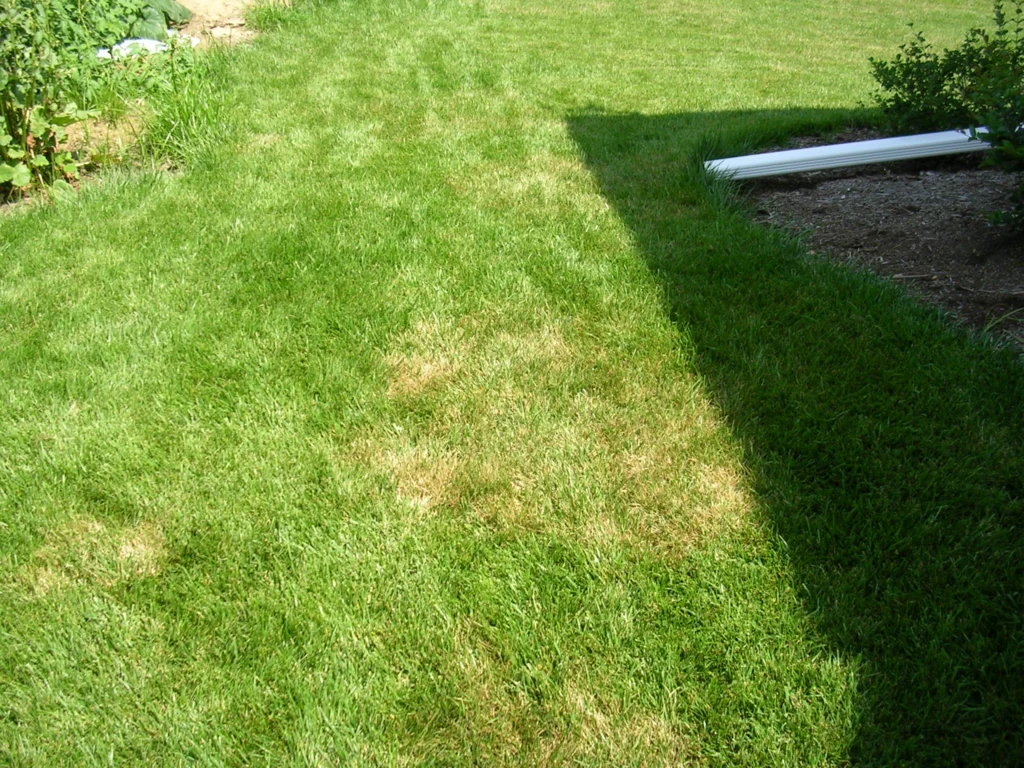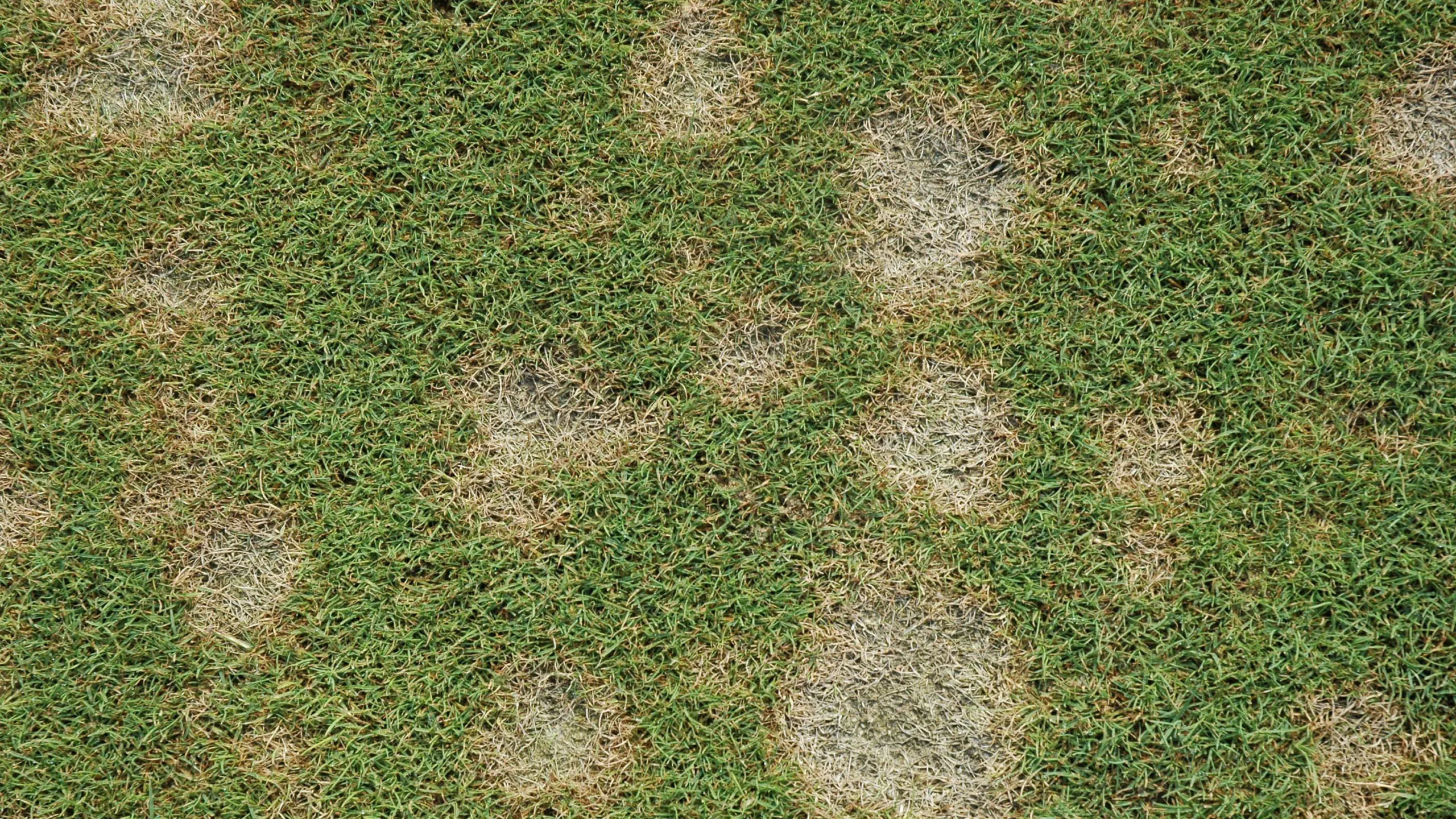
You walk outside one morning and notice small, pale spots scattered across your lawn. The grass looked green a few days ago, but now several areas have turned straw-colored.
At first, you might think the grass needs more water. But after a closer look, you notice unusual marks on individual grass blades.
Your lawn may have dollar spot disease.
Dollar spot is a common fungal disease that can affect lawns in Charlotte, NC, especially during warm, humid weather. It often starts with small spots but can spread into larger damaged areas when conditions stay favorable.
The good news is that dollar spot can be managed. The first step is knowing what it looks like. From there, proper watering, fertilization, mowing, and targeted treatment can help your grass recover.
What Is Dollar Spot?
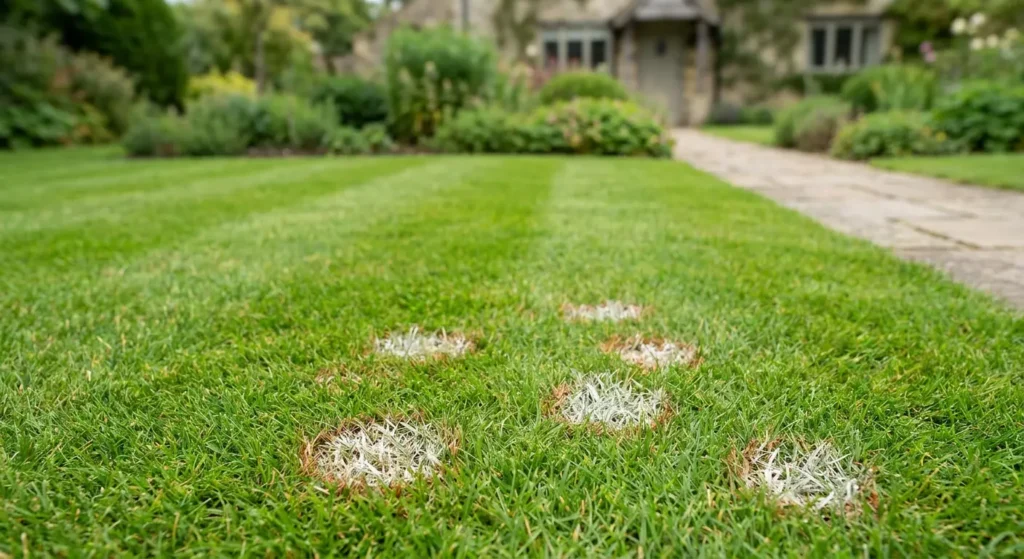
Dollar spot is a fungal lawn disease caused by fungi in the Clarireedia group, formerly known as Sclerotinia homoeocarpa.
It attacks grass blades and causes small, pale patches across the lawn. These spots are often 1 to 6 inches wide, though they can grow larger and join together.
The affected grass may look white, tan, or straw-colored. Individual blades often develop pale marks with reddish-brown edges.
Dollar spot can affect many grass types, including Bermuda, Zoysia, Kentucky bluegrass, ryegrass, and fescue.
However, not all grasses face the same risk.
According to NC State Extension, dollar spot is particularly troublesome on Bermuda, Zoysia, and Kentucky bluegrass in North Carolina. It is usually less severe on tall fescue.
Why should you be concerned?
A few small spots may not seem serious. But when the fungus stays active, nearby spots can join together and leave large parts of your lawn looking damaged.
Severe infections can weaken grass and slow its recovery from heat, drought, and other stress.
The problem can also return year after year if the conditions that encourage it never change.
How to Identify Dollar Spot in Your Lawn
Dollar spot can look similar to several other lawn problems.
Before applying any treatment, look at the shape of the patches and inspect the affected grass blades.
Look for small, straw-colored spots
The first sign is often a group of small, pale circles scattered across otherwise green grass.
You may notice:
- Round spots about 1 to 6 inches across.
- Grass that looks bleached, tan, or straw-colored.
- Small patches joining into larger, uneven areas.
- Grass blades that remain upright despite losing their color.
On taller home lawns, the spots may not be perfectly round.
Check individual grass blades
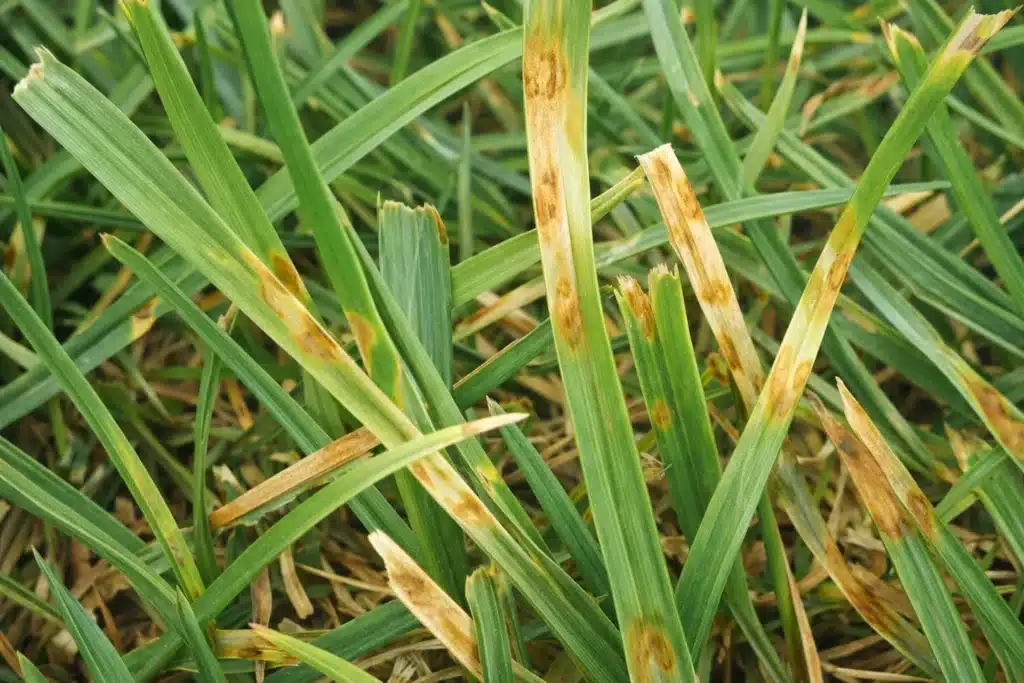
This is one of the best ways to identify dollar spot.
Pick a few affected blades and look closely. You may see a pale lesion across the middle of the blade, with reddish-brown edges.
Some lesions have a narrow, hourglass shape.
When the lesion spreads across the whole blade, the upper portion may turn brown and die.
Early in the morning, you might also see fine, white, cobweb-like fungal growth. This is called mycelium.
It often disappears once the dew dries.
Not every infected blade has a clear hourglass mark, so check several blades before deciding.
Dollar spot vs. drought stress
Both problems can make grass look dry and pale.
Drought stress often appears in places where the soil dries quickly, such as slopes, raised ground, or areas with poor sprinkler coverage.
Dollar spot is more likely to produce scattered patches with distinct lesions on individual leaves.
Check the soil moisture as well. If the soil is dry and the grass shows widespread wilting, drought may be part of the problem.
Quick dollar spot checklist
Use this checklist while inspecting your lawn.
- Are there small, straw-colored spots scattered across the grass?
- Can you see pale lesions with darker edges on individual blades?
- Is fine, white fungal growth visible early in the morning?
- Has the weather been warm and humid, with heavy overnight dew?
- Has your lawn experienced poor growth, low fertility, or drought stress?
If you answered yes to several questions, dollar spot is a possibility.
However, this checklist cannot confirm the disease on its own. A close inspection or professional diagnosis may still be needed.
Dollar Spot vs. Other Lawn Diseases
Not every brown patch is dollar spot.
Applying the wrong treatment can waste money and leave the real problem untreated.
Here are some common lawn diseases that homeowners confuse with dollar spot.
| Lawn problem | Common symptoms | Conditions | Main difference |
|---|---|---|---|
| Dollar spot | Small, pale patches with tan leaf lesions | Warm, humid weather and long periods of dew | Pale lesions with darker edges, sometimes hourglass-shaped |
| Brown patch | Larger brown or tan patches, sometimes with a dark outer ring | Hot, humid weather | Often affects much larger areas |
| Pythium blight | Dark, water-soaked patches with cotton-like growth | Very humid, hot, wet conditions | Can spread rapidly and look greasy |
| Fairy ring | Circular rings of dark green or dead grass, sometimes with mushrooms | Fungi growing in soil organic matter | Forms rings or arcs rather than typical leaf lesions |
| Red thread | Tan patches with pink or red threads on grass blades | Cool, damp weather | Visible pink or red fungal strands |
Red thread is especially easy to confuse with other diseases when viewed from a distance.
If you notice pink or reddish growth on the leaves, read our guide to identifying and treating red thread in lawns.
The key is to identify the disease before choosing a treatment.
What Causes Dollar Spot?
Dollar spot develops when the fungus, susceptible grass, and favorable weather conditions come together.
Several lawn care problems can also make an outbreak worse.
Warm days, humid nights, and wet grass
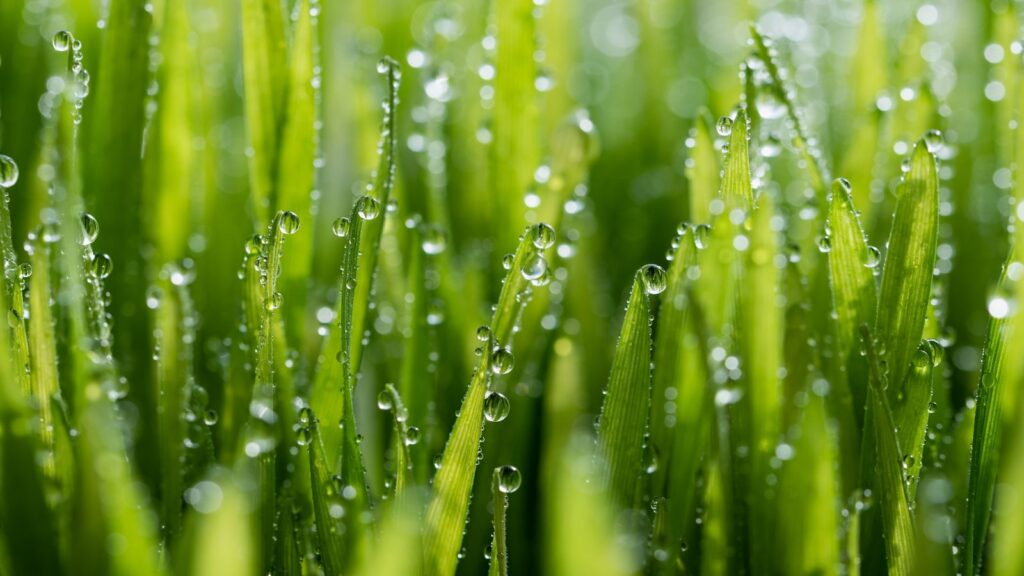
Dollar spot becomes active during mild to warm weather, especially when nights are humid.
Temperatures around 60°F to 85°F often support disease development, although the fungus can remain active outside this range.
One major factor is how long the grass stays wet.
According to NC State’s dollar spot guidance, the fungus needs about 10 to 12 continuous hours of leaf wetness for infection.
Heavy dew, fog, rain, and frequent watering can create these conditions.
In Charlotte, warm days followed by humid nights can leave grass wet for much of the morning.
Low nitrogen and weak grass growth
Grass needs nitrogen to grow healthy leaves.
When nitrogen is too low, grass grows slowly and may struggle to replace damaged tissue. This makes dollar spot more noticeable and can delay recovery.
However, applying large amounts of fertilizer is not the answer.
The goal is steady, healthy growth based on your grass type and growing season.
Drought stress also increases the risk. Grass with too little water has less strength to handle disease pressure.
Compacted soil, thatch, and poor airflow
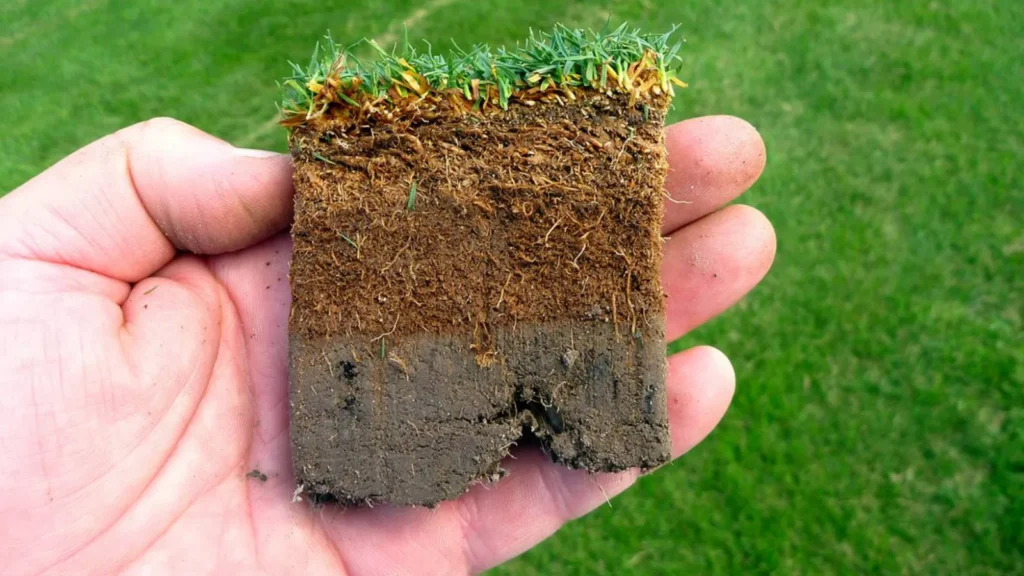
Compacted soil restricts root growth and makes it harder for water and air to move through the ground.
This is worth checking in Charlotte-area lawns with heavy red clay soil.
Excessive thatch can also encourage disease. Thatch is the layer of dead stems and roots between the green grass and the soil.
A thin layer is normal. A thick layer can hold moisture and interfere with healthy growth.
Poor airflow adds another problem. Grass surrounded by dense shrubs or overhanging branches may stay wet longer.
Where compaction is a concern, understanding how core and liquid aeration differ can help you choose suitable soil care.
A soil test can also reveal pH problems and nutrient needs. Standard soil tests do not directly measure available nitrogen, so use grass-specific fertilization guidance as well.
How to Treat Dollar Spot Step by Step
Once you have identified dollar spot, start by correcting the conditions that help it develop.
Not every outbreak needs a fungicide.
Step 1: Adjust your watering routine
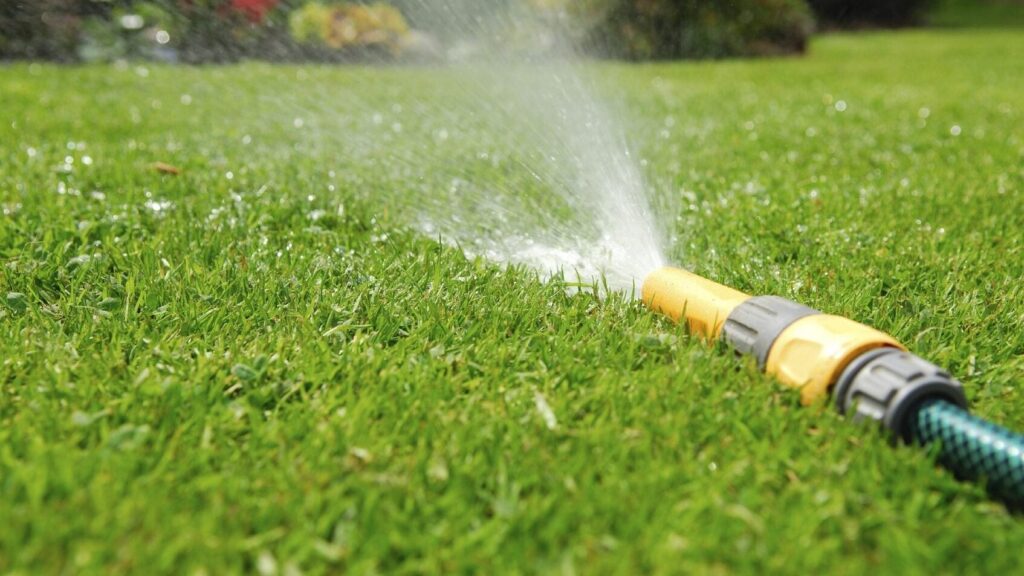
Check whether your sprinklers run too often or late in the evening.
Water deeply when the soil needs moisture, rather than applying small amounts every day.
Early morning watering is usually best because it limits extra leaf wetness and gives grass time to dry.
A soil moisture meter can help you check conditions below the surface.
Avoid watering again simply because the grass looks pale. Dollar spot damage is not always a sign of dry soil.
Step 2: Correct nutrient problems
If your grass is growing poorly, review its fertilization schedule.
Dollar spot often becomes worse when nitrogen is too low.
Use an appropriate fertilizer for your grass type, preferably one that provides a steady supply of nitrogen.
Do not apply a heavy dose without checking the lawn’s needs.
Fescue, Bermuda, and Zoysia grow at different times, so their fertilizer schedules should not be identical.
Step 3: Improve mowing and soil conditions
Continue mowing at the recommended height with sharp mower blades.
Avoid mowing when the grass is wet, especially during an active outbreak.
Clean grass debris from mowing equipment after working in infected areas. The fungus can spread through infected clippings and plant material.
If your lawn has excessive thatch, plan suitable removal when the grass is actively growing.
Lightly remove loose debris where practical, but avoid aggressive raking that damages already weak grass.
Step 4: Consider a fungicide if necessary
/
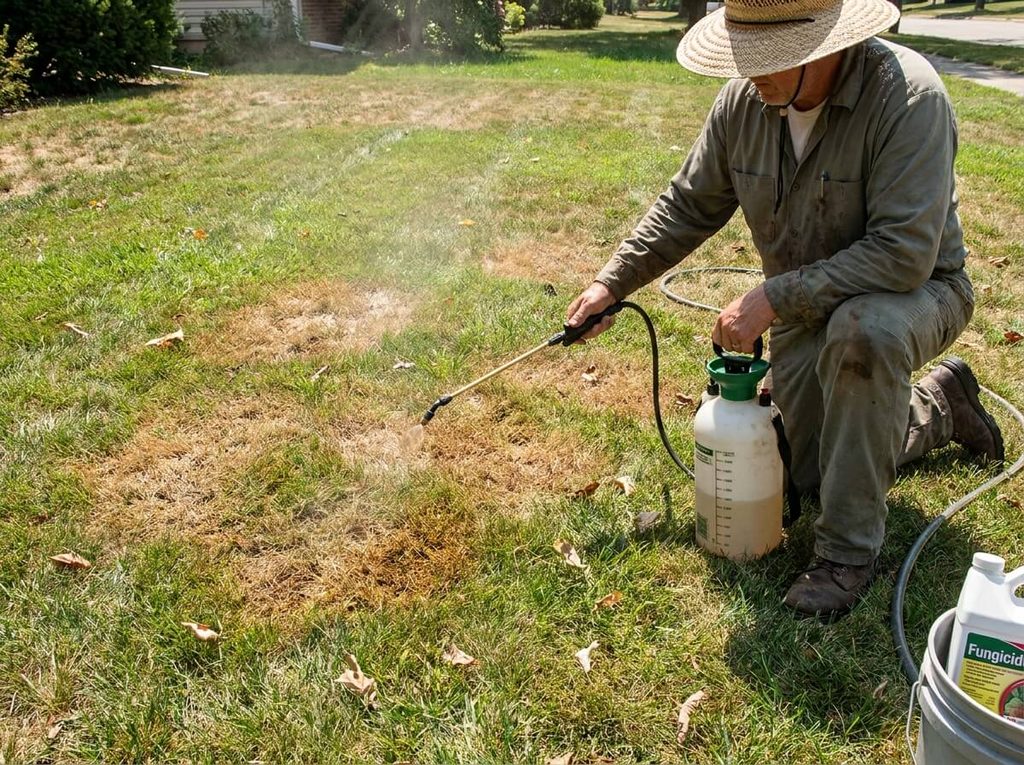
Fungicides may help when dollar spot is severe, keeps spreading, or returns despite proper care.
Some fungicides used against dollar spot contain these active ingredients:
| Active ingredient | Type | What to know |
|---|---|---|
| Propiconazole | Systemic, FRAC 3 | Can control dollar spot when the product is labeled for that use |
| Myclobutanil | Systemic, FRAC 3 | Another option, but has the same resistance group as propiconazole |
| Chlorothalonil | Contact, FRAC M5 | Protects treated surfaces; many turf formulations are not approved for residential lawns |
Combination products containing different fungicide groups may also be effective.
A fungicide cannot turn already dead grass blades green again. Its job is to control further fungal damage while healthy grass grows.
Step 5: Apply treatments safely
If a fungicide is needed, follow these steps:
- Read the label. Check the approved use, mixing rate, application interval, and precautions.
- Measure your lawn. Work out the treatment area so you do not apply too much product.
- Calibrate your equipment. Use a suitable pump sprayer, hose-end sprayer, or broadcast spreader, depending on the formulation.
- Check the weather. Follow the label’s rain, temperature, and watering instructions. Some products need irrigation after application.
- Wear protective equipment. Follow the label’s requirements and keep people and pets away until the stated re-entry conditions are met.
Never increase the application rate hoping for faster results.
Step 6: Prevent fungicide resistance
Dollar spot fungi can develop resistance when the same fungicide group is used repeatedly.
This means a product that once worked well may become less effective.
Rotating product names is not enough.
For example, propiconazole and myclobutanil both belong to FRAC Group 3. Switching between them does not provide a true change in fungicide group.
Where repeated applications are necessary, follow a rotation plan using different FRAC groups and label directions.
Use an integrated approach
Integrated Pest Management, or IPM, means using several methods together rather than depending entirely on chemicals.
Start with accurate identification, proper watering, balanced nutrition, and regular monitoring.
Use targeted fungicides only when the level of disease makes them necessary.
This reduces unnecessary product use and helps protect long-term treatment effectiveness.
How to Prevent Dollar Spot from Coming Back
Preventing dollar spot is mostly about keeping your grass healthy and reducing the conditions that help the fungus spread.
You cannot control the weather, but you can control many parts of your lawn care routine.
Water deeply and less often
Allow the soil surface to dry between watering sessions without letting the grass suffer severe drought stress.
Water early in the morning and adjust your irrigation schedule after rainfall.
A moisture meter or a simple soil check can help you avoid unnecessary watering.
Keep fertilization balanced
Use soil test results to guide lime, phosphorus, potassium, and other nutrient decisions.
For nitrogen, follow recommendations for your grass type and season.
Slow-release fertilizers can help provide steady nutrition without pushing sudden growth.
Avoid heavy summer nitrogen applications on heat-stressed fescue. Bermuda and Zoysia have different nutrient needs during active summer growth.
Healthy grass is better able to replace damaged leaves.
Mow at the correct height
Cutting too low can weaken grass and make disease damage worse.
NC State recommends different mowing heights for common lawn grasses:
- Tall fescue: Generally 2.5 to 3.5 inches.
- Bermuda: Generally 0.75 to 2 inches.
- Zoysia: Generally 0.75 to 2 inches.
The best height also depends on the variety and equipment.
Avoid removing more than one-third of the blade in one mowing.
Keep blades sharp and clean equipment after working in infected areas.
Manage thatch and soil compaction
Check your lawn’s thatch layer before deciding to remove it.
If it becomes thicker than about half an inch, dethatching may help. Use a dethatching rake or machine suited to the grass type.
For compacted soil, core aeration removes small plugs from the ground and allows better movement of water and air.
Spike aeration does not provide the same physical relief from heavy compaction.
Aeration is not an instant treatment for dollar spot, but healthier roots can help your lawn handle stress.
Timing is important. Our guide on when to aerate lawns in North Carolina explains why fall suits fescue, while late spring and summer are better for Bermuda and Zoysia.
Choose disease-resistant grass varieties
Some grass varieties handle dollar spot better than others.
When establishing a new lawn or overseeding, look for varieties with good disease-resistance ratings.
Use regional recommendations from NC State Extension or the National Turfgrass Evaluation Program.
Choose varieties suited to your sunlight, soil, and maintenance needs.
Improve airflow and sunlight
Look for areas where dew remains long after the rest of the lawn has dried.
Overgrown shrubs, low branches, and dense vegetation can restrict airflow.
Prune surrounding plants where appropriate and make sure the grass receives enough sunlight for its species.
Better airflow can help leaves dry sooner.
Seasonal dollar spot prevention calendar for Charlotte
The best lawn care schedule depends on your grass type and the weather.
| Season | What to do |
|---|---|
| Spring | Check soil fertility, monitor for early symptoms, and review irrigation. Begin warm-season fertilizer only when appropriate. |
| Early summer | Watch for small pale spots, maintain proper mowing height, and avoid frequent watering. |
| Mid-to-late summer | Inspect Bermuda and Zoysia closely. Correct moisture problems and consider professional disease management if outbreaks are severe or recurring. |
| Fall | Aerate and overseed fescue where needed. Review soil health and reduce watering as growth slows. |
| Winter | Keep heavy leaf cover off the lawn, avoid unnecessary watering, and plan maintenance for the next growing season. |
For Charlotte homeowners, summer monitoring is especially important on warm-season grass.
The goal is to find problems early and keep your lawn strong throughout the year.
When Should You Call a Lawn Care Professional?
Small outbreaks can often be managed with changes to basic lawn care.
However, some problems need more help.
Consider contacting a professional if:
- Dollar spot covers a large part of your lawn.
- The same problem returns every year.
- You cannot identify the disease confidently.
- Proper watering and fertilization have not helped.
- You lack the equipment or experience to apply treatments safely.
DIY treatment vs. professional lawn care
DIY care can make sense when the outbreak is mild.
You may only need to adjust watering, improve mowing, or correct a nutrient problem.
However, buying several products without a clear diagnosis can become expensive.
A homeowner treating a few small spots may spend little beyond normal lawn maintenance. Someone dealing with repeated outbreaks across a large yard may face several product purchases, equipment costs, and hours of work.
Professional care costs more upfront but can help avoid repeated mistakes.
A professional can assess your grass, soil, irrigation, and disease symptoms before recommending treatment.
What to expect from professional treatment
A proper lawn assessment starts with identifying the problem.
That may include inspecting affected blades, checking growing conditions, and recommending soil testing or laboratory diagnosis when needed.
The treatment plan should match your grass type and the severity of the outbreak.
At Advanced Turf Care, we provide disease control and lawn care programs designed for Charlotte-area conditions.
With more than 20 years of Carolina turf experience, Andrew Powell and the team understand the different needs of fescue, Bermuda, and Zoysia lawns.
The goal is not just to treat visible damage, but to improve the conditions that affect your lawn over time.
Common Dollar Spot Myths
Several common beliefs about dollar spot can lead homeowners toward the wrong treatment.
Myth 1: Dollar spot is caused by overwatering
Dollar spot is caused by a fungus, not water itself.
Long periods of moisture on grass leaves help the fungus infect the plant.
Even a lawn that receives little irrigation can develop dollar spot when heavy dew keeps the leaves wet overnight.
Myth 2: Every brown spot is dollar spot
Brown patches can come from drought, insects, fertilizer problems, or other fungal diseases.
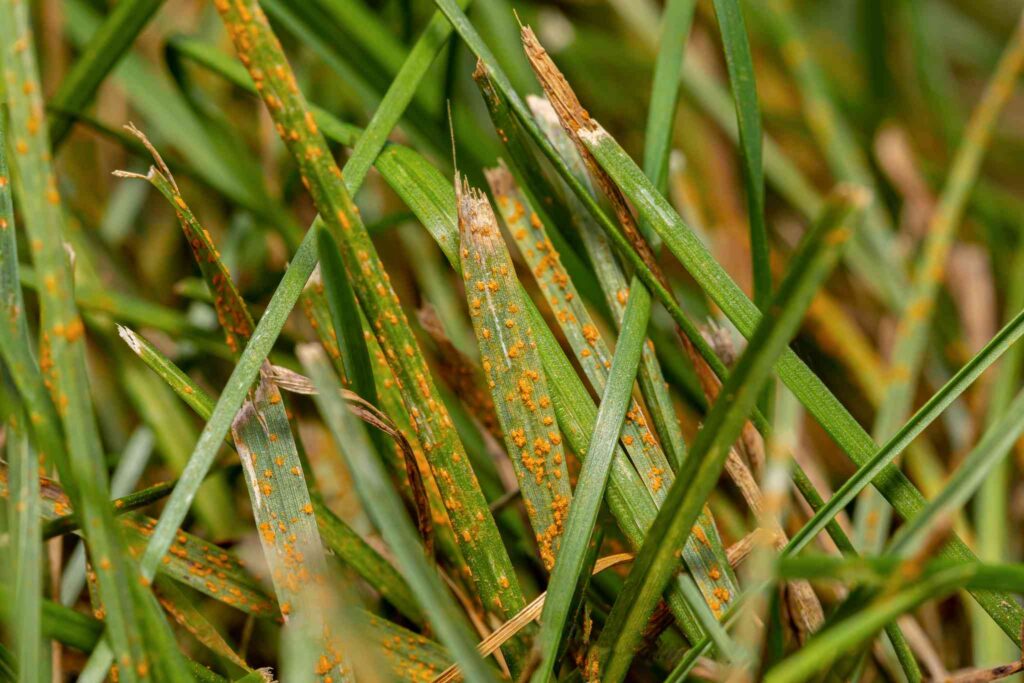
For example, lawn rust can leave orange powder on grass blades and shoes.
If you notice orange dust rather than pale hourglass lesions, see our guide on what lawn rust looks like and how to treat it.
Identifying the cause matters more than treating the color.
Myth 3: More fertilizer will cure dollar spot
Low nitrogen can increase dollar spot severity, but adding fertilizer without a plan is not a cure.
The grass needs the right amount of nutrients for its growing season.
Too much fertilizer can create other lawn problems.
Myth 4: Dollar spot will always disappear on its own
Disease activity may slow when weather conditions change.
However, severe infections can leave damaged or thin grass behind.
Without correcting the conditions that encourage dollar spot, the problem may return.
Frequently Asked Questions
However, infected grass clippings can carry the fungus to other susceptible turf areas.
Can dollar spot spread to garden plants?
Dollar spot primarily affects turfgrasses. It is not a typical disease of vegetables, flowers, or landscape shrubs.
Fungicides are a separate concern. Follow product labels carefully, including instructions for keeping children and pets away from treated areas.
Is dollar spot harmful to pets or children?
Dollar spot is a grass disease and is not known to cause illness in people or pets through normal lawn contact.
You may notice improvement within one or two weeks if the disease stops spreading and grass is actively growing. Full recovery can take several weeks or longer. Already damaged blades do not turn green again. New grass growth replaces them.
How long does dollar spot take to go away?
Recovery depends on the severity of the damage, grass type, and growing conditions.
Some biological fungicides are available, but their effectiveness varies. Neem oil and other homemade remedies should not be treated as proven dollar spot cures. Start with healthy lawn care practices and avoid unnecessary chemical treatments.
Are there organic ways to treat dollar spot?
Proper watering, mowing, fertilization, and soil care are the main nonchemical options.
In Charlotte, that often means late spring through summer and sometimes early fall. Check your lawn regularly during long periods of dew or wet weather. Early detection gives you more time to correct the problem before damage spreads.
When is dollar spot prevention most important?
Prevention matters throughout the year, but monitoring becomes especially important during warm, humid weather.
Keep Your Lawn Healthy and Reduce Dollar Spot
Dollar spot can make a lawn look unhealthy, but it does not always mean the grass is permanently damaged.
Start by checking the symptoms. Look for small, straw-colored spots and pale lesions on individual blades.
Once you know what is causing the damage, focus on the basics: proper watering, balanced fertilization, correct mowing, and healthy soil.
Use fungicides only when needed, and remember that preventing future outbreaks takes ongoing care.
For homeowners in Charlotte, Gastonia, Huntersville, Belmont, and nearby areas, Advanced Turf Care can help with lawn disease control and long-term turf health.
If dollar spot keeps returning or your grass is struggling to recover, contact Advanced Turf Care for a lawn assessment and a treatment plan suited to your lawn.
Seeing Spots, Patches, or Turf Decline?
Lawn disease can spread quickly. Get help identifying the problem and choosing the right treatment.
Explore Disease Control