Your lawn looks thin, water sits on the surface after rain, and some areas stay bare no matter how much you water or fertilize. You may be dealing with compacted soil.
When soil gets packed too tightly, grass roots have less room to grow. Water and air struggle to move through the ground, leaving your lawn weak even when you’re doing everything else right.
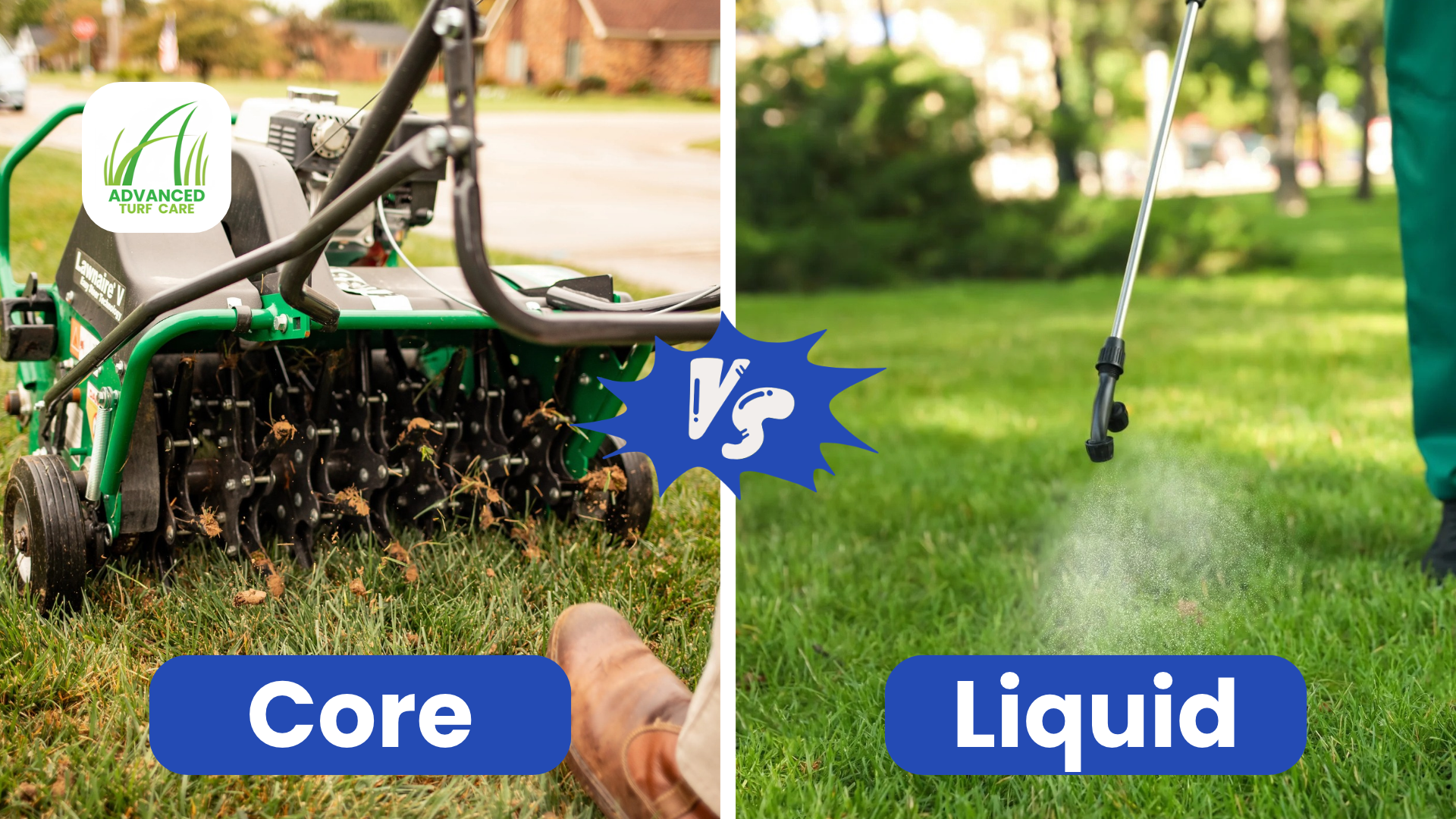
Aeration can help fix this problem, but there are two methods you’ll often hear about: core aeration and liquid aeration.
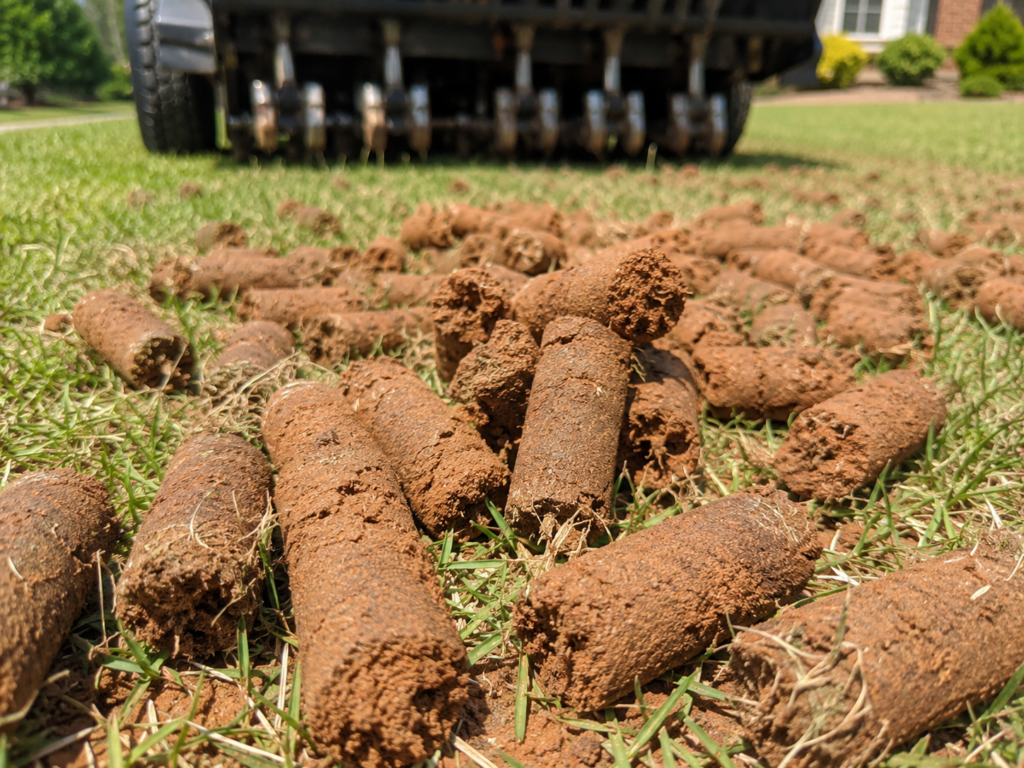
Core aeration uses a machine to pull small plugs of soil out of your lawn. Liquid aeration involves spraying a soil-conditioning product onto the grass. Both are marketed as ways to improve soil health, but core aeration is the more reliable choice for relieving physical soil compaction.
The best method depends on your soil, grass type, and the problem you’re trying to solve. Here’s how to tell which approach makes sense for your lawn.
Understanding Your Soil
Healthy grass starts below the surface.
Grass roots need water, oxygen, and nutrients to grow. In healthy soil, small spaces between soil particles allow water to soak in and roots to spread. When those spaces become compressed, root growth slows, and even regular watering may not be enough.
Compaction is common in areas with heavy foot traffic, construction activity, or frequent equipment use. Clay-heavy soils, like those found in many Charlotte-area yards, are especially prone to this problem.
According to NC State Extension’s Carolina Lawns guide, compacted soils can benefit from core aeration because removing soil plugs creates room for air and water to move through the ground.
Signs Your Soil Might Be Compacted
You may notice grass thinning around walkways, driveways, gates, or play areas. Bare patches can develop where people walk regularly, and water may collect on the surface after heavy rain.
The ground may also feel unusually hard when you try to dig into it.
However, these symptoms don’t always mean compaction. Poor drainage can come from grading problems, and thin grass may result from shade, watering mistakes, or disease.
For example, pale patches caused by red thread disease can look like general lawn stress, but aeration alone won’t solve that problem.
How to Check for Soil Compaction at Home
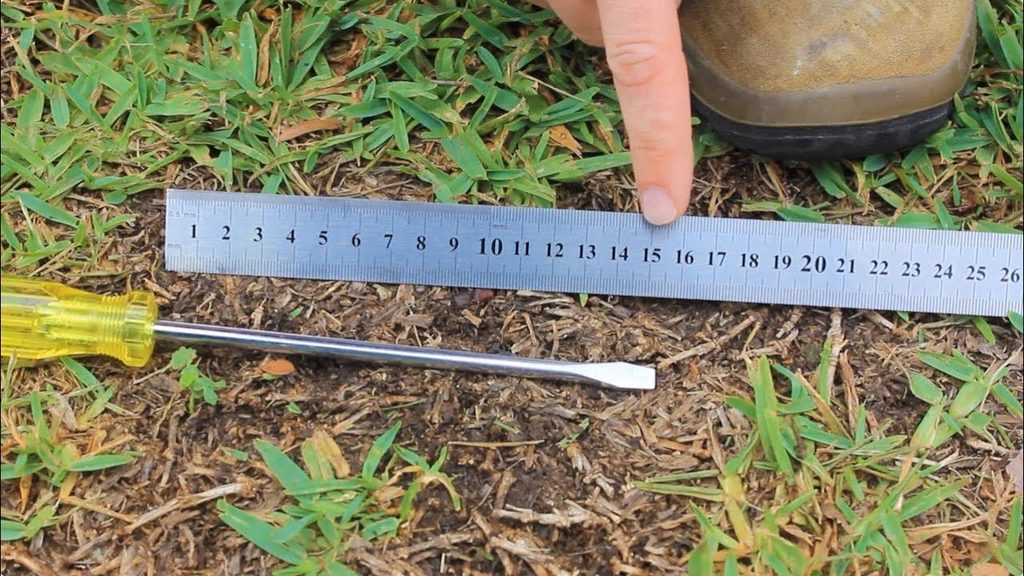
You can get an idea of your soil’s condition with two simple tests.
The screwdriver test: Wait until the soil is slightly moist, then push a long screwdriver straight into the ground. Try this in several places, including healthy areas and spots where grass struggles.
If the screwdriver slides several inches into the soil with little resistance, severe compaction may not be the problem. If you can barely push it into the ground, the soil could be tightly packed.
The soil probe test: Push a soil probe or sturdy wire flag into the ground. Notice where it becomes difficult to push farther. Repeat the test across your lawn and compare the results.
Hard resistance near the surface may suggest compaction, but dry soil, rocks, and roots can give similar results. These tests are useful starting points, not a complete diagnosis.
Why a Soil Test Still Matters
A soil test helps you understand what your lawn needs before you spend money on treatments.
For an established lawn, collect small soil samples from several locations, generally around three inches deep. Mix them in a clean plastic bucket and submit a representative sample to a soil testing laboratory.
A laboratory test can reveal soil pH, nutrient levels, and fertilizer or lime needs. Some tests also provide organic matter information. Standard fertility testing does not directly measure compaction or necessarily identify the percentage of clay, sand, and silt.
You can use an at-home kit such as MySoil or Rapitest for basic testing, but a laboratory test usually provides more complete guidance.
The goal is to separate soil fertility problems from physical compaction. Your lawn may need aeration, fertilizer, or both, depending on what you find.
What Is Core Aeration?

Core aeration is a lawn treatment that removes small plugs of soil using a machine fitted with hollow metal tines.
As the machine moves across your lawn, the tines enter the soil, pull out plugs, and leave small openings behind. These holes allow water and oxygen to enter the soil more easily while giving grass roots room to spread.
Unlike treatments that only work on the surface, core aeration physically removes some of the compacted soil.
What Equipment Is Used?
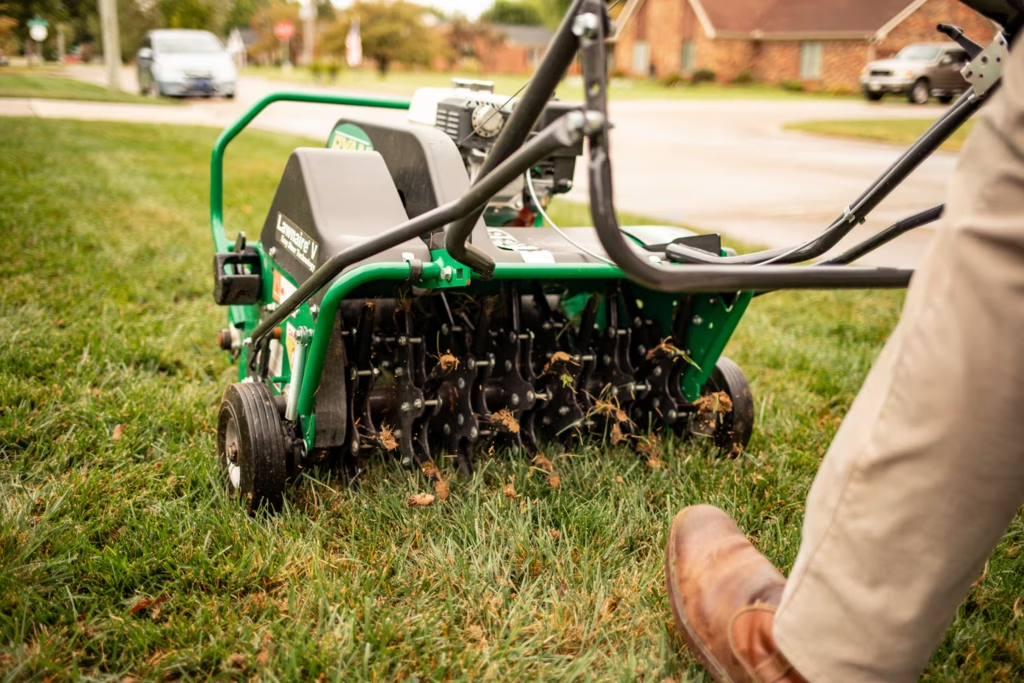
For small lawns or individual problem areas, a manual core aerator may be enough. These tools are relatively inexpensive, but pushing them into hard soil requires effort.
Larger lawns usually need a walk-behind or tow-behind core aerator. Walk-behind machines are commonly rented for DIY projects, while tow-behind models work with suitable lawn equipment.
Renting can make sense for occasional use. However, these machines can be heavy, and getting even coverage takes some practice.
What Happens After Core Aeration?
You’ll see small holes throughout the lawn and plugs of soil resting on the grass.
Those openings immediately create space for water and air to enter. Over time, roots can grow into the loosened areas, especially when the grass is actively growing.
On a compacted Charlotte lawn, this can help improve growing conditions. But don’t expect bare patches to become green overnight.
Core aeration improves the soil environment. Grass still needs proper watering, nutrition, and sometimes new seed to recover.
Pros and Cons of Core Aeration
Core aeration is one of the most effective treatments for compacted lawn soil, but it isn’t necessary for every yard.
Benefits of Core Aeration
It relieves physical compaction. Removing soil plugs creates openings in hard ground. This is especially helpful in clay-heavy lawns and areas with frequent foot traffic.
It improves water and air movement. The holes allow water to enter areas where compacted soil may otherwise slow infiltration.
It supports stronger roots. When roots have better access to air, moisture, and nutrients, grass has a better chance of developing a healthy root system.
It can help manage thatch. Core aeration brings soil into contact with the thatch layer and can encourage organic matter to break down. However, thick thatch may need separate treatment. If you’re unsure what that layer is, our guide explains what thatch is and how it affects your lawn.
It creates good conditions for overseeding. The openings and disturbed soil surface can improve seed-to-soil contact, especially when renovating thin fescue lawns.
Drawbacks of Core Aeration
The biggest drawbacks are cost, equipment, and timing.
Professional aeration or machine rental costs more upfront than buying a bottle of liquid soil conditioner. DIY aeration can also be physically demanding.
Your lawn will look temporarily disturbed because of the holes and soil plugs. Those plugs usually break apart with rain, watering, and mowing.
There is also a risk of hitting shallow irrigation lines, sprinkler heads, or buried wires if they aren’t marked beforehand.
Finally, core aeration works best during active grass growth. Aerating during drought, extreme heat, or dormancy can slow recovery.
What Is Liquid Aeration?
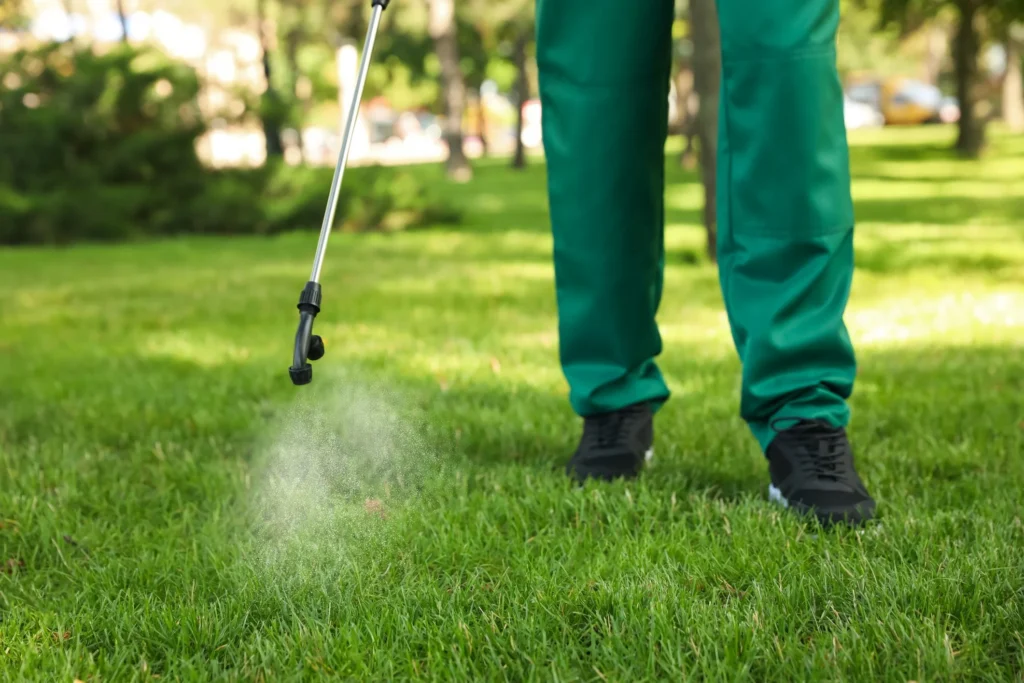
Liquid aeration is a treatment applied to the lawn using a sprayer.
Instead of removing plugs of soil, it uses ingredients designed to affect soil moisture, nutrient availability, or plant growth.
You’ll find products marketed as liquid aerators, soil looseners, and soil conditioners. Although they may sound similar, their ingredients and intended purposes can differ.
What’s Inside Liquid Aeration Products?
Common ingredients include:
Humic acids: Organic compounds that may influence nutrient availability, root growth, and certain soil properties. Their effects depend on the product and soil conditions.
Surfactants: Also called wetting agents, these help water spread across or enter surfaces that resist moisture. They can be useful where water does not soak in evenly.
Microbial ingredients: Some products contain beneficial microorganisms intended to support organic matter breakdown. Their performance depends on the organisms, soil environment, and product formulation.
Some formulas also contain seaweed extracts, nutrients, or other soil-conditioning ingredients.
These materials don’t all work the same way, and not every product contains all of them.
How Do You Apply Liquid Aeration?
Liquid aeration is usually straightforward.
Products such as N-Ext Air-8 and LawnStar Liquid Aerator are examples of concentrates homeowners may encounter.
Most treatments involve mixing the product according to its label, spraying it evenly using a garden or hose-end sprayer, and watering afterward if instructed.
Some manufacturers recommend repeat applications during the growing season. However, more frequent spraying does not necessarily mean better compaction relief.
Our article explaining how liquid lawn aeration works covers these products and their limitations in more detail.
Does Liquid Aeration Actually Work?
That depends on what you expect it to do.
Some liquid treatments can support root growth or help soil retain moisture. But there is an important difference between improving soil conditions and removing physical compaction.
A 2025 study published in Agronomy Journal compared liquid products with mechanical aeration on bermudagrass. Liquid treatments showed some benefits for root growth and moisture retention, but mechanical treatments were needed to reduce soil penetration resistance and improve long-term water infiltration.
In other words, liquid aeration is not a proven replacement for core aeration when soil is seriously compacted.
Pros and Cons of Liquid Aeration
Liquid aeration appeals to homeowners because it is simple and requires little equipment.
Benefits of Liquid Aeration
The biggest advantage is convenience. You don’t need to rent a heavy machine or pull soil plugs from the lawn.
Application also leaves the grass surface undisturbed, and there is no mechanical risk to buried sprinkler parts or shallow wires.
Certain products may help improve water distribution or support root growth when used for the right reason.
The initial DIY cost can also be lower than renting a core aerator, depending on the product and lawn size.
Drawbacks of Liquid Aeration
The main limitation is that liquid products do not physically remove soil.
They cannot be relied upon to relieve severe compaction, particularly in hard clay.
Results also vary by formulation. A wetting agent might improve moisture movement without reducing the density of the soil.
Repeated applications can increase long-term costs, especially if the product provides little measurable benefit.
Environmental safety depends on the ingredients and how they’re applied. Even products labeled natural or organic should be used according to their instructions. Excess application before heavy rain can waste product and increase runoff risk.
Core Aeration vs. Liquid Aeration: A Direct Comparison
Here’s how the two methods compare when you’re deciding what your lawn needs.
| Feature | Core aeration | Liquid aeration |
|---|---|---|
| How it works | Removes soil plugs | Applies soil-conditioning ingredients |
| Severe compaction | Effective physical treatment | Not a proven solution |
| Water movement | Creates openings for infiltration | Some products improve wetting |
| Root growth | Supports roots by relieving compaction | Some formulations may support growth |
| Results | Physical openings are immediate; grass response takes time | Depends on ingredients and conditions |
| Best soil conditions | Compacted clay and high-traffic areas | Specific moisture or conditioning problems |
| Equipment | Manual or powered core aerator | Garden or hose-end sprayer |
| Initial cost | Typically higher | Often lower for DIY use |
| Long-term value | Can provide meaningful compaction relief | Depends on benefits and repeat applications |
| Environmental impact | May require fuel-powered equipment | Depends on formulation and runoff management |
| Lawn disruption | Temporary holes and plugs | Minimal surface disturbance |
For a lawn with confirmed compaction, core aeration usually offers better value because it directly addresses the problem.
Liquid treatments may be worth considering for specific soil-conditioning needs, but buying several bottles won’t necessarily produce the same results as one properly performed core aeration treatment.
When Should You Choose Each Method?
The right choice depends on your soil type, the severity of compaction, your grass, and how much work you’re willing to do.
Choosing Based on Soil Type
Clay soil: Many lawns around Charlotte, Gastonia, and Belmont have clay-heavy soils. When these soils become compacted, core aeration is generally the better choice because it physically opens the ground.
Sandy soil: Sandy soils often allow water to pass through more easily, although they can still become compacted. Liquid wetting agents may help with certain dry spots, but they shouldn’t be applied simply because the soil is sandy.
Loamy soil: Loam usually has a better balance of drainage and moisture retention. If the lawn is healthy and the ground isn’t compacted, aeration may not be necessary.
How Compacted Is Your Lawn?
A lightly used lawn with healthy roots may need only occasional aeration.
However, if you’re dealing with hard soil around walkways, construction areas, or heavily used parts of the yard, mechanical core aeration is usually the more useful treatment.
Severely compacted soil may require repeated mechanical treatments over time, along with changes to the activities causing compaction.
Budget and Time
Liquid aeration is easier for most DIY homeowners. Application is usually quick, and there’s no machine to transport.
Manual core aeration may be economical for small spaces, but larger lawns can make the work exhausting.
A professional service costs more upfront but removes the equipment and labor burden. When comparing prices, consider whether the treatment actually solves your lawn’s problem rather than looking only at the initial cost.
The Best Time to Aerate in North Carolina
Timing makes a big difference.
For Charlotte-area lawns, the best aeration window depends mainly on your grass type.
| Grass type | General aeration window |
|---|---|
| Tall fescue | September to early October |
| Bermuda | Late spring to early summer |
| Zoysia | Late spring to early summer |
These are general guidelines. Weather, soil moisture, and active growth matter more than following a fixed date.
Fescue grows best during cooler weather, making fall an excellent time for core aeration and overseeding.
Bermuda and Zoysia grow more actively during warmer months, so they generally recover better after spring green-up.
For a detailed seasonal breakdown, read our guide on when to aerate lawns in North Carolina.
Match the Treatment to the Problem
If water pools because compacted soil prevents infiltration, core aeration may help. However, standing water caused by poor grading or drainage design requires a different solution.
If your lawn is thin because roots cannot spread through hard soil, core aeration followed by suitable lawn care can improve growing conditions.
If excessive thatch is the problem, core aeration may support its breakdown, but severe buildup could require dethatching.
And if grass isn’t absorbing nutrients properly, check soil pH and fertility before choosing either treatment. Aeration cannot correct every nutrient problem.
The Hybrid Approach: Can You Combine Both Methods?
Some homeowners choose to use core aeration and liquid soil conditioners together.
The idea is to combine the physical benefits of removing soil plugs with the possible moisture or root-growth benefits of a liquid treatment.
It sounds promising, but combining the two methods doesn’t automatically deliver better results.
When Combining Both Might Make Sense
Consider a compacted lawn with additional soil moisture problems.
Core aeration could address the compaction first. If the soil also has trouble wetting evenly, a suitable wetting agent might be considered afterward.
For heavily compacted areas, repeated core aeration during suitable growing periods may be more useful than adding liquid treatments.
The 2025 bermudagrass study found that repeated mechanical aeration was particularly effective at reducing soil resistance. Combining a mechanical treatment with liquid applications did not establish that the combination was superior to repeated core aeration.
How to Plan a Combined Approach
Start by checking whether physical compaction exists.
If it does, schedule core aeration during your grass’s active growing season. Afterward, assess whether a separate moisture or soil-conditioning problem still needs attention.
Some liquid products recommend seasonal or repeated applications. Follow the label rather than using a fixed quarterly schedule for every lawn.
Track changes in water infiltration, soil firmness, and grass growth.
You may notice improvements over the growing season, but there is no guaranteed timeline or evidence that every lawn benefits from combining the methods.
Common Aeration Myths
There is plenty of confusing advice about aeration. Here are four common misconceptions worth clearing up.
Myth 1: Only Unhealthy Lawns Need Aeration
Not necessarily.
A healthy-looking lawn can develop compaction in high-traffic areas. Aeration can be part of preventive lawn care when soil conditions justify it.
Myth 2: Liquid Aeration Is Completely Useless
That’s too broad.
Some liquid conditioners have documented effects on moisture retention and root growth. They simply shouldn’t be treated as proven substitutes for mechanical compaction relief.
Myth 3: Every Lawn Needs Aeration Each Year
Not every lawn.
Heavy clay soils and frequently used yards may need regular attention. Well-drained lawns with little traffic may need aeration much less often.
Let soil condition determine the frequency.
Myth 4: Aeration Shoes Work Just as Well as Core Aerators
Spiked aeration shoes push solid spikes into the ground.
Because they don’t remove soil, they can compress surrounding soil instead of relieving compaction.
Hollow-tine core aerators are the better choice when physical compaction needs treatment.
What to Do After Aeration
Proper aftercare helps your lawn make the most of the treatment.
Water Your Lawn Properly
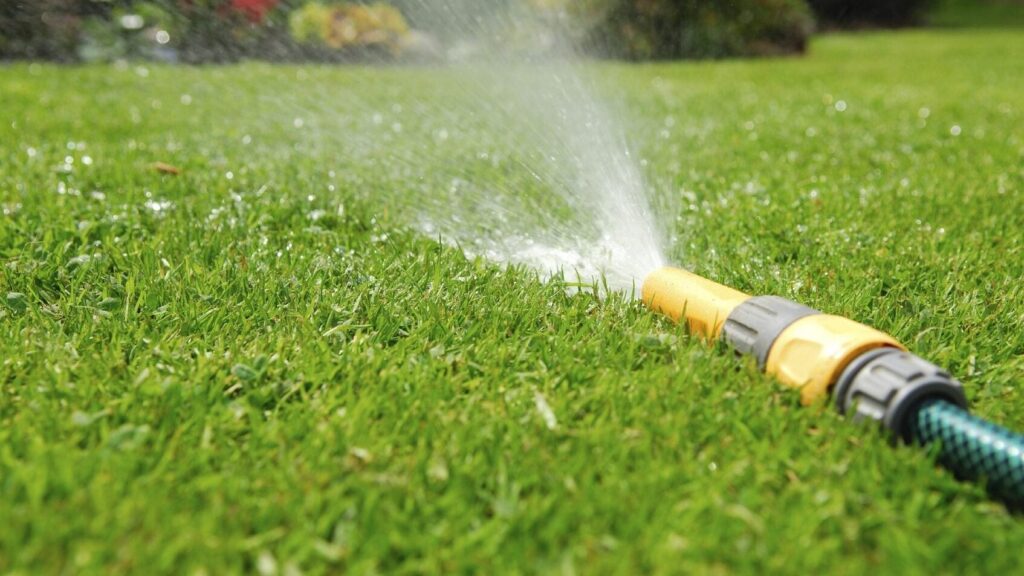
After core aeration, keep the soil adequately moist, especially if you’re also planting seed.
Before aeration, water dry ground enough to make it slightly moist. Avoid working on saturated soil because heavy equipment can cause additional damage.
For liquid treatments, follow the product’s watering instructions.
Overseed Thin Areas

Core aeration provides a good opportunity to overseed fescue lawns during fall.
Use quality seed suited to your existing grass and growing conditions. A broadcast spreader helps distribute seed evenly.
Keep newly seeded areas consistently moist until germination, then adjust watering as the grass develops.
Not every lawn needs overseeding. Established Bermuda and Zoysia lawns may spread naturally during active growth, depending on the variety and condition.
Apply the Right Fertilizer
Fertilizer helps support growth and recovery, but use the correct product and timing for your grass.
For fall fescue renovation, starter fertilizer may be appropriate alongside overseeding.
Use soil test recommendations to guide nutrient applications. Avoid adding unnecessary nutrients simply because the lawn has been aerated.
Leave the Soil Plugs on Your Lawn
Those small plugs scattered across the grass are normal.
Leave them in place. They will gradually break apart with rainfall, watering, and mowing, returning soil to the surface.
Removing them usually provides no benefit.
Keep Up With Regular Maintenance
Aeration won’t prevent future compaction if the same problems continue.
Avoid unnecessary traffic when soil is wet, maintain the right mowing height, water according to grass needs, and test your soil periodically.
If the grass remains thin or discolored despite better soil conditions, investigate other causes rather than repeating aeration treatments.
Common Aeration Mistakes to Avoid
Even a useful lawn treatment can cause problems when performed incorrectly.
Aerating at the wrong time: Working on dormant or severely stressed grass slows recovery. Choose a period of active growth.
Cutting the grass too short: Mow before aeration, but keep the grass at an appropriate height for its type. Scalping creates unnecessary stress.
Working on dry or waterlogged soil: Hard, dry soil makes plug extraction difficult, while saturated soil can become muddy and damaged.
Forgetting underground obstacles: Mark sprinkler heads, shallow irrigation lines, invisible fence wires, and other buried features before starting.
Removing the soil plugs: Let them break down naturally rather than collecting them.
Aerating too frequently or not enough: Base your schedule on soil compaction, grass health, and lawn use rather than a fixed rule.
Skipping aftercare: If you’re overseeding, the work isn’t finished when the aerator leaves. Proper watering, seed contact, and suitable nutrition are important.
One more mistake is expecting aeration to solve every lawn problem. If poor grading, disease, shade, or irrigation issues are responsible, those problems need attention too.
Frequently Asked Questions
How Often Should I Aerate My Lawn?
It depends on your soil and how much traffic the lawn receives. Heavily compacted clay may need annual or more frequent attention, while healthy, well-drained lawns might go several years without aeration. Check soil conditions before scheduling treatment.
Is Liquid Aeration as Good as Core Aeration?
Not for relieving physical soil compaction. Core aeration removes soil plugs and has stronger evidence for improving compaction and infiltration. Liquid products may help certain moisture or root-growth problems, but they serve a different purpose.
Can I Aerate My Lawn Myself?
Yes. Manual core aerators can work in small spaces, and powered machines are available to rent for larger lawns. Liquid treatments are usually easier to apply with a sprayer. Professional core aeration may be preferable for large, heavily compacted properties.
What's the Best Time of Year to Aerate?
For Charlotte-area fescue lawns, early fall is usually best. Bermuda and Zoysia lawns are generally aerated in late spring or early summer when they’re growing actively. Avoid aerating during severe drought or dormancy.
Will Aeration Damage My Lawn?
Correctly timed core aeration causes temporary surface disturbance, but healthy grass should recover during active growth. Damage is more likely when soil is waterlogged, grass is stressed, or underground obstacles are not marked.
Should I Combine Core Aeration With Liquid Aeration?
Only when there’s a clear reason. Core aeration should handle physical compaction. A suitable liquid conditioner may help with a separate soil moisture issue, but combining treatments isn’t automatically better than core aeration alone.
Which Aeration Method Is Better for Your Lawn?
If your lawn has hard, compacted soil, core aeration is usually the better choice. It physically removes soil plugs, improves conditions for root growth, and creates openings for water and air.
Liquid aeration may have a place in soil conditioning, but it cannot reliably replace mechanical aeration for serious compaction.
Before choosing either method, check your soil, identify your grass type, and make sure compaction is actually causing the problem.
At Advanced Turf Care, we work with fescue, Bermuda, and Zoysia lawns throughout Charlotte and surrounding communities. With Andrew Powell’s more than 20 years of turf experience, our team focuses on lawn treatments suited to local soil and growing conditions.
Our aeration and seeding service includes heavy core aeration, seed, and starter fertilizer to support healthier grass growth.
If your lawn is thinning, struggling with compacted soil, or needs professional attention, contact Advanced Turf Care for a lawn assessment and quote.
Ready for a Thicker, Healthier Lawn?
Professional aeration can reduce compaction and help seed, water, and nutrients reach the root zone.
Explore Aeration